The post Burglars Rob Nine Alameda Businesses in Early Morning Smash-and-Grabs appeared first on Alameda Post.
]]>
During the initial stages of the investigation, officers and detectives worked quickly to assess the scope of the incidents. Evidence gathered at multiple scenes enabled investigators to link the same vehicle and suspects to the burglaries. With the assistance of Automated License Plate Reader (ALPR) technology, officers were able to locate the suspect vehicle within hours.
With the help of East Bay Regional PD and Oakland PD, three individuals were detained. Two were arrested on unrelated offenses. Detectives have since identified additional parties of interest and continue to actively investigate these incidents.
“It’s too early to say who all is involved, but we have made some arrests of individuals we believe are involved,” Police Chief Nishant Joshi told KTVU News. “They’ve been arrested for unrelated crimes. We’re going to further our investigation.”
Joshi also said investigators believe the group may be responsible for similar crimes in other cities.
The APD report did not list the names of the businesses that were affected. A couple of the businesses that were robbed posted about the situation on social media.
“We were one of the shops burglarized in a string of smash-and-grabs in Alameda,” Malaya Tea Room, located at 920 Central Avenue, posted on Facebook. “There was nothing to steal. No cash on site …but expensive damages of windows. So horrible to wake up to.” The tea room is expected to be open for business again on Thursday, according to the post.
Doodlecakes, located at 647 Central Avenue, maintained an unexpected good sense of humor in a Facebook post, calling the burglars “four hungry cake connoisseurs,” and noting that they stole a total of $10 from a tip jar in a drawer and left a cash register that had been stolen from Mountain Mike’s Pizza (714 Central Avenue) on the sidewalk.
There were almost 100 comments on the APD Facebook post at the time of writing this article, most of which were devoted to thanking the police for their service and strongly encouraging Alamedans to support local businesses, especially those that were affected by the burglaries.
“I really feel for these small, locally owned businesses. I’m sure they are relieved that you nabbed the alleged bandits so quickly,” one commenter wrote. “Meanwhile, time to order a pizza, get some delicious high tea, and some cupcakes.”
Some comments specifically praised the Automated License Plate Reader (ALPR) technology, which spurred controversy upon introduction, and thanked APD for adopting it.
“ALPR paying for itself in spades again!” one person wrote. “Thank you for going the extra steps to catching the burglars.”
The post Burglars Rob Nine Alameda Businesses in Early Morning Smash-and-Grabs appeared first on Alameda Post.
]]>The post SF Bay Ferry Schedule Changes Start March 9 appeared first on Alameda Post.
]]>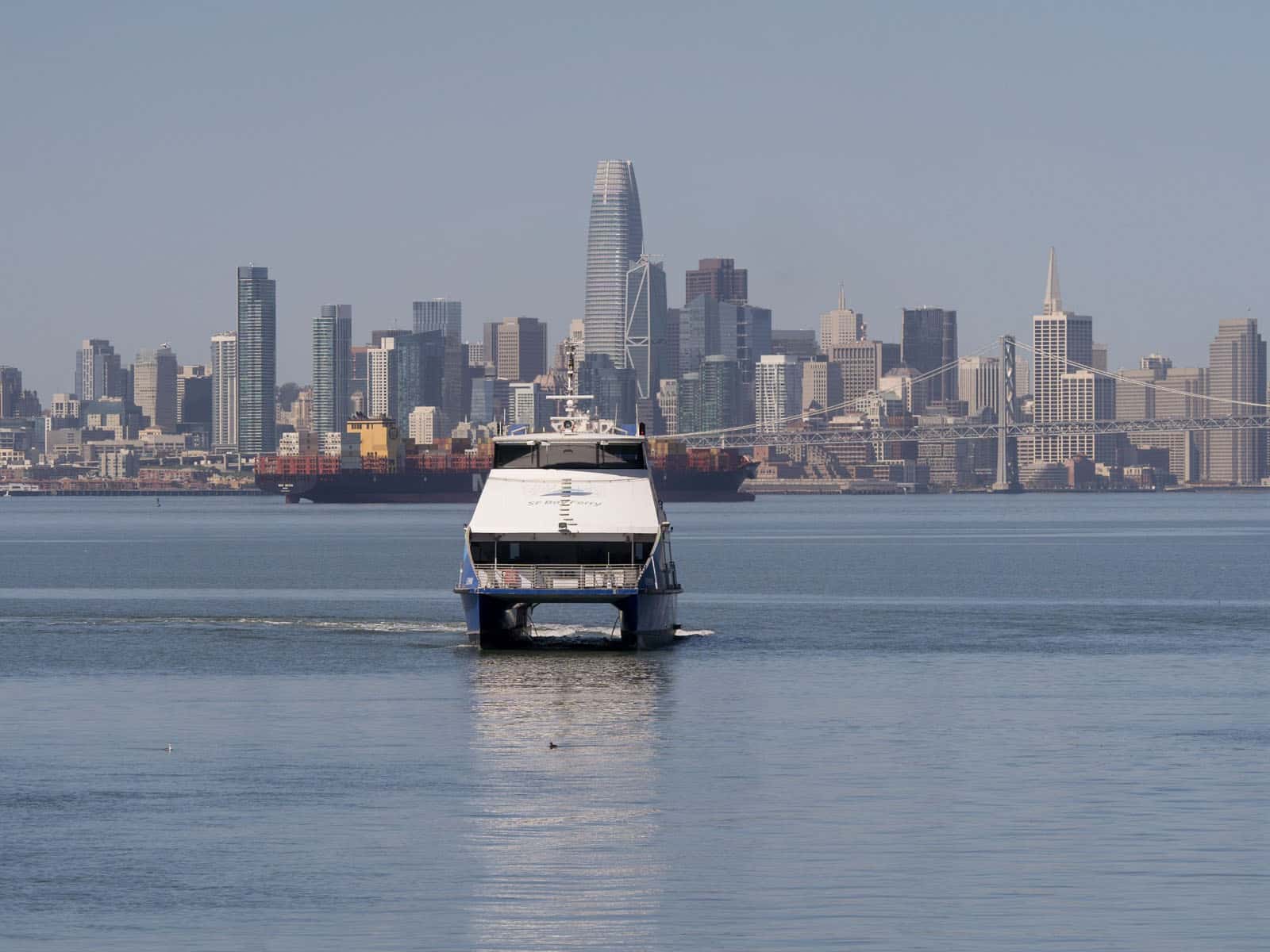
For riders commuting between the East Bay and South San Francisco, adjustments include trip time changes prompted by the results of the recent South San Francisco ferry route study. Additionally, a new early morning ferry trip is being added from Oakland to Downtown San Francisco to accommodate transbay UCSF commuters catching the Lilac Shuttle Route at Rincon Center at the Embarcadero. Other adjustments include minor departure time changes to improve system reliability.
SF Bay Ferry will make the following weekday service adjustments in March. All weekend schedules will remain the same with the exception of the Vallejo route and Alameda Short Hop.

Alameda Seaplane
Westbound
- The 9:40 a.m. westbound trip will be eliminated.
- A new westbound trip will be added at 12:30 p.m.
Eastbound:
- The 9:10 a.m. eastbound trip will be eliminated.
- The 9:40 a.m. eastbound trip will be eliminated.
- The 10:35 a.m. eastbound trip will shift 10 minutes earlier to depart at 10:25 a.m.
- The 12:10 p.m. eastbound trip will shift 10 minutes earlier to depart at noon.
- The 9 p.m. eastbound trip will shift five minutes later to depart at 9:05 p.m.

Harbor Bay
Eastbound:
- A new eastbound trip at 9:55 a.m. will be added.
- The 10:50 a.m. eastbound trip will shift 10 minutes earlier to depart at 10:40 a.m.

Oakland & Alameda
Westbound:
- A new westbound trip will depart Oakland at 5:55 a.m. and arrive in Downtown San Francisco at 6:20 a.m.
- The 9:05 a.m. westbound trip from Oakland will shift five minutes later to depart at 9:10 a.m.
- The 9:50 a.m. westbound departure from Main Street Alameda will be discontinued. This trip will continue to operate only between Oakland and Downtown S.F.
Eastbound:
- A new early morning trip will depart Downtown San Francisco at 6:25 a.m. eastbound to Oakland and Main Street Alameda.
- The 9:25 a.m. eastbound trip from Downtown San Francisco will shift 10 minutes later to depart at 9:35 a.m. This trip’s destination is the Oakland ferry terminal and will not stop at Main Street Alameda.

South San Francisco
Westbound:
- The arrival times for all morning trips arriving at South San Francisco are being adjusted to arrive 15 minutes before the top of each hour.
- The 8 a.m. Main Street Alameda and 8:20 a.m. Oakland departures to South San Francisco will be eliminated. The new westbound South San Francisco departure options from Main Street Alameda will be 6:50 a.m. and 7:45 a.m.
- The 4:10 p.m. Oakland and 4:25 p.m. Main Street Alameda departures to South San Francisco will shift 10 minutes later to depart at 4:20 p.m and 4:35 p.m. respectively.
Eastbound:
- The 7:10 a.m. departure to Oakland and Main Street Alameda will be eliminated.
- The 3:20 p.m. departure to Oakland and Main Street Alameda will shift 10 minutes later to depart at 3:30 p.m.

Alameda Short Hop
Weekdays
Eastbound:
- The 6:05 a.m. eastbound trip will depart Main Street Alameda at 6:50 a.m.
- The 7:05 a.m. eastbound trip will depart Main Street Alameda at 7:45 a.m.
- The 8 a.m. and 9:50 a.m. eastbound trips will be eliminated.
Westbound:
- The 4:10 PM westbound trip will shift 10 minutes later to depart Oakland at 4:20 PM.
Weekends
Eastbound only:
- A new eastbound trip will be added departing at 10:40 p.m. from Main Street Alameda.
Please refer to the updated schedules shown here for all changes. Information regarding the Vallejo and Richmond routes is available on the SF Ferry Schedule Changes webpage.
The post SF Bay Ferry Schedule Changes Start March 9 appeared first on Alameda Post.
]]>The post Council Reviews Public Safety Trends, New Homeless Shelter Contracts appeared first on Alameda Post.
]]>In other business, Council ratified revised salary schedules for the City Council appointed Positions of City Manager and City Attorney to ensure compliance with California Public Employee’s Retirement System (CalPERS) requirements.

Police Auditor report
Police Auditor Dr. Leigh Grossman provided a high-level overview of Alameda Police Department (APD) activity in 2025, highlighting increases in internal affairs investigations, arrests, traffic stops, and use-of-force incidents, while noting no corresponding increase in substantiated misconduct.
Internal Affairs cases rose approximately 70% compared to 2024, which Dr. Grossman attributed largely to supervisors taking a more proactive approach to documenting allegations and complying with state reporting requirements. Of 59 cases, 48 were closed, and nine included at least one sustained allegation involving issues such as firearm safety, unsatisfactory work product, conduct toward others, and body-worn camera activation; disciplinary actions ranged from counseling and training to suspension.
Use-of-force reporting showed a 67% decrease in weapon display incidents (e.g., pointing a firearm or Taser), but a 54% increase in low-level force, primarily control holds. Control holds accounted for 76% of all force incidents.
Traffic stops increased by 89% in 2025 due to the department’s emphasis on traffic enforcement, particularly moving violations such as speeding and red-light infractions. Roughly half of stops resulted in citations and half in warnings, with outcomes generally consistent across racial groups. Notably, only 36% of those receiving citations or warnings were Alameda residents.
Calls for service remained relatively stable, totaling about 68,000 in 2025. Felony arrests increased 56% and misdemeanor arrests rose 28%, driven largely by theft and shoplifting enforcement in business districts. Pursuits remained limited (12 in 2025), were generally short in duration, and resulted in no pursuit-related collisions. Department vehicle collisions increased slightly, with employees found at fault in 78% of cases.
Community satisfaction surveys showed generally strong ratings, around 4.5 out of 5, with improved dispatcher satisfaction but a slight decline in officer professionalism ratings. Sworn staffing remains 25% below authorized levels and is currently frozen at 72 officers. Officers average about 100 hours of training annually.
Council discussion
Councilmembers expressed appreciation for the report’s transparency and the department’s efforts to track and publicly present detailed data. Councilmember Tracy Jensen asked for clarification regarding the reported 25% sworn vacancy rate. Dr. Grossman explained that the percentage reflects the difference between the authorized staffing level of 88 officers and the current staffing level of approximately 69 to 72 officers, noting that although staffing is technically authorized at 88, there is currently a freeze at 72 positions.
Vice Mayor Michele Pryor expressed gratitude that no collisions resulted from pursuits and emphasized the importance of carefully balancing public safety with enforcement decisions. She also praised the comprehensive tracking of all uses of force—including low-level incidents—highlighting that such reporting, combined with body-worn camera footage, strengthens accountability and community trust.
Councilmember Tony Daysog thanked Dr. Grossman for contextualizing traffic stop data, particularly the impact of non-resident drivers on enforcement statistics. Councilmember Greg Boller commended the Alameda Police Department for enhanced transparency measures, increased enforcement in business districts to address property crimes, and attention to traffic safety concerns, such as speeding. Councilmember Boller also highlighted officer training as a strength, noting the substantial hours of training officers complete annually.
While expressing overall support, Mayor Marilyn Ezzy Ashcraft expressed concern about sworn staffing levels remaining below the authorized number. She encouraged future efforts to increase staffing: “The numbers, the staffing, troubles me. We do need to get those numbers up to where they’re authorized.”
Council unanimously accepted the informational presentation.
Homeless shelter services
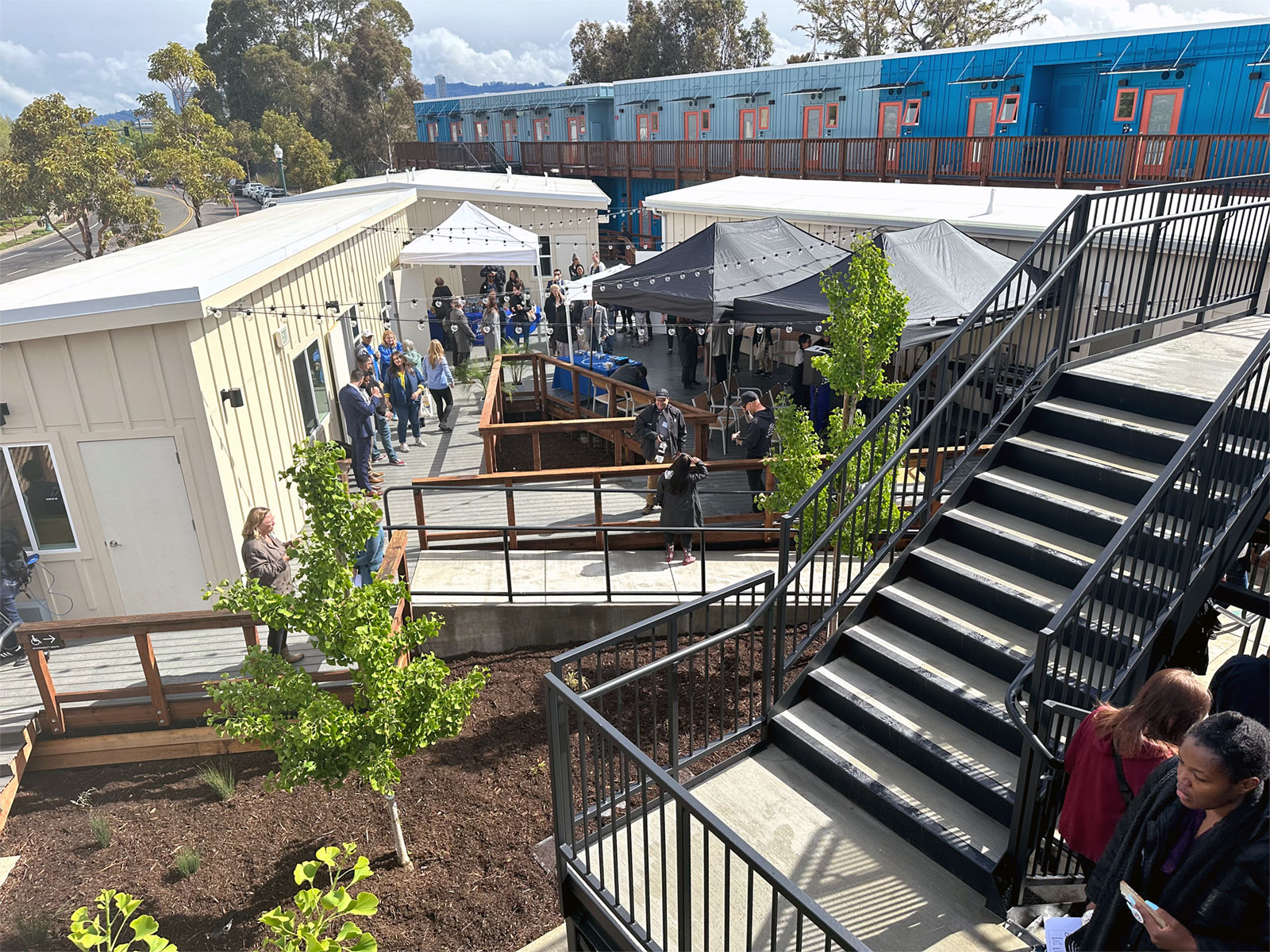
Housing and Human Services Manager C’mone Falls presented three related contract approvals aimed at continuing and strengthening Alameda’s homeless services system. The contracts address mental health services, emergency supportive housing operations, and day center/safe parking program management.
The first would authorize an agreement with Alameda Family Services (AFS) to continue providing on-site therapeutic services at Dignity Village, the Emergency Supportive Housing (ESH) program, and the Day Center/Safe Parking Program. AFS currently provides crisis intervention, individual therapy, and connections to outside mental health, substance abuse, and housing resources. Falls emphasized that mental health and substance use challenges are increasingly complex among unhoused residents, making integrated clinical support critical within shelter settings.
The second and third contracts reflected the outcome of a competitive Request for Proposals (RFP) process for shelter operations. The City used a two-step review process—written proposals reviewed by partner jurisdictions, followed by oral panel interviews with Housing and Human Services staff and regional partners—to select the most qualified providers.
For Emergency Supportive Housing, staff recommended Ruby’s Place, doing business as Restorative Pathways, an organization with more than 55 years of experience serving families, single adults, and transitional-age youth and operating contracts with Alameda County and the City of Hayward.
For the Day Center, Safe Parking, and overnight emergency shelter, staff recommended Urban Alchemy, which has experience operating low-barrier programs, including safe parking, tiny home sites, and emergency shelters, in Alameda County and other jurisdictions.
Falls noted continued high demand for services, with the winter warming shelter currently over capacity. She reported that Alameda’s approach includes an integrated homeless services response system, with bi-monthly coordinated outreach meetings where providers review client cases by name to improve housing outcomes.
Public comment
Ian Clark-Johnson of Urban Alchemy expressed strong support for their proposed contract, describing the organization’s model as rooted in “love and respect” and built around staff with lived experience, including formerly incarcerated individuals and people who have experienced homelessness. He emphasized their 24-hour wraparound services, including a day center with showers and service access, safe parking to provide stability for vehicle dwellers, and overnight beds during cold weather.
A second speaker, who had received services at Dignity Village, raised concerns about the structure, accountability, and transparency of homelessness services, questioning the vetting process for providers and requesting greater public access to data, accreditation standards, and oversight mechanisms. Similarly, another commenter called for broader audits and oversight under the Sunshine Act and questioned funding, grant processes, and interagency coordination related to homelessness programs.
Finally, Karin Zeltzer of Alameda Family Services spoke in support of continuing mental health services, noting the benefits of having on-site therapists available for crisis intervention, de-escalation, individual therapy, staff consultation, and therapeutic group activities. She emphasized that housing and mental health services must operate in partnership to achieve long-term stabilization.
Council discussion and vote
Council discussion focused on contract oversight, renewal authority, and accountability. Falls clarified that contract extensions are contingent on program monitoring and outcome performance. The City Attorney further clarified that Council had delegated extension authority to the City Manager but could direct staff to provide updates to Council before renewals. Council agreed to amend the agreements to require that any extension be “approved by the City Council in an open and public meeting,” ensuring annual public review.
Councilmember Jensen asked about program oversight. Falls clarified that not all Emergency Supportive Housing sites have 24-hour on-site staff. For instance, family homes do not have overnight staffing. Oversight includes weekly provider meetings, coordinated outreach meetings twice monthly, and random site visits.
Jensen asked for clarification about a scope-of-work provision in the Restorative Pathways contract stating that the provider would “collect and save 30% of clients’ income and render the funds upon discharge.”
Falls explained that the 30% amount is based on a client’s ability to contribute and is not a strict requirement. She clarified that this is a flexible practice intended to support clients’ financial stability and savings needed for a successful transition into stable housing.
Councilmember Jensen questioned the vetting of Urban Alchemy, expressing concern about lawsuits, including a class-action lawsuit alleging labor violations. Mayor Ashcraft also brought up media reports of alleged budget overspending in San Francisco. City staff and Urban Alchemy’s CFO, Melek Totah, responded that overspending reports were incorrect, that Urban Alchemy had worked with the San Francisco Chronicle to correct reporting that resulted from being asked to add guests at a shelter for which they did not initially receive commensurate funding. Eventually, they did receive the funding and Totah affirmed that they did not exceed their budget. In addition, one lawsuit was dismissed and another settled, with internal controls relating to payroll and timekeeping greatly strengthened.
Mayor Ashcraft expressed satisfaction with Urban Alchemy’s explanation, noting that “there’s no one out there doing work that hasn’t run into difficulties, but we also give people credit for correcting them.” She added that annual public renewal of contracts would provide continued transparency and oversight.
The Alameda Family Services and Restorative Pathways contracts passed unanimously. The Urban Alchemy contract passed 4–1, with Councilmember Jensen voting no.
Contributing writer Karin K. Jensen covers boards and commissions for the Alameda Post. Contact her via karin@alamedapost.com. Her writing is collected at https://linktr.ee/karinkjensen and https://alamedapost.com/Karin-K-Jensen.
The post Council Reviews Public Safety Trends, New Homeless Shelter Contracts appeared first on Alameda Post.
]]>The post February 23 Planning Board Preview appeared first on Alameda Post.
]]>On February 23, the Planning Board will review the 2025 annual updates on the City’s housing, transportation, and climate action plans. The reports show slow progress on the construction of new housing, but also approvals for major projects and continued ordinance updates and permit streamlining. The City advanced its transportation and climate action goals through projects such as the construction of the Pacific Avenue Greenway and Central Avenue roundabouts, electric vehicle and electrification programs, zero-waste and urban forestry initiatives, and sea-level rise planning.
The Board will also hold a public hearing to review Park Station’s use permit, which allows an outdoor seating area for afternoon and early evening live music events. Park Station is a beer garden and tap room at 1200 Park Street.

Annual Reports
The 2025 Annual Reports present the City’s annual update on the General Plan/Housing Element, transportation plans (Vision Zero, Active Transportation, and Transportation Choices), and the Climate Action and Resiliency Plan (CARP), including the Climate Adaptation and Hazard Mitigation Plan.
Broader economic conditions continue to impact the local housing market, resulting in very limited housing development. Since 2023, the City has issued just 663 building permits toward its 5,353-unit Regional Housing Needs Allocation (RHNA) requirement by 2031. In 2025, 65 new dwelling unit permits were issued, including 52 ADUs, with 32 units designated as low- or very-low-income housing.
Still, the City approved planning entitlements, the initial, discretionary approval that grants legal rights to develop land, for 166 affordable units at RESHAP and 284 townhomes at West Midway, both at Alameda Point, as well as 356 units at Mariner Square Loop.
Staff also advanced the Inclusionary Housing Ordinance update, aiming to increase affordable housing for low- and moderate-income residents, Universal Design Ordinance revisions, Accessory Dwelling Unit (ADU) streamlining, and continued work on a Short-Term Rental Ordinance. A new Express Permit track streamlined roughly 60% of routine permits, reducing review times by up to 30 days.
Progress continued toward safety and multimodal mobility goals. Accomplishments included construction of the Pacific Avenue Neighborhood Greenway, new Central Avenue roundabouts, sidewalk repairs at 8,000 locations, and deployment of a mobile parking payment system. In 2026, the Cross Alameda Trail will be completed, paving projects will integrate safety improvements, and the Oakland Alameda Access Project will begin construction.
The City advanced climate mitigation and adaptation efforts, including public electric vehicle (EV) charger deployment, electrification rebates, updated building code amendments requiring heat pumps, urban forestry expansion, adoption of a Zero Waste Plan update, and sea level rise planning.
Staff recommends that Council accept the annual reports.
Reviewing Park Station’s Use Permit
Park Station, at 1200 Park Street, is a popular craft beer destination and restaurant. The Board will hold a public hearing to perform a required six-month review of Park Station’s Use Permit allowing outdoor seating and live outdoor music. The original 2023 approval permitted outdoor music up to three days per month, with a maximum sound level of 85 dBA. Indoor music is not regulated by the Use Permit but must comply with the City’s Noise Ordinance.
Since opening in August 2025, Park Station has hosted indoor jazz and salsa events during the week and outdoor performances three times per month. During the review period, Code Enforcement recorded two instances in which outdoor music exceeded the 85 dBA limit; one of those events also exceeded the permitted hours. Complaints were received from nearby locations, and staff observed that drums were the primary source of excessive noise.
The applicant now requests modifications to allow up to 10 outdoor live music events per month, extend hours to 9 p.m. on Friday and Saturday, add Sunday 2-7 p.m., and increase the allowable noise limit to 90 dBA.
Staff does not recommend increasing the noise limit. Instead, staff recommends:
- Maintaining current patio hours (7 a.m.-11 p.m. Friday and Saturday; 7 a.m.-10 p.m. Sunday-Thursday).
- Allowing outdoor music 4-9 p.m. Friday and 2-9 p.m. Saturday, with no monthly cap, but limiting performances to three hours per day, plus one hour for sound checks.
- Requiring drum dampeners and the installation of a professional sound meter.
- Maintaining the 85 dBA maximum at adjacent residential property lines.
- Providing that three verified violations could trigger Planning Board review.
Staff recommends adopting a resolution approving the modified Use Permit with those conditions.
How to participate
The meeting will be held on Monday, February 23, at 7 p.m. at the City Council Chambers, located on the third floor of City Hall, 2263 Santa Clara Avenue.
Members of the public may participate in person or via Zoom. They may comment on the Non-Agenda, Consent Calendar, and Regular Agenda portions of the Meeting Agenda (link downloads document).
The Non-Agenda portion of the meeting provides an opportunity to address the Board regarding any matter not on the agenda over which the Board has jurisdiction. The Consent Calendar is for routine items approved by a single motion. The Regular Agenda is the central portion of the meeting, during which each issue receives a presentation and time for Board discussion and public comment.
Make requests for reasonable accommodation by completing an online form.
For Zoom registration, click here. Information to assist with Zoom participation is here. The Zoom phone number for telephone participants is 669-900-9128, and the Meeting ID is 815 3979 3319.
The meeting can also be viewed on the City of Alameda’s Facebook page, but comments posted there are not monitored.
Community members may also email Board Members before the meeting.
Contributing writer Karin K. Jensen covers boards and commissions for the Alameda Post. Contact her via karin@alamedapost.com. Her writing is collected at https://linktr.ee/karinkjensen and https://alamedapost.com/Karin-K-Jensen.
The post February 23 Planning Board Preview appeared first on Alameda Post.
]]>The post Alameda Police Officers Work on Day Off, Stop 52 Traffic Offenders appeared first on Alameda Post.
]]>
As the Alameda Post reported on February 9, APD is conducting a proactive effort to target issues such as impaired driving, unsafe roadway behavior, auto theft, and other community concerns. Unfortunately, APD officers cannot focus solely on traffic enforcement during their shifts, particularly during peak commuting hours, because they are frequently dispatched to calls for service and must conduct investigations.
But that fact didn’t deter a group of dedicated officers who came to work on their day off to conduct a directed traffic enforcement operation, APD reported on Facebook.
“They gave their undivided attention to Alameda roadways during peak commuting hours, with a goal of improving safety for everyone traveling through our city,” APD stated. During this operation, the officers stopped 52 individuals who were engaging in unsafe roadway behaviors, the report stated. Not all were ticketed.
“Some drivers received a citation, but not every encounter results in one,” APD explained in a comment. “Traffic enforcement takes many forms, including presence, citations, warnings, and most importantly, education. This is especially important at locations with new roadway designs/signs/signals.”
Dozens of Alamedans commented on the APD report, mostly to thank the officers and to note areas that need special attention.
“I would like to advocate for ticketing drivers driving unsafely near pedestrians,” one person stated. “It’s scary to walk when people don’t obey the traffic laws or are distracted.”
Speeding was one of the biggest complaints from commenters, with many noting that they wish the citywide 25 mph speed limit would be strictly enforced, as it once was. One person asked, “Is there a way to use technicians for traffic enforcement? Like take the license plate number and mail them a ticket/warning?”
The APD report promised that officers will continue to conduct similar proactive operations in the coming weeks as part of the department’s ongoing commitment to community safety.
The post Alameda Police Officers Work on Day Off, Stop 52 Traffic Offenders appeared first on Alameda Post.
]]>The post William (Bill) Arthur Erny, AKA Wild Bill 1956-2026 appeared first on Alameda Post.
]]>
Bill was preceded in death by his parents, Paul and Sally Erny, and an older brother, Ronald. Bill is survived by several siblings—Michael, Jerry, Dorothea, Roy, Thomas, and Sally—and many cousins, nieces and nephews.
Bill attended Encinal High School in Alameda and eventually went to work at the Ballena Bay yacht harbor, where he also loved to fish.
In 2002, Bill relocated to Rathdrum, Idaho with his brother Thomas and sister-in-law Robin. Bill enjoyed rural life in Idaho, where he lived until his passing.
The post William (Bill) Arthur Erny, AKA Wild Bill 1956-2026 appeared first on Alameda Post.
]]>The post USS Hornet Volunteer Finds 1966 High School Ring, Returns to Deceased Owner’s Family appeared first on Alameda Post.
]]>
Hornet volunteer Mal Sloane found the ring in an area of the ship that had been closed since 1970, according to an ABC-7 News report.
“It could have been someone who served on the ship during service. The only thing we had to go by was that it said Briarcliff High School on it, and it said J-S-R on the inside, so that was something,” Anthony Wilson, Director of Exhibitions, Collections & Aircraft for the Hornet, told ABC.
The Hornet posted a photo of the ring on Instagram in early January, hoping someone would recognize it. The post noted that Briarcliff High School in Atlanta, Georgia, had shut down. “Does anyone have the graduation list or yearbook for the Class of 1966 at Briarcliff?” the post asked. “We would love to reunite the ring with the owner.”
Shortly thereafter, the Hornet again posted about the found ring on Facebook, along with a yearbook photo of Reeves sent by a follower. ABC-7 News saw the posts and reported on the situation.
Alameda resident Greg Helms saw that news report. Well, he heard it from another room, and then replayed it to get the details.
“I hear them start talking about something on the USS Hornet. I live in Alameda, I know the Hornet and so I kind of listened,” Helms later told ABC. “They said they found a high school ring from Briarcliff High School. And I stepped out of the bathroom and went back to the TV, got the remote control, backed it up and played it again.”
Briarcliff High School is Helms’ alma mater, so he was intrigued.
He went to an alumni group on Facebook to see if anybody had any clues. “I think three people that were actually from the class of 1966 knew Jon Scott Reeves, Helms told ABC. One of those classmates had posted part of an obituary saying Reeves had died in 2008.
Helms went on with his search. He later told ABC he has a strong connection to both his high school alma mater and the USS Hornet—his father was decommissioned from the Navy in Alameda back in 1955. “I just felt I could help out with this and that I had some resources to at least start a conversation with some people to see if it went anywhere,” he said.
He turned to Google and ultimately tracked down Jon Scott Reeves and his brother. The mystery was solved. Jon Scott Reeves was an aviation maintenance person who would have worked in the area where the ring was found, according to Wilson. “It really all makes sense now,” Wilson told ABC.
And here’s the happy ending. The USS Hornet is now working out the details with Jon Scott Reeve’s brother to return the long-lost ring.
The post USS Hornet Volunteer Finds 1966 High School Ring, Returns to Deceased Owner’s Family appeared first on Alameda Post.
]]>The post AUSD Board Hears Mid-Year LCAP Report, CLCS Middle School Consolidation appeared first on Alameda Post.
]]>
LCAP mid-year update
As part of a state-mandated annual update, Assistant Superintendent of Educational Services Kirsten Zazo provided an overview of the LCAP—the three-year plan that outlines goals and expenditures to support positive student outcomes—and the district’s progress so far this year. Board meetings often feature presentations from administrators and teachers across AUSD who relay creative, inspiring ways they are implementing the plan’s tenets in the classroom, but Zazo’s presentation dove into the underlying data on which such strategies are based.
AUSD tracks progress by student group across eight key indicators, ranging from rates of absenteeism, suspension, and graduation to academic performance and college/career readiness. Using a color-coded, five-by-five matrix, each indicator can highlight the level at which each student group is currently performing, as well as the difference in achievement compared to the previous year.

The district has also established baseline, mid-year data, and desired outcomes for individual metrics under each LCAP goal in a series of detailed tables. Zazo explained that each metric is driven by an implementation statement (e.g., if we invest in this action, then…) paired with an effectiveness statement that includes these metrics to determine whether the action is achieving its intended results or if deeper analysis is needed.

Notably, Zazo highlighted that AUSD’s homeless student group falls under the “Red – Lowest Performance” category in two separate priority areas, Pupil Achievement and Pupil Engagement, due to poor performance in English-Language Arts/Math and chronic absenteeism. This qualifies AUSD for Differentiated Assistance, a mandatory support system provided by the Alameda County Office of Education to help districts address performance inequities.
During Board discussion, President Ryan LaLonde and Vice President Heather Little both emphasized the important role reliable transportation plays for students experiencing homelessness, particularly for those who come from outside Alameda, since a missed bus connection could discourage attendance later in the day. Zazo explained that staff is working with neighboring school districts, since homeless youth often move between districts, to share lessons on how to better serve this student group.
ACLC grade levels reduction
Later in the meeting, Annalisa Moore, Executive Director of Community Learning Center Schools (CLCS), presented to the Board a request for a material revision to ACLC’s charter to change the school’s grade span from sixth-12th to ninth-12th starting with the 2026-2027 school year.
CLCS operates two charter schools, ACLC and Nea Community Learning Center (Nea), at a combined campus located at 1900 Third Street. According to Moore, AUSD recommended that CLCS explore the restructuring of its programs back in 2018 and 2019, leading the organization to consolidate its high school programs at ACLC beginning in 2021. Over the years, however, administrators determined additional reorganization was needed.
“With that successful unification of our two high school programs, our board continued to monitor enrollment, our finances, et cetera,” explained Moore. “They made the challenging decision that operating two small middle schools on one school site is just unsustainable, and would like to move forward with unifying our middle school programs.”
Moore said the restructure is a “fiscally responsible” decision that will enable the organization to more effectively and efficiently serve students by combining resources and services, with minimal impact to the academic programs, leadership structure, and staffing. Nea will serve students in Kindergarten through eighth grade, and ACLC will serve students in ninth through 12th grade.
During public comment, Heather Dutton, chair of Nea/ACLC United—the union that serves the staff for CLCS—spoke in support of the restructuring, noting that staff “stand in support of this unification.”
She added: “While change can be challenging, we do believe that this unification is a great opportunity to improve the education of our learners, while remaining more fiscally stable, which is really important to all of us.”
AUSD staff will review the request and return to the Board with findings and recommendations on March 10.
Ken Der is a contributing writer for the Alameda Post. Contact him via ken@alamedapost.com. His writing is collected at AlamedaPost.com/Ken-Der.
The post AUSD Board Hears Mid-Year LCAP Report, CLCS Middle School Consolidation appeared first on Alameda Post.
]]>The post Dispute Over Radium-226 Cleanup Hinders Progress at Closed Navy Bases appeared first on Alameda Post.
]]>
Since 2019, the Navy has not been able to determine the cleanup goal for radium-226 to allow for unrestricted use of facilities. Repeated attempts by the Navy to get an answer suggest that the new California Department of Public Health (CDPH) standard is based upon the location of the site rather than the risk to human health. CDPH is a sister agency that provides the California Department of Toxic Substances Control (DTSC) with expertise on radiological cleanup issues.
In order to achieve satisfactory cleanup, CDPH has changed how it determines the goal for the allowed safe amount of radium in building structures, saying it should be comparable to the amount naturally found in nearby soil, according to a February 2025 letter to DTSC from now-retired Gregory C. Preston, former Director of the Navy’s Base Realignment and Closure (BRAC) Program. This has led to “inconsistent application of cleanup criteria,” resulting in “property transfer delays and unnecessary costs,” according to Preston.
Radium is a naturally occurring element found in soil that varies in amount from place to place depending on underlying geology and historic erosion of rocks. The soil at Alameda Point consists mainly of sand and silt dredged from the Bay to construct the Navy base. Having a cleanup goal pegged to soil at Alameda Point would mean a goal artificially more stringent than the established and agreed upon CERCLA Remedial Goal, according to Preston.
For decades CDPH had agreed to accept the U.S. Environmental Protection Agency (EPA) protocol for determining the health risks of getting cancer from radiation exposure. The human health risk determines the level of cleanup required at federal Superfund sites, such as at Alameda Point. Guidelines for cleanup are spelled out in the federal law known as CERCLA (Comprehensive Environmental Response, Compensation, and Liability Act).

Navy contractors have carried out numerous radium-226 cleanup actions in two buildings at Alameda Point where glow-in-the-dark instrument paint containing radium-226 was handled. Cleanup in Building 400 was deemed completed in November 2018 and made available for unrestricted use. Soon thereafter, however, CDPH decided that the agreed upon cleanup criteria no longer applied to the building across the street, Building 5. The agency has yet to provide the Navy with a numerical goal to reach so that the Navy can “provide assurances to future property owners that the radiological remediation is complete,” explained Preston.
The uncertainty also affects Treasure Island. “Although nearly 70% of Treasure Island’s sites have successfully undergone cleanup and transfer through coordinated efforts, the land conveyance for Site 12 … is now approximately six years overdue and currently stalled,” San Francisco’s Deputy City Administrator Jennifer Johnston stated in a November 2024 letter Department of Toxic Substances Control Director Katherine Butler. “This delay is not due to new environmental discoveries, but rather the lack of specific, actionable guidance from CDPH on achievable remediation standards.”
Navy’s radium paint cleanup at Alameda Point spans more than a decade
As for Building 5 at Alameda Point, the Navy had been following the “actionable guidance” in effect since 2012 when it performed an extensive survey of floors and walls in the radium paint shop areas, which were located in a section known as the mezzanine in the middle of the building. The guidance, or goal, was clearly delineated in the Radiological Characterization Survey Report in the form of a numerical limit on scanner readings. “These limits, or release criteria, refer to standards for release of Building 5 from radiological controls, allowing unrestricted use,” states the survey’s report. Above that limit meant the specific locations were marked for subsequent removal of radium-impacted surfaces. Those below the limit required no further action and were scratched off the list.
Navy contractors returned on two occasions to remove contaminated surfaces and perform follow-up scanning. An entire non-structural brick wall was removed and numerous wall and floor surfaces were stripped of coatings. Only a handful of areas, such as a second-floor concrete floor with holes where pipes once passed through, were marked for a subsequent and final work plan.


Current status
The Navy acknowledges that some radiological work remains in Building 5 in its August 2024 Final Radiological Investigation Summary to DTSC on cleanup work and investigations.
When the Alameda Post asked why the remaining cleanup work in Building 5 is not happening, Russ Edmondson, DTSC Media Information Officer said, “The cleanup plan … must show a path to reduce levels of contamination below levels that are protective of human health and allow for safe occupation of the building.”
When the Alameda Post asked the Navy the same question, Dave Darrow, Environmental Coordinator for Alameda Point said, “The Navy is awaiting concurrence from the State that the satisfaction of [previously agreed to] CERCLA requirements supports that all necessary remedial action has been taken.”
Hence, the impasse between the Navy and state regulators. Without a mutually agreed-upon cleanup standard to apply, the Navy cannot complete its work and transfer the property to the City for economic development.
The State of California is the only state in which the regulatory agency lacks a specific numerical cleanup requirement for radiological contamination, according to Preston.
“The lack of a specific numerical cleanup requirement leads to lack of clarity and agreement on a path forward between the DON [Department of Navy] and the State [DTSC] to achieve cleanup of radiological constituents,” Preston’s February 2025 letter states. “It appears the State [DTSC] is unwilling to apply an appropriate framework to regulate federal CERCLA radiological cleanup actions that are protective of human health and the environment,” continued Preston. “Rather the State [DTSC] continues to attempt to apply non-applicable State regulations that impose an undue burden on future transferees and effectively prevent the DON from disposing surplus BRAC property as directed by Congress and federal law and regulation.”
Contributing writer Richard Bangert posts stories and photos about environmental issues on his blog Alameda Point Environmental Report. His writing is collected at AlamedaPost.com/Richard-Bangert.
The post Dispute Over Radium-226 Cleanup Hinders Progress at Closed Navy Bases appeared first on Alameda Post.
]]>The post AUSD and AEA Sign Tentative Agreements, Avert Strike appeared first on Alameda Post.
]]>On Friday afternoon, the Alameda Unified School District (AUSD) released a statement declaring it had reached tentative agreements with the Alameda Education Association (AEA).

Following a third mediation session on February 11, the bargaining teams agreed on all contract articles that had been opened, including salary and benefits.
The agreement applies to all members of the AEA, the union representing teachers, nurses, speech and language pathologists, school psychologists, and counselors and will avert the AEA’s threat to strike if an agreement was not reached.
The AUSD and the AEA have been negotiating since January of last year. The union declared it had reached an impasse in November, which led to three mediation sessions with a neutral mediator appointed by the state’s Public Employee Relations Board (PERB).
In the third and final mediation session earlier this week, both teams tentatively agreed to a 10% increase plus a 2% bonus over the next three years, with yearly increases as follows:
- In 2025-26
- A 6% increase comprised of:
- A 4% ongoing raise of which,
- 3% is retroactive to July 1, 2025, and
- 1% is retroactive to January 1, 2026.
- A 2% one-time bonus (which will distributed as $2,160 to each member).
- A 4% ongoing raise of which,
- A 6% increase comprised of:
- In 2026-27
- A 3% ongoing raise.
- In 2027-28
- A guaranteed 3% ongoing raise, and
- If the COLA is between 3% and 3.99%, AEA members will receive that amount in a raise.
- If the COLA is more than 4%, the two teams will reopen salary negotiations.
- A guaranteed 3% ongoing raise, and
Also under the terms of the agreement, the AUSD’s contribution to AEA members’ health benefits would increase to the following amounts:
- Effective January 1, 2026
- $1,168 per month for individual (employee-only) coverage.
- Effective July 1, 2026
- $1,700 per month for an employee plus one dependent or an “employee family” (two dependents).
- Effective January 1, 2027
- $1,500 per month for employee-only plans.
- Effective January 2, 2028
-
- $1,800 per month for an employee plus one dependent or an “employee family” (two dependents).
-
AUSD asserts its contribution for individual plans will have grown by nearly 40% and its contribution to employee family plans will have increased 76% by January 2028. The AUSD also declared that the salary increases for 2025-26 and 2026-27 are significantly higher than the 2.3% cost of living adjustments (COLA) that the state is providing school districts this year and the 2.4% the state is estimating for next year according to the California Department of Education’s LCFF COLA web page.
“To provide these significant increases in salary and benefits, we have chosen to use select one-time funds in a way that does carry some long-term financial risk,” AUSD Superintendent Pasquale Scuderi stated. “In part, we’ll be spending down a portion of the cushion we maintain to protect the district in case of a sudden or long-term economic downturn. We’re also pre-committing any additional one-time money coming to the district in the next few years to support this agreement. But by structuring this as a three-year deal, we feel this can be doable and that we are being both fair to our employees and fiscally responsible.”
In total, the two teams agreed on 14 articles related to recognition, leaves, professional dues, work hours, evaluation, unit member safety, secondary department chairs, association rights, class size, transfer, salary, health & welfare, adult school, special education, and stipends. The next step will be for AEA members to vote first and then AUSD’s Board of Education to vote on whether to ratify the tentative agreement. The financial terms must also be approved by the Alameda County Office of Education.
When the Alameda Post reached out to the AEA, representatives stated, “This Tentative Agreement is a big win for our schools. We are thankful to our bargaining team, our membership, and our community for showing up and leading us to win a fair contract. This agreement with Alameda Unified School District reflects over one year of conversation, negotiation, and hard work. Over the next 18 months, our members will receive a 10% raise that reflects how valued educators are in Alameda, and significantly increased contributions to health care costs, enabling more of us to stay in Alameda and focus our efforts on what matters most – our students and classrooms. Our students with the most needs will also get support from this contract, in the form of class size caps in ELD, more balanced workloads for Education Specialists who support students with disabilities, and caps on class overages.
“Without everyone’s voices, we wouldn’t have achieved this win for our students, schools, and community – thank you to those who spoke, and to those who listened to our stories.”
“The bargaining process requires dedication from both parties to reach meaningful agreement,” asserted Tim Erwin, Assistant Superintendent of Human Resources and AUSD’s Bargaining Chair. “Countless hours are spent preparing and negotiating. It isn’t always easy—effective bargaining takes perseverance and a careful eye for detail. I want to express my sincere appreciation to the members of the AEA and District bargaining teams for their hard work and collaboration in achieving these agreements.”
“This has been a challenging process,” Scuderi said. “As a district, we understand the struggles our teachers are having here in the Bay Area. The glaring insufficiencies of our public education finance system at the state and federal levels create pronounced challenges and unnecessary tensions between teachers, administrators, and board members. “Despite that, we know that it’s our responsibility to work locally with our bargaining partners in a respectful and creative way to come to solutions. I am grateful to both teams for their persistence, to our Board for their durability and commitment, and to everyone involved for their willingness to collaborate within a difficult set of circumstances and constraints.”
“The Board approached these negotiations with seriousness and resolve,” added AUSD Board of Education President, Ryan LaLonde. “We were determined to reach a fair agreement without compromising the district’s financial future. The result—a 10% raise over three years, a bonus, and full coverage of the current cost of individual healthcare premiums—is a major commitment. Leadership requires making difficult decisions, and this was one. Now we move forward, together, with the responsibility of making this investment sustainable.”
This is a developing story. Stay with the Alameda Post for further coverage.
Updated at 4:52 p.m. to include AEA statement.
The post AUSD and AEA Sign Tentative Agreements, Avert Strike appeared first on Alameda Post.
]]>