Hunger in America is on the rise. Alameda Food Bank [1] now serves over 1,200 families a week. This is a nationwide trend. Food insecurity is rising, while at the same time, the USDA is cutting food assistance [2]. However, if you can get access to land, or have a sunny balcony with enough room for a couple of planter boxes, you can stretch your food dollar by growing some of your own food.
 [3]
[3]One of the few books on growing food that takes into account most people’s limited time and tight budget is Steve Solomon’s Gardening When It Counts. Solomon explains how to grow food with a few hand tools, inexpensive fertilizer, and a minimum amount of water.
The first chapter includes a list of crops that will grow without a lot of expensive fertilizer, perfect weather, or top grade soil, including vegetables that do well in our climate—peas, fava beans, carrots, beets, kale, and Swiss chard. Although potatoes need more fertilizer and water, Solomon has a special fondness for potatoes and points out that they produce more calories per acre than just about anything.
He explains why you need fertilizer, what types of fertilizer you need and how to get fertilizer inexpensively. Good organic fertilizer is out of reach for gardeners on a budget, but composted steer manure is cheap. Solomon suggests spreading a layer a quarter-inch deep, plus a thin layer of composted chicken manure (if you can afford it) and five pounds per 50 square feet of agricultural lime once a year, then dig it in. Free horse manure is available from Piedmont Stables and other horse boarding facilities if you bring your own truck—use that instead of steer manure.
Although it is easy to overdo fertilizer, especially chemical fertilizer, you should add as much compost as you can get to your garden soil. Most of Alameda is sandy soil, which does not hold moisture. Adding compost improves the moisture-holding ability of your soil, which cuts down on watering and keeps nutrients available to your plants. Free compost is available from Plowshares Nursery [4].
 [5]
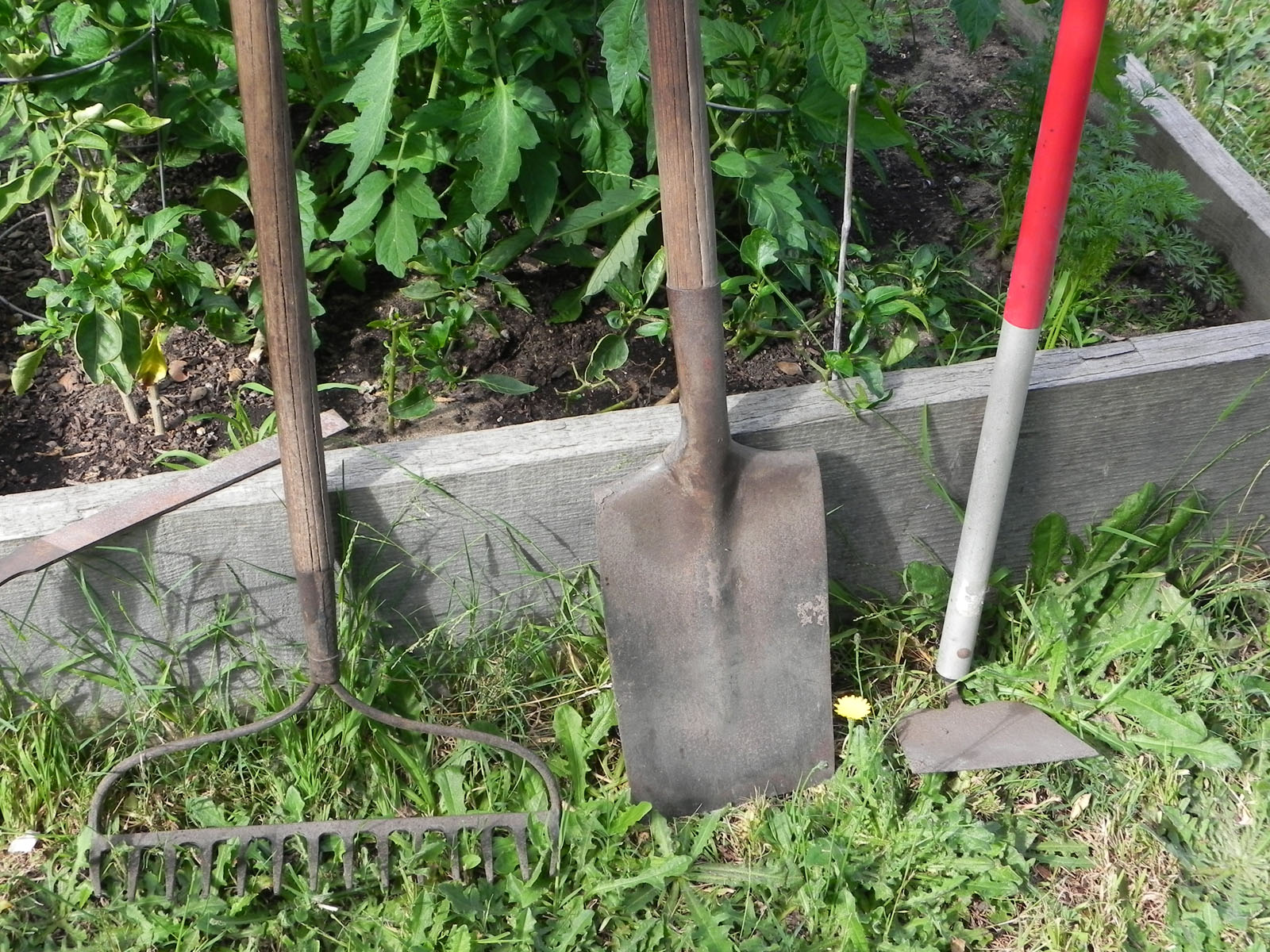
[5]Next, Solomon talks about the hand tools you actually need—a shovel, a hoe, and a rake—as well as the importance of keeping them sharp and how to use a file to sharpen them yourself. He also explains the most effective way to use these tools. Gardening should not be exhausting or take more than an hour or two a day after work.

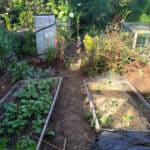


He describes how to build a seedbed. After you dig in compost and fertilizer, shovel two inches of soil on top of each three- to four-foot-wide row, then rake it level. A level seedbed with few soil clumps is especially important if you are growing vegetables from small seeds, such as broccoli, radishes, and lettuce. Solomon suggests using empty food containers or beverage cups and garden soil to start seedlings instead of buying expensive starters. Alameda Backyard Growers [6] has free seed libraries in five different locations in Alameda.
The only problematic section of the book is the one about finding land to grow edibles. In Alameda, getting access to enough land to grow even half of your food is problematic. Although Solomon doesn’t have a good answer to this issue, here are some realistic suggestions.
If you own or rent a house with sunny outdoor space, you can dig up the lawn, amend the soil, and plant—if you rent, be sure to check with the landlord FIRST. If you are friendly with a neighbor and are willing to help them with their yard, you might be able to obtain a garden area in exchange for mowing their lawn and trimming their bushes. Neighbors can also band together and garden the “hell strip” between the sidewalk and the street. While this is technically public land, I see many of these strips planted with ornamental or edible plants. Alameda also has community gardens—contact Alameda Backyard Growers for information—and you may be able to snag a plot.
If you have a sunny balcony or deck, you can put in a couple of planter boxes and grow some food. Planter boxes can be made from old furniture scavenged from the street. Just be sure to have a sturdy and waterproof underliner and raise the box up a couple of inches for air flow.
Every little bit helps!
Margie Siegal is a long term gardener in Alameda and a supporter of Alameda Backyard Growers. Reach her via [email protected] [7]. Her writing is collected at AlamedaPost.com/Margie-Siegal [8].