The post Dispute Over Radium-226 Cleanup Hinders Progress at Closed Navy Bases appeared first on Alameda Post.
]]>
Since 2019, the Navy has not been able to determine the cleanup goal for radium-226 to allow for unrestricted use of facilities. Repeated attempts by the Navy to get an answer suggest that the new California Department of Public Health (CDPH) standard is based upon the location of the site rather than the risk to human health. CDPH is a sister agency that provides the California Department of Toxic Substances Control (DTSC) with expertise on radiological cleanup issues.
In order to achieve satisfactory cleanup, CDPH has changed how it determines the goal for the allowed safe amount of radium in building structures, saying it should be comparable to the amount naturally found in nearby soil, according to a February 2025 letter to DTSC from now-retired Gregory C. Preston, former Director of the Navy’s Base Realignment and Closure (BRAC) Program. This has led to “inconsistent application of cleanup criteria,” resulting in “property transfer delays and unnecessary costs,” according to Preston.
Radium is a naturally occurring element found in soil that varies in amount from place to place depending on underlying geology and historic erosion of rocks. The soil at Alameda Point consists mainly of sand and silt dredged from the Bay to construct the Navy base. Having a cleanup goal pegged to soil at Alameda Point would mean a goal artificially more stringent than the established and agreed upon CERCLA Remedial Goal, according to Preston.
For decades CDPH had agreed to accept the U.S. Environmental Protection Agency (EPA) protocol for determining the health risks of getting cancer from radiation exposure. The human health risk determines the level of cleanup required at federal Superfund sites, such as at Alameda Point. Guidelines for cleanup are spelled out in the federal law known as CERCLA (Comprehensive Environmental Response, Compensation, and Liability Act).

Navy contractors have carried out numerous radium-226 cleanup actions in two buildings at Alameda Point where glow-in-the-dark instrument paint containing radium-226 was handled. Cleanup in Building 400 was deemed completed in November 2018 and made available for unrestricted use. Soon thereafter, however, CDPH decided that the agreed upon cleanup criteria no longer applied to the building across the street, Building 5. The agency has yet to provide the Navy with a numerical goal to reach so that the Navy can “provide assurances to future property owners that the radiological remediation is complete,” explained Preston.
The uncertainty also affects Treasure Island. “Although nearly 70% of Treasure Island’s sites have successfully undergone cleanup and transfer through coordinated efforts, the land conveyance for Site 12 … is now approximately six years overdue and currently stalled,” San Francisco’s Deputy City Administrator Jennifer Johnston stated in a November 2024 letter Department of Toxic Substances Control Director Katherine Butler. “This delay is not due to new environmental discoveries, but rather the lack of specific, actionable guidance from CDPH on achievable remediation standards.”
Navy’s radium paint cleanup at Alameda Point spans more than a decade
As for Building 5 at Alameda Point, the Navy had been following the “actionable guidance” in effect since 2012 when it performed an extensive survey of floors and walls in the radium paint shop areas, which were located in a section known as the mezzanine in the middle of the building. The guidance, or goal, was clearly delineated in the Radiological Characterization Survey Report in the form of a numerical limit on scanner readings. “These limits, or release criteria, refer to standards for release of Building 5 from radiological controls, allowing unrestricted use,” states the survey’s report. Above that limit meant the specific locations were marked for subsequent removal of radium-impacted surfaces. Those below the limit required no further action and were scratched off the list.
Navy contractors returned on two occasions to remove contaminated surfaces and perform follow-up scanning. An entire non-structural brick wall was removed and numerous wall and floor surfaces were stripped of coatings. Only a handful of areas, such as a second-floor concrete floor with holes where pipes once passed through, were marked for a subsequent and final work plan.


Current status
The Navy acknowledges that some radiological work remains in Building 5 in its August 2024 Final Radiological Investigation Summary to DTSC on cleanup work and investigations.
When the Alameda Post asked why the remaining cleanup work in Building 5 is not happening, Russ Edmondson, DTSC Media Information Officer said, “The cleanup plan … must show a path to reduce levels of contamination below levels that are protective of human health and allow for safe occupation of the building.”
When the Alameda Post asked the Navy the same question, Dave Darrow, Environmental Coordinator for Alameda Point said, “The Navy is awaiting concurrence from the State that the satisfaction of [previously agreed to] CERCLA requirements supports that all necessary remedial action has been taken.”
Hence, the impasse between the Navy and state regulators. Without a mutually agreed-upon cleanup standard to apply, the Navy cannot complete its work and transfer the property to the City for economic development.
The State of California is the only state in which the regulatory agency lacks a specific numerical cleanup requirement for radiological contamination, according to Preston.
“The lack of a specific numerical cleanup requirement leads to lack of clarity and agreement on a path forward between the DON [Department of Navy] and the State [DTSC] to achieve cleanup of radiological constituents,” Preston’s February 2025 letter states. “It appears the State [DTSC] is unwilling to apply an appropriate framework to regulate federal CERCLA radiological cleanup actions that are protective of human health and the environment,” continued Preston. “Rather the State [DTSC] continues to attempt to apply non-applicable State regulations that impose an undue burden on future transferees and effectively prevent the DON from disposing surplus BRAC property as directed by Congress and federal law and regulation.”
Contributing writer Richard Bangert posts stories and photos about environmental issues on his blog Alameda Point Environmental Report. His writing is collected at AlamedaPost.com/Richard-Bangert.
The post Dispute Over Radium-226 Cleanup Hinders Progress at Closed Navy Bases appeared first on Alameda Post.
]]>The post Records Show Other Developers Sought Different Surf Pool Deal appeared first on Alameda Post.
]]>
The City of Alameda has been moving toward leasing public park land to one developer, Neptune Beach Surf Club Development Partners, LLC (Neptune), for a commercial surf pool facility, while two other surf pool developers have also expressed interest in buying commercial property from the City for the same use.
If the private facility is built in the park and does not work out, the City would be left with a specialized pool that would cost the City to either operate or remove it.
If, on the other hand, a company buys commercial property from the City, the developer would take on all the risk that goes with owning property. In addition, the City could use the revenue from the sale to replace some of Alameda Point’s outdated infrastructure, which, according to a recent staff report, has ballooned to an estimated cost of $840 million. The sold property would also produce annual property tax.
On May 17, 2025, at a highly publicized pop-up community event, the City and developer (Neptune) rolled out their proposal to construct a surf pool facility in Enterprise Park. It quickly became clear that not everyone in Alameda was happy about the location and process underway (community reaction can be found in the “Exhibit 2 Community Meeting and Survey Results” download).
Soon thereafter, two other surf pool developers contacted City staff, according to emails retrieved from public records.
On May 19, the San Francisco Economic Development Department sent the City an email asking if it could connect a French company, identified as Business France, “which is creating a type of surfing wave pool,” with the City of Alameda to see if there were potential opportunity sites for its project. The company was coming to San Francisco on a trade mission. There is no documented response by City staff inviting the French company to visit Alameda.
On May 27, SurfLoch, a company that designs, engineers, builds, and operates surf pools around the world, contacted the City and expressed interest in being considered for the project. Matt Nowlen, Assistant Recreation and Parks Director, responded: “At this stage, we are in the early phases of exploring potential opportunities for this site. Should there be any updates or if I have questions as we move forward, I will be sure to reach out.”

On July 10, City staff took the leasing proposal concept to a meeting of the Recreation and Park Commission where the interests expressed by SurfLoch and the French company were not mentioned. Feedback at the meeting was mixed on whether the private surf pool should be built in a public park.
“I understand that the local community has voiced reservations regarding the proposed surf park location due to its existing status as a small tranquil public park near a boat ramp and beach,” SurfLoch CEO Thomas Lochtefeld wrote on July 18. “In view of potential community resistance, my group would prefer a location that is already targeted for commercial use and capable of land purchase …. We would also consider the addition of a hotel resort.”
City staff took Neptune’s leasing proposal to City Council three months later. On October 21, the council met in closed session to consider the “price and terms” of the lease. “Staff provided information and council provided direction,” according to the city clerk’s post-meeting announcement. It is unknown whether SurfLoch or Business France were brought up during the meeting.
On November 10, following the publication of a commentary critical of the city council decision, SurfLoch’s CEO again emailed City staff, asking: “In view of community reaction to the proposed surf pool at Enterprise Park… I foresee that project becoming embroiled in a prolonged political debate, and most likely will never happen. Notwithstanding, I recall you mentioned that other properties (e.g., the air hangars) could be soon available. In this light, is there other opportunity? Especially if the property is capable of land purchase.”
Abby Thorne-Lyman, Director of Base Reuse and Economic Development, responded, “We will still hold on exploration of a private surf park on other City-owned land until we advance far enough into the process for council to provide direction to change course.”
The Alameda Post asked Thorne-Lyman if there was a reason why the City did not pause the leasing process in the public park when there was an offer to purchase land in the commercial area for the same use, and whether the City had met with the French surf pool developer. The inquiry was forwarded to the City’s communications director and the Recreation and Parks Department because “this project is being managed by [them],” Thorne-Lyman said. The City did not respond.
On January 28, 2026, SurfLoch told the Alameda Post that it “still has interest to purchase land in Alameda Point for a surf pool and potentially a hotel.”
Contributing writer Irene Dieter’s articles are collected at alamedapost.com/Irene-Dieter, and she posts stories and photos about Alameda to her site, I on Alameda.
The post Records Show Other Developers Sought Different Surf Pool Deal appeared first on Alameda Post.
]]>The post Analysis: City May Shift its Approach to Economic Development at Alameda Point appeared first on Alameda Post.
]]>
On January 20, 2026, City Council will hold a public workshop to discuss plans to boost property sales at Alameda Point that will, in turn, fund new infrastructure in the Adaptive Reuse Area. So far, only five buildings have been sold in this area, generating approximately $31 million, which has already been spent on upgrading some street infrastructure. Meanwhile, the total cost for new infrastructure—streets, utilities, parks, levees, stormwater basins—for all of Alameda Point has jumped from $700 million in 2020 to $840 million in 2025, according to the workshop staff report.
“Unfortunately, while costs since 2020 have escalated 20%, land and building values have not proportionately increased,” states the staff report. “In fact, it appears some values have decreased.”
The City’s current policy states that high-value buildings, such as hangars, will be held onto for their lease revenue until property somewhere else is sold to provide funds for new infrastructure in front of these buildings. For example, the City passed up an offer in 2023 to purchase one of the high-value hangars, Building 11, for $24.9 million, according to the 2023 Keyser Marston report on leasing versus selling presented to City Council. Instead, the staff unsuccessfully attempted to lease this hangar in 2023.

The City is now entertaining the idea of trying to sell the vacant hangar (Building 11) along with the two buildings attached to it as one unit. “Several developers have toured this complex with staff and expressed a strong interest in purchasing and restoring the property,” states the report.
This sale could be seen as a welcome departure from the constraining effect of the current policy that says the complex should wait to be sold until adjacent new infrastructure is completed. The infusion of revenue from such a large sale could fund completion of infrastructure on adjacent streets and so much more.

The Elephant in the Adaptive Reuse Area
Not covered in the staff report is one of the roadblocks to achieving full infrastructure replacement—the designation of state tidelands on some seven blocks through the heart of Alameda Point. Since state-owned tidelands cannot be sold, that property will never contribute a penny toward new infrastructure.
In the early days of base reuse planning, it was determined that much of the future development would be constrained by being state tidelands when it left federal ownership. This prompted the enactment of a state statute that allowed for the swapping of land. Unfortunately, a strip of land dubbed the Tidelands Corridor was left intact as tidelands. The stated rationale in the statute is that it would provide interconnected public access between the Seaplane Lagoon and Oakland Estuary. The Master Infrastructure street grid will now permanently ensure such access without a special zoning overlay.

The tidelands corridor currently hosts no tidelands-compliant uses, which are supposed to be for the enjoyment and benefit of all Californians. The current non-compliant uses, such as manufacturing and municipal buildings, can continue only for the useful life of the buildings, according to the statute. So, the current fire station location, for example, cannot be one of the options for a new fire station as presented at a previous meeting, even if it is the ideal location.
Another major unintended consequence of leaving this corridor designated as tidelands is that the empty block in front of the Seaplane Lagoon has little chance of attracting investment in the tens of millions of dollars to construct something on leased land. Plus, the lack of sales revenue from selling this waterfront property will remove the logical source of funding for the adjacent section of waterfront park and associated levee.
A viable solution for the City to consider is to swap this tideland strip for other non-tideland acreage, as has been done elsewhere in Alameda to facilitate development.
Taking valuable property out of the lock box and putting it on the market as soon as possible is the only way to come close to having Alameda Point development pay for its own infrastructure.
The council workshop offers hope that policy decisions which have not panned out, or are having unintended negative consequences, will change.
Contributing writer Richard Bangert posts stories and photos about environmental issues on his blog Alameda Point Environmental Report. His writing is collected at AlamedaPost.com/Richard-Bangert.
The post Analysis: City May Shift its Approach to Economic Development at Alameda Point appeared first on Alameda Post.
]]>The post Analysis: Two Possibilities for Alameda Point VA Property Following Veterans Project Cancellation appeared first on Alameda Post.
]]>On December 12, Congresswomen Lateefah Simon and Nancy Pelosi, along with Senators Adam Schiff and Alex Padilla, released a letter they sent to the U.S. Department of Veterans Affairs (VA) addressing its decision to cancel plans for a clinic and columbarium cemetery at Alameda Point.

The congressional delegation urged the VA to reconsider its decision to terminate the project. On December 15, public officials and representatives of veterans organizations made a similar plea on the steps of Alameda’s Veterans Memorial Building.
The delegation’s letter to the VA questioned why the agency plans to turn over the land to the federal General Services Administration (GSA), which handles disposing of real estate. The congressional delegation pointed out that the land could go back to the Navy, according to the VA/Navy land transfer agreement. The letter explained that the “VA and the Navy have a binding agreement that requires VA to notify the Navy of its decision to terminate the project within 30 days of its determination, and permits the Navy to receive the property if VA makes such a decision within fifteen years of this 2014 agreement.”
This means either the GSA or the Navy will dispose of the federal land. History and current events will likely play a role in both scenarios.
Scenario 1: The property reverts back to the Navy and the City.
Under this scenario, the Navy would receive the 550 acres that was originally earmarked for a National Wildlife Refuge. And the City would get back the 74 acres it relinquished in a 2013 non-binding agreement to allow the VA facilities to move further away from the least tern nesting site.
With both federal and city properties back at square one, previous plans may be revisited.
The Navy could seek to dispose of the land again. In that case, the Navy would again be required to embark on a process to dispose of the land. A logical source of guidance is the congressionally mandated 1996 Community Reuse Plan for the Navy base, which was approved by the Alameda City Council and accepted as the roadmap for future uses by the Navy.
Subsequently, the base reuse plans were incorporated into the City’s 2002 Alameda Point General Plan Amendment, which contains 113 references to a wildlife refuge on the airfield. “This area … is being preserved as a National Wildlife Refuge for the protection and enhancement of migratory birds, endangered species, and other wildlife habitat,” the amendment states. The wildlife refuge was to include the rock wall, known as Breakwater Island, where pelicans roost, as well as the waterway in between.
However, the transfer of land from the Navy to the U.S. Fish & Wildlife Service (referred to simply as “Service” throughout the document) for a wildlife refuge never came to pass because in the early 2000s the Service would not accept the small section where the underground toxic dump is located, called Site 2, until the Navy completed a remediation plan and retained long-term responsibility for it.

“USDI [U.S. Department of Interior] policy requires that newly acquired lands do not add to the agency’s contaminant liabilities. Therefore, the Service must ensure that the Navy completes an acceptable remediation plan and retains long-term liability for remaining contaminants,” explained Marge Kolar, Chief of the Pacific Southwest Region of U.S. Fish & Wildlife Service in a 2002 document obtained through a Freedom of Information Act request.
Still, at the time, the Navy was not willing to retain long-term liability for the dump site. Eventually the Navy abandoned the effort to transfer the land to the Service and instead began discussions with the VA, which submitted a formal request for the property (exclusive of the waterway and breakwater) in 2006, according to VA’s environmental impact report.
Even though transfer of land from the Navy to the Service was at a standstill in 2007, regional officials with the Service were still determined to protect the wildlife and educational value of the property, highlighted in a PowerPoint Presentation, even if it was managed by a different agency. In July 2007, the Service emailed the East Bay Regional Park District to discuss the possibility of the park district taking the land. It is unknown if, or what, the park district responded.
If the 550 acres is returned to Navy ownership, it is likely that the Navy will again be responsible in perpetuity for the buried industrial dump site that was certified remediated in 2017, and also PFAS chemicals, even though the VA formally assumed liability and maintenance responsibility in 2019. The Navy would also again be responsible for managing the endangered California least terns.
The City would increase its regional park footprint. With the return of 74 acres to the City’s Northwest Territories, the footprint for the proposed regional park would increase. This would offer more contiguous open space for natural wildlife habitat and more visitor-serving design options.
Scenario 2: The VA turns the property over to GSA for disposal.
The Congressional delegation’s letter referenced the VA’s Notification statement to Congress, which states, “VA will work with GSA to excess or dispose of this Alameda site through the most advantageous method.” Under this scenario, the GSA goes through a mandated land disposal process.
The GSA would make the property available for other federal agencies that might want it, including the Fish & Wildlife Service or the Golden Gate National Recreation Area. If no federal agencies want the VA property, it would then be offered to the State of California through a Public Benefit Conveyance, perhaps going to the California Department of Parks and Recreation. If the state does not want it, the GSA could offer it to the East Bay Regional Park District or the City of Alameda. Acceptable public benefit conveyance uses include “Public Parks and Public Recreational Areas,” and “Wildlife conservation.”

Regardless of which scenario plays out, the City’s Climate Adaptation and Resiliency Plan (CARP) has identified opportunities to implement adaptive landscape design for the area.
Contributing writer Richard Bangert posts stories and photos about environmental issues on his blog Alameda Point Environmental Report. His writing is collected at AlamedaPost.com/Richard-Bangert.
The post Analysis: Two Possibilities for Alameda Point VA Property Following Veterans Project Cancellation appeared first on Alameda Post.
]]>The post Americans Still Have Faith in Local News − but Few Are Willing to Pay for It appeared first on Alameda Post.
]]>
In 2023, trust in national newspapers, TV and radio reached historic lows. Just 32% of Americans said they have a “great deal” or “fair amount” of trust in these news sources. In 1976, by comparison, 72% of Americans said they had a “great deal” or “fair amount” of trust in mass media, including newspapers, TV and radio.
And in 2021, the United States ranked last among 46 countries in the trust citizens placed in news outlets.
Yet even as the local news industry is declining in the U.S. – more than 3,200 local and regional newspapers have closed since 2005 – Americans still place much more trust in local news than they do in national news.
In 2024, 74% of Americans said they had “a lot of” or “some” trust in their local news organizations, and 85% believed their local news outlets are at least somewhat important to their community.
I am a former local journalist who studies the effects that media content can have on people. Local news can help people understand what their local government is doing, stay aware of day-to-day events, such as local weather, traffic, sports, schools and crime, and even feel a greater sense of community.
Despite their trust in local news, many Americans are not willing to pay for it. Only 23% of Americans who say they pay for online news report paying for a local or regional newspaper.

The decline of local news
News organizations in the U.S. have long relied on commercial business practices – such as advertising from companies and subscriptions from readers – that have not been financially sustainable since the mid-2000s.
Newspapers’ advertising revenue peaked around 2005 and has since rapidly declined from more than $49 billion a year in 2005 to less than $10 billion in 2020, according to the Pew Research Center. This drop was driven by the rise of the internet.
As a result, the U.S. has lost more than a third of its local and regional newspapers since 2004.
Now, “news deserts” have become more common. This term describes places where there are not enough reliable news sources to help people get information about their local communities.
Of the local newspapers that remain, 80% are weeklies, as opposed to the daily local newspapers that were more common in the past.
With fewer reporters and editors who closely follow the ins and outs of local and state issues, local newspapers are now less able to hold state and local government officials accountable for their actions.
Americans also read local newspapers less than they once did. Since 2015, print and digital circulation numbers have dropped 40% for weekday news editions and 45% for Sunday editions among locally focused daily newspapers and their websites.
Instead, a larger percentage of Americans now turn to their family members, friends and neighbors than their local news outlets for local news.
Local news unites people, makes them more engaged
Despite local news’ problems with declining revenue and readership, Americans still trust local news – and this trust crosses partisan lines.
A 2024 Pew Research Center survey found that both Republicans and Democrats think local journalists are in touch with their local communities. The majority of Democrats and Republicans in this survey agreed that local news media “report news accurately,” “are transparent about their reporting,” “cover the most important stories/issues” and “keep an eye on local political leaders.”
This might be because local newspapers can focus on issues people encounter in their day-to-day lives rather than on national politics. In many cases, readers are also able to more easily connect with local journalists in their communities and share story ideas or feedback.
People learn about their elected officials and become more informed about local issues from their local news, making it an important component of developing a well-informed public.
Local news gives constituents information they need to monitor whether their local leaders are implementing campaign promises. People who regularly follow local news are more likely to participate in politics, including voting in local elections, contacting a local public official and attending a town hall meeting.
The current local news environment
When people no longer have access to local news sources, or they stop following local news coverage, their faith in the integrity of local elections decreases, their ability to assess elected officials is worse, and voter turnout is lower in local elections, compared with those who do follow, read, watch or listen to local news.
Some Americans started relying more heavily on national news when local newspapers shut down, which research shows led to increases in political polarization. My research found that when people trust a partisan-leaning national news source, for example, they’re very likely to agree with the partisan-slanted news stories published by that source.
As nonpartisan local newspapers have vanished or downsized, partisan-leaning online local news content has cropped up over the past several years. These sites publish news stories that are focused on local issues but approach it with a partisan bent. As a result, people looking for local news information may take in unreliable information that is presented as local news and interpret it as trustworthy.
Verifying the origins and intentions of information continues to be paramount for news consumers to make sure they are receiving accurate information – including when it comes to local news.
While the local news industry continues to face financial problems, research shows that local journalists could consider new content ideas to increase readers’ interest, such as engaging with community members by answering their specific questions.
Meanwhile, I believe that news consumers should consider whether they are willing to pay for and continuously support the local news they say that they trust. Without that support, their trusted local news source may disappear.
Jennifer Hoewe is an Associate Professor at Purdue University. This article is republished from The Conversation under a Creative Commons license. Read the original article.
The post Americans Still Have Faith in Local News − but Few Are Willing to Pay for It appeared first on Alameda Post.
]]>The post Tidelands Designation Undermines Development of Alameda Point appeared first on Alameda Post.
]]>
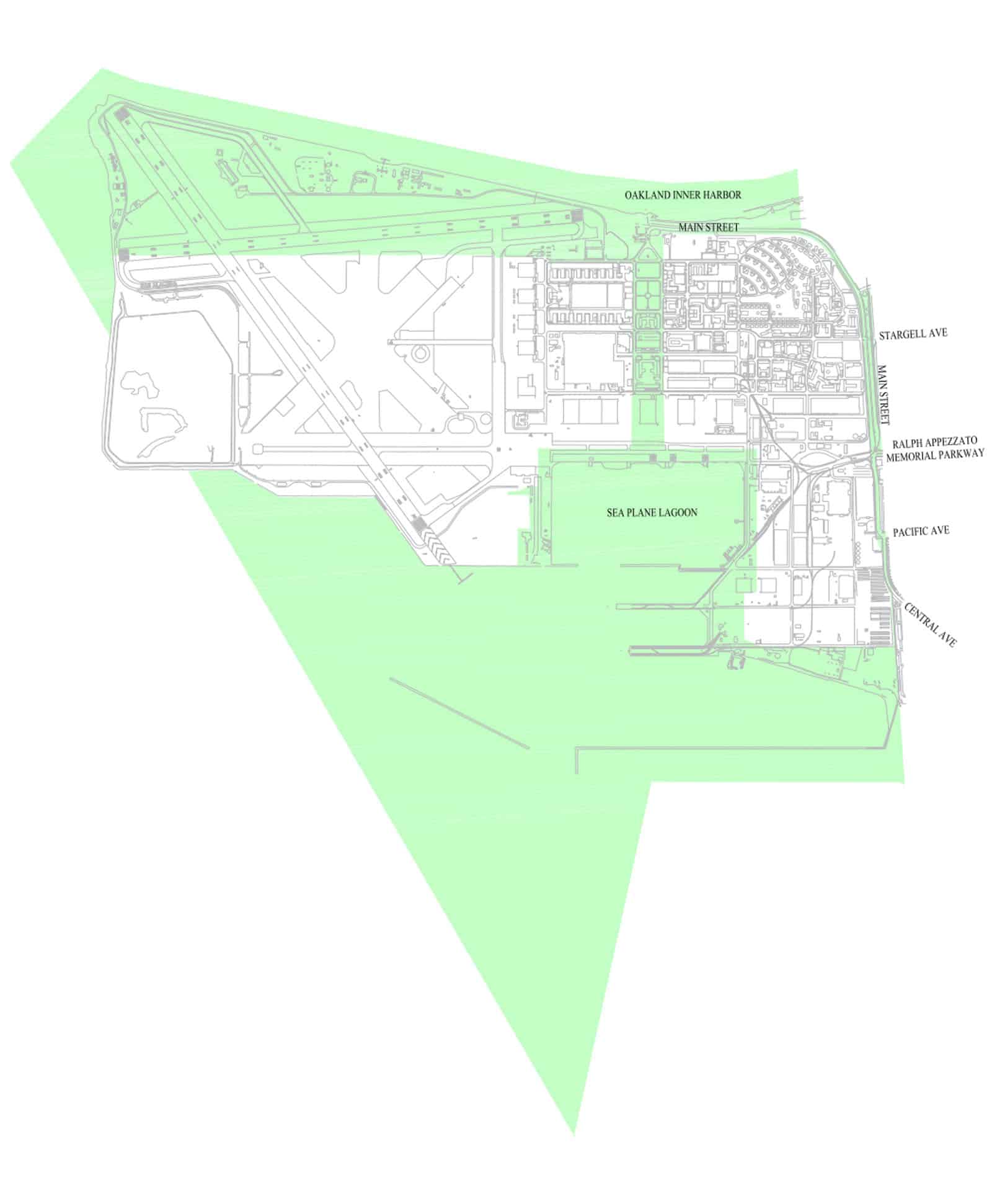
There is a major strip of land, dubbed the Central Corridor, through the center of Alameda Point that is designated state “tidelands,” even though the open water tidelands were filled in by the Navy 80 years ago. According to the California State Lands Commission, tidelands are to be held in trust for the people of the entire state, allowing only maritime, resource protection, or visitor serving uses. “Uses that do not accommodate, promote, foster or enhance the statewide public’s need for essential commercial services or their enjoyment of tidelands are not appropriate uses for public trust lands,” states this Overview of Public Trust Doctrine.
Currently, City Hall West, two blocks of lawn, a fire station, a hangar, some buildings of limited value, a parking lot, and an empty block of tarmac occupy the “tidelands” corridor and serve no tidelands purposes.
Property designated as tidelands prohibit certain uses, such as housing, general manufacturing, local municipal uses, schools, hospitals, and generally anything that can be located somewhere else. The designation also prevents the sale of this state-owned land to further the goals of Alameda’s Community Reuse Plan, such as generating revenue for replacing antiquated infrastructure and promoting investment.
Tidelands Exchange Agreement falls short
Even though the open water tidelands had been filled in by the U.S. Navy, the State of California still considered this area as tidelands and subject to restricted uses when it left federal ownership.
In the mid-1990s, while planning the transition to civilian use, one of the administrative housekeeping tasks facing the City was to get rid of the tidelands designation to make way for new mixed-use development.
The state acknowledged the problem and enacted the Tidelands Exchange Agreement in order to free up most of the land for uses that would otherwise be prohibited on tidelands. “Interior lands already cut off from the waterfront and no longer useful for Trust purposes would potentially be restricted to Trust-related uses that could prevent beneficial development,” the exchange agreement states. “A number of buildings at NAS Alameda that were constructed during the period of federal ownership for non-Trust purposes are incapable of being devoted to public trust purposes during the remaining useful life of the buildings or structures.”
But after the state made some tweaks, the agreement left intact the tidelands designation on the strip of land directly through the center of Alameda Point, which does exactly the opposite of the agreement’s stated purpose of fostering “beneficial development.” It justified this tidelands nexus by claiming it will ensure that the public will have direct interconnected access to the water at both the Seaplane Lagoon and the Oakland Estuary via streets and sidewalks.
However, the tidelands designation was not necessary to provide interconnected public waterfront access through the center of Alameda Point. The streets on both sides of the corridor already provide that access. And the Master Infrastructure Plan extends them all the way to the Seaplane Lagoon when the empty waterfront tarmac block is developed.

Detrimental effects of tidelands plan now evident
The detrimental effect of this handicap recently came into play when the City was debating whether to lease or sell hangars. Instead of being able to sell a valuable hangar—Building 39 at 950 West Tower Ave.—on the “tidelands” corridor and then use the revenue to continue building out new street infrastructure, the City is relegated to being a commercial landlord in perpetuity. A company that makes drone aircraft will begin leasing the hangar this month, which ironically is not even tidelands-related.
Besides no sales revenue for new infrastructure, there are two other problems with permanent tidelands leasing. First, the tidelands designation means that all lease revenue has to be deposited into the City’s Tidelands Fund. The revenue can only be used on tidelands; it cannot be commingled with general base reuse funds for things like mowing grass, providing security, and fixing things here, there, and everywhere. So the tidelands restriction adds yet another layer of handicap on redevelopment by restricting the use of lease revenue. Second, permanent leasing also means that none of the leased property will ever be added to the tax rolls.
The City’s hands are tied when it comes to other property located on this “tidelands” corridor. For instance, between the Building 39 hangar and the Seaplane Lagoon is an empty parcel still waiting for an offer to develop it. But the pool of investors is currently limited to those who are willing to build a tidelands-compliant project on leased land. The same can be said for two other parcels that currently have buildings of limited economic value.
Also, Fire Station #5, at 950 West Ranger Ave., sits in the center of this “tidelands” corridor. Its use as a fire station was grandfathered into the Tidelands Exchange Agreement, just like all of the other non-compliant tidelands uses. But there is a caveat—the non-compliant uses can only continue during the useful life of the buildings.
If someday the City wants to build a modern public safety facility that is up to speed for the vastly expanded responsibilities at full build-out of the base, they would be unable to do so. As soon as the old buildings are demolished, their life has ended, and any subsequent use would have to be tidelands compliant. If the tidelands designation were removed, the City could one day build a multi-story facility with full emergency response capabilities, modern training facilities, and perhaps a police substation.
A remedy
The City has experience with freeing up faux tidelands. In 2023, Assemblymember Mia Bonta was instrumental in introducing AB 1706, legislation that effected the exchange of tidelands for property at Encinal Terminals on Alameda’s northern waterfront to allow that project to move forward. A similar legislative fix could be done for the tidelands corridor at Alameda Point, which is burdened with comparable tidelands baggage that is frustrating an already daunting redevelopment challenge.
It is unknown if there is any political will to implement this remedy.
Contributing writer Richard Bangert posts stories and photos about environmental issues on his blog Alameda Point Environmental Report. His writing is collected at AlamedaPost.com/Richard-Bangert.
The post Tidelands Designation Undermines Development of Alameda Point appeared first on Alameda Post.
]]>The post How Did We Get Here? appeared first on Alameda Post.
]]>Fallout from our state’s long history of breaking promises to people with serious mental illness is everywhere.

It can be found under our overpasses and in our tent encampments, but also inside our jails and prisons, our emergency rooms, our schools, our homes.
It flashes across our public opinion polls, which repeatedly list mental health as a top concern.
Increasingly, it makes its way into our political discourse. Referencing “our broken system,” Gov. Gavin Newsom in recent years has rolled out mental health policies with dizzying speed.
Now he’s promoting Proposition 1, a two-pronged March ballot measure that would fund a $6.4 billion bond for treatment beds and permanent supportive housing, while also requiring counties to spend more of their existing mental health funds on people who are chronically homeless.
The measure makes promises of its own.
“These reforms, and this new investment in behavioral health housing, will help California make good on promises made decades ago,” Newsom has said.
What are the promises that California has made to people with mental illness over the years? And why are so many people still suffering?
Here’s a brief timeline of mental health policies in our state—of promises made and promises broken—during the past 75 years.
1950s & 1960s: An era of institutionalization
In the 1950s, it is relatively easy to force people into state mental hospitals, many of which have horrific conditions. The number of patients peaks in the late-1950s, at approximately 37,000. During that time, the state starts shifting control over mental health services to counties, embarking on the process of deinstitutionalization. This process accelerates in the late 1960s with the passage of the landmark Lanterman-Petris-Short Act, a law designed to protect the civil rights of people with mental illnesses.
1954: The federal Food & Drug Administration approves Chlorpromazine (Thorazine), the first antipsychotic drug, to treat people with serious mental illnesses.
1957: The California Legislature increases funding for community mental health under the Short-Doyle Act, aiming to treat more people in their communities instead of in state hospitals.

1963: President John Fitzgerald Kennedy signs the Community Mental Health Act, promising federal leadership to build and staff a network of community mental health centers. Less than a month later, he is assassinated. Many of the clinics are never built.
1965: Congress creates Medicare and Medicaid, allowing people with mental illnesses to receive treatment in their communities.
1967: Then-Gov. Ronald Reagan signs the Lanterman-Petris-Short law limiting involuntary detention of all but the most gravely disabled people with mental illness and providing them with legal protections.
1970s & 1980s: California tax revolt leads to austerity
As state mental hospitals close in the 1970s, many people with serious mental illnesses are moved into for-profit nursing homes and board and care homes. Their numbers on the streets and inside jails and prisons begin to rise. The 1980s sees significant funding cuts for mental health services at both the state and federal levels.
1978: The Community Residential Treatment Systems Act seeks to create unlocked, noninstitutional alternatives for people with mental illness throughout California.
The same year, voters pass Proposition 13, capping property taxes and reducing the amount of money available to counties for a variety of services, including mental health.

1980: President Jimmy Carter, who a few years earlier created a Presidential Commission on Mental Health at the urging of his wife Rosalynn, signs the Mental Health Systems Act to fund the community mental health centers envisioned by President Kennedy.
1981: President Ronald Reagan signs the Omnibus Budget Reconciliation Act, repealing most of Carter’s Mental Health Systems Act and kicking responsibility for people with serious mental illness back to the states.
1990s: Local control of mental health services
The decade sees funding and responsibility for mental health services shift from the state to counties. California passes a law to hold health plans accountable for providing adequate mental health treatment.
1991: The state Legislature passes “realignment” — moving funding and responsibility for many mental health services from the state to counties.
1995: The state implements Medi-Cal Mental Health Managed Care, making counties responsible for providing many Medicaid mental health services.
1999: California passes a state parity law, requiring private health plans to provide equal coverage for serious mental illness and physical health.
The same year, the Homeless Mentally Ill Act — a pilot program to help homeless people with serious mental illness and an important precursor to the Mental Health Services Act — rolls out in three counties.
2000s: New resources for mental health care
Optimism about the state’s ability to finally address the needs of people with mental illness surges with the passage of the landmark Mental Health Services Act. But the Great Recession in the later part of the decade threatens some of that progress.
2002: The Legislature passes Laura’s Law. Named for a young woman killed by a man who refused psychiatric care, the law allows — but does not require — counties to build court-ordered treatment programs.
2004: California voters approve the Mental Health Services Act. The 1% tax on people with incomes above $1 million provides a new source of revenue to bolster county mental health systems.
2008: A federal parity law, the Paul Wellstone and Pete Domenici Mental Health Parity and Addiction Equity Act, requires health plans that offer coverage for mental health issues and substance use disorders to provide comparable benefits to those offered for medical and surgical treatments.
2010s: Homelessness focuses attention
The numbers of people with serious mental illness experiencing homelessness continue to increase. Jails and prisons are now the country’s largest mental health providers, and a backlog of incarcerated people deemed incompetent to stand trial draws increasing scrutiny. The numbers of children and adolescents landing in hospitals in mental health crises begins to rise.
2010: The Affordable Care Act (Obamacare) requires insurers to provide mental health as an essential benefit.
2011: The Great Recession triggers significant budget cuts, pushing some people out of the public mental health system. A second movement or ‘realignment’ of mental health and substance use disorder services passes even more funding and responsibility from the state to the counties.

2012: California eliminates its Department of Mental Health and distributes its responsibilities among other state departments.
2013: The Mental Health Wellness Act injects about $143 million into increasing the capacity of the state’s mental health crisis response system.
2018: California voters pass a ballot measure called No Place Like Home to build and rehabilitate supportive housing for people with mental illness. The measure authorizes the use of Mental Health Services Act funds to pay for $2 billion in bonds.
That same year, Newsom is elected governor and vows to make mental health a major focus of his administration.
2020s: Newsom’s mental health agenda
In the wake of the COVID-19 pandemic, the sheer number of people with mental illness on the streets, along with the fentanyl epidemic and a growing mental health crisis among children and teenagers, leads to increased public interest in mental health. The Newsom administration makes unprecedented investments and rolls out a steady stream of major policy changes. Critics decry some of these changes as moving the state toward more involuntary treatment.
2020: California passes a “groundbreaking” new state parity law, greatly expanding upon its earlier law and making it a national leader in requiring commercial health plans to provide mental health services.
2021: The Newsom administration allocates $4.6 billion in one-time funds for a Children and Youth Behavioral Health Initiative.
2022: The administration creates Community Assistance, Recovery, and Empowerment (CARE) Courts, new court systems to address the needs of people with serious mental illness that have some echoes of Laura’s Law. This time, county participation is not optional.
That same year, a massive statewide effort called California Advancing and Innovating Medi-Cal (CalAIM) begins rolling out, promising to expand and streamline access to mental health care for people insured by Medi-Cal, the public insurance program for low-income Californians.

2023: Newsom signs a law that amends the definition of “grave disability” that was originally laid out in the landmark 1967 law limiting involuntary confinement in the state. The amendment makes it easier to conserve people with serious mental illness—stripping them of their rights and entrusting their care to public guardians.
2024: Proposition 1 comes before the voters. If it passes, it will bring in billions of new funding for permanent supportive housing and treatment beds, and will place new parameters on how Mental Health Services Act funds are used.
This timeline was reported with the help of dozens of news articles and government and academic reports, as well as interviews and historical information provided by a variety of individuals, including Steve Fields, Adrienne Shilton, Michelle Cabrera, Corey Hashida, Stacie Hiramoto, Randall Hagar, Diane Van Maren, Chad Costello and Alex Barnard’s 2023 book “Conservatorship: Inside California’s System of Coercion and Care for Mental Illness”
CalMatters.org is a nonprofit, nonpartisan media venture explaining California policies and Politics. This article is republished with their permission.
The post How Did We Get Here? appeared first on Alameda Post.
]]>The post Six Candidates Compete for State Senate District 7 appeared first on Alameda Post.
]]>
Three of the candidates for State Senator for District 7 are current or previous residents of Alameda: AC Transit Director Jovanka Beckles, California Labor Federation President Kathryn Lybarger, and former California Assemblymember Sandré R. Swanson—who previously held the seat Mia Bonta currently holds. Rounding out the field of candidates are Berkeley Mayor Jesse Arreguín, Oakland City Councilmember Dan Kalb, and—the lone Republican in the race—property management company owner Jeanne Solnordal.
The Alameda Post sent each of the candidates three questions to answer about their candidacy: What is the priority or focus of the campaign, which unique skills and qualities would the candidate bring to the office, and what are the challenges and opportunities the candidate sees for the city of Alameda now and in the future? Five of the six candidates responded—we sent multiple emails to Ms. Solnordal to no avail. Nor were we able to find a website for her campaign, so unfortunately we cannot provide any additional information about her positions on the issues.

What is the focus of each State Senate campaign?
From the candidates who responded, it is clear most have similar ideas for the focus of their campaigns. Affordable housing topped the list of issues the candidates agree upon—all of the respondents listed creating and maintaining sustainably affordable housing as a focus of their campaign. With housing costs continuing to rise, and affordable inventory not keeping pace, this is an issue that will continue to be top of mind in the district.
Other issues that multiple candidates agreed were driving their campaigns included Universal Public safety, health care, and environmental protections—each were listed by three candidates. Swanson declared he would stop what he termed an unacceptable crime wave, calling it “organized crime,” and suggested adding “unarmed community peacekeepers to help increase law enforcement’s response time to emergency calls for help.” Arreguín declared, “I’ll address public safety comprehensively and push to hire more officers who live in the communities they serve.”
Kalb’s website touts his experience as an environmental activist on his website and he told the Post that he will take “strong action on environmental protection and the climate crisis.” Beckles wrote of the need to increase health equity by moving to “single payer plans, correcting racial and other discrepancies, [and] more access to mental care.”
Equity is a popular issue among the candidates. Arreguín mentioned that Berkeley is a sanctuary city for reproductive health and gender care, and vowed to defend reproductive rights. Beckles is prioritizing increasing income equality, funded by corporate taxes. “We can reinvest some of the money we take back from corporations into social programs that help increase earning power,” Beckles stated.
Lybarger and Kalb also emphasized the need to properly fund public education and libraries. Swanson stated that education would be his top budget priority.
Union leader Lybarger, unsurprisingly, is concerned with fair pay for workers, and wants to close the pay gap along gender and racial lines. “California brags about having the fourth largest economy in the world,” the candidate wrote, “but it never mentions having the highest poverty rate in America. Workers should never bear the economic burden while corporations get richer.”

What sets each District 7 candidate apart?
Arreguín emphasized his almost twenty-year career of public service on Berkeley’s City Council and as Mayor. He said his track record is proven, with a focus on delivering results, and noted his extensive experience writing laws, negotiating amendments, and building support for passage. He called out his collaborative leadership style as being key to achieving legislative victories. “As Mayor of Berkeley, I have come to realize that so many of our region’s challenges cannot be solved by one city, or even one county, but require leadership at the state level,” he said.
Beckles wrote: “As a Black Latina, Queer, immigrant woman, I live at the intersection of many marginalized communities. This lived experience makes my voice very much needed in the Senate.” She pointed to her 23 years providing mental health services to East Bay youths, her experience as a Teamster (Local 856) and as a former union steward, noted that she sued Chevron for unpaid taxes and damages after a 2012 fire at the Richmond refinery, and emphasized that 98% of her campaign contributors are individuals.
Kalb also feels his experience makes him a strong candidate. He touted more than thirty years of policy experience, including ten years crafting state legislation, and several years as the statewide policy director for the Union of Concerned Scientists. He stated that he has “built and worked with broad-based coalitions and understands firsthand what it takes to be a successful legislator at the state level.” He also mentioned that he was the recipient of local media awards in 2014 and 2016, recognizing his effectiveness as an elected official.
As president of the California Labor Federation, Lybarger stated that she is accountable to over two million union members and has spent the last decade meeting with legislators and getting bills through the legislature. She pointed out that she led a strike of over 25,000 blue-collar workers, winning them higher wages, affordable healthcare, and secure jobs. “Leading strikes and passing legislation are different ways to get something done, but both require focusing on the possible and being able to build the unity to achieve it,” she declared.
Former Assemblymember Swanson claims he is “the only former legislator running for this Senate seat.” He detailed his leadership of the fight to retain redevelopment programs and noted that he told colleagues, “The elimination of redevelopment funds would lead to more homelessness and a growing housing crisis of affordability.” He said restoring those funds is key to fixing the housing and unhoused crisis. He also spoke of his experience as Deputy Mayor of Oakland under Jean Quan, and the violence reduction strategy they successfully implemented. Finally he spoke of his commitment to education, calling for California to be in the top 10% in the nation for funding schools and teachers.
What do they see as Alameda’s challenges and opportunities?
Four of the five candidates responded to this section of the Post’s questionnaire with their views of Alameda’s needs and opportunities in the coming years.
Swanson used the section to share his family’s history in Alameda and some of his previous accomplishments for the community. “Today in Alameda you can see some of the positive developments: our environmental reserves, shoreline agreements with the Port of Oakland regarding the Estuary, housing, restaurants and shopping centers that are a result of 25 years of planning.” He said that he “understands why the residents love the city’s hometown environment, schools, shopping, beaches, shoreline, and our first responders’ reliable response to emergencies.” He did not outline any vision for Alameda’s future.
Affordable housing and services for those who are unhoused in Alameda are of great concern to the candidates. All who mentioned housing issues expressed support for constructing more housing.
Beckles said she and her wife were unable to afford to purchase a home in Alameda after many years of renting, and their son is now in a similar position. “We should build more ADU’s and build them where some of the largest unhoused populations currently live,” she suggested. She also encouraged stronger tenant protections and the repeal of the Costa Hawkins Rental Housing Act to allow for stronger rent control laws. She also proposed more residential treatment facilities for the unhoused and persons suffering from mental and physical disabilities.
Kalb stated, “I support dedicated funding to help create more affordable housing at all below-market income levels—including workforce housing.” Arreguín spoke of his leadership in passing a five-year countywide homelessness plan, and commended Alameda’s Mayor and Council for greenlighting the Wellness Center on McKay Avenue. Lybarger encouraged partnerships with nonprofits, philanthropists, the state, and federal government to build affordable housing. She stated, “The city has a real opportunity to make it an even better place to live that includes seniors, district teachers, and others who don’t have affordable housing and need things to change.”
All of the candidates highlighted Alameda’s need to prepare for the inevitable rise of sea levels. “The rain this year underscores the need for the island to maintain its seawalls and other infrastructure critical to flood control,” Lybarger said. Arreguín mentioned his work with ABAG (Association of Bay Area Governments) and the SFBCDC (SF Bay Conservation and Development Commission) on regional policies and funding. “With climate change upon us and rising sea levels, there is an urgent need to develop effective emergency and evacuation plans to safeguard residents,” Beckles warned.
Transportation issues were also on many of the candidates’ minds. Arreguín proposed increasing ferry service, pedestrian and bike connections, and public transport options. Kalb urged, “We need to work together—local, regional, state—to improve transportation options to/from Alameda.” Lybarger took an optimistic stance, saying, “Alameda is well-positioned to build out climate-friendly solutions to address congestion and access as the city densifies that also help maintain its character.”
Lybarger also called out her work with her wife, an Alameda High School teacher, to support Measure E, the AUSD parcel tax, and promised to fight for dedicated school funding. Arreguìn mentioned the inability to manage traffic in and out of Alameda. And Kalb highlighted prioritizing public safety, particularly by enacting gun laws. He stated he would prioritize “increased investments in rehabilitation in our state prisons and reentry services at the county/local level. This is critical to reduce recidivism in our communities and our state.”
Choose your candidate and vote on or before March 5
There are several ways to learn even more about candidates for California State Senate District 7 before the primary election on Tuesday, March 5, 2024. Check out the candidates’ campaign websites, linked in this article, to learn more about their positions and see who has endorsed them. Get election and voting information from our 2024 Alameda Election page. Read KQED’s State Senate, District 7 Voter Guide and check out East Bay Insiders roundup of the District 7 State Senate election. And watch the video below of the forum hosted by the League of Women Voters on February 5, 2024.
Adam Gillitt is the Publisher of the Alameda Post. Reach him at publisher@alamedapost.com. His writing is collected at AlamedaPost.com/Adam-Gillitt.
The post Six Candidates Compete for State Senate District 7 appeared first on Alameda Post.
]]>The post Who’s Raking in the Cash for U.S. Senate? appeared first on Alameda Post.
]]>The Burbank Democrat entered the new year with $35 million on hand — more than all his opponents combined, according to federal campaign finance reports filed Wednesday. Between Oct. 1 and Dec. 31, his campaign raised $5.7 million from individual donors and more than $136,000 from political action committees.

In comparison, Rep. Katie Porter ended the year with $13 million in the bank, raising almost $3 million from individual donors and $18,000 from political action committees during the last three months of 2023.
Rep. Barbara Lee, who has lagged behind her fellow Democrats in polling and fundraising, raised more than $1 million in the same period. She had just shy of $816,000 on hand by Jan. 1.
Republican Steve Garvey — the last of all the major candidates to file on Wednesday — raised just shy of $611,000 between Oct. 10 and Dec. 31, with $600,000 from individuals and $10,000 from political action committees. His campaign spent more than $302,000 during the same period, leaving just over $300,000 in the bank by Jan. 1. His campaign also has more than $48,000 in debt for fundraising, consulting and printing costs.
It was a first look at the fundraising power of the former L.A. Dodgers star, who launched his campaign in October. He is the top Republican in polls and the only GOP candidate to qualify for the two televised debates, but lagged behind all three Democrats in last-quarter fundraising and campaign reserves.
But he may be catching up. Garvey spokesperson Matt Shupe said that, in January alone, the campaign matched what it raised in the last quarter of 2023.
- Shupe: “In just two and a half months, the momentum and support for Steve Garvey’s campaign, along with its rocket-like rise in the polls demonstrates that he is resonating with Californians.”
Some top candidates have spent big on advertising ahead of the March 5 primary. Between October and December, Schiff’s campaign spent at least $862,000 in digital and phone advertising, whereas Porter’s campaign spent more than $536,000.
Lee’s own campaign spent about $14,000 during the same period, focused primarily on print advertising. She Speaks for Me — a pro-Lee super PAC that launched a $1 million ad buy in November for her — reported raising no money at all in the fall, which could further hurt Lee’s chances of reaching more voters.
With less than a week until ballots go out, some Senate hopefuls have stepped up TV ad spending. Schiff’s campaign has bought at least $13 million worth of TV ads — the equivalent of Porter’s cash reserves as of Jan. 1, according to an analysis by AdImpact Politics last month. Pro-Porter groups have spent at least $3 million in TV ads, compared to $1.2 million by pro-Lee groups, the analysis said.
Eric Early, a GOP attorney, raised just under $40,000 during the last three months of 2023 and ended the year with $140,000 in the bank. Democrat Christina Pascucci, a Los Angeles TV journalist, raised $352,000 during the quarter and started this year with $154,000 in reserves.
CalMatters.org is a nonprofit, nonpartisan media venture explaining California policies and Politics. This article is republished with their permission.
The post Who’s Raking in the Cash for U.S. Senate? appeared first on Alameda Post.
]]>The post California Legislature Whiffs on Insurance Crisis, Punting to Newsom and Lara appeared first on Alameda Post.
]]>However, legislators left town without doing anything concrete about something that threatens the psychic and economic wellbeing of millions of homeowners and those who aspire to ownership: the rapidly shrinking availability of residential fire insurance.

One by one, insurers have been reducing or eliminating their exposure in California, having paid out billions of dollars to cover losses from years of major wildfires and, they say, facing a fire threat that is likely to increase with climate change.
With Gov. Gavin Newsom and Insurance Commissioner Ricardo Lara involved in the background, there were weeks of private negotiations among legislators, insurance lobbyists and other stakeholders on how to bolster the state’s insurance market.
However, the negotiations ended a week before the Legislature adjourned without agreement, signaled when state Sen. Bill Dodd, a Democrat whose Napa-centered district is one of the state’s most fire-prone regions, sent a text message: “Deal is dead. Very frustrating.”
The discussions revolved about changing the way insurers calculate risk, from basing it on past experience to including potential future risk. Such a change would probably increase premiums and legislators wanted ironclad assurances that the companies would continue writing policies in fire-prone areas if the change was made.
As the session ended, there were public assurances that the issue would not be forgotten.
“We hear loud and clear from our residents that access to insurance is a problem,” Assembly Speaker Robert Rivas said in a statement.
The Legislature’s departure punted the issue, at least for a few months, to Lara and Newsom, who said, “We can do a lot of things. And I’m very mindful. We can do all of that.”
However, Newsom didn’t list any specifics. Last Thursday, he issued an executive order urging Lara to “take action to stabilize and improve California’s property insurance marketplace.”
Almost immediately, Lara issued new rate-setting regulations, which he had described earlier as “a package of regulatory solutions that will streamline the department’s rate review process, opening it equitably to public input – not just the entrenched interests that have benefited materially from the status quo.”
Newsom, Lara and the regulations drew praise from the American Property Casualty Insurance Association, which said, “Everyone understands that California’s insurance market is in a spiraling crisis that requires immediate policy solutions to protect consumer access to the coverage they need.”
Given industry support, it’s likely that the new regulations will allow it to include, at least to some extent, estimates of future risk from wildfires in their rates which would probably lead to premium increases.
Newsom stopped short of declaring an emergency in Thursday’s executive order, which would have given Lara the authority to issue new rate-setting rules without going through the usual procedural hoops.
Earlier in the day, Consumer Watchdog, the organization that sponsored a 1988 overhaul of insurance regulation, Proposition 103, and has been a critic of Lara from virtually his first day on the job, issued a warning to Newsom and Lara about proceeding on an emergency basis.
Later, the organization said, Lara’s move “would allow insurance companies to use secret algorithms to set rates for homeowners’ coverage for wildfire and to add reinsurance costs to premiums will lead to higher insurance premiums.”
So there it is, a complex mélange of economic, political and societal factors and a huge tradeoff between the availability of coverage, which is mandatory for anyone having a mortgage, and the costs.
CalMatters.org is a nonprofit, nonpartisan media venture explaining California policies and Politics. This article is republished with their permission.
The post California Legislature Whiffs on Insurance Crisis, Punting to Newsom and Lara appeared first on Alameda Post.
]]>