Infrastructure Workshop #4, Inclusionary Housing Ordinance, ARPD fee update, and Mylar balloon ban
The City of Alameda faces an $800 million backlog in deferred maintenance and climate-driven infrastructure needs. On December 2, City Council will hold its final infrastructure needs workshop of a four-part series. The workshop will focus on shoreline flood protection, sea level and groundwater rise, and disaster mitigation. Prior workshops addressed libraries and parks, civic and fire facilities, and streets and traffic safety.
Council also will address items postponed from the November 18 meeting, including updating the Inclusionary Housing Ordinance and providing direction on drafting a Mylar balloon ban, as well as holding a hearing to consider updating Recreation and Parks fees for 2026, and adopting a resolution appointing Chantel Carter as a Member of the Social Service Human Relations Board.
Below is a summary of what will be discussed and how to participate in the meeting.

Infrastructure Workshop #4
Council’s final infrastructure workshop will focus on shoreline flood protection, sea level and groundwater rise, and disaster mitigation. Alameda’s shoreline—much of it built on bay fill—is increasingly susceptible to coastal storm overtopping, rainfall flooding, shoreline erosion, and rising groundwater. Today’s 100-year floodplain corresponds to roughly three feet of sea level rise and puts over $3 billion in land and building value at risk. A 100-year floodplain is an area with a 1% chance of being flooded in any given year.
Public concern about flooding, climate change, and disaster preparedness has grown steadily, and a 2024 poll found strong resident support for infrastructure investments, including earthquake-resilient bridges, shoreline protection, and flood-prevention measures. Alameda has emerged as a regional leader through the Oakland-Alameda Adaptation Committee, securing grants and national recognition, though future funding remains uncertain.
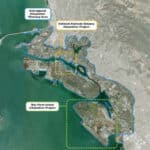
The City is advancing four major adaptation initiatives:
- Bay Farm Island Adaptation Project ($75 million) to protect Veterans Court and address erosion.
- Estuary Adaptation Project ($120 million) involving levees, seawalls, and stormwater detention.
- South Shore Adaptation Project ($75 million) using nature-based solutions to strengthen beaches, tidal marsh, and drainage systems.
- Alameda Point Adaptation Project ($20 million) stabilizing the northern shoreline and improving stormwater outfalls to support redevelopment.
To comply with SB 272, Alameda must complete a comprehensive Shoreline Adaptation Plan by 2034 that integrates community-supported strategies, land-use updates, and funding pathways. Across all projects, only $26.45 million has been secured toward the $290 million needed.

Community engagement—including the 2025 Sea Level Rise Planning Fair—shows residents prioritize protecting critical assets, acting quickly, emphasizing equity, and incorporating nature-based solutions. Upcoming outreach in 2026 will help determine whether to pursue a revenue measure, such as an infrastructure bond, to fund some of the pressing needs identified.
Update the Inclusionary Housing Ordinance
Council is holding a workshop to provide input on potential updates to Alameda’s Inclusionary Housing Ordinance, which requires that 15% of housing units in projects of five or more units be deed-restricted affordable housing. Updates will aim to maintain development feasibility while increasing affordability and Alameda’s competitiveness for housing and infrastructure grants.

Alameda’s existing ordinance requires 4% Very Low-, 4% Low-, and 7% Moderate-Income units for 59 years. However, staff have found that moderate-income rental units are often priced close to market rents, providing limited affordability benefits. The City is reconsidering these ratios to better align with housing needs and development feasibility.
Key staff recommendations are to:
- Adjust the income mix:
- Maintain the overall 15% inclusionary requirement while differentiating between rental and ownership housing.
- For rental projects: Shift the focus to 15% Low-Income units rather than including Moderate-Income units that are close to market rates and don’t serve significant affordability needs.
- For ownership projects: Require 5% Low-Income and 10% Moderate-Income units to balance feasibility and affordability.
- Adjust and expand in-lieu fees (the fees developers can pay instead of including affordable housing units on-site):
- Expand eligibility for all project types.
- Set fees at $25 per square foot for rental and $50 per square foot for ownership projects.
- Dedicate revenues to a local housing fund supporting affordable housing initiatives, including acquisition, rehabilitation, and homeownership assistance.
- Formalize a clustered option:
- Formalize criteria allowing developers to partner with nonprofits for off-site affordable housing (“clustered” projects).
- Ensure equivalent or greater affordability outcomes and require City Manager approval.
- Extend the affordability term:
- Extend the affordability period from 55 to 99 years to preserve long-term benefits at a minimal additional cost.
Update Recreation and Parks fees for 2026
Council will hold a hearing to consider adding and revising Recreation and Parks fees for calendar year 2026 (link downloads fee comparison document). The Recreation and Parks Department proposes a 3-5% fee increase for most programs. These updates aim to address rising costs, ensure fiscal sustainability, and maintain equitable access to services. The tiered fee structure balances cost recovery with community benefit, with lower rates for broad or at-risk populations and higher rates for individual benefit programs. New fees have been added for additional rental opportunities, and comparisons with neighboring cities inform adjustments.
Proposed Mylar balloon ban
City staff will seek Council direction on drafting an ordinance to ban the sale and distribution of Mylar (metallic) balloons in Alameda. The goal is to reduce power outages, electrical hazards, and environmental impacts resulting from conductive balloons contacting power lines. State Assembly Bill (AB) 847 mandates the elimination of metallic balloon sales in California by 2031 and requires their replacement with non-conductive alternatives.
Related Articles



Locally, Alameda Municipal Power (AMP) documented 54 balloon-related callouts over five years, with seven outages affecting up to 200 customers. Each incident costs about $25,000 in labor and equipment. Staff are already integrating Mylar balloon bans into City event permits while expanding public education about electrical and environmental hazards.
Local sellers—grocery, party, and floral stores—reported that Mylar balloons account for about 80% of balloon sales. They oppose voluntary phaseouts, citing demand and the lack of effective alternatives, and say they would comply only if required by ordinance.
Council will consider whether to implement complaint-driven or active enforcement, whether to ban mylar-only balloons or include all helium balloons, whether to phase implementation or enforce immediately, and how to assess the ban’s effectiveness.
How You Can Participate
The meeting will be held on Tuesday, December 2, at 7 p.m. at the City Council Chambers, located on the third floor of City Hall, 2263 Santa Clara Avenue.
Members of the public are welcome to participate in person or via Zoom. They may comment on the Non-Agenda, Consent Calendar, and Regular Agenda portions of the Meeting Agenda (link downloads document).
The Non-Agenda portion of the meeting provides an opportunity for members of the public to address the Council regarding any matter not on the agenda over which the Council has jurisdiction. The Consent Calendar is intended for routine items and is approved by a single motion. The Regular Agenda is the central portion of the meeting, where each issue receives a presentation and time for Council discussion and public comment.
Complete this online form to request reasonable accommodation.
Click here for Zoom registration. The Zoom phone number for telephone participants is 669-900-9128; the Meeting ID is 847 0907 6204.
Information to assist with remote participation is available online in the Public Comment and City Council Meeting Guide. The meeting can also be viewed on the City of Alameda’s Facebook page. Note that comments posted there are not monitored.
For each issue, public speakers will have three minutes to speak if fewer than five are speaking, or two minutes if five or more are speaking.
Community members may also email Council Members on issues of interest before meetings.
Contributing writer Karin K. Jensen covers boards and commissions for the Alameda Post. Contact her via [email protected]. Her writing is collected at https://linktr.ee/karinkjensen and https://alamedapost.com/Karin-K-Jensen.
