Over the last year, the City of Alameda and companies located at Alameda Point have been engaged in four lawsuits brought by Tod Hickman and Shelby Sheehan regarding California Environmental Quality Act (CEQA) laws.
The first lawsuit was filed on July 22, 2024, against the City of Alameda, City Council, and the technology company Natel Energy. A judge heard that case on July 29, 2025, and a decision is pending.

Hickman and Sheehan also have a pending lawsuit against the City of Alameda and MidPen Housing Corporation, Alameda Point Collaborative, Inc., Building Futures with Women and Children, and Operation Dignity, Inc. over the RESHAP project.
Last year, Hickman and Sheehan filed a lawsuit against aerospace company Pyka, the City of Alameda, and City Council, as well as a lawsuit against Alameda Food Bank. Those lawsuits were dismissed on July 9, 2025, and on April 22, 2025, respectively.
The petitioners
In the petition filed by Sheehan and Hickman against the RESHAP project, Sheehan describes herself as an environmental consultant who “regularly lives, works, and recreates at Alameda Point.” In the petition filed against Natel, Sheehan states that she “is a friend of the owners of Building 43 Winery and who frequents their business” and is “an environmental justice advocate with strong interests for CEQA protections and the proper performance of City Officials duties to the public.”
Hickman is the co-owner and operator of Building 43 Winery which, along with Natel, Pyka, RESHAP, and Alameda Food Bank, is located at Alameda Point. In the petition filed against RESHAP he states that he has “a direct beneficial and economic interest in the City’s compliance with CEQA and the proper enforcement of federal mandates protecting historic, scenic, and environmental resources.”
Building 43 Winery recently announced its closing due to alleged building code violations in an Instagram post on June 10, 2025.
In addition to the lawsuits against Natel, the RESHAP project, Pyka, and Alameda Food Bank, Hickman filed a lawsuit on July 1, 2025 against the City of Alameda and various City employees accusing them of “unlawful enforcement actions” regarding the closing of Building 43 Winery. That lawsuit capped off a saga of CEQA complaints, lease and code disputes, and legal action that began in early 2024.
Lease renewal for Building 43 Winery
In early 2024, Building 43 Winery, owned by Hickman and Estela Vilagrana, began lease renewal negotiations with the City of Alameda, the landlord that owns the building at 2440 Monarch Street out of which the business operated.
The lease renewal negotiation process was a contentious one. Building 43 Winery exercised its option to renew the lease at 2440 Monarch Street on May 21, 2024, but Building 43 Winery and the City of Alameda could not come to an agreement over new lease terms.
Eventually, the City of Alameda filed a lawsuit against Building 43 Winery on December 16, 2024 over lease negotiations, requesting that a third party broker determine a new rate for rent. That request was granted on July 17, 2025.

Natel
Around the same time that Building 43 Winery was starting to renegotiate their lease, the City of Alameda Planning Board approved Natel’s use permit to allow outdoor storage, outdoor R&D (research and development) and the design for a 25-foot tall, 5,500-square-foot hydraulic test facility. Natel designs hydropower turbines that use moving water to generate electricity while allowing fish to safely pass through them.
At the April 2024 meeting, the Planning Board concluded that Natel would be mindful of the nearby tern habitat by constructing their expansion project on the north side of the building. Natel would also comply with the City of Alameda’s “No Build Area” meant to preserve views of the Bay and confirmed that testing noise levels would be below City thresholds. The Board voted to approve the permit in a 6-0 vote.
In May 2024, however, Councilmembers Trish Herrera Spencer and Vice Mayor Tony Daysog filed a Call for Review of the Planning Board’s decision contending that, among other issues, the project generates vibration and excessive noise incompatible with the nearby tern colony and that “view impacts for tenants across the street, especially Building 43 Winery, are an unacceptable reduction in the value of those leases.”
At the June 2024 City Council meeting, Herrera Spencer and Daysog’s concerns were reviewed, with staff of the Planning Division of the Planning, Building, and Transportation Department refuting each contention, most notably stating that, “The view in question is not part of any city-adopted view corridor nor is it a character-defining feature of the Naval Air Station Alameda Historic District.”
During the public comments portion of the meeting, Hickman protested the Natel expansion and the operation of industrial companies at Spirits Alley. He also claimed that Natel’s expansion was ruining Building 43 Winery’s views of the bay and that it was violating CEQA laws. Hickman, whose lease on Building 43 predated the arrival of Natel, explained, “There was never any talk of industrial/manufacturing uses on Spirits Alley. Our view…was amazing and the primary value in our long-term lease.”
Hickman called Natel’s expansion, “a great project, great concept, just the wrong location.” The language was similar to how he described the Alameda Food Bank’s new building, which he also sued to block, at the September 2024 City Council meeting: “We fully support the Food Bank. We always have. We’ve been telling the Food Bank and the City for over a year that this was the wrong location.”
The City Council voted 4-1 to approve the Natel expansion, with Herrera Spencer casting the dissenting vote.
Hickman, along with Sheehan, then challenged the City Council ruling by filing a Petition for Writ of Mandate on July 22, 2024, accusing the City of Alameda of CEQA and Historic District violations.
California Environmental Quality Act (CEQA)
CEQA was signed into law in 1970 by then-governor Ronald Reagan and was enacted to provide environmental protection to land that would be developed. The law doesn’t prohibit building or development, but according to the Office of Attorney General’s website: “CEQA requires that state and local agencies disclose and evaluate the significant environmental impacts of proposed projects and adopt all feasible mitigation measures to reduce or eliminate those impacts.”
While proponents of CEQA champion the protections that the law provides, critics such as activists who advocate the building of more housing in urban areas, have argued that the law was being used by those who opposed development for other reasons.
Alameda Point, which consists of large areas of prime undeveloped real estate overlooking the San Francisco Bay with many environmental concerns such as tern nesting sites and toxic waste, is an unsurprising battleground for CEQA lawsuits.
Sheehan told the Alameda Post in an email that she disagreed with the City Council’s approval of Natel’s expansion project and that she thought the approval was “a result of a systemic deliberate failure to comply with CEQA that circumvents fundamental environmental protections, directly threatening our community’s environmental integrity and public trust resources.”
She continued by explaining the lawsuit: “Our CEQA Petition against the City was brought to hold the current regime accountable and to protect the public and natural resources at Alameda Point, as intended by the Alameda Point Environmental Impact Report (EIR).”
When asked to comment on the lawsuit, City of Alameda Communications Director Sarah Henry told the Post, “The City properly determined that the project was categorically and statutorily exempt from the CEQA.”
Henry addressed the Historic District zoning concerns, stating, “The City correctly found that Natel’s proposed exterior testing equipment did not impact any of the historic features of the district, and complied with all applicable laws and regulations, including Fish and Wildlife restrictions.”


It is unclear how the weakening and rollback of CEQA laws signed into effect by Governor Gavin Newsom on June 30, 2025, will affect the lawsuit.
Code violations at Building 43
Soon after Building 43 Winery began renegotiating their lease with the City of Alameda, and Hickman and Sheehan began protesting Natel’s expansion, the “City of Alameda staff received public complaints regarding incidents of public urination possibly involving patrons of the business known as Building 43 Winery.”
The Post reached out to Chief Building Official Oscar Davalos, who explained via email that his staff had received the complaints in early July 2024. They then decided to investigate “inadequate plumbing fixtures and other possible violations” of the building along with their annual landlord’s inspection. According to public records, and confirmed by Davalos, months of non-compliance by Hickman and co-owner Villagrana followed, including refusal to allow inspections and refusal to pull permits to do work to bring the building up to code.
On November 26, 2024, Hickman was documented as refusing entry to Davalos and Senior Code Enforcement Officer Jose Luis Larios, who had a warrant to inspect the building. Hickman had requested the presence of Alameda Police officers. After Hickman allegedly told Davalos and Larios, “Get the hell out of here,” and “I’m going to sue you personally,” they left and warned Hickman that the building would be red-tagged.
On December 2, 2024, Hickman and Villagrana allowed an inspection to be performed on the building and on February 19, 2025, the Code Enforcement Division issued a report with the violations and required actions needed to address the violation.
In a statement emailed to the Post, the City of Alameda stated that Building 43 Winery “is responsible for the code violations that led to the property being red-tagged,” and that the landlords, in this case the City of Alameda, were not the ones responsible for bringing the building up to code.

Lawsuits
About a week after the City of Alameda received the initial complaints about public urination and initiated an investigation, Hickman and Sheehan sued the City of Alameda and Natel on July 22, 2024, for CEQA and Historic District zoning violations. A cascade of lawsuits soon followed.
Hickman and Sheehan then sued:
- The City of Alameda and the Alameda Food Bank on September 11, 2024.
- The City of Alameda, Steven Buckley, Zoning Administrator, Henry Dong, Senior Planning Department Staff, and Pyka on December 30, 2024.
- The City of Alameda and MidPen Housing Corporation, Alameda Point Collaborative, Inc., Building Futures with Women and Children, and Operation Dignity, Inc. over RESHAP on June 5, 2025.
Hickman made good on his word to Davalos and sued him, along with the City of Alameda, City Manager Jennifer Ott, City Attorney Yiben Shen, and Mayor Marilyn Ashcraft on July 1, 2025.
Pyka
Pyka and the City of Alameda were sued by Hickman and Sheehan for allegedly violating CEQA laws, obstructing public access to water and lands, and obstructing views due to their outdoor activities and fencing. The outdoor activities described in the lawsuit include truck deliveries and shipping containers used for storage.
A representative from Pyka let the Post know that they have no comment on the matter, while Henry stated, “Mr. Hickman and Ms. Sheehan have filed a likewise frivolous lawsuit against the City and Pyka. Like the Food Bank case, the Pyka case is without merit and vexatious.”
On July 9, 2025, a judge dismissed Hickman and Sheehan’s lawsuit against the City of Alameda and Pyka. The judge also rejected the City of Alameda’s request to declare Sheehan a “vexatious litigant”—someone who files frivolous lawsuits—because Sheehan had not yet filed more than five lawsuits in seven years. The judge, however, did add in the ruling that “Ms. Sheehan has not yet reached this number, but does seem to be approaching it more quickly than one would expect.”
RESHAP
Similar to the lawsuits against Natel, Pyka, and The Alameda Food Bank, the lawsuit brought by Hickman and Sheehan against the RESHAP project centers around alleged CEQA violations.
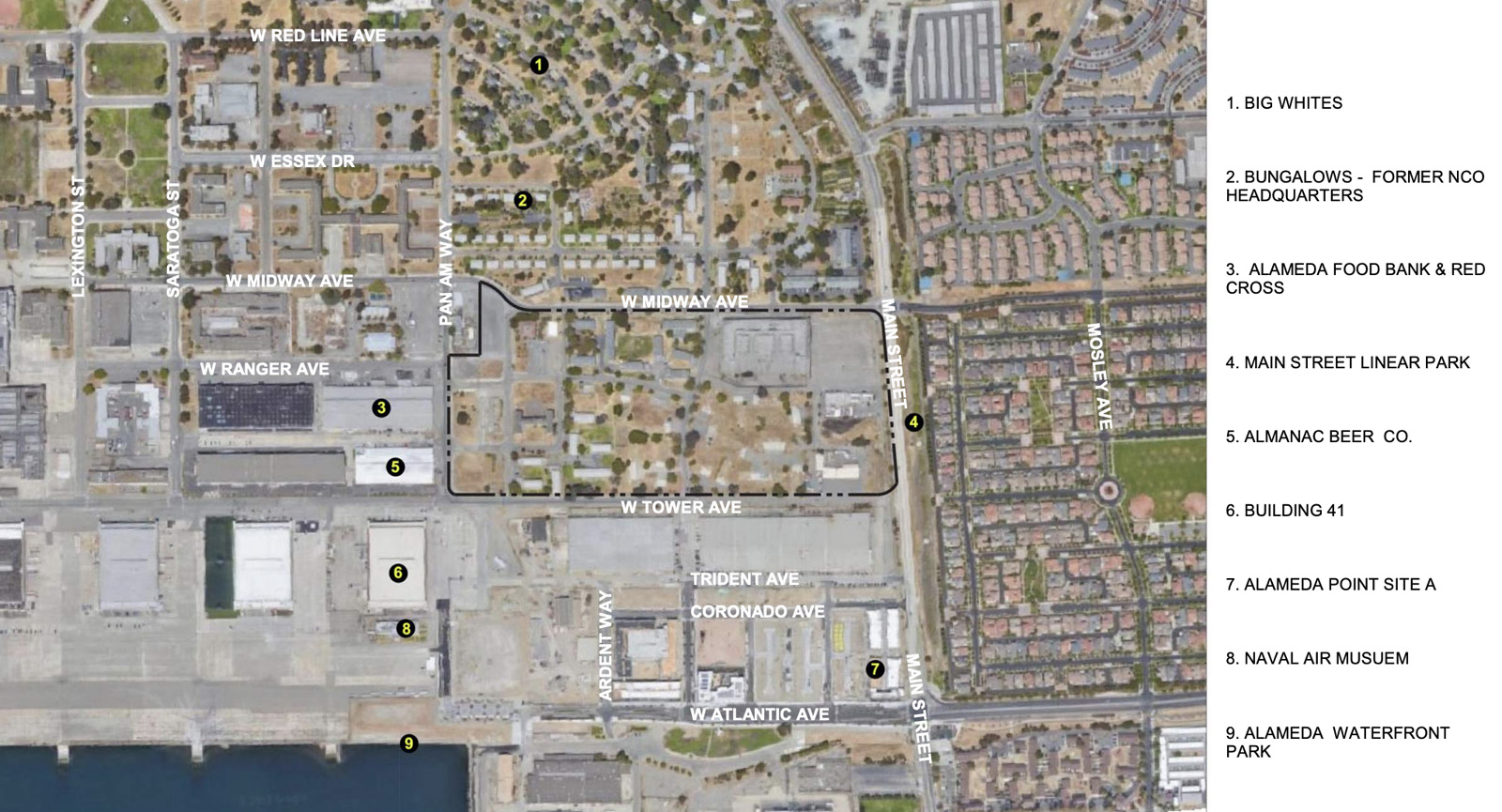
The RESHAP project would develop nearly eight acres of land at Alameda Point and build 332 housing units for low-income and at-risk families and individuals, including veterans and survivors of domestic violence. The plans include an after-school youth center, a family shelter, a domestic violence center, and a workforce development center.
The City Council approved the RESHAP project in a July 18, 2023 City Council meeting. Earlier this year, the Planning Board approved an annual progress report in a February 24, 2025 meeting at which they agreed that the developers were complying with the terms and conditions of their Development Agreement.
According to their petition, Hickman and Sheehan’s objection to the RESHAP project is that the final version of the plans that the City of Alameda approved differ from the version reviewed and analyzed in 2018. “Significant unauthorized alterations to RESHAP, including parcel size reduction, dramatically increased density, relocation, and removal of essential supportive services, fundamentally changed the project from its original, CEQA-reviewed form,” they allege.
The Post repeatedly sent emails reaching out to Hickman and Sheehan about the Pyka and RESHAP project lawsuits, but those emails went unanswered.
Building 43 Winery Appeals
Meanwhile on May 5, 2025, Hickman on behalf of Steeltown Winery LLC DBA Building 43 Winery filed an appeal in regards to the building code violations found by inspectors at Building 43 Winery.
In the appeal, Hickman claimed that the April 24, 2025 Inspection/Violation Notice that Building 43 Winery received was “procedurally defective and legally insufficient.” He also claimed that the inspections and notices “reflect a broader pattern of retaliatory and discriminatory conduct by the City of Alameda” due to the multiple CEQA lawsuits he and Sheehan have filed against the City.
The Housing and Building Code Hearing and Appeals Commission reviewed the appeal on June 4, 2025. On June 10, 2025, the Commission published its decision that all but one of the appeals from Hickman were denied. That same day, Building 43 Winery announced they were closing.
One more lawsuit
Hickman then sued the City of Alameda, City Manager Jennifer Ott, City Attorney Yiben Shen, Mayor Marilyn Ashcraft, and Code Enforcement Oscar Davalos on July 1, 2025.
In the lawsuit, Hickman claims he was silenced and threatened at City Council meetings, citing an alleged incident in January 2025 during which Mayor Ashcraft purportedly threatened him with arrest and had police officers surround him.
Footage of the incident reviewed by Alameda Post staff shows that the incident actually took place at the February 18, 2025 City Council meeting. Mayor Ashcraft did have Hickman briefly removed from the meeting for speaking over his allotted time, but he was allowed to come back to the meeting and speak.
Hickman also claims in the lawsuit that the City of Alameda “sought retaliatory lease terms intended to punish [him] for his ongoing protected speech, public advocacy, and CEQA litigation against the City.” Hickman accused the City of Alameda of doubling the rent at 2440 Monarch Street, but in a statement emailed to the Post, the City of Alameda said they are waiting for the court appointed third party broker to determine the new rate and that the new rent has not been determined. It is unclear whether Building Winery 43 will renew their lease and re-open.
In an email to the Post, regarding the RESHAP and City of Alameda lawsuits, Henry wrote, “We are convinced that they are likewise frivolous, and we look forward to the court eventually finding these plaintiffs to be vexatious litigants in the future.”
Repeated Post emails asking Hickman about the alleged code violations, appeals, the closing of Building 43 Winery, and his lawsuit against the City of Alameda have gone unanswered.
