Vietnam. Even after 50 years, the name conjures up memories of a conflict that divided the nation and cost the lives of more than 58,000 servicemembers.

This year marks the 50th anniversary of the Vietnam War. That conflict and the men and women who were a part of it, formed the core of the annual Veterans Day dinner held November 7 at the Alameda Elks Lodge No. 1015. Each year, the lodge members host serving soldiers, sailors, marines, and coast guard personnel who attend the dinner in uniform.
While past dinners have featured a host of military guests and even an army band, the turnout was low this year due to restrictions imposed by the shutdown of the federal government.
Veterans Day has a special meaning for the Elks. The holiday was originally called Armistice Day to commemorate the end of World War I in 1918. President Woodrow Wilson ordered American Army Gen. John J. Pershing to set the day and hour of the armistice. Pershing, an Elks member, set the end of hostilities on the 11th hour of the 11th day of the 11th month (November). This was to honor the Elks tradition of remembering deceased members daily at the 11th hour. Alameda’s lodge has 82 members who served in the military. They represent all five branches of the service and one member served in the British Army.
The audience was obviously moved by the war memories shared by three Vietnam veterans: Major (retired) James Allen Taylor, Stephen Thompson, and Patrick Leary. Their testimony was not reminiscent of jingoistic bravado or hatred of the enemy, but the common decency soldiers can show others despite the chaos of war and deep respect for those who served with them.
Taylor was a young first lieutenant with the Army’s first Armored Cavalry when his troupe of 200 men was ambushed by Viet Cong fighters on Nov. 9, 1967 near Que Son South Vietnam. During an almost nine-hour firefight, the group’s infantry vehicles came under withering fire and several were set ablaze, creating an inferno for those inside. Despite being wounded, Taylor pulled 13 men from the stricken armor and brought them to an evacuation area. For his bravery, Taylor received the Congressional Medal of Honor, the nation’s highest military decoration.

With the medal draped around his neck, Taylor acknowledged that he wears it for those who served and those who did not return from southeast Asia.
“You have to summon up the courage,” he said. “I was raised to respect, honor and love my fellow men and women. I loved the troops that I served with and was going to make sure that they came home.” Taylor retired from the Army in 1979.
Thompson was a self-described “skinny kid” of 20 years old when he was deployed to Vietnam in 1967. He served as a Navy corpsman or medic attached to a group of combat marines. It didn’t take long for him to learn what combat was like, even for a guy whose job it was to take care of the wounded.
“My first reaction was ‘I’m a nice guy. Who is shooting at me?’” he said.
On February 16, 1968, Thompson and other marines encountered two companies of North Vietnamese Army soldiers north of Dong Ha, South Vietnam. The ensuing battle wounded several marines, and the group tried desperately to get them evacuated by helicopter. The fighting was so intense that the group’s leader, Lt. Terrance Graves, had to stay behind while the men were helicoptered to safety. He and two marines died that day, but Thompson miraculously survived.
To this day he has what the military calls “survivor’s guilt,” or a feeling of wondering why he did not die with his comrades.


“The courage of the marines and the tragic loss of life has stayed with me the past 57 years,” he said. “I was not hit and I was the only one that was not wounded. No reason why other than it was not meant to be.”
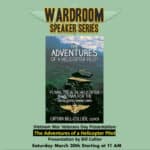
Leary was a 21-year-old helicopter pilot who remembers the acts of kindness he and other army personnel showed Vietnamese civilians.
In their free time, the soldiers played with village kids, brought them food and building supplies and anything they got from relatives at home that could be useful. They were motivated by their commanding officer who understood the effect of war on those who did not fight.
“This war is making orphans,” he said. “You are making orphans. It’s our duty to take care of them. He made sure we understood that.”
Leary will never forget finding a baby, a child of Viet Cong parents, on the battlefield lying under his dead mother. For two days, the army men helped the child survive on a mixture of sugar packets and dry coffee creamer fed from a plastic spoon. The boy grew into an adult and lived a normal life, Leary said.

Today Vietnam is a modern prosperous nation, and the old Danang marine base is a golf course and beach resort. Helping civilians made the difference.
“All of this became possible because a 19-year-old kid made friends and made an impact by winning the hearts and minds of the people. We gave them a demonstration of the values and principals by which we live. We gave them hope.”
Leary has continued his charitable work through an organization that supports 800 orphans in Vietnam.
Men and women who have lived through the horrors of war rarely talk about their experiences, so the testimony of these three men was all the more meaningful.
But the Elks have a saying. “So long as there are veterans, the Benevolent and Protective Order of Elks will not forget them.”
I’d say the members of Alameda Lodge 1015 did that once again. And did it well.
David Boitano is a contributing writer at the Alameda Post. Contact him via [email protected].
