Delays sidewalk repair ordinance, approves CSI Mini-Storage lease
On January 6, City Council unanimously accepted The Road Home Final Report, the City’s five-year strategic plan to prevent and respond to homelessness. The report noted both an increase in total homelessness and positive growth in sheltered capacity. Council also approved a new citywide collections policy while rejecting the use of property liens for sidewalk repairs, instead directing staff to continue a sidewalk repair pilot program emphasizing voluntary compliance, payment plans, and hardship assistance.
In addition, Council authorized a short-term lease with CSI Mini Storage at Alameda Point and appointed Adrienne Sancho as a member of the Public Art Commission and Kevin Scoles as a member of the Mayor’s Economic Development Advisory Panel.
The Road Home: Final Report
Housing and Human Services (HHS) Manager C’Mone Falls presented the Final Report on The Road Home Plan (link downloads document), a five-year strategic plan adopted in 2021 to prevent and respond to homelessness. The plan concluded in 2025 and reflects a significant expansion of the City’s housing and homeless-response infrastructure.
The plan identified key causes of housing instability, including lack of affordable housing, high cost of living, discrimination, and systemic barriers faced by vulnerable populations. Core strategies focused on expanding affordable housing, providing flexible financial assistance, increasing low-barrier shelter, strengthening supportive services, improving data coordination, and ensuring sustainable funding.
Five major focus areas guided implementation: preventing first-time homelessness, reducing chronic homelessness, shortening the duration of homelessness, addressing racial and systemic disparities, and preventing returns to homelessness. The City advanced these priorities by pursuing three overarching goals:
- Goal 1: Secure a housing future for all. Since 2021, the City has built 82 affordable ownership units and 182 affordable rental units, with 816-875 additional units anticipated by 2030. The City updated its Housing Element to guide long-term housing production.
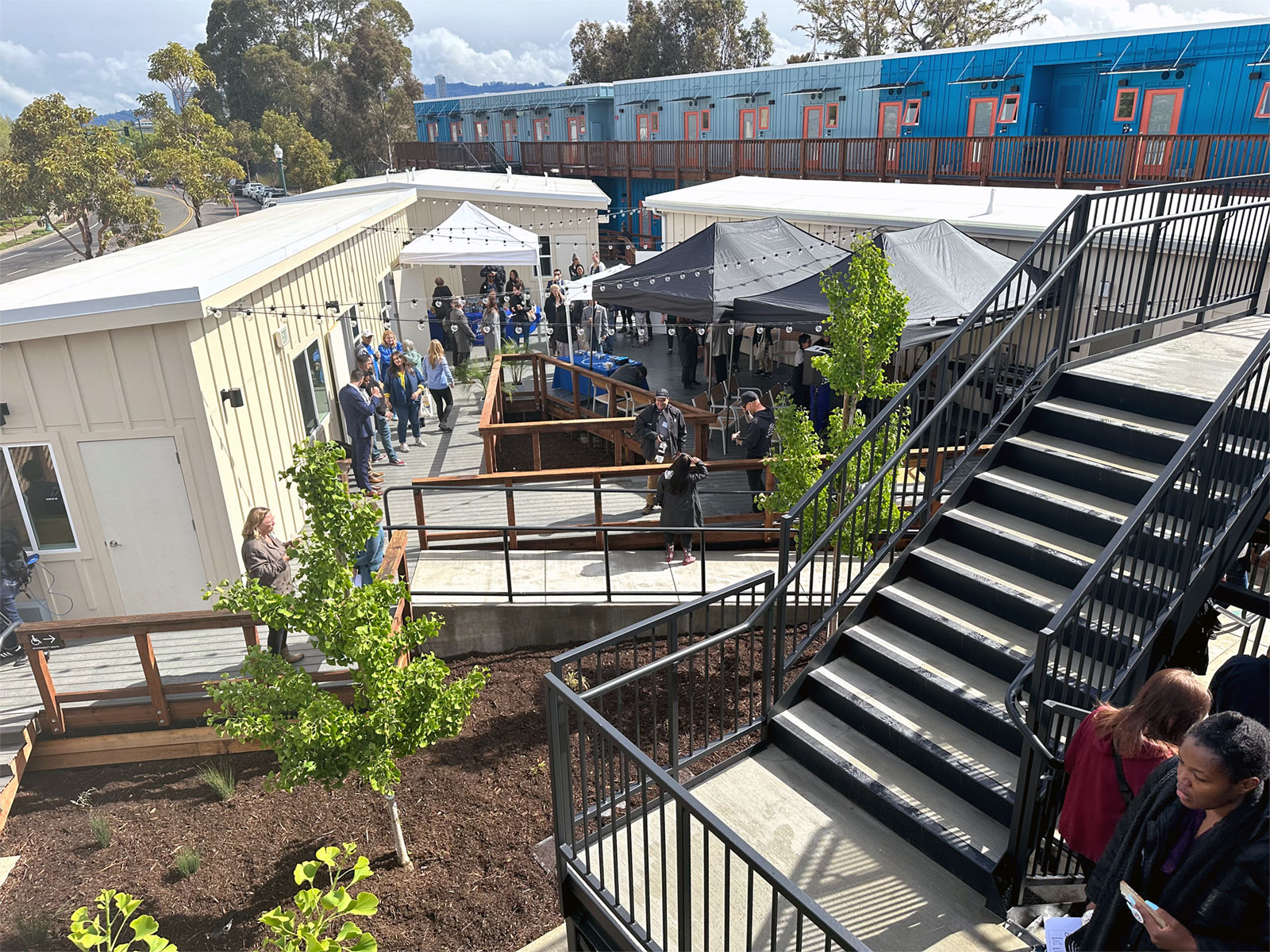
- Goal 2: Increase access to emergency response services. The City opened four shelter programs, including Dignity Village transitional housing, emergency supportive housing, the Village of Love day center, and the Christ Episcopal Church seasonal winter shelter. By 2026, the City will fund 140 shelter beds. The City expanded outreach, case management, hygiene services, and flexible funding for prevention and stabilization.
- Goal 3: Mobilize a citywide response. City agencies, nonprofits, and the Alameda Housing Authority strengthened coordination to support the unhoused community. Together, they served over 1,000 individuals through homeless services, with measurable increases in exits to permanent housing, particularly at Dignity Village.
Public comment
John Brennan, Co-Director of the Alameda Warming Shelter at Christ Episcopal Church, thanked the City for its long-standing funding partnership and described the homelessness response as both economically practical and compassionate. He noted that a healthy local economy depends on workers having stable housing and that many people enter homelessness due to job loss, behavioral health challenges, addiction, or lack of family support, saying, “This housing strategy is fundamentally about making sure we have a thriving city.”
Brennan emphasized that navigating the housing system is extremely difficult for unhoused individuals and that supportive housing—sometimes for life—is essential to reducing shelter demand: “That’s really going to be the crux of how we reduce the numbers of people who need shelter.” He also highlighted the importance of community and social connection, calling isolation “one of the great poverties of being unhoused.”
Alameda resident Mitch Ball acknowledged the City’s recent actions to address the housing crisis. Still, he argued that homelessness fundamentally persists because housing supply is insufficient: “The number one counter to homelessness is homes.” He urged policies that incentivize building more homes rather than taxing housing development.

Council discussion
Mayor Marilyn Ezzy Ashcraft highlighted the importance of flexible funding, noting that sometimes small, targeted assistance—such as help with utilities or move-in costs—prevents people from falling into homelessness. HHS Manager C’Mone Falls explained that case managers can refer people to flexible fund grants of up to $1,500. She added that an HHS Engagement Specialist, who can act as a case manager, and a Social Worker, maintain regular office hours at the Main Library (see below for more information).
The Mayor also commended the addition of case management at the warming shelter, emphasizing that it is essential for helping individuals transition to longer-term or permanent housing. Finally, the Mayor noted that young people often exit foster care without the support needed to avoid homelessness. She urged the City to do more to support this population.
Councilmember Tracy Jensen raised questions about the planned McKay Wellness Center, intended to provide respite services and health care for unhoused seniors. Staff acknowledged funding shortfalls and an uncertain opening timeline.
Turning to housing production goals, Jensen expressed skepticism about the feasibility of delivering more than 800 affordable units by 2030. Falls and the Assistant City Manager clarified that these projections include multiple Housing Authority projects and partnerships, not solely new inclusionary units.
Projects Contributing to the 816–875 Affordable Housing Unit Estimate by 2030
| Project / Program | Lead Entity | Status | Notes |
|---|---|---|---|
| Estuary 2 | Alameda Housing Authority (AHA) | Planned | West End, Near Target |
| North Housing – Blocks B, C, D & Skyline | AHA | Planned / Phased | Near Target. Multiple future phases beyond the existing North Housing |
| The Poplar | AHA | Planned | Fernside neighborhood |
| RESHAP Program | City of Alameda / Partners | Planned (multi-phase) | Alameda Point, ~324 units, Largest single contributor |
| Additional Housing Authority Pipeline Projects | AHA | Planned | Combination of senior, family, and special-needs housing |
| Inclusionary Units (Private Development) | Private Developers | Ongoing / Uncertain | Not the primary source of the estimate |
Councilmembers reviewed Point-in-Time (PIT) data, noting both an increase in total homelessness and positive growth in sheltered capacity. PIT data is a snapshot census of sheltered and unsheltered people experiencing homelessness on a single night, required by the U.S. Department of Housing and Urban Development (HUD) every two years to measure the scope of homelessness and inform planning. Staff emphasized that accurate counts are critical to secure federal funding.




Finally, Council discussed next steps, including the development of a new five-year strategic plan. Councilmembers agreed that expanding housing and services remains essential and unanimously voted to accept The Road Home Final Report.

Where to get help
If you are experiencing homelessness or are at risk, an HHS Engagement Specialist (case manager) holds office hours in the Alameda Main Library’s second-floor conference room on Tuesdays from 10 a.m. to 2:30 p.m. and Saturdays from 10 a.m. to 5 p.m.
There’s also a Social Worker in the same room, Monday-Thursday 12:10 p.m.-6:10 p.m., and Friday 11:10 a.m.-5:10 p.m.
Resources for immediate assistance include:
- Call 211 (24/7 emergency shelter, food, and clothing assistance, etc.).
- SeeClickFix to report encampments or people living outdoors who need support.
- Housing and Human Services main line: 1-510-747-6890.

Collections Policy and Sidewalk Repair Ordinance
Council considered a package of actions related to collections procedures and sidewalk repair enforcement.
Revenue Manager Carlos Figueroa presented a proposed citywide collections policy, noting that Alameda lacks a formal framework for collecting unpaid accounts. As of last fiscal year, the City had approximately $1.4 million in outstanding receivables. The proposed policy emphasizes voluntary compliance, clear communication, payment plans, and hardship accommodations before enforcement action. Staff estimated the policy could recover up to $550,000 annually.
Public Works Director Erin Smith described enhancements to the sidewalk repair program, under which adjacent property owners are responsible for maintaining their sidewalks. A pilot program now allows property owners to opt into City-performed repairs with invoicing, paired with financial assistance for hardship cases. Over 70% of notified owners have voluntarily participated, with very few delinquent accounts to date.
Council approved the new citywide collections policy but directed staff to remove language related to liens and to return at a later date with a revised sidewalk repair ordinance reflecting the removal of special assessments and property liens for unpaid sidewalk repairs.
CSI Mini Storage lease on Alameda Point
Council unanimously approved a new 36-month lease, with optional renewals, with Rose Property Holdings LLC (doing business as CSI Mini Storage) for 50–51 West Hornet Avenue on Alameda Point.
CSI Mini Storage has operated there since 2005. While mini-storage is not a desired long-term use for the Enterprise District, staff emphasized that the short-term lease generates revenue, provides active occupancy and site security, and does not interfere with future redevelopment. The lease includes a 9.25% increase in base rent compared to the prior month-to-month tenancy. The significant increase is due to there having been no increase for the past seven years. The agreement is expected to generate more than $2.6 million for the Alameda Point fund over the initial term.
Mayor Ashcraft raised concerns about why the tenant had remained on a month-to-month lease for seven years without adjustment. Staff attributed the delay to pandemic disruptions, staff turnover, and the prioritization of other leases, and confirmed that efforts are underway to update the remaining month-to-month tenancies. Councilmembers emphasized the importance of a six-month termination clause, which preserves City flexibility for future redevelopment.
Contributing writer Karin K. Jensen covers boards and commissions for the Alameda Post. Contact her via [email protected]. Her writing is collected at https://linktr.ee/karinkjensen and https://alamedapost.com/Karin-K-Jensen.
