At its meeting on Tuesday, February 10, Alameda Unified School District discussed a mid-year report on the Local Control Accountability Plan (LCAP) and heard a request from the Alameda Community Learning Center (ACLC) to change its grade span beginning with the upcoming 2026-2027 school year.
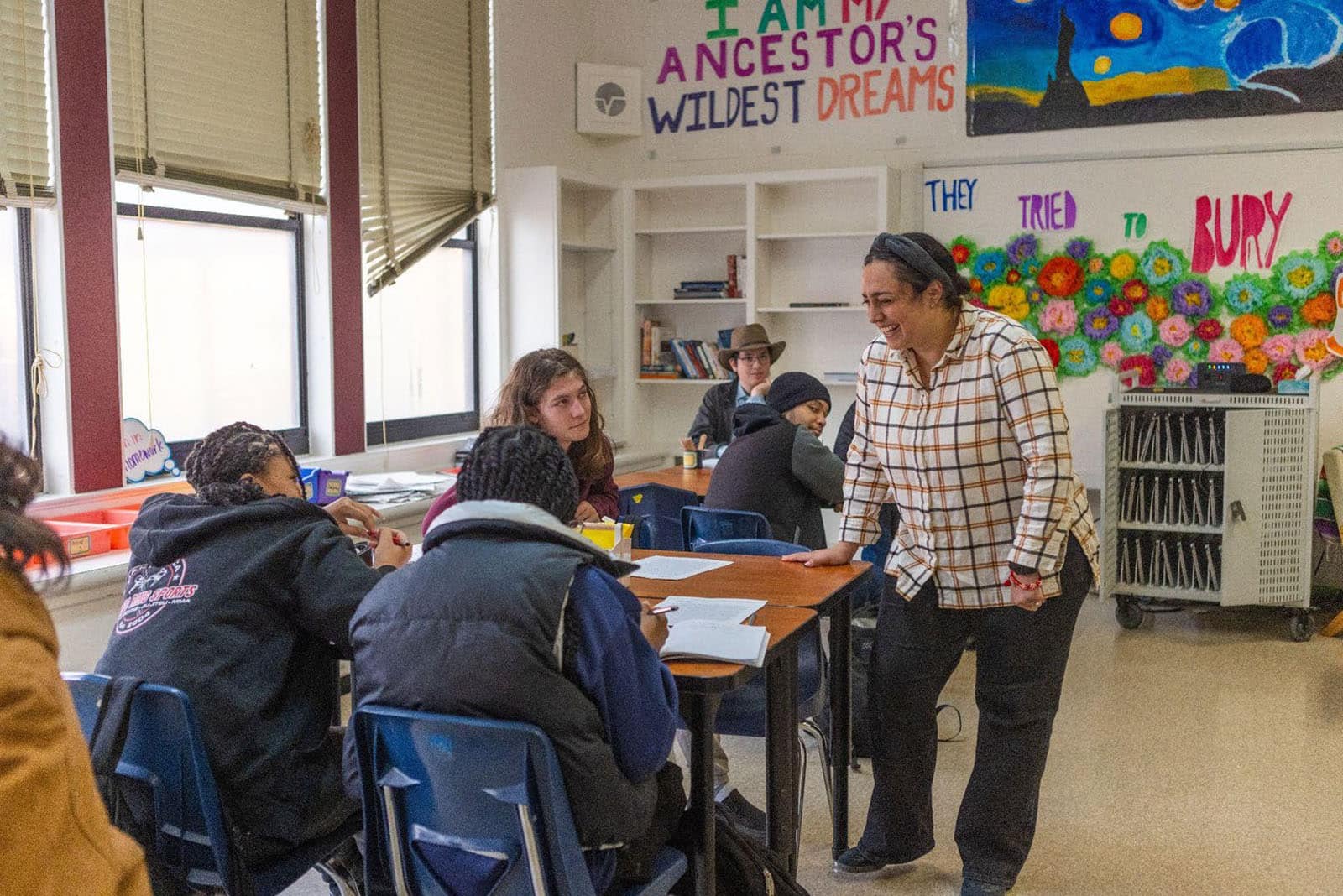
LCAP mid-year update
As part of a state-mandated annual update, Assistant Superintendent of Educational Services Kirsten Zazo provided an overview of the LCAP—the three-year plan that outlines goals and expenditures to support positive student outcomes—and the district’s progress so far this year. Board meetings often feature presentations from administrators and teachers across AUSD who relay creative, inspiring ways they are implementing the plan’s tenets in the classroom, but Zazo’s presentation dove into the underlying data on which such strategies are based.
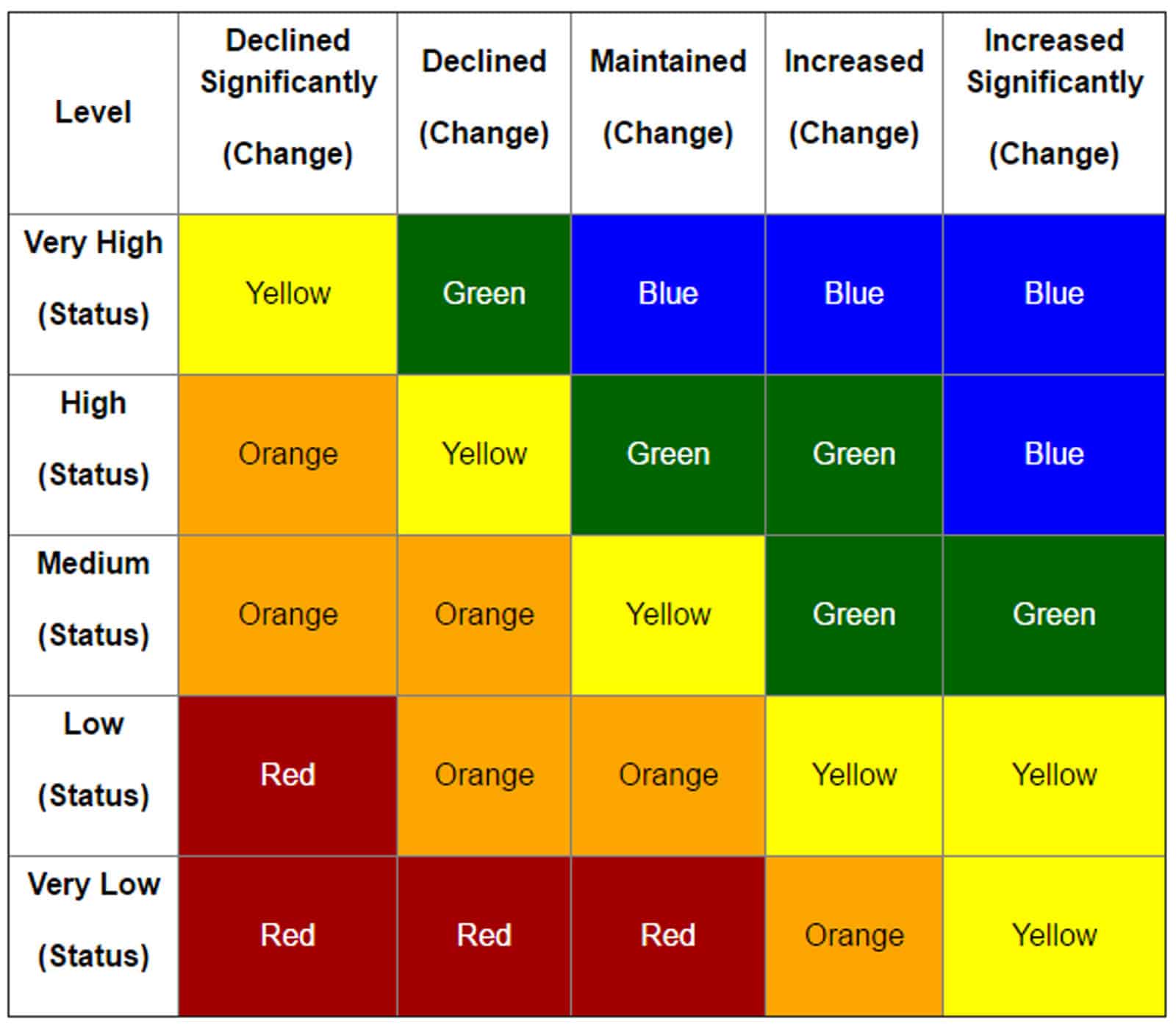
AUSD tracks progress by student group across eight key indicators, ranging from rates of absenteeism, suspension, and graduation to academic performance and college/career readiness. Using a color-coded, five-by-five matrix, each indicator can highlight the level at which each student group is currently performing, as well as the difference in achievement compared to the previous year.
The district has also established baseline, mid-year data, and desired outcomes for individual metrics under each LCAP goal in a series of detailed tables. Zazo explained that each metric is driven by an implementation statement (e.g., if we invest in this action, then…) paired with an effectiveness statement that includes these metrics to determine whether the action is achieving its intended results or if deeper analysis is needed.
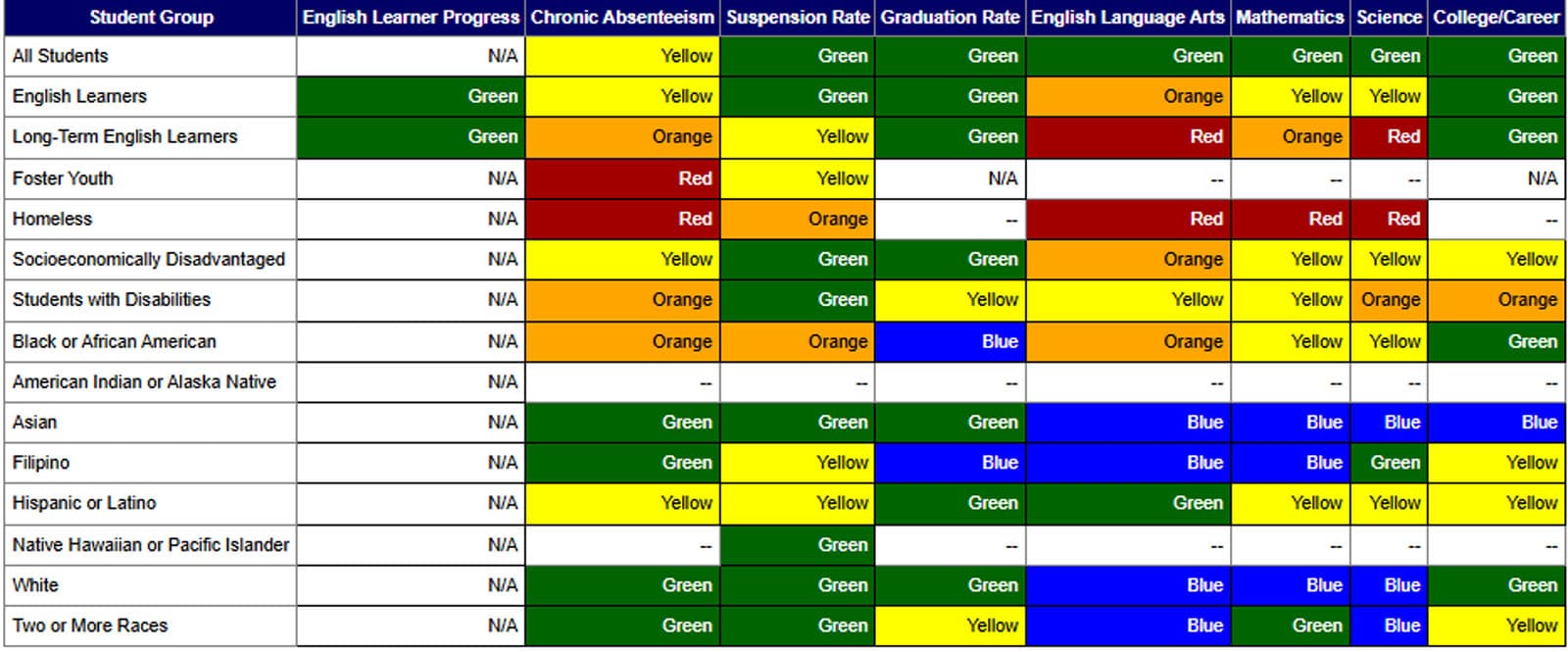
Notably, Zazo highlighted that AUSD’s homeless student group falls under the “Red – Lowest Performance” category in two separate priority areas, Pupil Achievement and Pupil Engagement, due to poor performance in English-Language Arts/Math and chronic absenteeism. This qualifies AUSD for Differentiated Assistance, a mandatory support system provided by the Alameda County Office of Education to help districts address performance inequities.
During Board discussion, President Ryan LaLonde and Vice President Heather Little both emphasized the important role reliable transportation plays for students experiencing homelessness, particularly for those who come from outside Alameda, since a missed bus connection could discourage attendance later in the day. Zazo explained that staff is working with neighboring school districts, since homeless youth often move between districts, to share lessons on how to better serve this student group.
ACLC grade levels reduction
Later in the meeting, Annalisa Moore, Executive Director of Community Learning Center Schools (CLCS), presented to the Board a request for a material revision to ACLC’s charter to change the school’s grade span from sixth-12th to ninth-12th starting with the 2026-2027 school year.



CLCS operates two charter schools, ACLC and Nea Community Learning Center (Nea), at a combined campus located at 1900 Third Street. According to Moore, AUSD recommended that CLCS explore the restructuring of its programs back in 2018 and 2019, leading the organization to consolidate its high school programs at ACLC beginning in 2021. Over the years, however, administrators determined additional reorganization was needed.
“With that successful unification of our two high school programs, our board continued to monitor enrollment, our finances, et cetera,” explained Moore. “They made the challenging decision that operating two small middle schools on one school site is just unsustainable, and would like to move forward with unifying our middle school programs.”
Moore said the restructure is a “fiscally responsible” decision that will enable the organization to more effectively and efficiently serve students by combining resources and services, with minimal impact to the academic programs, leadership structure, and staffing. Nea will serve students in Kindergarten through eighth grade, and ACLC will serve students in ninth through 12th grade.
During public comment, Heather Dutton, chair of Nea/ACLC United—the union that serves the staff for CLCS—spoke in support of the restructuring, noting that staff “stand in support of this unification.”
She added: “While change can be challenging, we do believe that this unification is a great opportunity to improve the education of our learners, while remaining more fiscally stable, which is really important to all of us.”
AUSD staff will review the request and return to the Board with findings and recommendations on March 10.
Ken Der is a contributing writer for the Alameda Post. Contact him via [email protected]. His writing is collected at AlamedaPost.com/Ken-Der.
