Previous History Walking Tours
Choose a previous tour to view:
October 12 & 19, 2025 – Webster Street Commercial Buildings
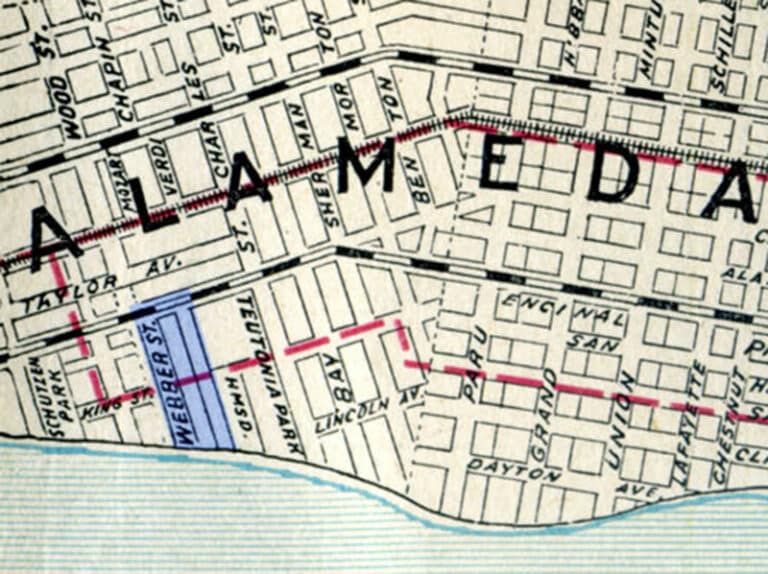
Take an informative stroll down Webster Street with us. We will describe how the byway—originally called Euclid Street—grew, largely thanks to baths that thrived on Alameda’s Bay shore. Learn about how the Britt family sold their farmland and used the money to build their impressive hotel. See what happened when the Croll family arrived. Learn how the street grew thanks, in large part to the arrival of A. A. Cohen’s 1864 railroad and the coming of the South Pacific Coast Railroad 14 years later. Dennis will talk about the Bureau of Electricity’s that became a bank. Learn about the subtle, but amazing message the bank carved into the entrance way when it arrived. Experience not one, but two, of the Alameda Post’s more amusing “No It’s Not” moments as Dennis talks about the year that is lit up in neon on the Croll’s Building and the “history” plaque on Lincoln Avenue and Webster that contains more fantasy that fact. Lecture.
October 4 & 5, 2025 – The North Shore
We will take a stroll along the City’s northern waterfront, home to major shipbuilding sites for most of the first half of the 20th Century. As we walk, Dennis and Adam will untangle a complicated story that involves United Engineering Works in 1900, James Dickie in 1901, Union Iron Works in 1905, and the Bethlehem Shipbuilding Company in 1916. We’ll see the sites where these massive ships were built and launched. We’ll also discuss what became of the area since the shipbuilding industry waned and how Measure A played a role in the destruction of a City Monument.
This walk takes us along Brooklyn Basin’s shoreline. Dennis and Adam will discuss the history of the basin, how it got its name, and the role it played in history that stretches back to the Ohlone presence here. The Alaska Packers and Encinal Terminal both called the basin’s shoreline home and played significant roles in the West Coast’s maritime history. We’ll stroll past the sites of these former seafaring giants and learn more about them when we see the historical plaques on the Wind River property. Three yacht clubs call this shoreline home, two of them transplants, one a homebody to the estuary. We’ll visit Shoreline Park, where we can appreciate the transformation of this area from industrial to residential. Lecture 1 / Lecture 2.
September 13 & 14, 2025 – Waterside Terrace
In 1858, Henry Gibbons Jr., M.D., purchased the property that became Waterside Terrace. The good doctor’s investment, defined roughly by today’s High Street, Fairview Avenue and Fernside Boulevard—was mostly marshland that bordered San Leandro Bay. In 1902, when the Corps of Engineers shaped the Tidal Canal, their dredges created “made land” here. Beginning in 1909, the Southern Pacific Railroad stepped in and built Fernside Boulevard as a right-of-way for its Big Red trains. The city gave its permission with the condition that the Southern Pacific added a paved road along the tracks. The arrival of the trains and the new road attracted speculators who purchased this property with eyes on development. The trains began running on June 1, 1911.
The following year, developers stepped in with plans to build 160 homes on a tract that featured a pair of ideas new and radical in their day: terraced lots and curving streets. And the homes! C. C. Adams (remember him from Mastick Park?) hired builders who put up homes in the impressive new Prairie style inspired by creations at Frank Lloyd Wright’s studio in Oak Park, Illinois. On this walk we’ll learn to distinguish this new style from the bungalows in the neighborhood. It will be easy: Look for the homes with those horizontal lines. Lecture.
August 24 & 30, 2025 – Mastick Park
Join us on a walk through Mastick Park’s “bungalow heaven.” In 1864, Edwin Mastick settled here with his family in a gracious home along the San Francisco & Alameda’s railroad tracks on a street that become Lincoln Avenue. Prospect Street, today’s Eighth Street, bordered his property to the west. When Edwin passed way, his son, George took down his parent’s home and subdivided the family’s 22-acre estate into 186 lots. He kept his own home intact on Pacific Avenue just outside the tract. Well have a look at George’s home. George then hired C. C. Adams to develop “Mastick Park.” (We’ll meet Mr. Adams next month again when we tour Waterside Terrace.} Surveyors stretched Eighth and Ninth streets and Eagle Avenue through the estate and laid out Nason and Wood streets. As we stroll through the development, Dennis will explain how American builders made the India-inspired, British-born bungalow—not a style, but a type of a home—their own. Lecture.
August 9 & 10, 2025 – Burbank & Portola, Schuetzen Park & Washington Park
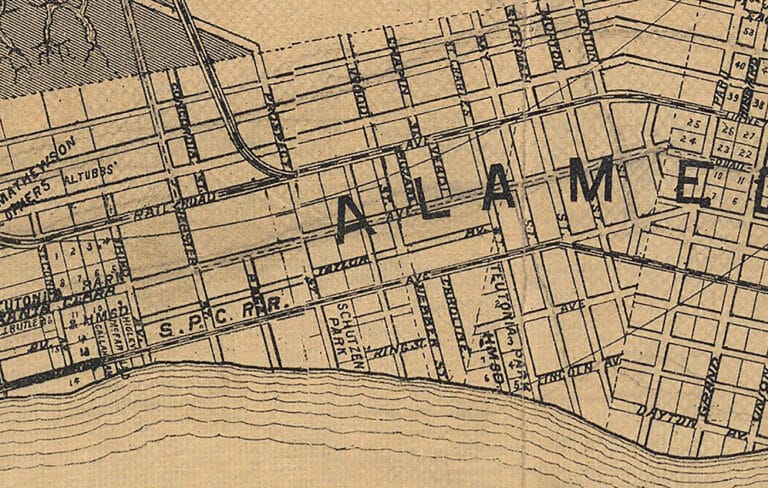
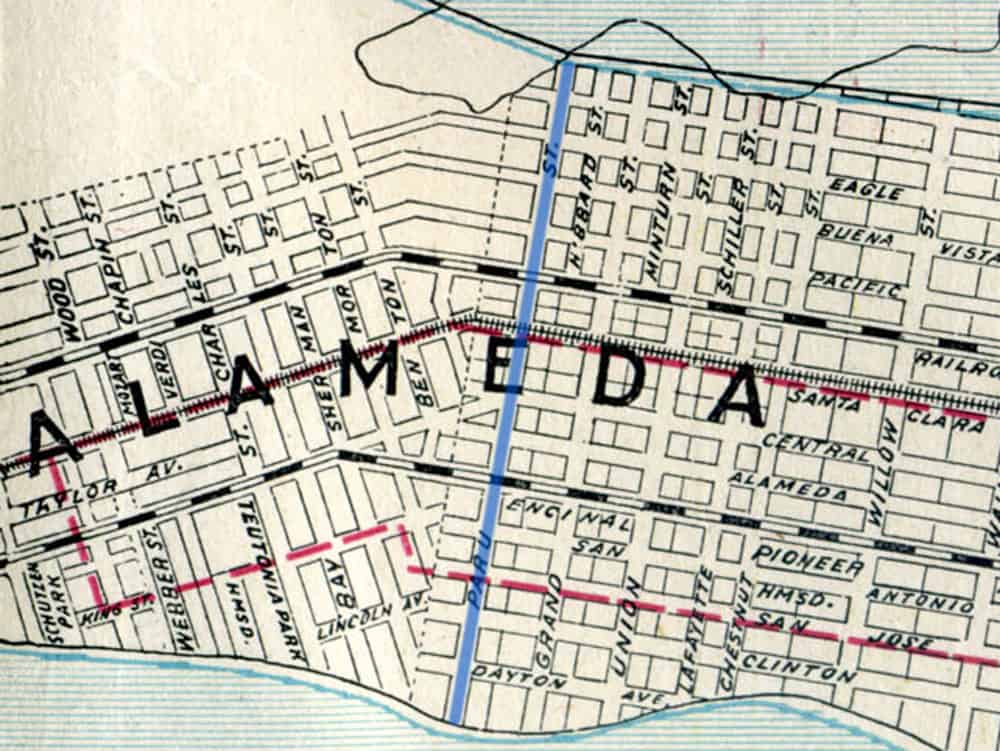
We will take a walk through “Craftsman-style heaven” along palm-tree-lined Portola Avenue, Burbank Street and Eighth Street. Caroline Dwinelle’s son from her first marriage, Willie Chipman, was behind developing these streets. The tract was once home to Schuetzen Park and a velodrome. Dennis will explain the interesting meaning of “Schuetzen” and why many found the park loud, raucous, and even dangerous. We’ll share an interesting “then-and-now” moment with a lithograph of the park. We’ll stand right where the artist made the sketch when the park was thriving. Skippy peanut butter was born here, and the homes coincided with the automobile’s growing popularity. This led to some of these homes sporting garages, some of the first in Alameda. These tours were canceled. Lecture.
July 19 & 20, 2025 – Neptune Beach and the baths
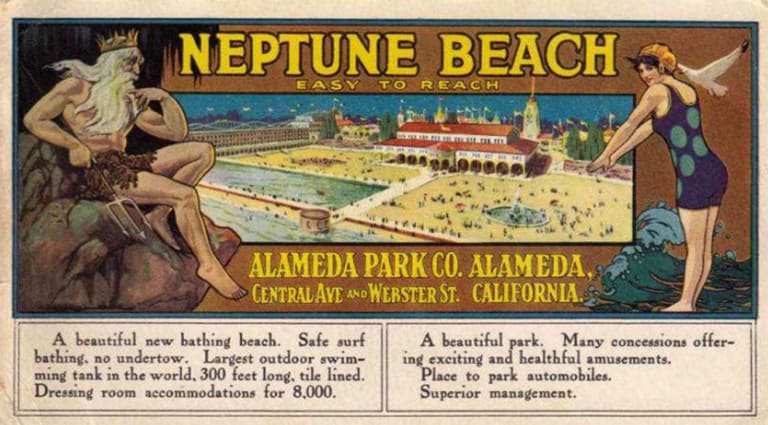
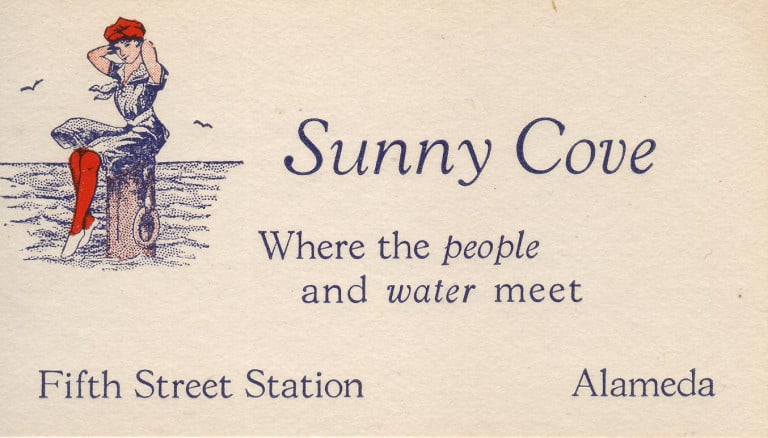
Trace what little remains of the Coney Island of the West on this walking tour. The resort opened its doors as Newport Swimming Baths in 1877, 40 years before the Strehlow family invited bathers to Neptune Beach. Visitors in 1878 would be served by 200 dressing rooms stock full of 1,200 bathing suits available for rent, as well as a conservatory with glass sides and seating capacity for 300 persons. We’ll take a first-hand look at Neptune Beach that entertained thousands from 1917 to 1939. When it closed, The Merchant Marines stepped in and carved Mackay Avenue on the footprint of the “Whoopie” roller coaster. We’ll see how the street’s name heralded the arrival of the Merchant Marines. Lecture.
June 21 & 22, 2025 – Queen Anne-style blossoms on Mozart & Verdi
This time we offer a textbook adventure into the Queen Anne, “Stick,” and Colonial Revival styles along streets that Caroline Dwinelle named for two of her favorite composers. Mozart and Verdi streets together boast 30 examples of Victorian and Edwardian-era homes. We will see homes built by Marcuse and Remmel, Denis Straub, and A. R. Denke. Dennis will explain all this and show—first-hand—details that set Queen Anne style apart from “Stick” (also called Eastlake) and Colonial Revival. We will also present one of the Alameda Post’s famed “No, It’s Not” moments as Adam asks Dennis if some say Caroline Dwinelle named Chapin Street across Lincoln Avenue for the composer Frederick Chopin and the City spelled the name wrong. Lecture.
June 7 & 8, 2025 – Marcuse and Remmel around Bay & Eagle
Meet us at the community gardens at Bay Street and Eagle Avenue. Before we walk into the neighborhood, they will tell the interesting story behind the creation of these gardens. Then we’ll meet Felix Marcuse and Julius Remmel and see the homes their company built on Eagle and Pacific avenues in the 1890s. Folks who lived these homes in the late 19th and early 20th century enjoyed the peace and quiet of their rural neighborhood, until a series of “improvements” north of their homes changed everything.
We’ll see five Marcuse & Remmel 1891 creations on the north side of the 1200 block of Eagle Avenue, all designed by their in-house architects, Cary and Johnson, and all purchased by a one investor, Mrs. E. A. S. Page. The firm also purchased property on the north side of the 1200 block of Pacific Avenue. We’ll walk two blocks up Bay Street and have a look at the eight homes the partners built there in 1895. Their firm built six homes on the 1300 block of Pacific as well—also in 1895.
We’ll also look at the advancements in transportation that shaped the area including the airport known as Sunset Field whose planes “buzzed the neighborhood day and night. Dennis will also discuss the impact dredging the Estuary to make Government Island had on the airport, the rise and fall of the Alameda Belt Line railroad (with its yards once busy in nearby Jean Sweeney Space Park, and Calpak, later better known as Del Monte that transported their products by rail and sea from their warehouse on Buena Vista Avenue. Lecture.
May 18 & 25, 2025 – Park Street Commercial Buildings
Park Street has been the center of Alameda’s business district since the railroad came to town in 1864. Join us for a walk to discuss the history of many of the vintage commercial buildings that are still in use today. We’ll learn what is hiding behind some of the modern facades, and what buildings are no longer standing. Highlights will include the Artesian Water Works, the Masonic Temple, and the original Bureau of Electricity building that stood at the corner of what is now Otis Drive.
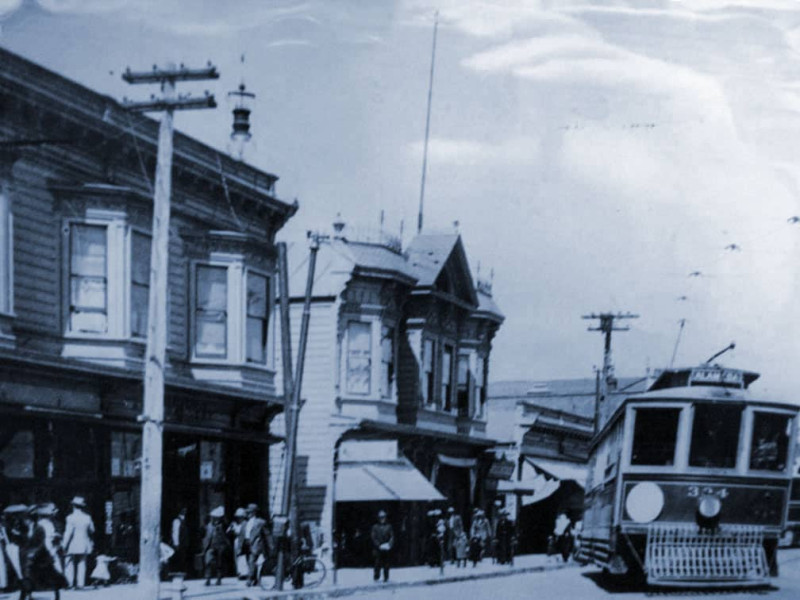
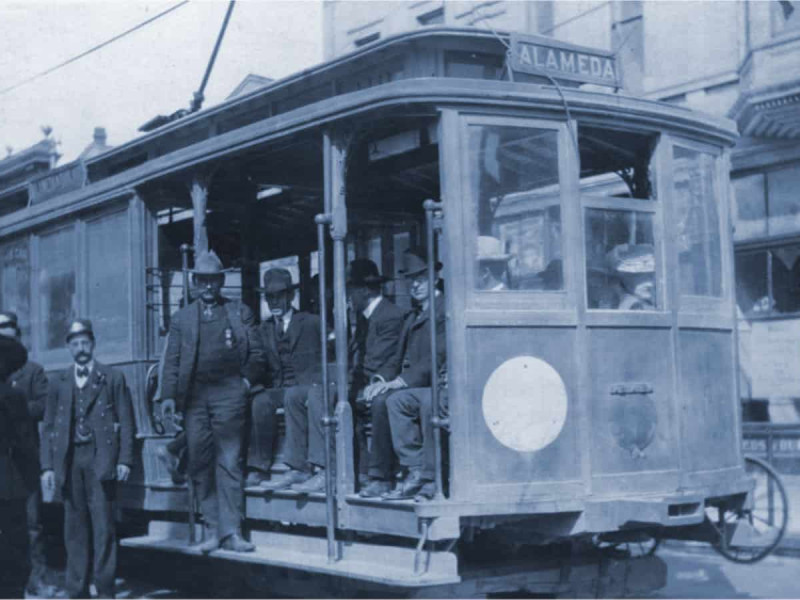
We will also visit the Alameda Museum to see a colorized photograph of Park Street taken from the tower of the long-gone Artesian Water Works in 1893 and an early 20th century photo of the “Green Star” line streetcar trundling past buildings still dressed in their Victorian-era finery. Lecture.
April 27, 2025 – Bay Farm Part 2
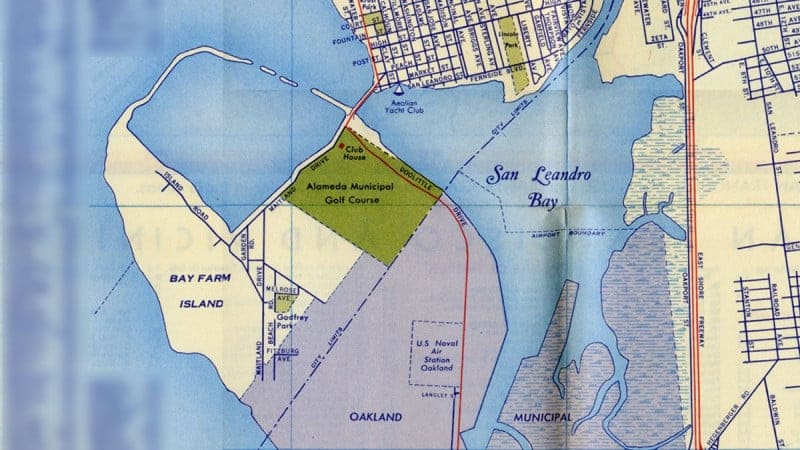
Get to know how—with the voters’ approval—Utah Construction Company converted all the marshland across Mecartney Road from the farms into “made land,” and how Ron Cowan and Doric Construction stepped in to build the neighborhoods that we know today as “Harbor Bay Isle.” Stroll with us along the lagoon that Utah Construction created and enjoy neighborhoods distinctly different from those on Bay Farm Island.
Cowan invented the name “Harbor Bay Isle” and had much to do with developing Utah Construction’s finished product. We’ll see the spot that Amos Mecartney and his family called home. We’ll learn how the promised 1922 coming of the Navy created a false alarm and how eager speculators brought the hulks of seven World War I destroyers into play. These ships were meant to act as breakwater for a development they hoped to call “Alameda Acres.” All that failed when the Navy changed its mind. The marshland then lay fallow for 46 years when Utah Construction came on the scene. Lecture.
April 6 & 12, 2025 – Bay Farm Part 1
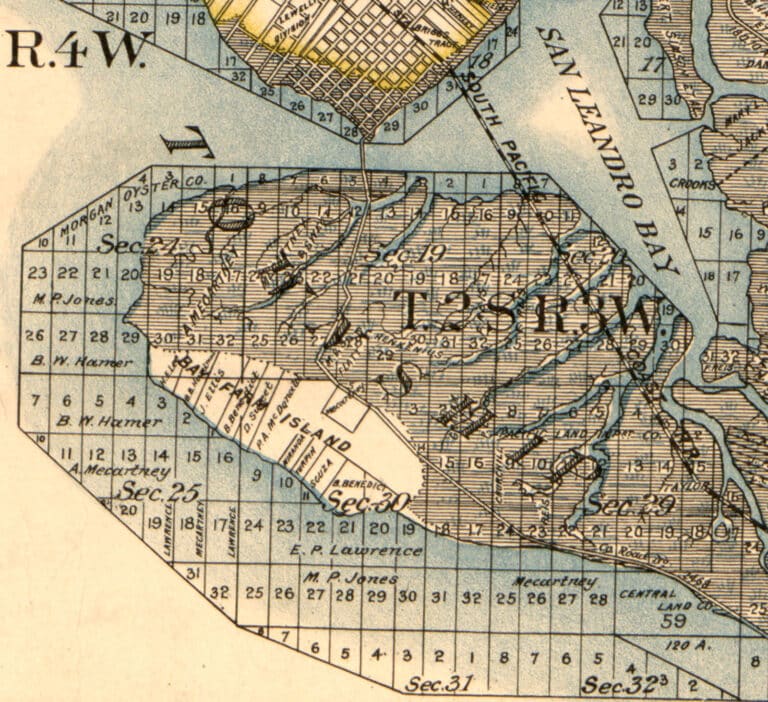
Join us for an imaginary walk through the farmlands that once covered Bay Farm Island. We’ll peel back the homes with our time machine to meet the people who made their living from farming the “Uplands” rich soil that produced, at first, asparagus and hops as cash crops.
Dennis will share stories of many Bay Farm families throughout history, including the Rattos, the Silvas, the McDonells, the Benedicts, and Leas. Our look back to the past will include tales of the oyster farmers, oyster pirates and the oyster patrols the likes of which even included author Jack London. “I wanted to be where the winds of adventure blew. And the winds of adventure blew the oyster pirate sloops up and down San Francisco Bay,” London wrote in his semi-autobiographical novel John Barleycorn. Join us as we visit the farms of Jack London’s “Asparagus Island,” and seek London’s “winds of adventure.” Lecture.
September 21 & 29, 2024 – Portola Avenue and Burbank Street
September’s tours, the last of the Post’s “baker’s dozen,” will also include a walk through “Craftsman-style heaven” along palm-tree-lined Portola Avenue, Burbank Street and Eighth Street. Caroline’s son Willie Chipman, was behind developing these streets. The tract was once home to Schuetzen Park and a velodrome. Dennis will explain the interesting meaning of “Schuetzen” and why many found the park loud, raucous, and even dangerous. Skippy peanut butter was born here, and the homes coincided with the automobile’s growing popularity. This led to some of these homes sporting garages, some of the first in Alameda. Lecture.
September 8 & 14, 2024 – Caroline, Weber, and Hawthorne Streets
Dennis Evanosky and Adam Gillitt will show off the Gold Coast’s “West End” this month. We’ll check out some magnificent homes on Caroline, Weber and Hawthorne streets. When we visit Weber Street, Dennis will present a live and in-person then-and-now moment with a large photograph of Caroline Dwinelle’s impressive home and gardens. And, yes, Caroline Street bears Caroline’s name. She was the widow of town founder William Worthington Chipman and wife of John J. Dwinelle when the home was built. Did you know that Hawthorne Street was first named for a woman? We’ll learn the name and speculate who it might be. Lecture.
August 17 & 25, 2024 – Third Street: Taylor to Pacific Avenues
This walk begins on the old shoreline near the site of Alameda founders William Worthington Chipman and Gideon Aughinbaugh’s very expensive and unsuccessful “Peralta Wharf.” South Pacific Coast Railroad’s trains rolled by this spot from 1878 to 1906. The Southern Pacific Railroad’s Big Reds stepped in and carried their passengers by here from 1911 to 1938. Our walk will take us north on Third Street to Pacific Avenue. Had we walked down Third before 1877, we would have been on Kellogg Street instead. A. A. Cohen created the Town of Woodstock in 1864, he named this street for his wealthy benefactor, John Grover Kellogg, who made his fortune striking gold coins. Lecture.
August 3 & 11, 2024 – Northern Waterfront: Marina Cove Waterfront Park to Shoreline Park
This walk takes us along Brooklyn Basin’s shoreline. Dennis and Adam will discuss the history of the basin, how it got its name, and the role it played in history that stretches back to the Ohlone presence here. The Alaska Packers and Encinal Terminal both called the basin’s shoreline home and played significant roles in the West Coast’s maritime history. We’ll stroll past the sites of these former seafaring giants and learn more about them when we see the historical plaques on the Wind River property. Three yacht clubs call this shoreline home, two of them transplants, one a homebody to the estuary. We’ll visit Shoreline Park, where we can appreciate the transformation of this area from industrial to residential. Lecture 1 / Lecture 2.
July 13, 14, 20, & 28, 2024 – Alameda Point / NAS Alameda
This month the Alameda Post features a two-part walk around the former Naval Air Station. The Navy dredged San Francisco Bay and used what its machines drew from the Bay floor to create its air station. Dennis and Adam will discuss how the Navy covered two existing airports and closed a third one nearby. Along the way, they will show you how Alameda Point evolved from where Jimmy Doolittle’s Raiders left for Japan, where a number of aircraft carriers docked, and seaplanes took to the air. We’ll also check out a number of buildings once used by the Navy and see how they fit into today’s Alameda Point. Lecture 1 / Lecture 2.
June 29 & 30, 2024 – Alameda’s Changing Shoreline
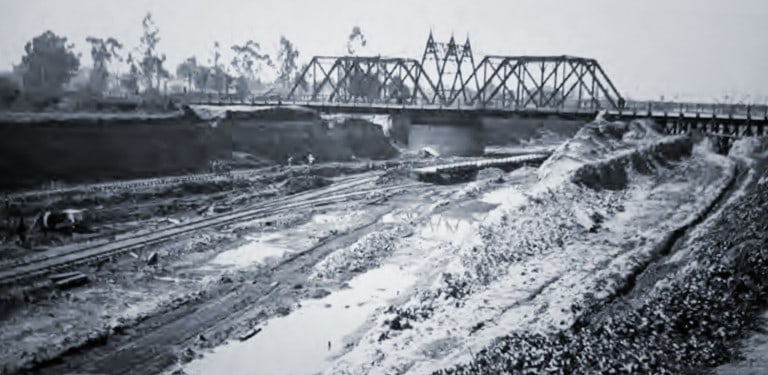
Dennis Evanosky and Adam Gillitt will trace the boundaries of the former peninsula of Alameda and show how (and why) Alameda became the “Island City.” Until 1902, Alameda was a headland. The Army Corps of Engineers had other plans. They hired Alameda’s own Hermann Krusi, whose San Francisco Bridge Company turned the first “spade” of earth on Feb. 18, 1889. Learn about the surprising plans the Corps of Engineers had for the canal that Krusi dug and how they, thankfully ran out of money (and interest) to carry those plans out. Lecture.
June 9 & 15, 2024 – Fernside and A.A. Cohen
Adam Gillitt and Dennis Evanosky will take you through the East End’s Fernside neighborhood. They will show you where Alfred A. Cohen family’s homes once stood. Dennis will discuss the important role the family patriarch played in the arrival of the transcontinental railroad in Alameda. We’ll meet his wife Emilie Gibbons’ influential family as we trace the stories of both families’ presence in Alameda. Emilie passed away in 1924 at the age of 91, and the children sold the estate to developer Fred Wood. He created the Fernside we know today. Lecture.
May 18 & 26, 2024 – Neptune Beach and Central Baths
Trace what little remains of the Coney Island of the West with Dennis Evanosky and Adam Gillitt. The resort opened its doors as Newport Swimming Baths in 1877, 40 years before the Strehlow family invited bathers to Neptune Beach. Visitors in 1878 would be served by 200 dressing rooms stock full of 1,200 bathing suits, as well as a conservatory with glass sides and a seating capacity for 300 persons. We’ll take a first-hand look at Neptune Beach that entertained thousands from 1917 to 1939. When it closed, McKay Avenue was carved on the footprint of the roller coaster. We’ll see how the street’s name heralded the arrival of the Merchant Marines. Lecture.
May 11 & 12, 2024 – Grand Street: Otis Drive to Santa Clara Avenue
Stroll along the Gold Coast’s main thoroughfare with Adam Gillitt and Dennis Evanosky. Learn how Leviathan and Linnet streets became Grand Street and Santa Clara Avenue. Grand Street offers an open-air textbook of the architectural styles that made Alameda so attractive. (None of them “Victorian,” by the way.) Dennis will describe the shoreline as it once was and discuss how Utah Construction changed everything (with the voters’ approval). We’ll stop at and enjoy what Alameda Museum’s retired curator George Gunn calls a “string of pearls.” We’ll also visit a street whose residents politely asked that the attic of a nearby famous house be removed so they could enjoy the morning light. Did they succeed? We’ll find out. Lecture.
April 14, 20, 21, & 27, 2024 – Utah Construction: South Shore and Bay Farm Island
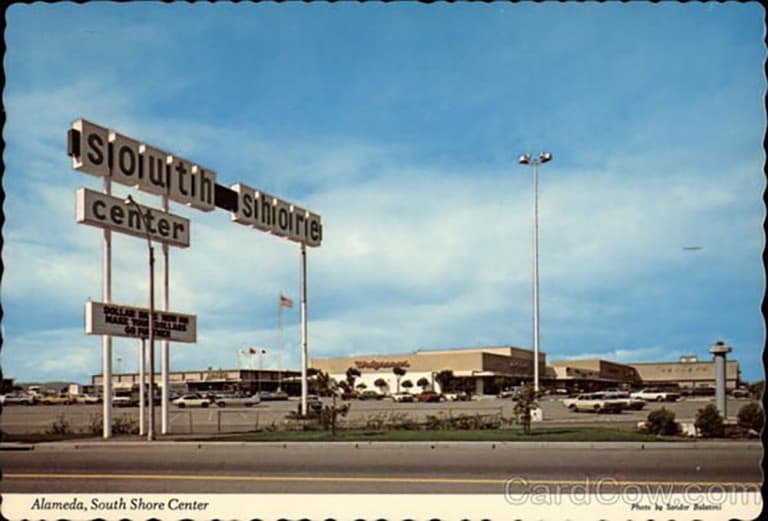
Dennis Evanosky and Adam Gillitt will explore how Alameda lost its tidelands and its San Francisco Bay shoreline. Learn about the pair of men who got their hands on almost every inch of Alameda and Bay Farm’s San Francisco Bay shoreline and tidelands. When they learned that had that could not carry out their grandiose plans, they sold everything to Utah Construction. Utah delivered Alameda’s environment a one-two punch when they created South Shore and Harbor Bay Isle. Learn about the political developments that led to these developments and see first-hand how they unfolded. Lecture.
March 31, 2024 – Original Town of Alameda
Take a walk through where it all started: The 1854 Town of Alameda. Learn how the copycat name of the town reflected how the founders hoped to bring the county seat here. See what attracted Gideon Aughinbaugh and William Worthington Chipman to this spot. Stand at the spot of the “High Street surprise” and see what role that street played in the founders’ plans. We’ll meet the Christensen and Saroni families and learn what role the disastrous winter of 1861-’62 and the 1864 arrival of the railroad played in the town’s losing the role the founders hoped it would play. Lecture.
March 10 & 17, 2024 – Webster Street Business District
Join Dennis Evanosky and Adam Gillitt of the Alameda Post for an informative stroll down Webster Street. They will describe how the byway—originally called Euclid Street—grew, largely thanks to baths that thrived on Alameda’s Bay shore, Learn about the Britt family and their impressive hotel. See what happened when the Croll family arrived. Learn how the street grew thanks, in large part to the arrival of A. A. Cohen’s 1864 railroad and the coming of the South Pacific Coast Railroad 14 years later. Lecture.
February 18 & 25, 2024 – Park Street Business District
Park Street has been the center of Alameda’s business district since the railroad came to town in 1864. Join Alameda Post Historian Dennis Evanosky for a walk to discuss the history of many of the vintage commercial buildings that are still in use today. We’ll learn what is hiding behind some of the modern facades, and what buildings are no longer standing. Highlights will include the Artesian Waterworks, the Masonic Temple, and the original Bureau of Electricity building that stood at the corner of what is now Otis Drive. The tour will end at back at the Alameda Museum, where volunteers will offer a special tour of the collection. Lecture.
November 4 & 12, 2023 – Park Avenue and Environs
Alameda Post’s Adam Gillitt and Dennis Evanosky will explore Park Avenue and environs at 10 a.m. Saturday, Nov. 4. They will offer the same tour at the same time the following Sunday, Nov. 12. Park Avenue is the centerpiece of Alfred A. Cohen’s plan to entice the wealthy to his “Alameda Park Homestead.” We will explore Park Avenue and learn about the Alameda Park Hotel and its fate as an asylum. Dennis will discuss how Cohen’s plans failed and how his estates for the wealthy with the planned private park became the neighborhood we know today. We will meet in front of the Kaiser Building on Central Avenue. Advance tickets available online for $20 each.
Read more from Dennis: Park Avenue: From Exclusive Neighborhood to Public Park and What’s in a Name: Chochenyo Park
October 8, 14, 21, & 28, 2023 – Alameda Point - Former NAS
Join Alameda Post Historian Dennis Evanosky and Publisher Adam Gillitt throughout October for a two-part series of tours exploring Alameda Point, formerly Naval Air Station Alameda. We will learn how the landscape developed from a marshland and the waters of San Francisco Bay to railroad wharves, to a pair of airports, a naval air station, and finally to today’s Alameda Point. We will discuss the recent history and development of the area as well. The first tour of the series will be offered on two dates: Sunday, October 8 and again on Saturday, October 14. The second tour in the series will also be offered on two different days: Saturday, October 21 and again on Sunday, October 29. We will meet at 10 a.m. each day. Tickets are available online for $20 each.
Read more from Dennis: There’s More than Meets the Eye at Alameda Point and War and Peace at NAS Alameda
Part 1: Sunday, October 8 and Saturday, October 14.
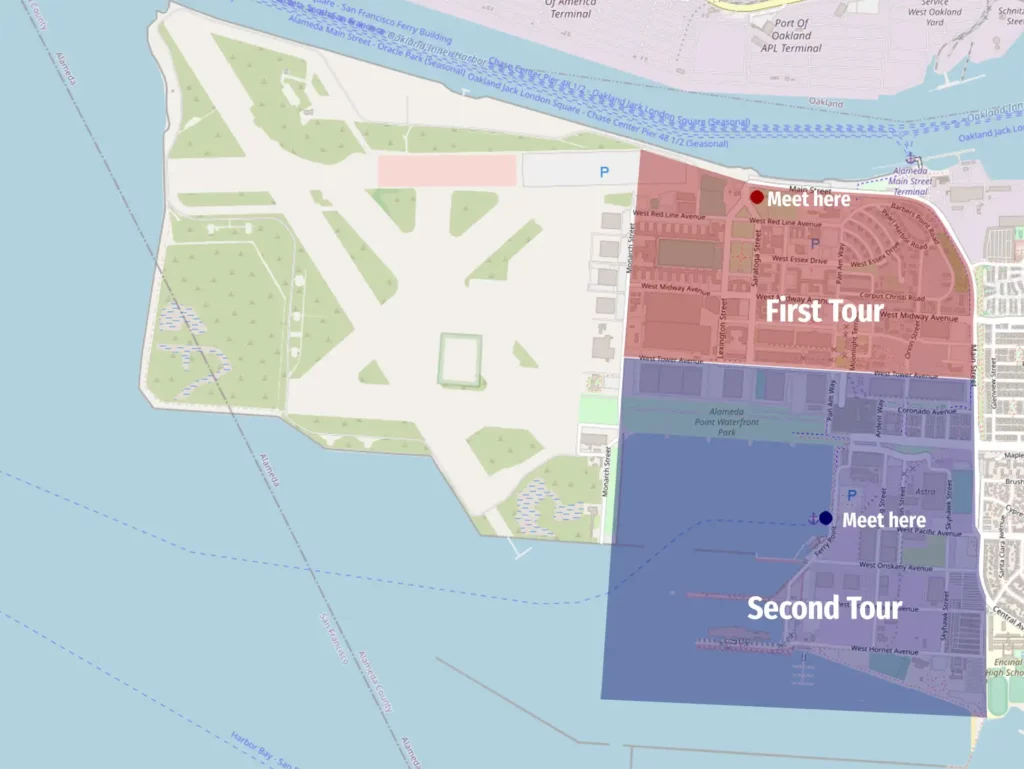
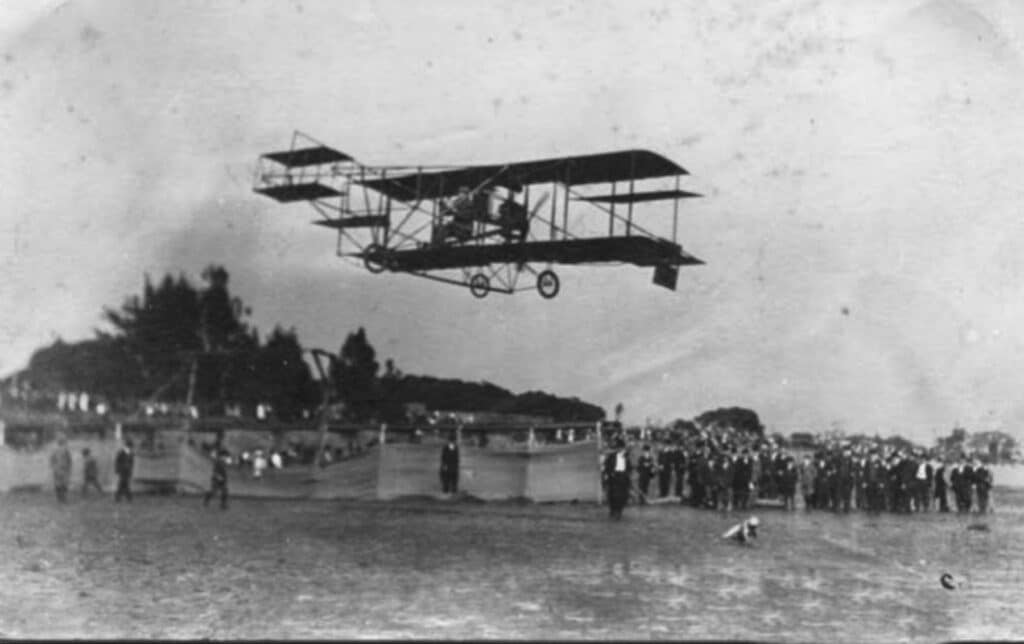
During the first tour of series, held on Sunday, October 8 or Saturday, October 14, Dennis will cover the history of the area north of West Tower Ave. We’ll have an up-front look at the 1874 seawall, see where the South Pacific Coast Railroad trains (and the Big Reds) made their way to the “Alameda Mole.” You’ll learn why Main Street is on the edge of town (instead of where it really belongs) and stand where Army Air Corps planes once took to the air. We will meet at 10 a.m. under the “plane on a stick” at the Main Gate at the end of Main Street, past the Ferry Terminal.
Part 2: Saturday, October 21 and Sunday, October 29.
The second part of the series will meet at 10 a.m., Saturday, October 21 or Sunday October 29. Dennis will explore the area south of West Tower Ave.—the area around the USS Hornet and Seaplane Lagoon. We will meet at the Seaplane Lagoon Ferry Terminal. We will have a first-hand look at the history plaques at Seaplane Lagoon and see where the San Francisco & Alameda Railroad carried passengers on its 1864 pier—the same pier that welcomed transcontinental railroad passengers five years later. Then we’ll say “hey” to the seals hanging out near Encinal Beach. We will end the tour at the USS Hornet Museum.
Sept. 23 and Oct. 1, 2023 – Eagle Avenue and Environs
Marcuse & Remmel built homes on the 1200 blocks of Eagle and Pacific avenues in the 1890s. Folks who lived these homes in the late 19th and early 20th century enjoyed the peace and quiet of their rural neighborhood, until a series of “improvements” north of their homes changed everything.
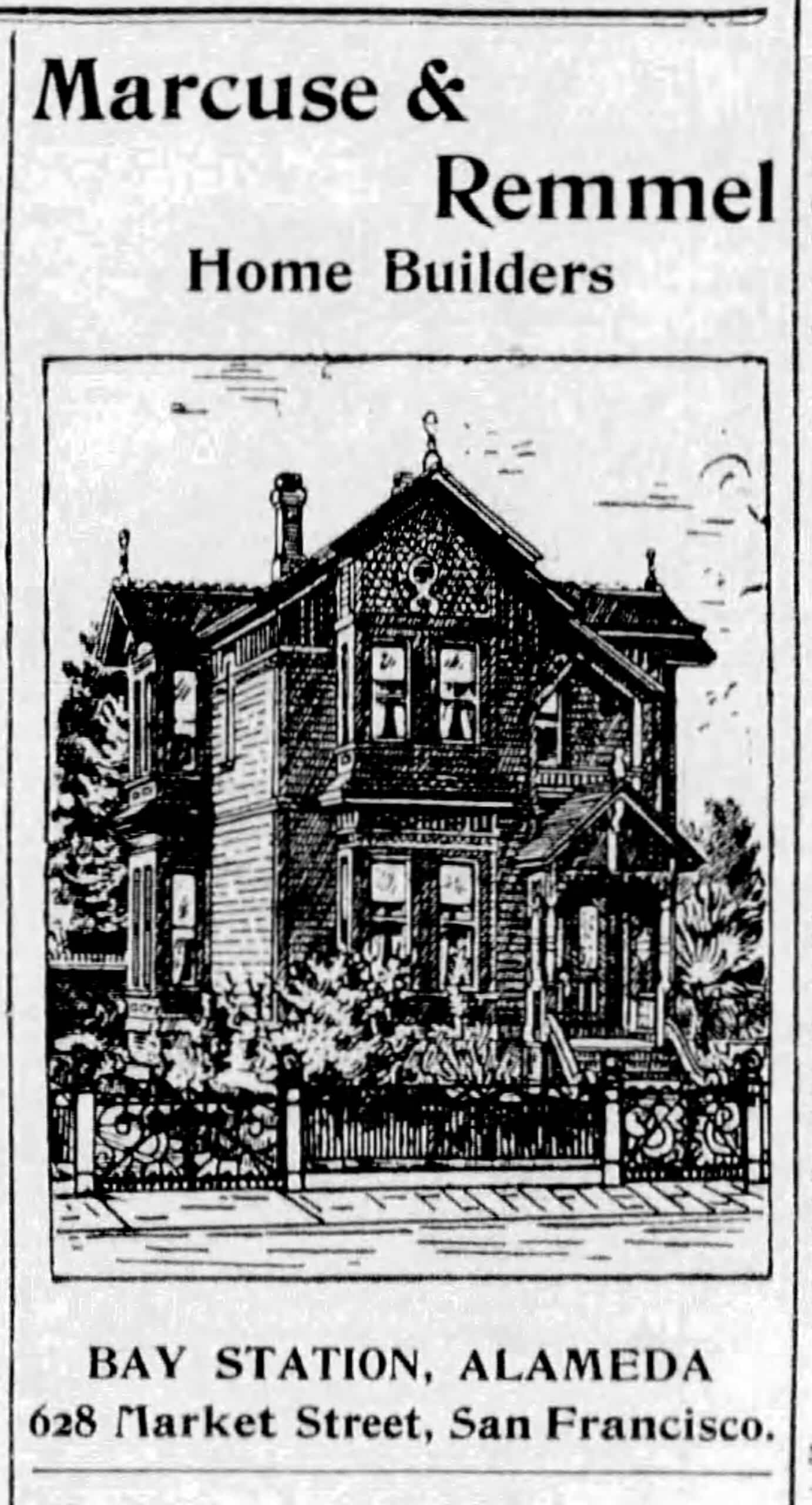
We’ll see five of their 1891 creations on the north side of the 1200 block of Eagle Avenue, all designed by their in-house architects, Cary and Johnson, and all purchased by a one investor, Mrs. E. A. S. Page. The firm also purchased property on the north side of the 1200 block of Pacific Avenue. We’ll walk two blocks up Bay Street and have a look at the eight homes Marcuse and Remmel built in 1895. The firm built six homes on the 1300 block of Pacific as well—all in 1895.
We’ll also look at the advancements in transportation that shaped the neighborhood, including the airport known as Sunset Field, dredging the Estuary to make Government Island, the rise and fall of the Belt Line railroad, and Calpak, later better known as Del Monte, who transported their products by rail and sea from their warehouse on Buena Vista Ave.
Join Alameda Post’s Adam Gillitt and Dennis Evanosky as they explore homes along the 1200 blocks of Eagle and Pacific avenues built by Marcuse and Remmel. They will also have a look at the transitions in transportation taking place not far away. Dennis will point to the changes neighbors endured in the early 20th century and we’ll see what’s there today. Meet at 10 a.m., Saturday, Sept. 23, and Sunday, Oct. 1, at the Bay Eagle Community Garden at the intersection of Bay Street and Eagle Avenue.
Read Dennis’ articles – There Goes the Neighborhood and Marcuse & Remmel: Up Close and Personal.
Advance Tickets are $20. We advise purchasing your tickets in advance to ensure your place on the day of the tour. If space permits, additional tickets may be available at the beginning of the tour.
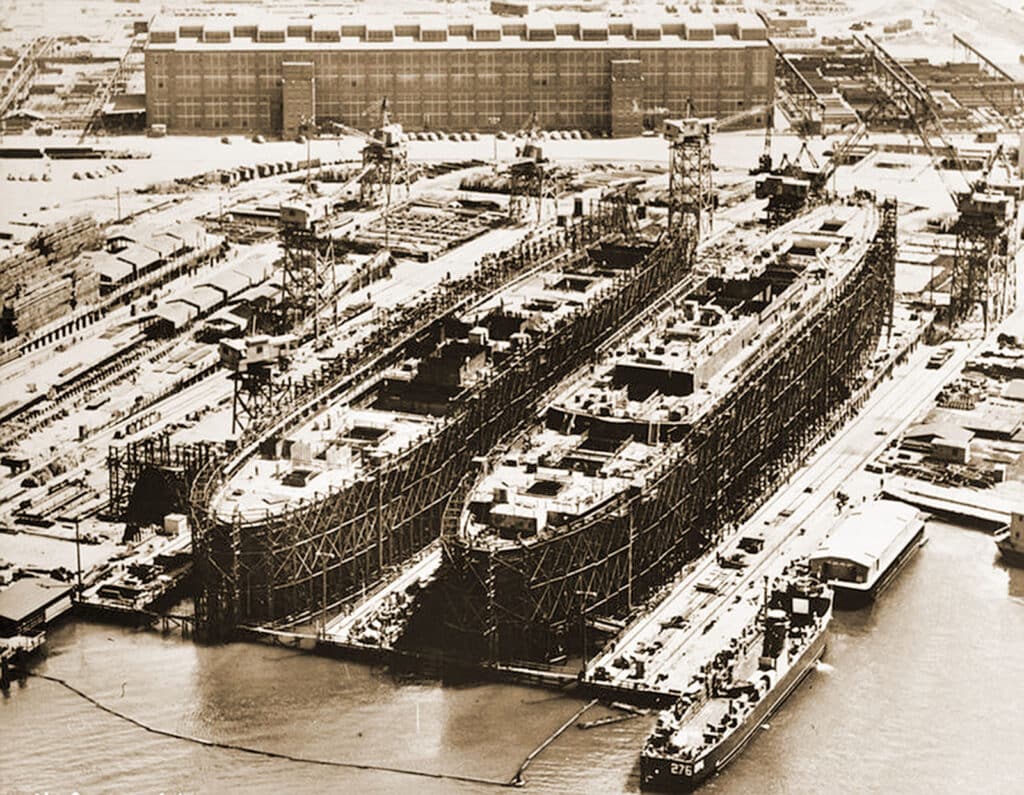
August 10 & Sept. 12, 2023 – Alameda’s Northern Waterfront
Read Dennis’ article Shipbuilding on Alameda’s North Shore.
Join the Alameda Post’s Historian, Dennis Evanosky, for a stroll along the City’s northern waterfront, home to major shipbuilding sites for most of the first half of the 20th Century. As we walk, Dennis will untangle a complicated story that involves United Engineering Works in 1900, James Dickie in 1901, Union Iron Works in 1905, and the Bethlehem Shipbuilding Company in 1916. We’ll see the sites where these massive ships were built and launched and discuss what has become of the area since the shipbuilding industry waned, and how Measure A played a role in the destruction of a City Monument.
Meet at 10 a.m either day at the foot of Mariner Square Drive just east of Pasta Pelican, and join us for a stroll along the waterfront to Wind River Park.
August 6 &12, 2023 – A.A. Cohen and His Fernside Estate
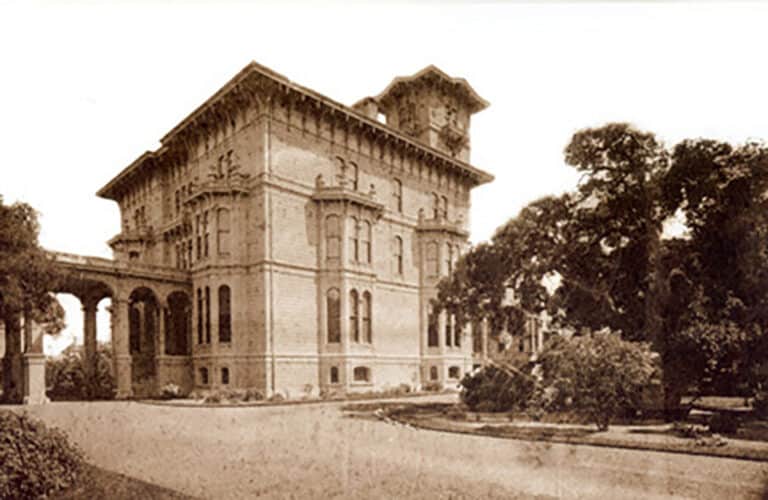
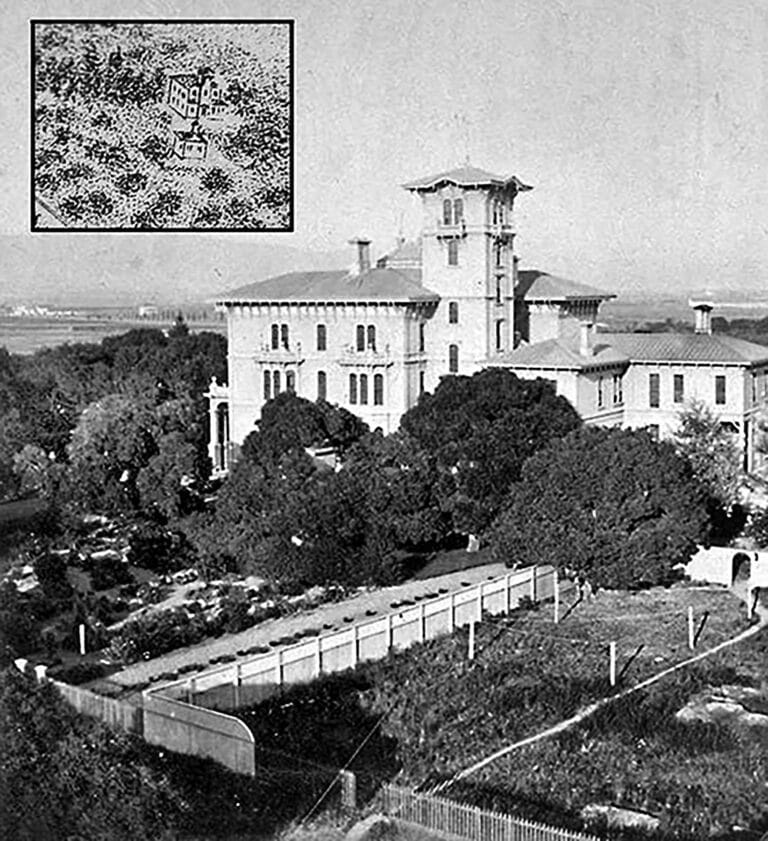
Join the Alameda Post’s Adam Gillitt and Dennis Evanosky at 10 a.m., Sunday, August 6 or 10 a.m. Saturday, August 12, for an informative stroll through Alfred A. and Emilie Cohen’s impressive Fernside estate. We’ll meet at property’s former entrance and discover the exact location of the impressive home, the bowling alley, the stables, and other outbuildings.
The home with all its trappings was said to have cost the staggering sum of $300,000. In Ultimate Victorians, Elinor Richey described the Cohens’ home as, “the most splendid of all Italianate villas in the East Bay.”
Read Dennis’ article A.A. Cohen’s Fernside Estate
When Emilie died in 1925, the children subdivided the estate and sold the property to developer Fred Wood. All that’s left to remind us of the grand estate’s existence in Alameda is the neighborhood’s name and a boulevard that echoes, “Fernside.”
Meet us at the intersection of Buena Vista and Versailles avenues. Dennis will talk about Alfred and Emilie’ seemingly contradictory backgrounds—enslavers on Alfred’s side and Quakers on Emilie’s—and tell more of the history of the Cohen’s estate and the neighborhood created on its grounds by Fred Wood.
July 16 & 22, 2023 – Tregloan Court and The East End
Join Alameda Post historian Dennis Evanosky and publisher Adam Gillitt at 10 a.m., Sunday, July 16, for an exploration of the neighborhood surrounding the East End’s Tregloan Court. If you can’t make it on Saturday, plan on joining us at 10 a.m., Saturday, July 22.
Meet us on Buena Vista Avenue just across from Tregloan Court (between Pearl Street and Versailles Avenue). Dennis will discuss and dispel a pair of fables associated with the court, and we’ll explore the neighborhood and investigate how it was developed.
See Dennis’ article: What’s in a Name? Tregloan Court
We’ll discuss street names and architectural styles. Dennis will point out details on the homes that will help you distinguish a Queen Anne from a Colonial Revival. We’ll have a look at an Italianate home, and you’ll learn how those Storybook Style homes on Pearl Street and Versailles Avenue evolved from the Doughboys’ imaginings to reality.
Who (or what) is the Pearl of Pearl Street? How did the laying out of Lincoln Avenue get resolved in the California Supreme Court? What impediment once stretched along the eastern side of Versailles Avenue. What famous (in his day) photographer made his home in the neighborhood? And what is the story behind those small homes on Tregloan Court?
Join us and we will answer all those questions and more on the tour!
June 17 & 25, 2023 –Taylor Avenue and Alameda’s West End
Read more in Dennis’ article, Reading the West End.
Join the Alameda Post’s Dennis Evanosky and Adam Gillitt at 10 a.m., Saturday, June 17, to learn how to read a neighborhood. We’ll start at the Healing Garden at the corner of Taylor Avenue and Webster Street in Alameda’s West End. Along the way, we’ll have a close look at all the architectural styles and learn how to identify each one we see. Isn’t that one Queen Anne? How do you know that one is a bungalow? What’s the earliest style we can find? And the latest?
We won’t come across a single an Arts and Crafts style home. There’s no such thing. And we won’t see any Victorians. Not a single one exists in Alameda. We’ll see some towers, for sure. Will we see any turrets? We’ll come across some dentils, but will we see any quoins?
By the time we’re finished, you will be able to talk about all the different Victorian-era styles of homes. You’ll know at least three features of each style. We’ll, no doubt, come across a jerkinhead roof or two and too many naked protruding beams to count. What’s the difference between a column and a pillar? Is that column fluted? What kind of order defines the column? Ionic? Or is that Doric?
We’ll have fun answering all these questions and more. If you can’t join us on Saturday, June 17, we’ll repeat the same tour at the same place and time on Sunday, June 25.
May 28 & June 3, 2023 – Determining Architectural Styles
It’s hard for many to believe, but Alameda does not have a single Victorian home. The City, however, is a treasure trove of homes built in Victorian-era styles. Join the Alameda Post’s Dennis Evanosky and Adam Gillitt at 10 a.m., Sunday, May 28, or Saturday June 3, at the corner of Cottage Street and Santa Clara Avenue. Dennis will talk about as many of these styles as we encounter. He’ll discuss each of these and give you three or more elements that will help you identify them. Elements like brackets and spindles, dentils and cornice lines, pendants and finials, arches and columns, towers and turrets.
Learn which orders top a column: Corinthian, Ionic, Doric, or Eclectic. By the end of the tour, you’ll know the difference between a hipped and a jerkinhead roof, be able to identify a mansard roof, and distinguish between a stoop and a porch.
Most importantly, you’ll go home knowing that there are no Victorians in Alameda, after all. Let’s find out how many Victorian-era styles we can find (and see what happened after Victoria died and the twentieth century dawned with new styles.) We’ll have fun along the way and, no, there won’t be a test.
Read more in Dennis’ article, Let’s Solve a Mystery.
May 6 & 14, 2023 – Bygone Bay Farm: The Developers Arrive
Read more in Dennis’ article, Building Out Bay Farm Island.
Join Alameda Post historian Dennis Evanosky as he concludes his three-part walking tour of Bay Farm Island. He will give participants a first-hand look at how Bay Farm developed from a farming community to neighborhoods of homes. He will include the ABC drives of the Uplands, the original developments by Braddock & Logan, the partnership between Utah Construction and Doric Development, and how the Committee of Concerned Citizens passed 1973’s Measure A.
Meet at 10 a.m. at the Bay Farm Library, 3321 Mecartney Rd. for a leisurely two-bridge stroll through Harbor Bay Isle as Dennis shares the story of how all of Bay Farm Island developed. Advance tickets are $20, and a limited number of tickets may be available at the start of each tour.
April 16 & 22, 2023 – Bygone Bay Farm: Asparagus, Oysters, and Hops
Read more in Dennis’ article, Oysters Once Dominated Bay Farm’s Economy.
Join the Alameda Post’s Dennis Evanosky and Adam Gillitt for an imaginary walk through the farmlands that once covered Bay Farm Island. We’ll peel back the homes with our time machine to meet the people who made their living from farming the “Uplands” rich soil that produced asparagus and hops as cash crops.
Dennis will share stories of many Bay Farm families throughout history, including the Rattos, the Silvas, the McDonells, the Benedicts, and Leas. Our look back to the past will include tales of the oyster farmers, oyster pirates and the oyster patrols the likes of which even included author Jack London. “I wanted to be where the winds of adventure blew. And the winds of adventure blew the oyster pirate sloops up and down San Francisco Bay,” London wrote in his semi-autobiographical novel John Barleycorn. Join us as we visit the farms of the past and seek London’s “winds of adventure.”
We’ll meet at Harrington Park by the corner of Oleander Avenue and Holly Street at 10 a.m., Sunday, April 16, or at 10 a.m., Saturday, April 22.
March 18 & April 2, 2023 – Bay Farm Island B. C.
Join Alameda Post’s award-winning Historian, Dennis Evanosky, for a walking tour on Bay Farm Island on Saturday, March 18, or Sunday, March 19 April 2 at 10 a.m. Sunday’s tour has been postponed due to the weather.
Each tour will explore the area that was known as “Wind Whistle Island.” We’ll learn about the early days of oyster farmers before Amos Mecartney created arable land from the marsh. We’ll see how destroyers were sunk and where the airport stood before the Oakland airport took over, and much more along the way.
Learn more about the history of Bay Farm Island in the 19th Century in Dennis’ article, “Bay Farm Island B. C. – Before Cowan.”
We’ll meet at 10.a.m. on either day at Tillman Park along Auginbaugh Way. Tickets are $20 each. Limited tickets may be available on the day of the tour.
February 25 & March 5, 2023 – Gold Coast Architecture: Caroline and Weber streets
Join Alameda Post’s award-winning Historian, Dennis Evanosky, for walking tours in the Gold Coast on Saturday, February 25, or Sunday, March 5, at 10 a.m.
Both tours will cover the history and architecture of Caroline and Weber streets. We’ll learn about the notable architects—not just Marcuse & Remmel—who designed and built homes on the 1200 and 1300 blocks of these Gold Coast streets. The architectural firms of Delanoy & Randelett, Wasson & Pattiani, and Ernest Coxhead designed homes here. Builders that include George W. Scott, David S. Brehaut, and Peter Christensen also plied their trades in the neighborhood. We will also learn personal details about some of the people who lived in the historic homes there.
Learn more about the history of Caroline Street and the woman it was named for in Dennis’ article, “The Gold Coast’s Caroline Street.”
We’ll meet at 10.a.m. on either day at the intersection of Caroline Street and Fair Oaks Ave. Tickets are $20 each. Limited tickets may be available on the day of the tour.
February 12, 2023 – Teutonia Park and Homestead
Join award winning Historian Dennis Evanosky and the Alameda Post for a walking tour of St. Charles Street and the surrounding neighborhood. We’ll learn how a wealthy merchant family and an association of German investors shaped much of what we know today as “The Gold Coast.”
Read more about the Remmel family.
We met Sunday, February 12, at 10.a.m. in the 1200 block of St. Charles Street by the lagoon.
January 29, 2023 – The Architecture of Paru Street
We’ll get to know not only the various styles of the Victorian-era homes and have a look at some of the architects and builders who gave us these gems. These include A.W. Pattiani, John Wasson, Charles Shaner, Fuller Claflin, Otto Collishon, Frederick Bamann, and, of course, Felix Marcuse and Julius Remmel. I’ll talk about some of these talented men and more as we go along.
We can also talk about some of the owners and even have a look at a home visited by, of all people, Prince Albert of Flanders. We can also see where a family of artists lived. One of their relatives came up with the idea of and painted the bear we use today as one of California’s symbols. Did you know that a dentist once lived on Paru Street. His name? Dr. Gore. Yikes!
Dennis will share these and other fun facts along the way.
September, 2022 – Alameda’s Parks and their Neighborhoods
August, 2022 – Architecture of the East End
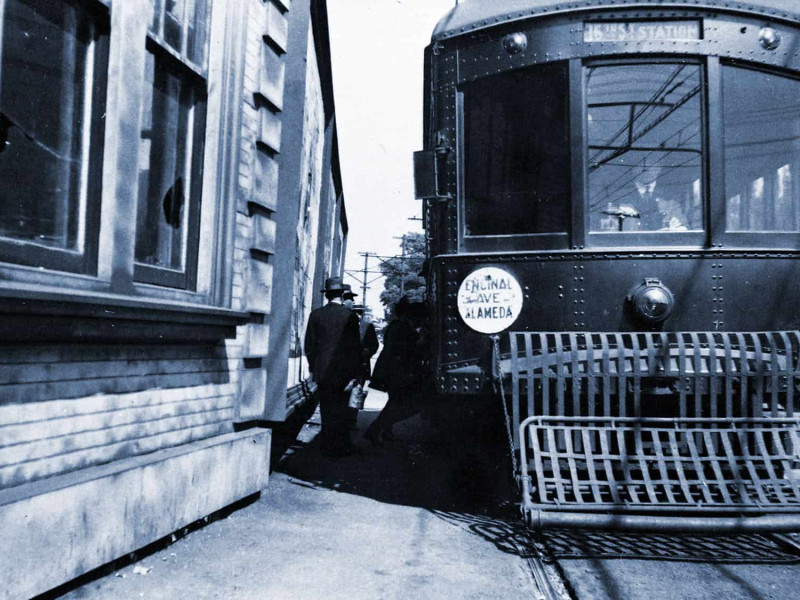
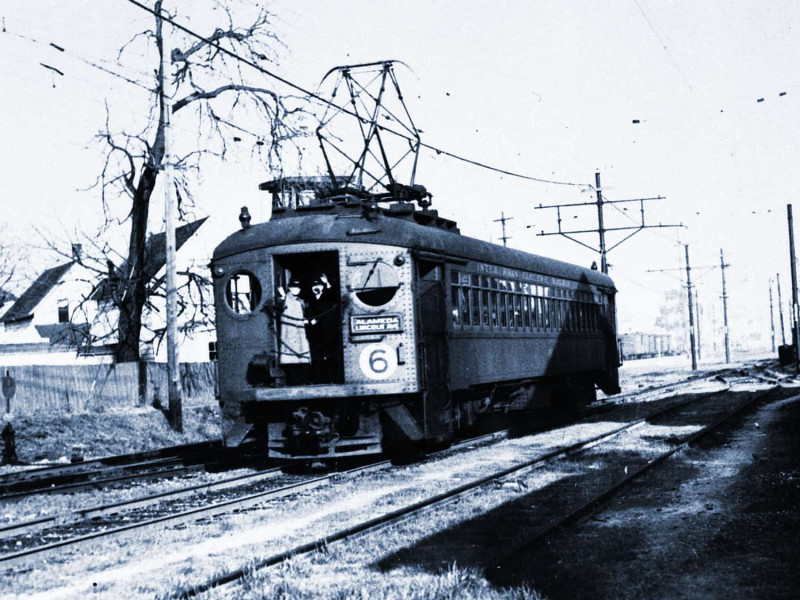
July, 2022 – Alameda’s Innovative Streetcars


Alameda PostCast Special #1
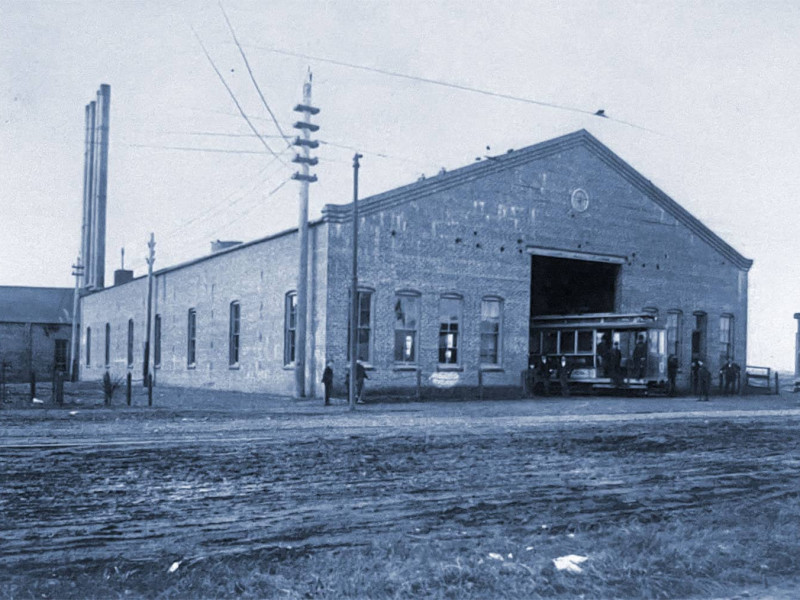
Dennis Evanosky discusses the entire 70-year history of Alameda’s streetcars.
June, 2022 – Alameda’s Changing Shoreline
- Tour the Changing Shores of the Oakland Estuary
- Waterway Created the Island City
- Photos from June 11 tour of the creation of the Oakland Estuary on Facebook
- Explore Neptune Beach This Saturday
- Explore Alameda’s Lost Baths and Beaches
- Photos from June 18 tour of forgotten baths and Neptune Beach on Facebook
- South Shore Rises
- Photos from June 25 tour of Utah Construction and South Shore on Facebook