At its meeting on Tuesday, January 27, the Alameda Unified School District (AUSD) Board of Education took a deep dive into Smarter Balanced Assessment Consortium (SBAC) test results with a focus on math outcomes.
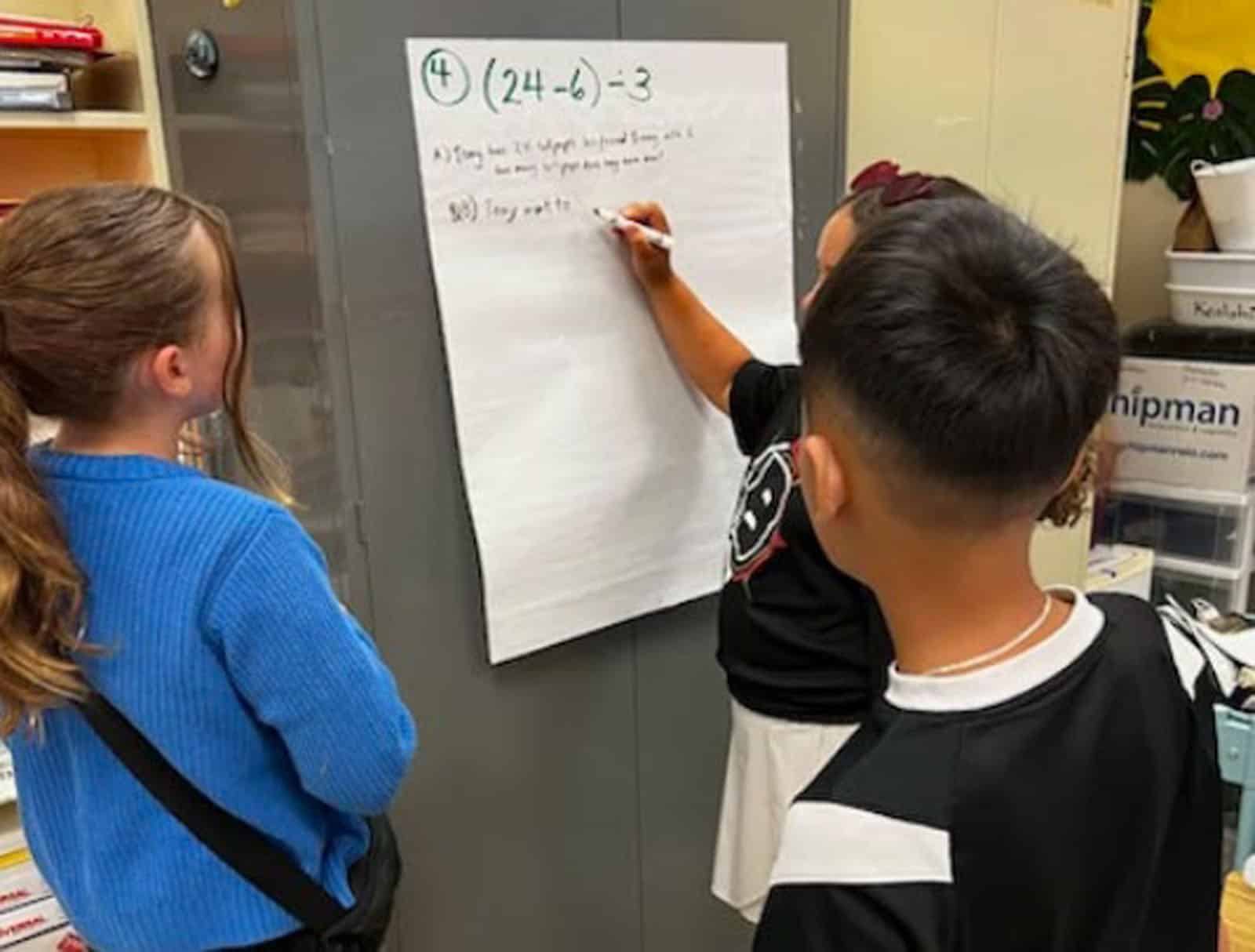
Similar to the discussion on reading and literacy efforts in the fall, key district staff joined a study session to provide insight into efforts the district is taking to improve mathematical teaching and learning in the classroom, framed by SBAC math assessment results. The SBAC is an annual assessment taken by students in third through eighth grade and in eleventh grade that measures progress in both math and English Language Arts (ELA).
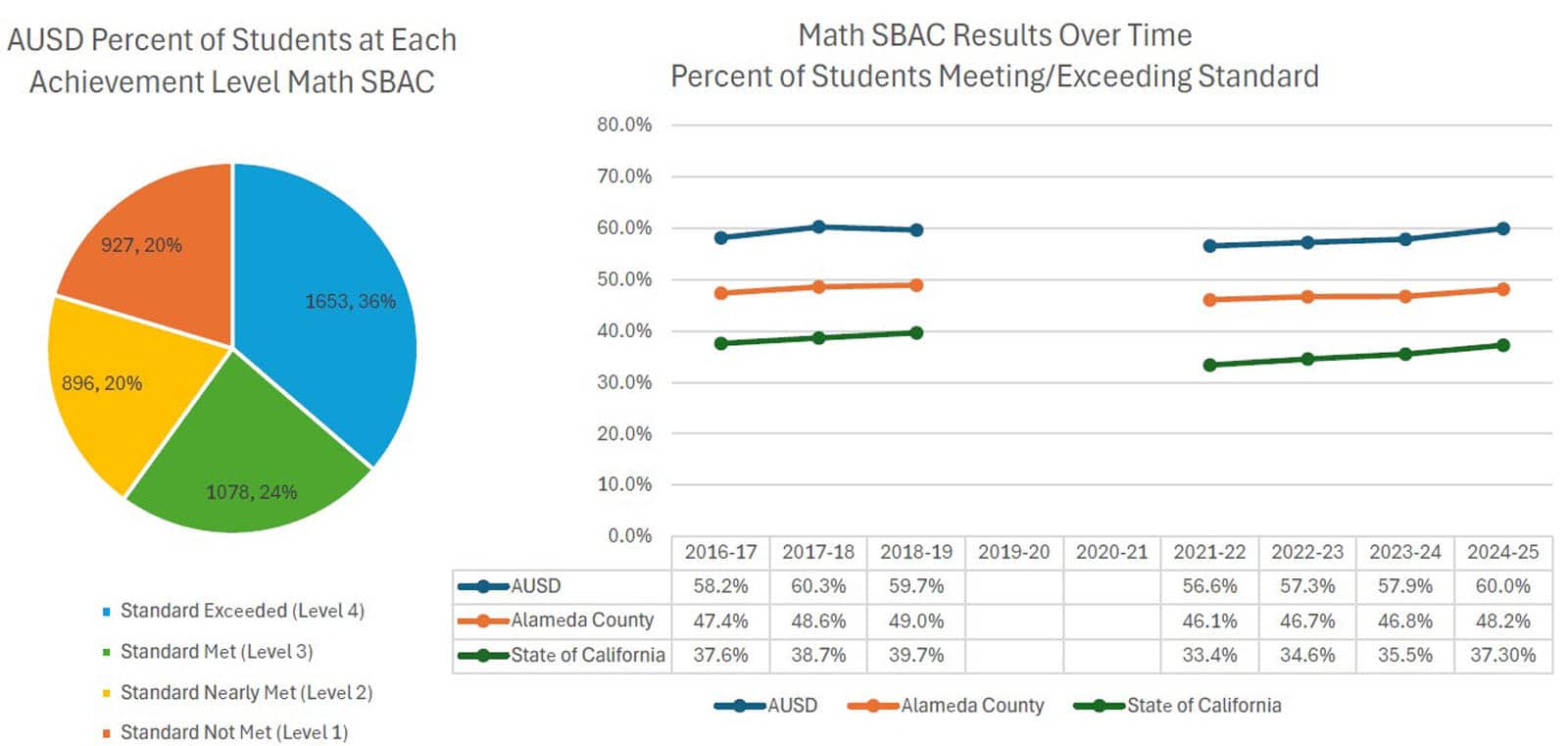
Lindsey Jenkins-Stark, AUSD Senior Manager of Data, Assessment, and Research, kicked off the workshop by explaining how students are tested and discussing trends in student performance. Overall, the percentage of AUSD students meeting or exceeding standards has increased and recovered from a drop caused by the COVID-19 pandemic. Math performance improved in almost all districts in Alameda County in the 2024-2025 school year, and AUSD students continue to score better than county and state averages.
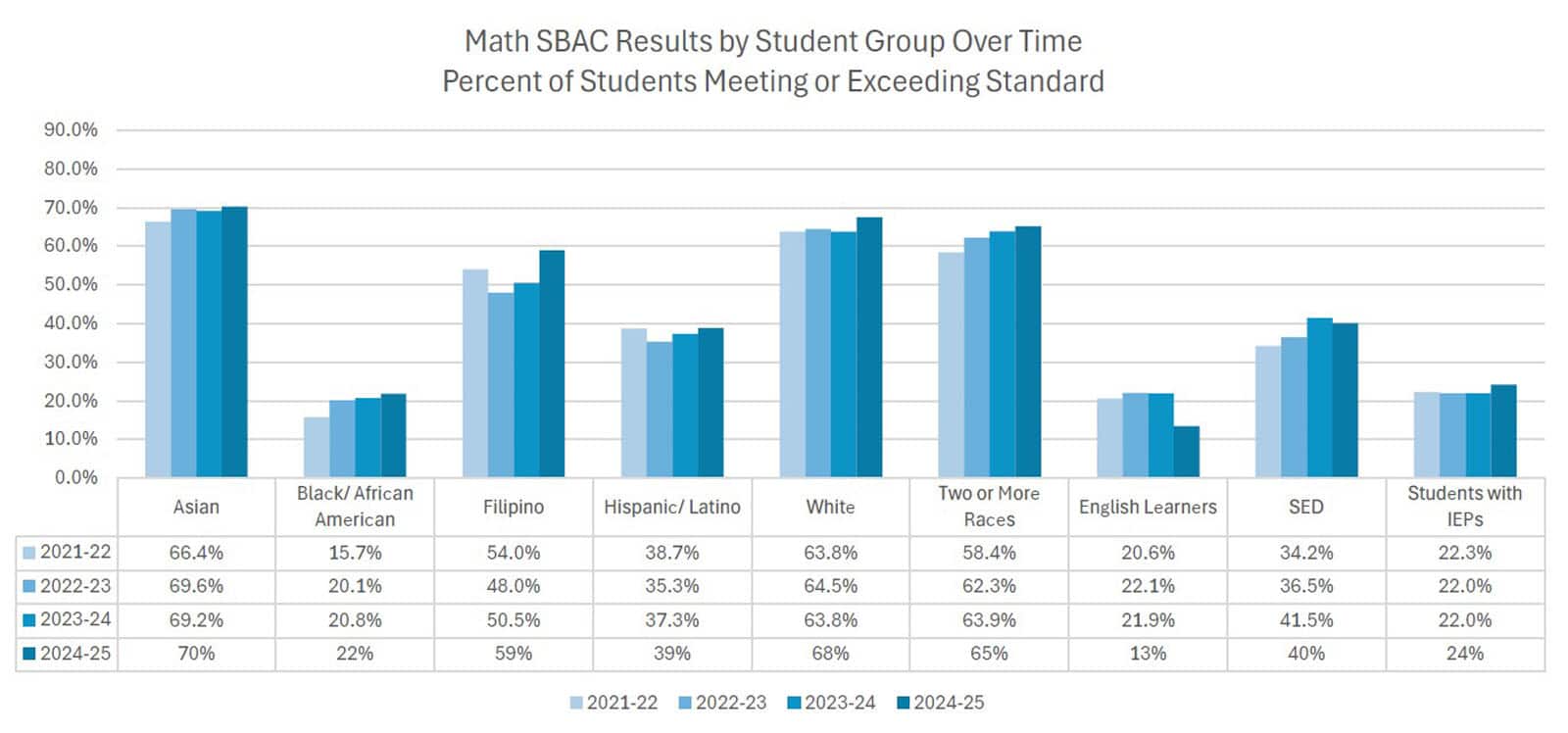
However, performance gaps still persist based on student groups—most notably, the percentage of students in the English Learner group that met or exceeded standards fell from nearly 22 percent last school year to 13 percent this year.
“We are performing better than the state and the county in math,” said Vernon Walton, Director of Secondary Education. “However, as a district, we are not happy with this—better is just not good enough. Our goal…is to support all students into growing toward becoming proficient in math by the eighth grade.”
“It is a moral imperative that we do not leave students behind,” Walton added.
For a student, “true math proficiency” looks like a positive math identity and the ability to use strong reasoning skills to develop deep conceptual understanding, according to Walton. To foster those skills in the classroom, Walton outlined a “science of math” approach that fundamentally shifts the system of learning into one that is student-driven. Instead of the traditional teacher-centered approach, the student becomes an active thinker and works together with classmates to tackle real-world, open-ended tasks and challenges, while the teacher fulfills more of a facilitator-type role.
Wood Middle School Math Teacher Andrew Guyatte described ways he has been implementing this approach in the classroom to encourage his students to adopt a “start together, finish together, work together” mindset.
Related Articles




“I really want and encourage my students to explore and problem-solve on their own,” explained Guyatte. “I want them to engage in a productive struggle. We’re not always going to feel secure and comfortable.”
The application of this model in math classrooms districtwide remains a gradual process following the adoption of a new math curriculum in spring 2024, and requires refinement of a shared vision and continued meaningful professional development time for teachers to understand and trade success stories.
Board members expressed excitement for the progress made so far and related their own experiences with math when they were students.
“This idea of math being ruthlessly cumulative really resonated with me,” said Board Clerk Jennifer Williams. “The moment you hit an obstacle that was difficult—if you didn’t catch on, the bus kept going, and then the rest of your math was negatively impacted.”
Trustee Gary Lym added, “The moment you fall behind, there is a critical gap in concept. I am very appreciative for the strides we have made and that we are actually addressing this in a way that helps students mitigate the conceptual loss by the time they get to high school.”
Later in the meeting, the Board received an update on the Governor’s budget proposal for fiscal year 2026-2027, which could impact the district’s financials as it develops the budget for the upcoming school year. The Board also approved audit reports for AUSD and for the Measure I and Measure B bonds—financial auditing firm Baker Tilly maintained clean audit opinions for each.
Ken Der is a contributing writer for the Alameda Post. Contact him via [email protected]. His writing is collected at AlamedaPost.com/Ken-Der.
