The tattoo world lost a pioneering women’s tattoo studio and a safe space for LGBTQ+ folks when Diving Swallow, the esteemed studio in Oakland, closed in September 2025 after 21 years in business. One of the owners, Cedre Csillagi, recently set up Treehouse Tattoo, a private studio here in Alameda, and does tattoos there along with artist Wolf, who also was a co-owner of Diving Swallow.
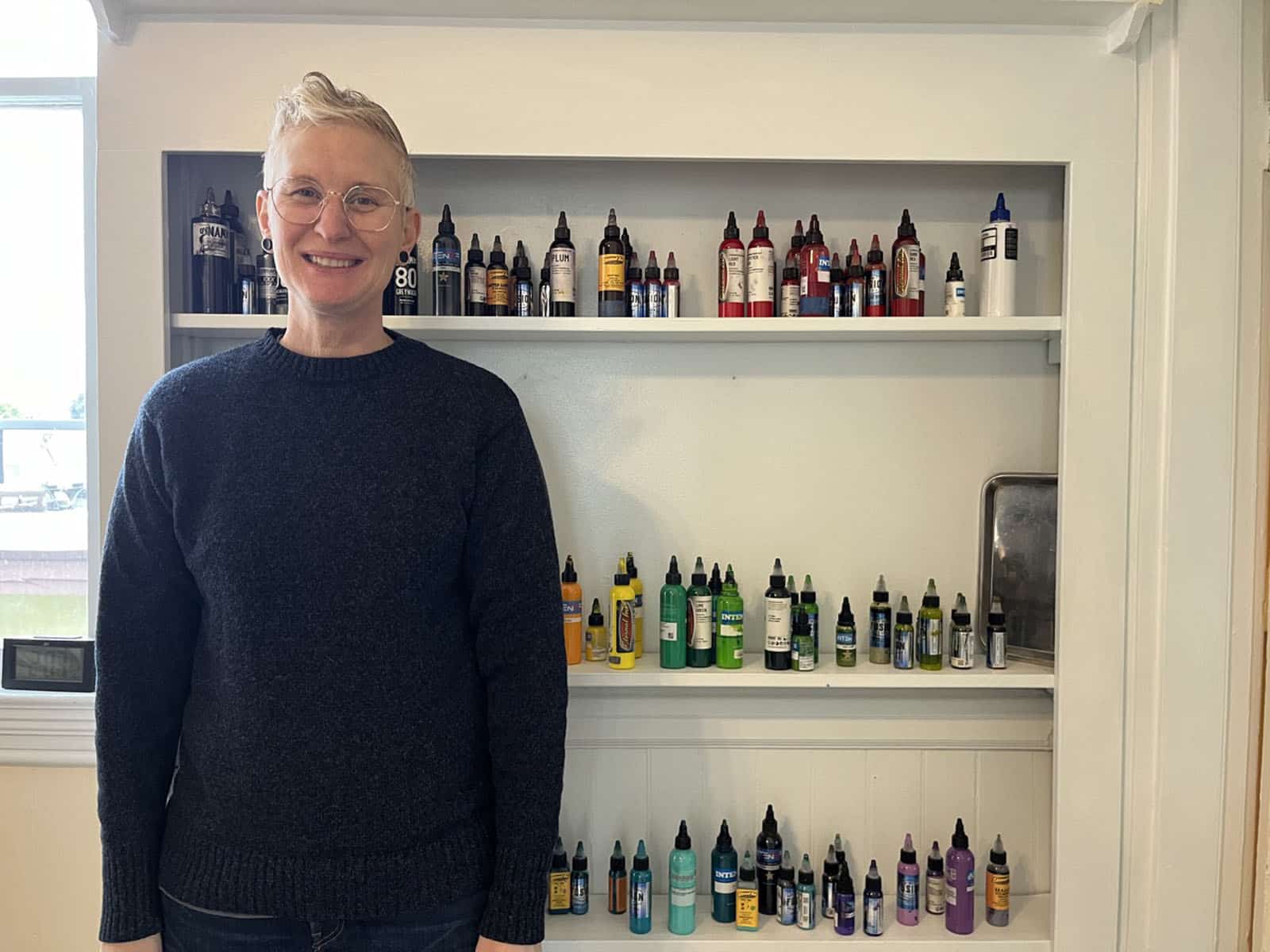
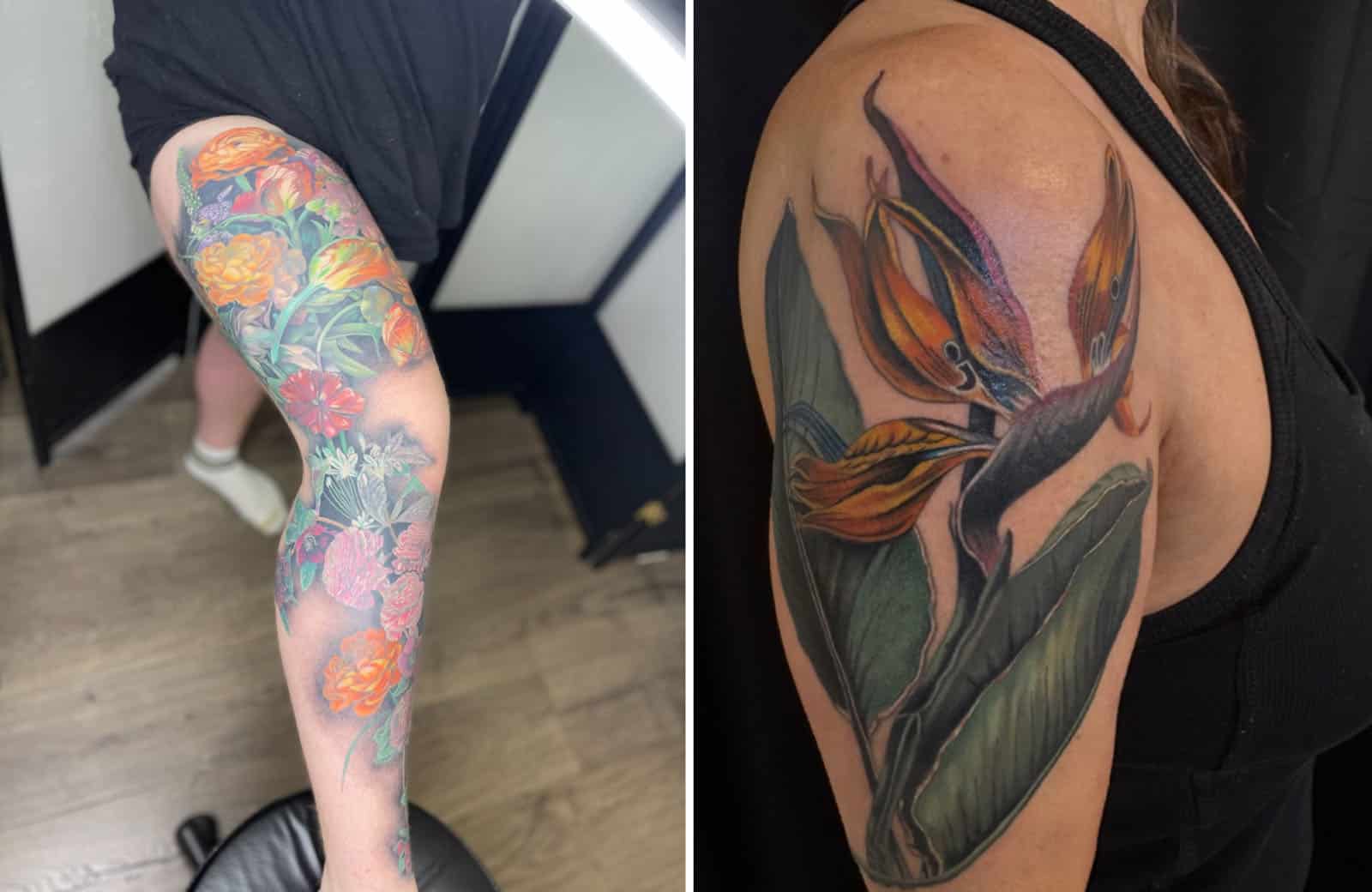
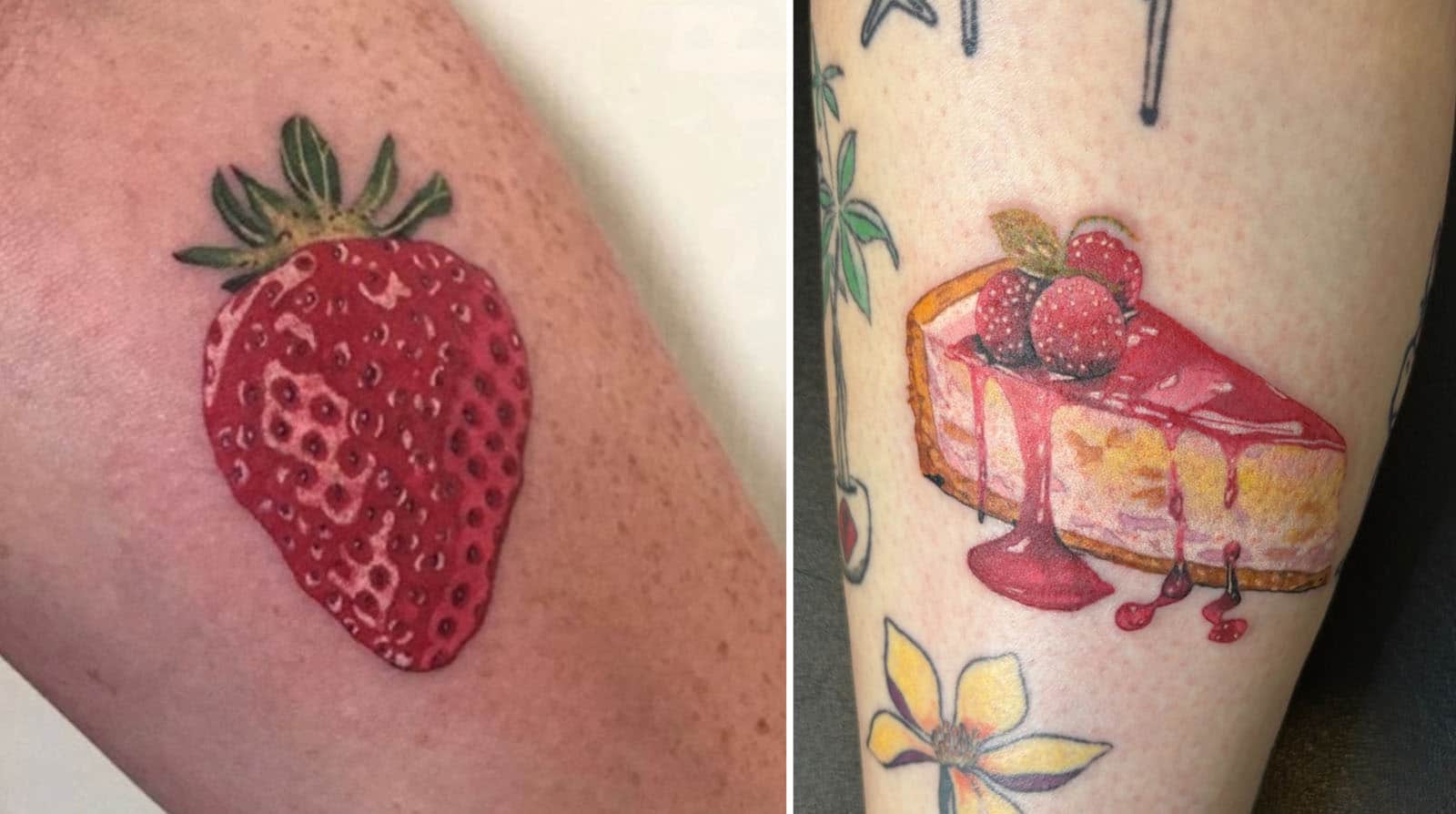
Csillagi, who uses they/them pronouns, specializes in botanical art and recreating paintings as tattoos. They also enjoy creating tattoos of food items. After making the difficult decision to close Diving Swallow, Csillagi was looking for a smaller, more private space. They told the Alameda Post, “I’ve always wanted to work in Alameda, so I was happy to find this place.”
The studio is situated on the upper floor of an office building at 2233 Santa Clara Avenue, accessed by a long set of outdoor stairs that makes it feel a lot like a treehouse. The cozy studio has a small waiting area and a bright interior that features a wall of tattoo ink bottles in a colorful array of shades and tranquil art on the walls.
Csillagi, who grew up in Texas, told the Post that they originally had dreams of being a professional soccer player and attended the University of Northern Texas on a full scholarship. They left after one semester. “I felt a little too gay there,” laughs Csillagi. They then transferred to the San Francisco Art Institute and studied sculpture.
As they were about to graduate, Csillagi began wondering how they could make a living from art and was introduced to tattooing through a friend of a friend who was tattooing out of her house. Csillagi hung out, watched her tattoo, and then tried doing a few.
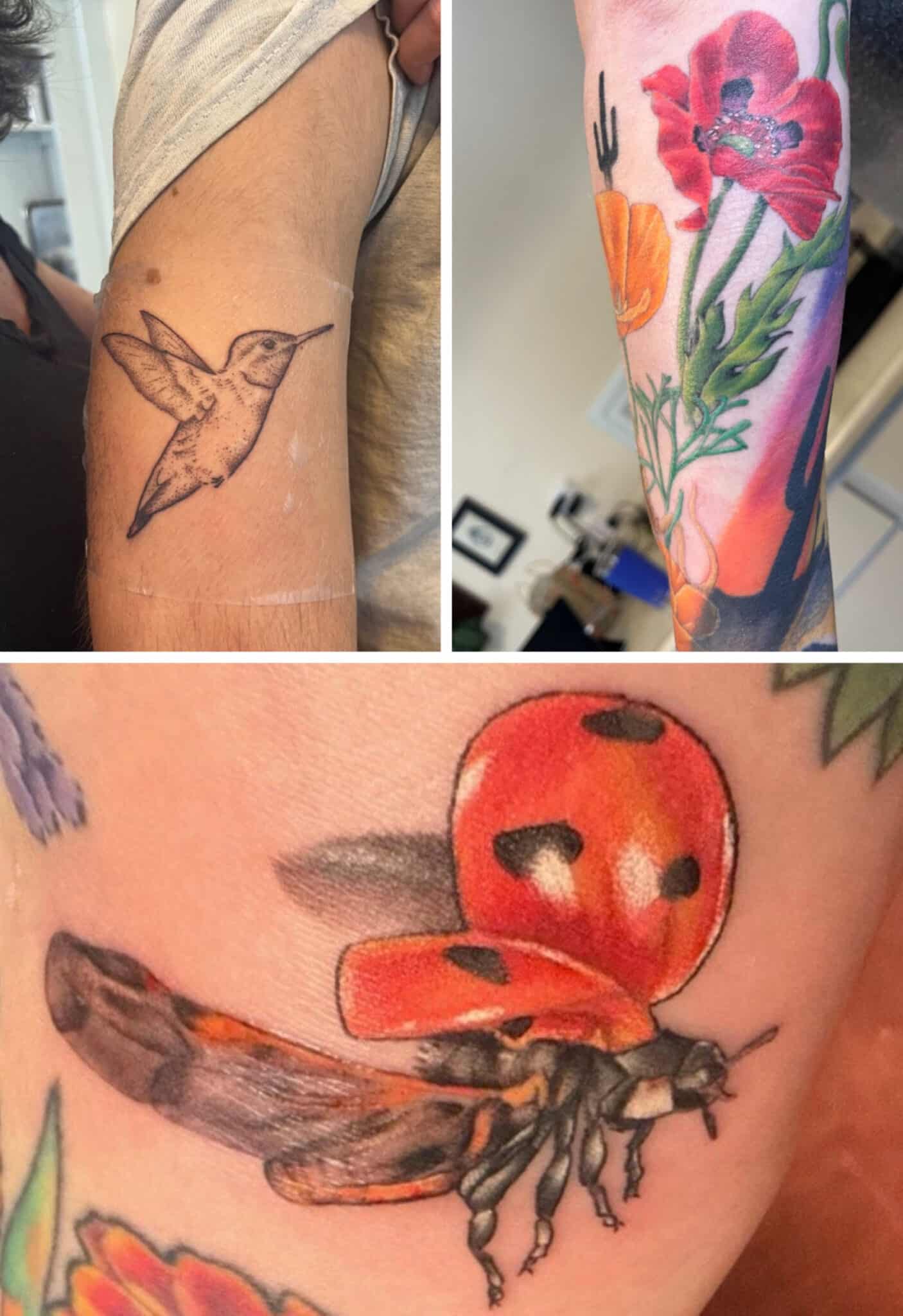
They then landed a job as the counterperson at Black and Blue Tattoo in San Francisco. “I basically made myself indispensable and made them take me on,” Csillagi recounted to the Post. Csillagi became an apprentice and learned how to tattoo. Black and Blue Tattoo at the time was an all-female, queer tattoo shop, an anomaly in an industry that was overwhelmingly white, male, and straight.
At the time, in the early 2000s, it was unheard of for a shop to have exclusively female artists. Only one other shop in San Francisco–Sacred Rose Tattoo–was owned by a woman. Until the 2010s, tattooing was very exclusive. Learning how to tattoo and getting equipment was difficult and required knowing someone who was already tattooing and hoping they would take you on as an apprentice.
Black and Blue Tattoo was revolutionary in creating a safe space for women and queer artists and clients. In 2005, Csillagi and two other tattooers left Black and Blue Tattoo for Oakland and opened Diving Swallow Tattoo. “We wanted to have a queer, safe place in the East Bay.”
Csillagi explained, “It was honestly like, let’s create a place we want—that’s queer, that’s safe for women and people of color and trans people and anyone that is marginalized… and at that time, it wasn’t very common.”
Csillagi also reminisced about the diverse and numerous art shows hosted by Diving Swallow that built community. “Never money-making, just community gathering. I think I’ll miss that the most from Diving Swallow, being able to have a space to open up and create for people.”


Despite transitioning to a private studio, Csillagi is still making connections, building community, and supporting trans people through “A Thousand Pansies.”
“Three years ago, I was like, everything is f*ed for the trans community. Policies are coming down and it’s terrible,” Csillagi told the Post. They felt that things were especially terrible in their home state of Texas, where they had a trans nephew. Csillagi’s straight white clients were asking how to help: “Where do we put our money?”
Csillagi then came up with the idea of tattooing pansies on people, with the proceeds going to The Knights & Orchid Society, a Black trans-led nonprofit organization in Alabama. “I chose the pansy because of its longstanding history for queerness, reclaimed in the queer community for being called pansies a long time ago.”
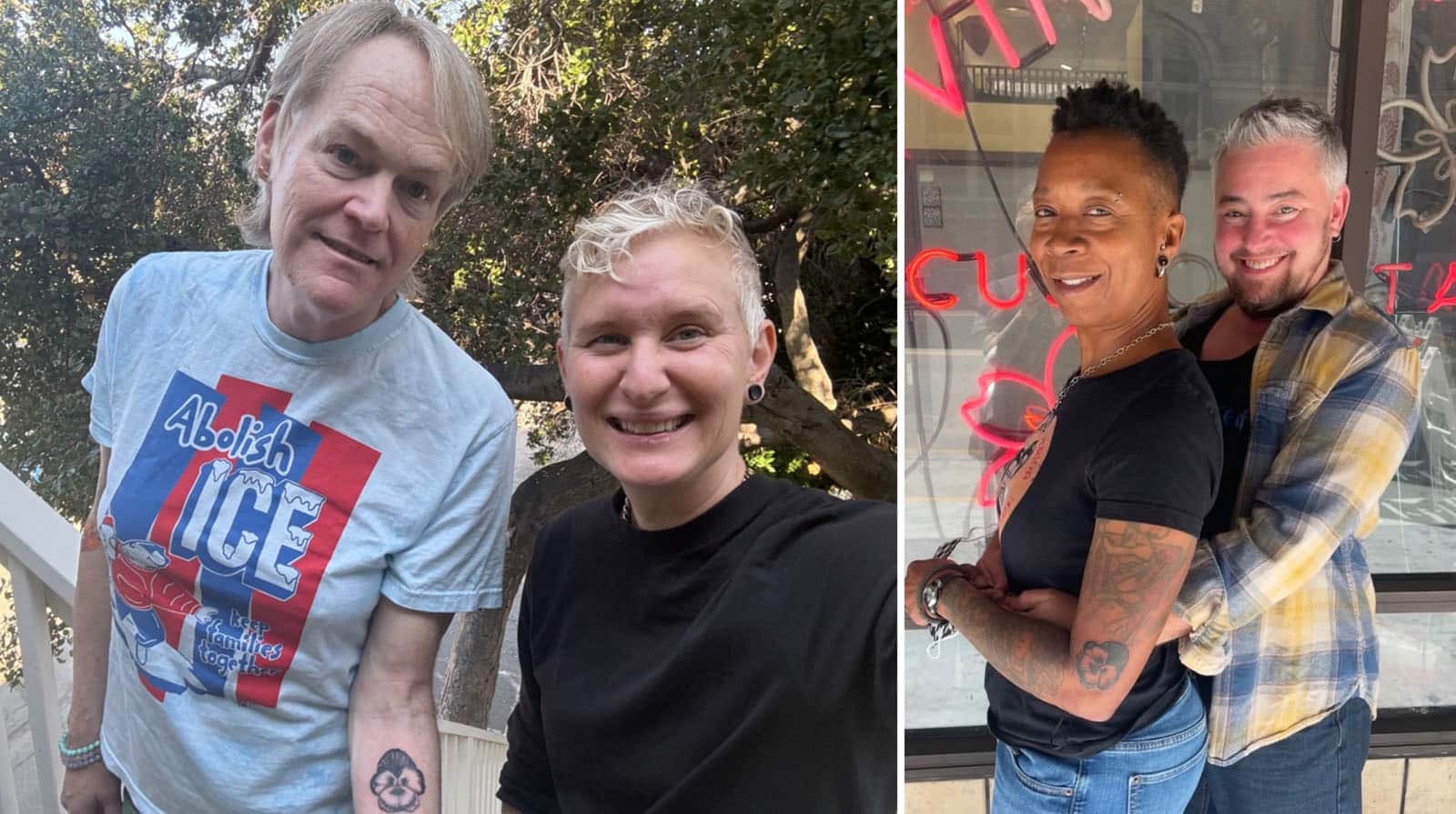
In addition to Csillagi, 16 other tattooers all over the United States are now participating in the project. Csillagi explains that the artists volunteer their time and artwork and that people donate $500 for the tattoo. Or, they can donate extra money for someone else to get a pansy who can’t afford the $500 donation.
The project is documented through interviews with clients talking about why they chose to get tattooed and what the project means to them. “I really didn’t want a bunch of pictures of body parts,” explains Csillagi. “I really wanted people who were getting the pansy to talk about their process.” So far, A Thousand Pansies has raised $113,000.
Csillagi, who currently has a one-year waitlist, can be reached at [email protected]. See them on Instagram @cedretattoos, where you can access their website, mailing list, and request a consultation.
To get tattooed by Wolf, email [email protected]. You can check out their Instagram account @wolf.heart_
The Instagram account for A Thousand Pansies is @a1000pansies.
Jean Chen is a contributing writer for the Alameda Post. Contact her via [email protected]. Her writing is collected at AlamedaPost.com/Jean-Chen.
