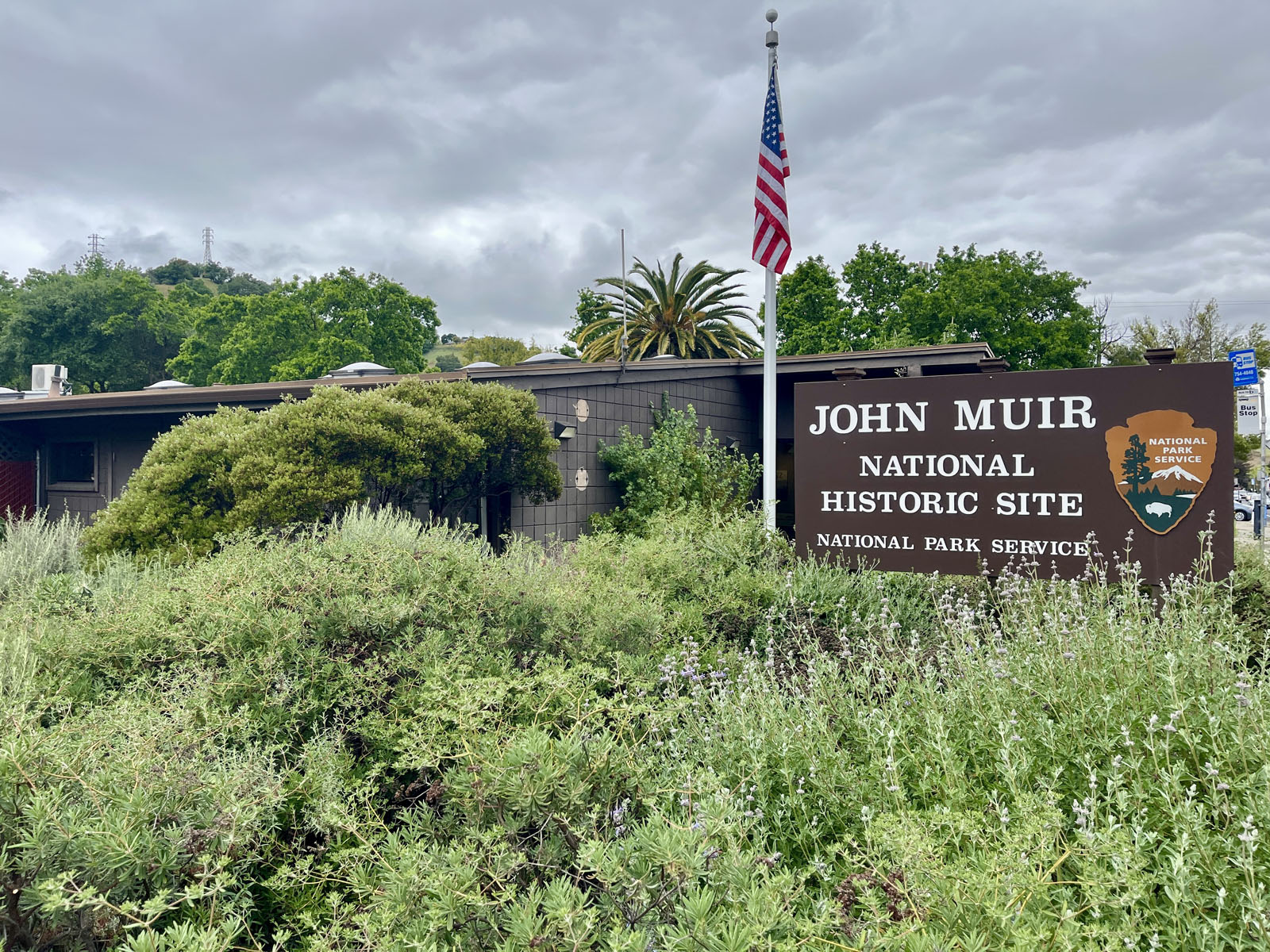
After almost 41 years of living in the Bay Area, I’d somehow never managed to visit the John Muir National Historic site in Martinez. So, when entertaining out-of-town guests recently, I decided that a visit to this historic site might make an interesting and enjoyable day trip. We packed a picnic lunch, loaded up the car, and set off on the 35-minute drive out to the former home of John Muir.
Scottish roots
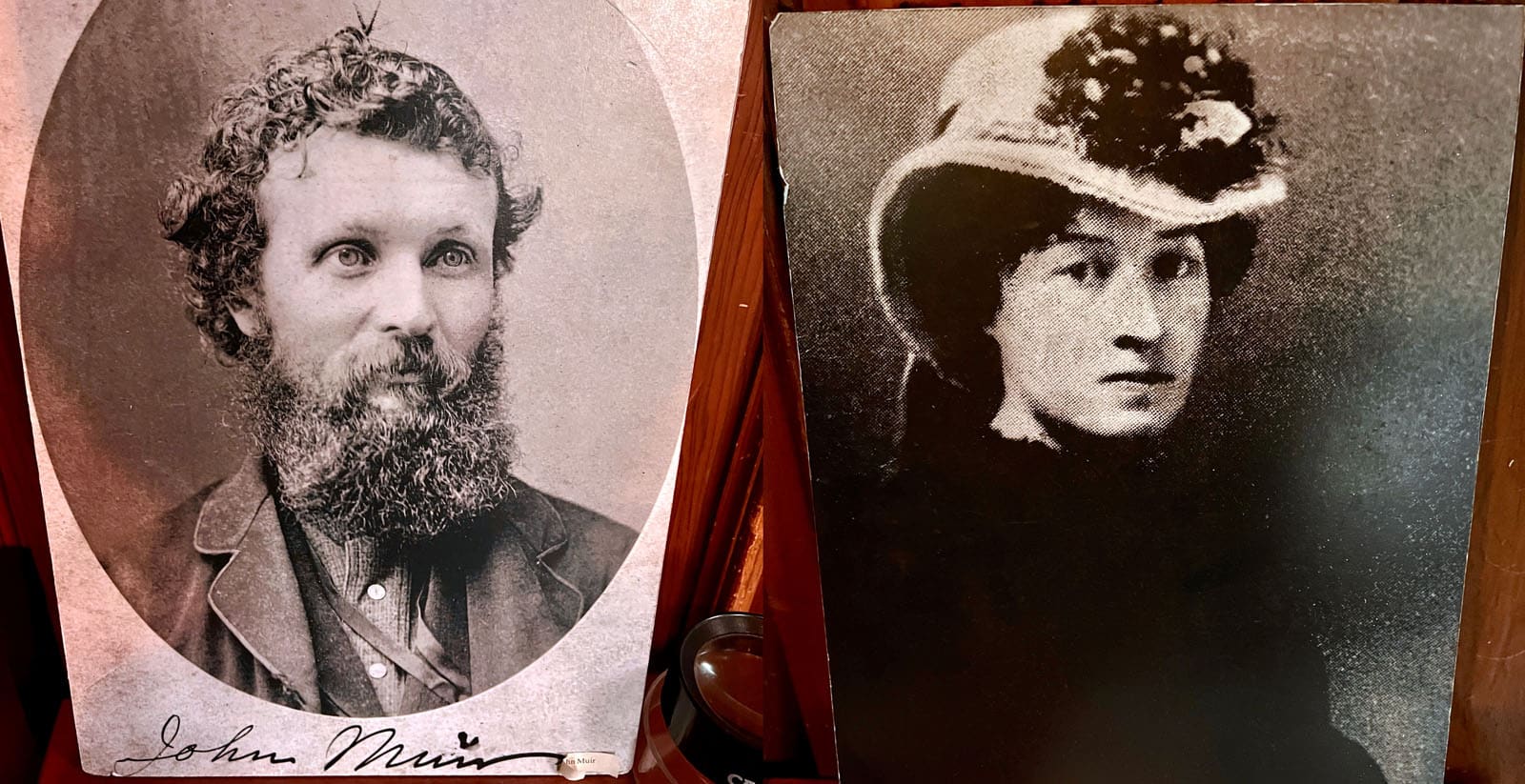
John Muir (1838-1914) was born in Dunbar, Scotland, and in 1849 his family moved to the United States, where they established a farm near Portage, Wisconsin. By age 22 John had taken his first botany lesson at the University of Wisconsin-Madison, but he left school after two years to begin his real education out in the world of nature. After wandering and working in southern Ontario, Canada, for a couple of years, Muir returned to the U.S. in 1866, where he found work at a wagon wheel factory in Indianapolis.
A life-changing accident
In March of 1867, a tool Muir was using in the woodshop slipped and damaged his right eye. With the left eye also affected by the incident, John Muir was confined to a darkened room for six weeks as he hoped and prayed that his eyesight would return. When his sight finally did return, Muir saw the world in a new light, and vowed to be true to himself, following his dreams of exploration and the study of the natural world.
A thousand-mile walk
In September of 1867, Muir began a walk from Kentucky to Florida, which he later recounted in his book, A Thousand-Mile Walk to the Gulf. Sketching plants along the way and keeping a journal, Muir eventually found work in Cedar Key, Florida. After surviving a bout of malaria, he sailed for Havana, Cuba, where he spent many hours studying shells and flowers in that city. Afterward, he sailed to New York City where he booked passage to California.
Destiny awaits
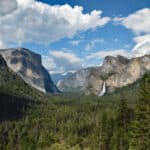
Settling in San Francisco in 1868, Muir soon made his first trip to Yosemite, a place he had only heard stories about. From that moment on, though he would travel around the world, California became his home, and Yosemite his spiritual temple. Working as a shepherd for a season, Muir built a small cabin on Yosemite Creek, constructing it so that a section of the creek flowed through a corner of the room. Muir spent a few years in Yosemite, scaling its lofty peaks, meeting with writers and naturalists like Ralph Waldo Emerson and Joseph LeConte, and developing his controversial (at the time) theory of Yosemite being formed through glaciation. Muir wrote a book about this period of his life, titled My First Summer in the Sierra. His biographer, Frederick Turner, said that Muir’s writing at that time “blazes from the pages with the authentic force of a conversion experience.”
Domestic life
After his years living in Yosemite, Muir set off on a trip to Alaska, a place he would visit seven times between 1879 and 1889. In 1880, he returned to Oakland and married Louisa Strenzel (1847-1905), daughter of the successful Martinez fruit rancher John Theophil Strenzel. according to NPS.gov.
“Louie (as she was known) was a wonderful musician, wife, mother, ranch manager, and helpmate,” according to NPS.gov. “Muir did not relegate Louie to an anonymous life in the background—this is what she herself preferred. She stayed close to home because she wanted to, preferring not to be away more than a day or two. Certainly, she was not inclined to camp out on an Alaskan glacier or even take a walk in the hills near their Alhambra Valley home.”
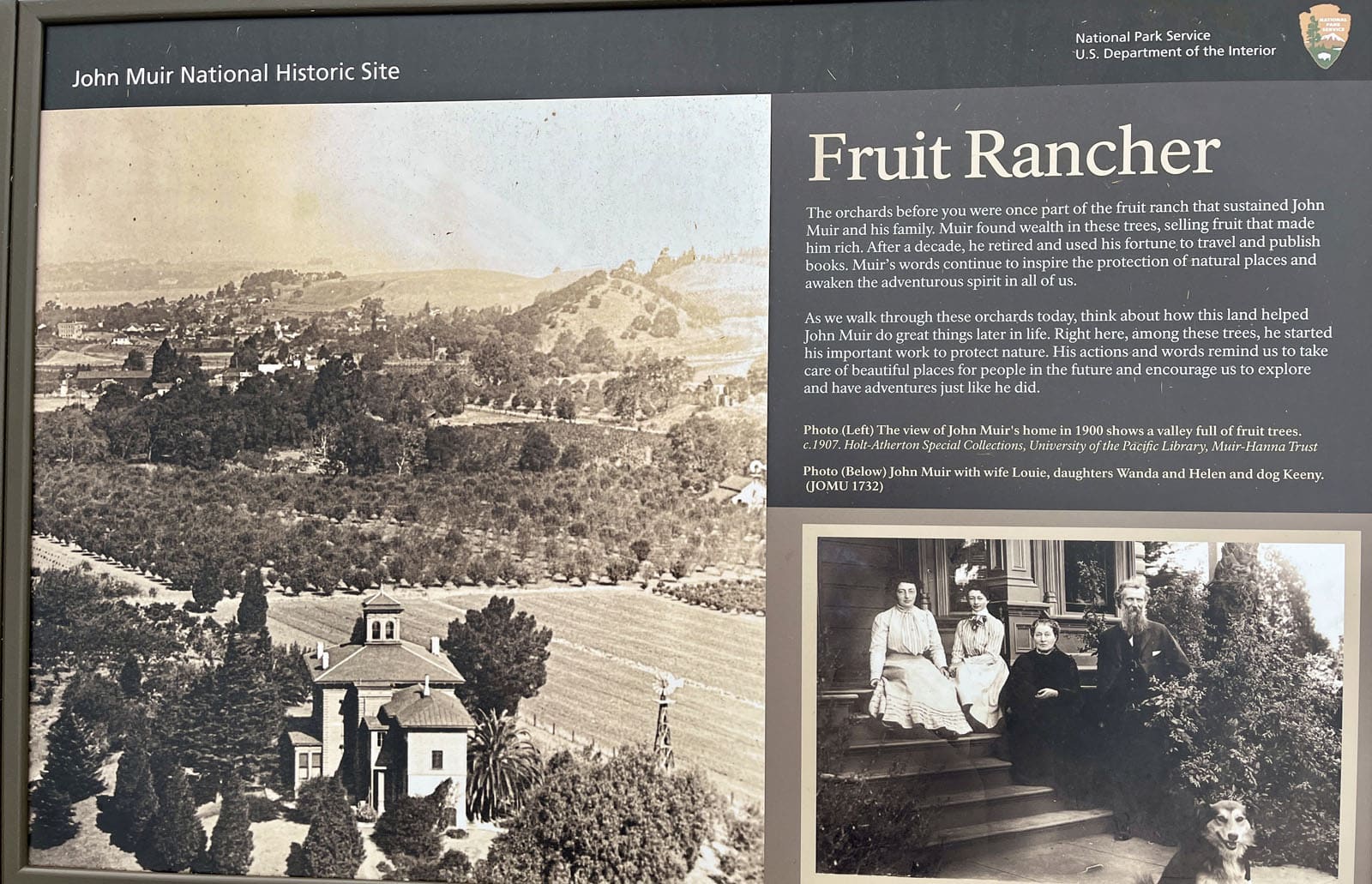
After marrying Louisa, John Muir went into partnership with his father-in-law and managed the family fruit ranch in Martinez with great success. In 1881 their daughter Wanda was born, and in 1886 they welcomed their second daughter, Helen.
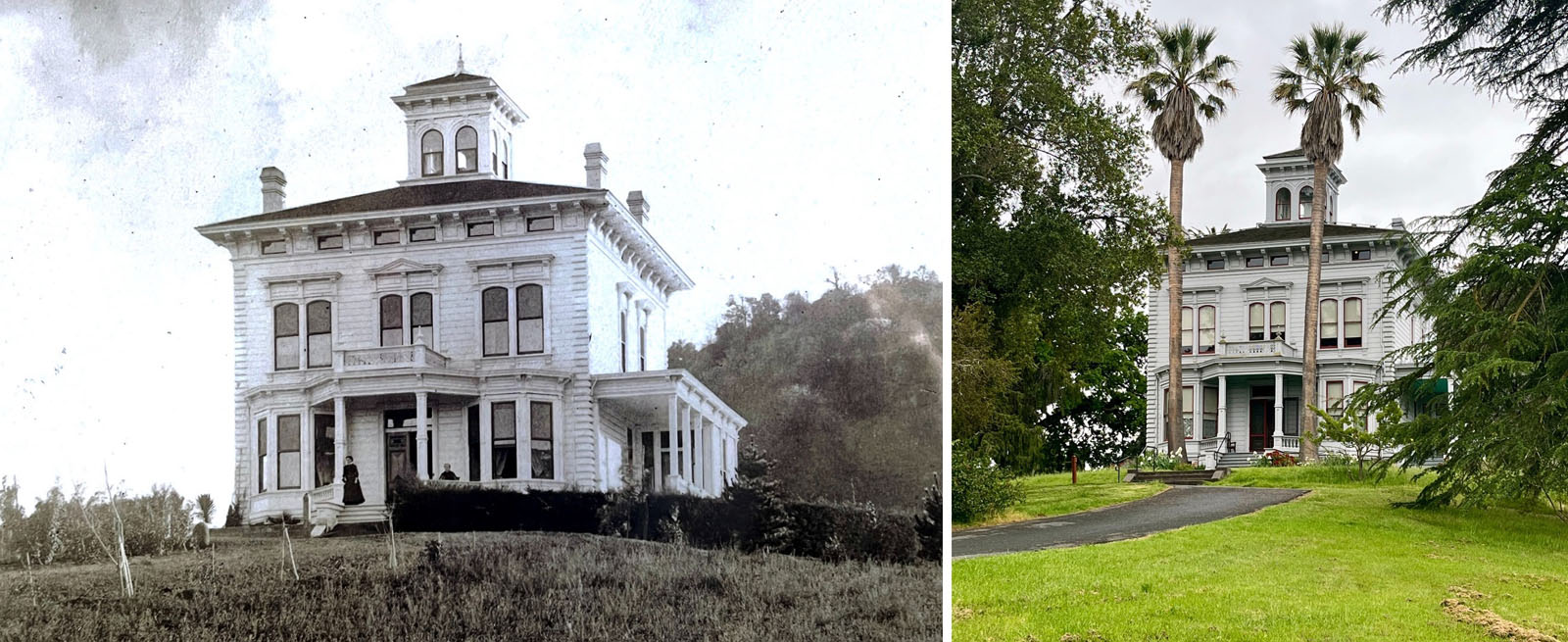
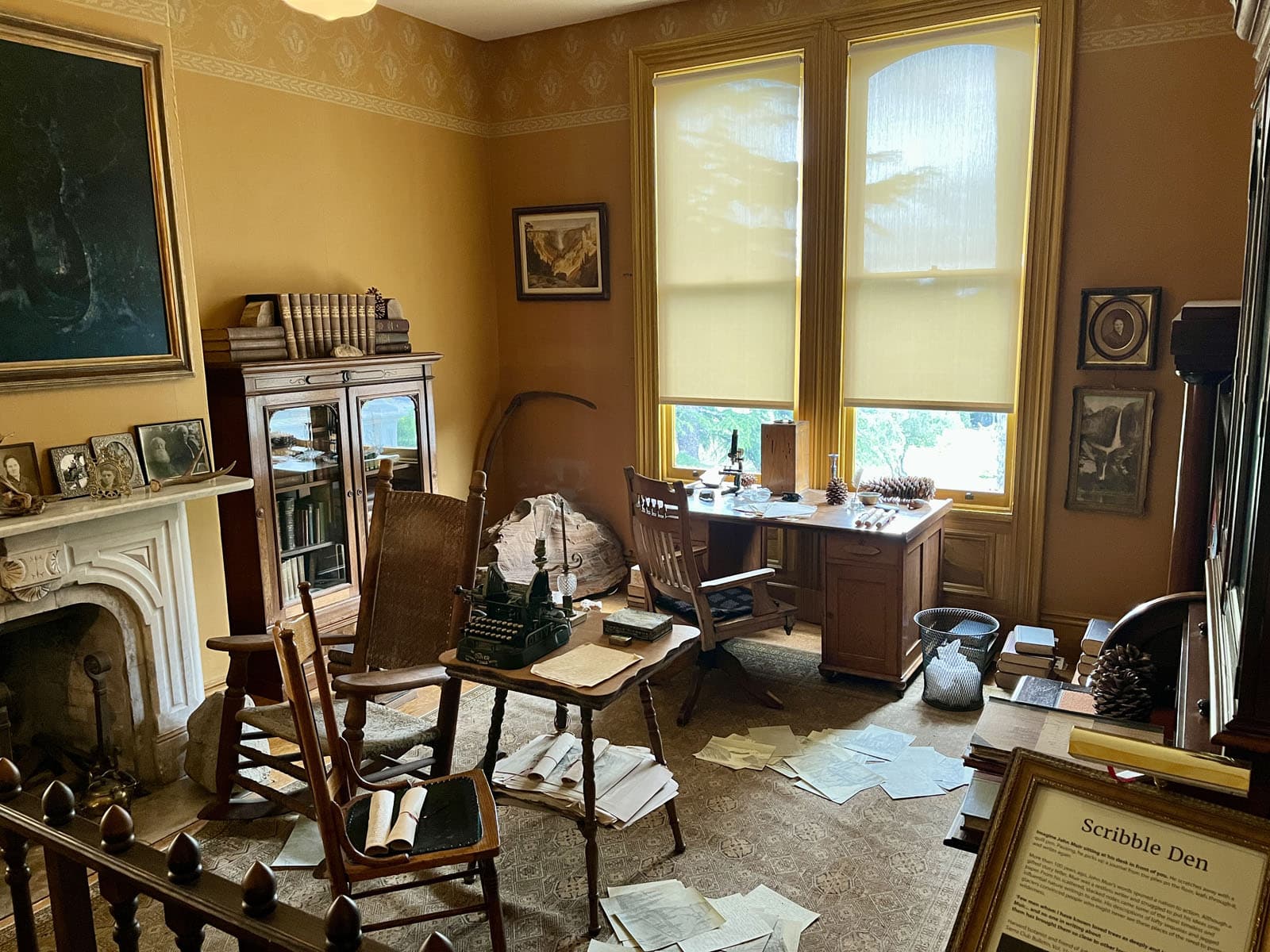
In 1890, John T. Strenzel died, and his widow, Louisiana E. Strenzel, invited her daughter and family to move in with her. So John Muir’s family moved into the big house on the ranch, which had been built by Strenzel in 1882. This would be Muir’s home until his death in 1914. Here, in the second-floor “scribble den,” Muir would write most of his published work and all of his books, which established him among the world’s most well-known nature writers.
Wanderlust
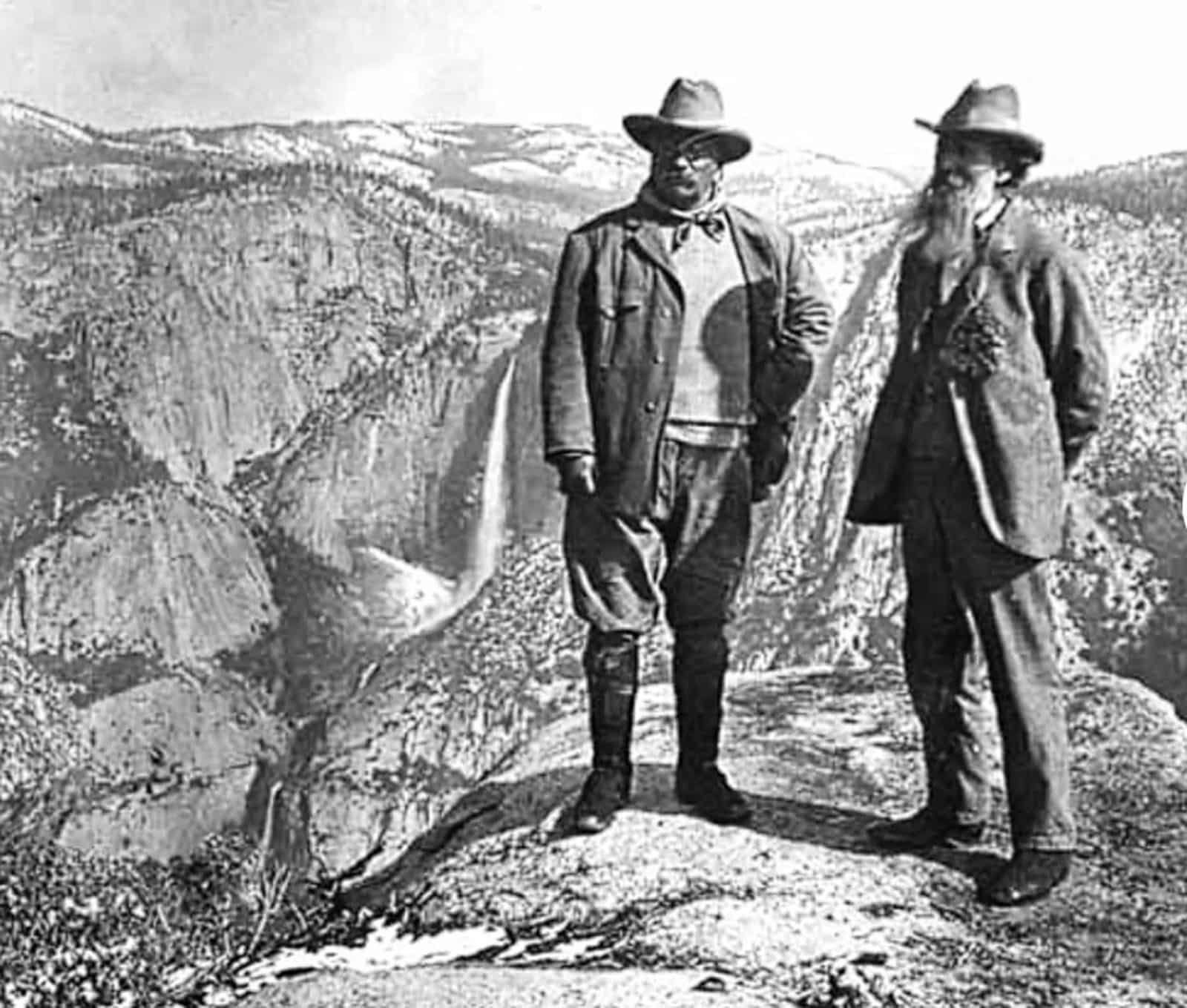
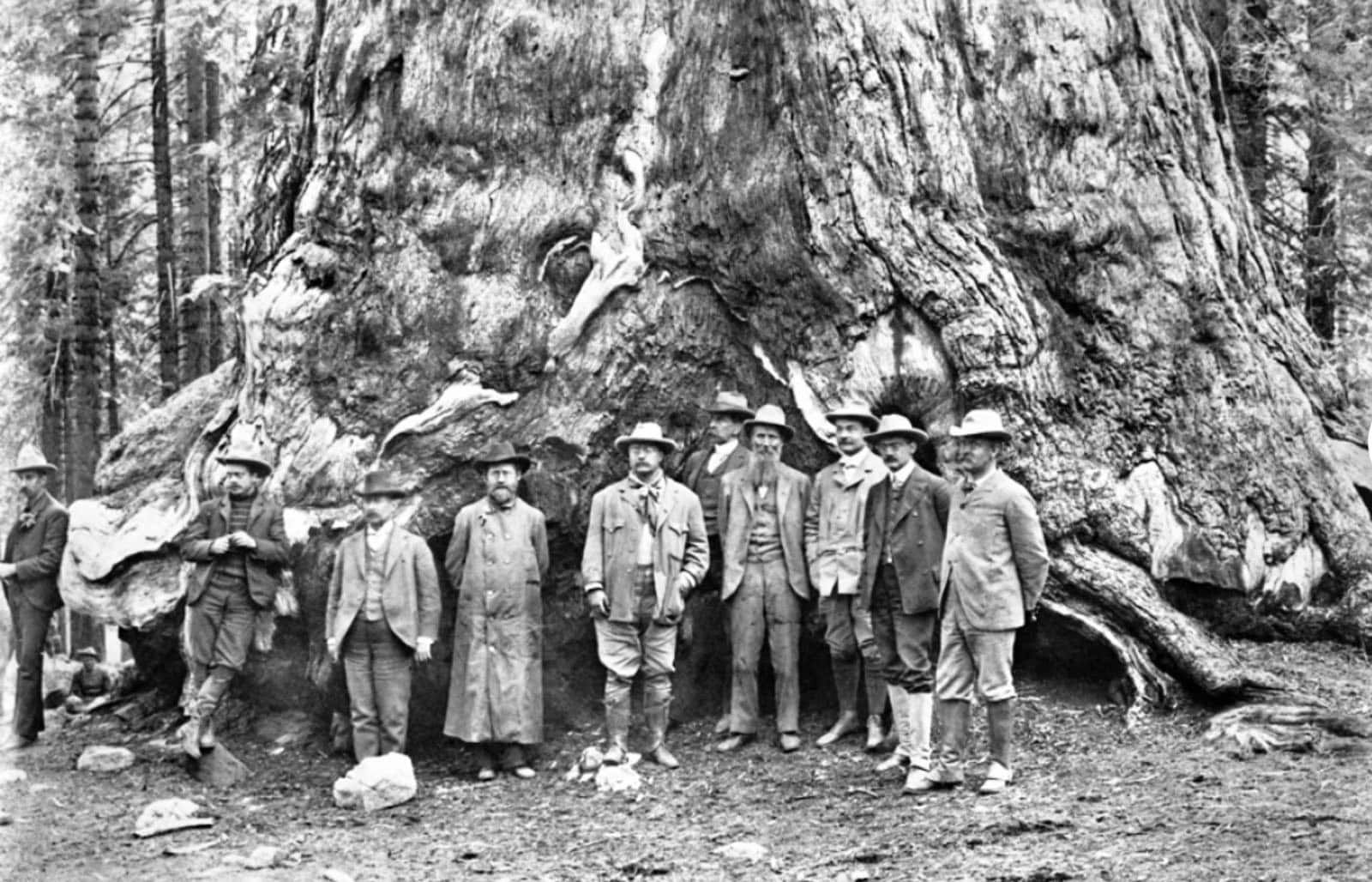
Ten years of ranching and writing did not cure Muir’s wanderlust, which took him again and again to Alaska, Australia, South America, Africa, Europe, China, and Japan, along with his beloved Sierra Nevada. In 1892 he co-founded the Sierra Club with professor Henry Senger and San Francisco attorney Warren Olney. Muir was elected its first president. Among the club’s first initiatives was to oppose efforts to reduce Yosemite National Park by half. Muir had lobbied successfully for the park’s creation in 1890 and then asked for additional protections when he guided President Theodore Roosevelt on a tour of the park in 1903.
A crushing defeat
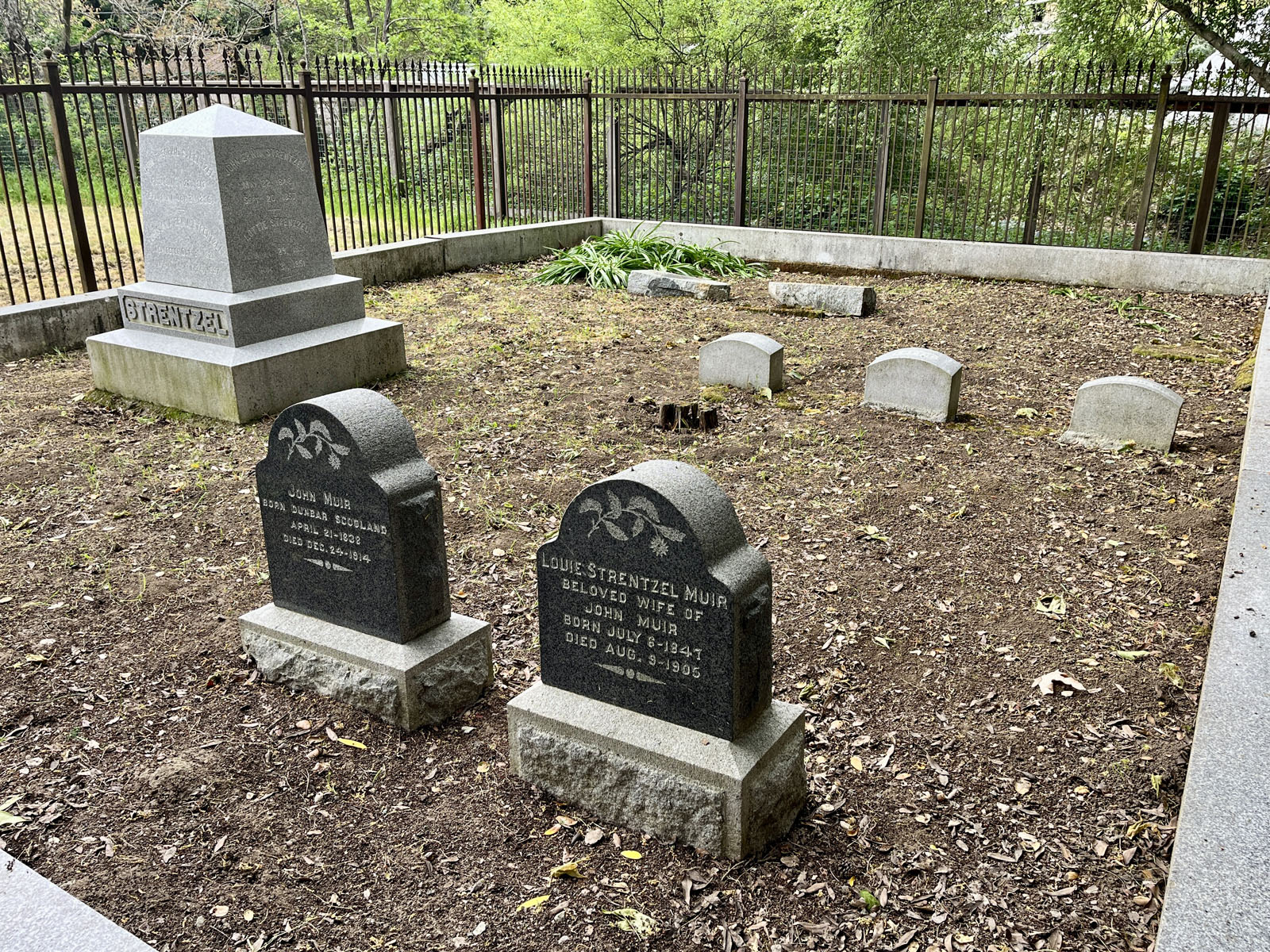
Though John Muir and the Sierra Club were successful in many of their campaigns to safeguard our precious natural areas, the last big fight of Muir’s life was one that he lost. In 1913, after years of opposition from Muir and other preservationists, the battle to save Yosemite’s Hetch Hetchy Valley was lost, and the valley was dammed to create a reservoir and power generating station for San Francisco. The following year, after a short illness, Muir died in a Los Angeles hospital after visiting his daughter Wanda, who lived in Daggett, California, at the time.
In memoriam
The Sierra Club eulogizes Muir as such: “John Muir was perhaps this country’s most famous and influential naturalist and conservationist. He taught the people of his time and ours the importance of experiencing and protecting our natural heritage. His words have heightened our perception of nature. His personal and determined involvement in the great conservation questions of the day was and remains an inspiration for environmental activists everywhere.”
A visit to Muir’s home
A visit to the John Muir National Historic Site is a rare glimpse into the life of this iconic figure, as well as a well-preserved remnant of the once vast Strenzel-Muir fruit ranch. What was once a 2,666-acre ranch is now down to just 345 acres, and yet that amount of land, still containing fruit orchards, manages to provide a sense of the original rural landscape.
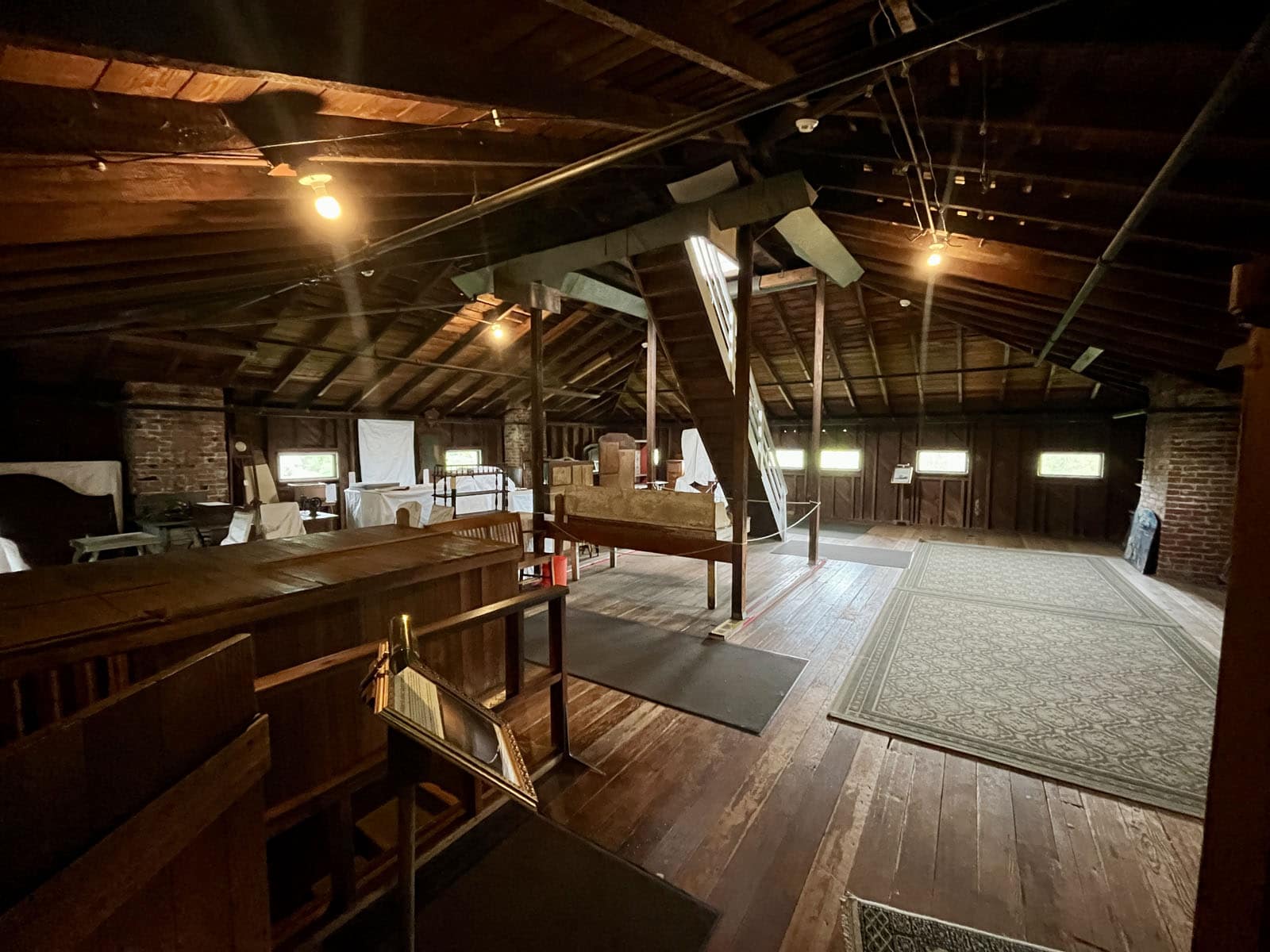
The original circa 1882 Italianate style home still sits on the same knoll that once provided the family with a view out over their holdings, and is accessible to visitors on all its levels, from the first floor parlors, to the second floor bedrooms and Muir’s “scribble den”, all the way up to the vast attic, along with its narrow staircase leading up to the bell tower and cupula. Historical materials, photographs and interpretive signs abound, and one can’t help but feel much more educated and appreciative of the life of John Muir after leaving this place. I’m sorry it took me 41 years to get here, but I’m so glad I did. It’s never too late to learn about history, and preserve the past so that we can apply its lessons to the future.
If you go
The John Muir National Historic Site is located at 4202 Alhambra Avenue in Martinez, California. The phone number is 925-228-8860.
Operating hours are Tuesday through Saturday, 10 a.m. to 5 p.m. The site is closed on Sundays and Mondays.
Admission is free, and there is a small parking lot available at no charge.
Start your experience at the Visitor Center, before making your way up the hill to the house, orchards, and historic adobe structure built by Vicente Martinez in 1849. Plan approximately two hours for your visit.
