In Part 1 of this series on Scotty’s Castle, we learned that the historic Spanish Colonial Revival style retreat in the remote desert of Death Valley National Park is neither a castle nor a property ever owned by Scotty. How these contradictions came to be are the basis of the story of Death Valley Scotty, and how his tall tales, schemes, and engaging personality made him a legend in his own time. Since 1970, when Scotty’s Castle was purchased by the National Park Service, it has been the most popular attraction in the park. But that visitation would come to an abrupt halt on October 18, 2015, when a natural disaster hit the area.
A desert retreat
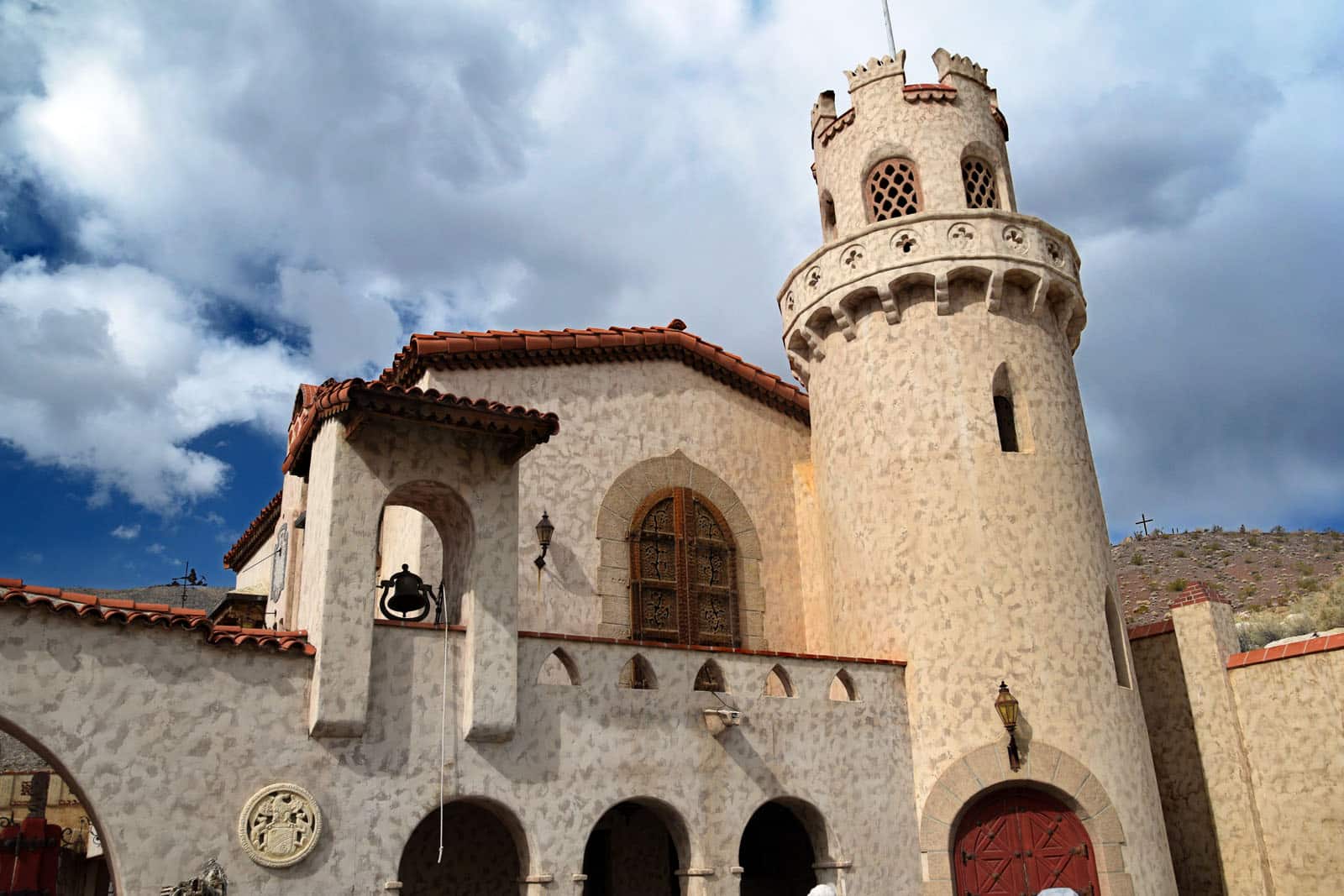
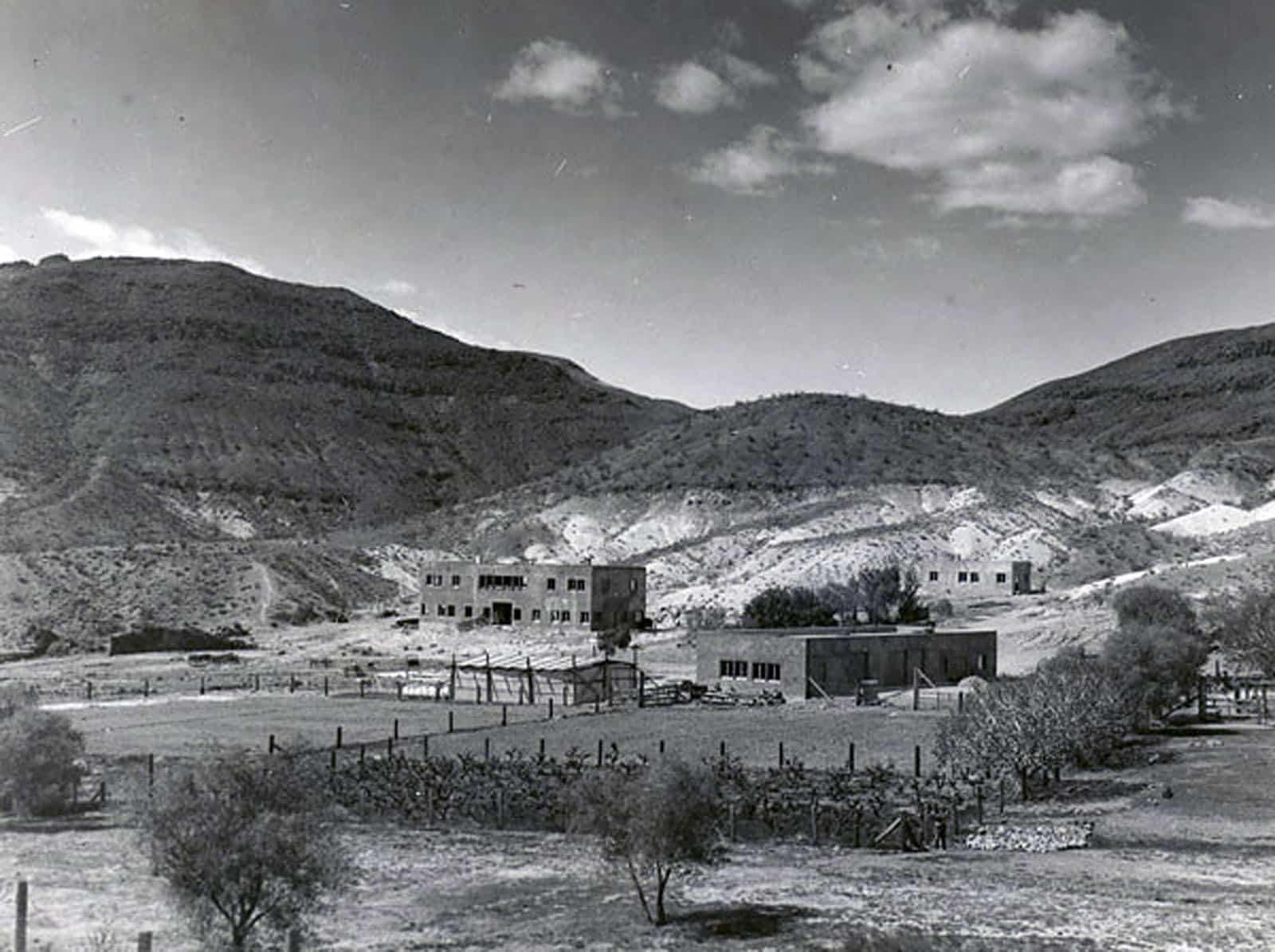
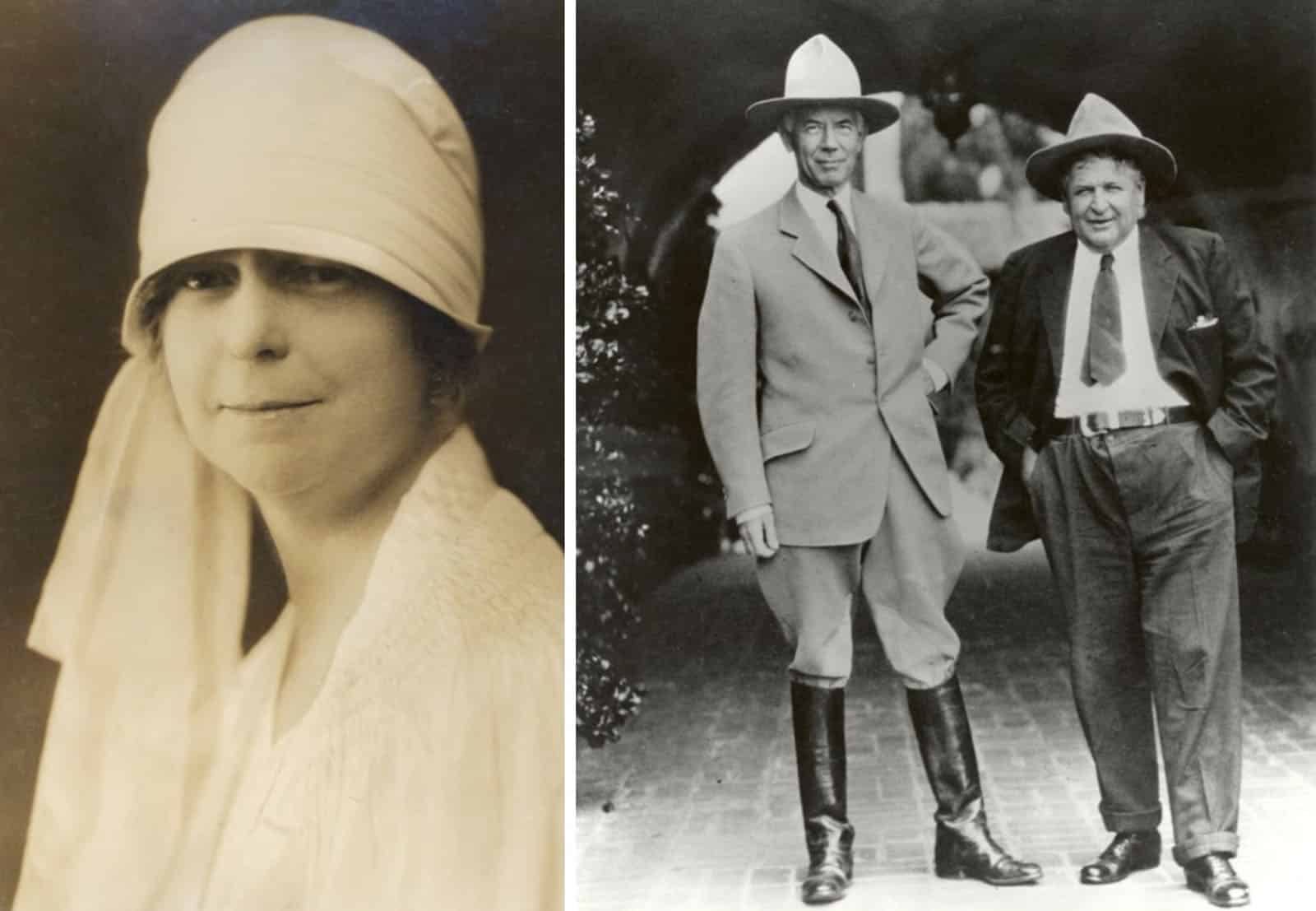
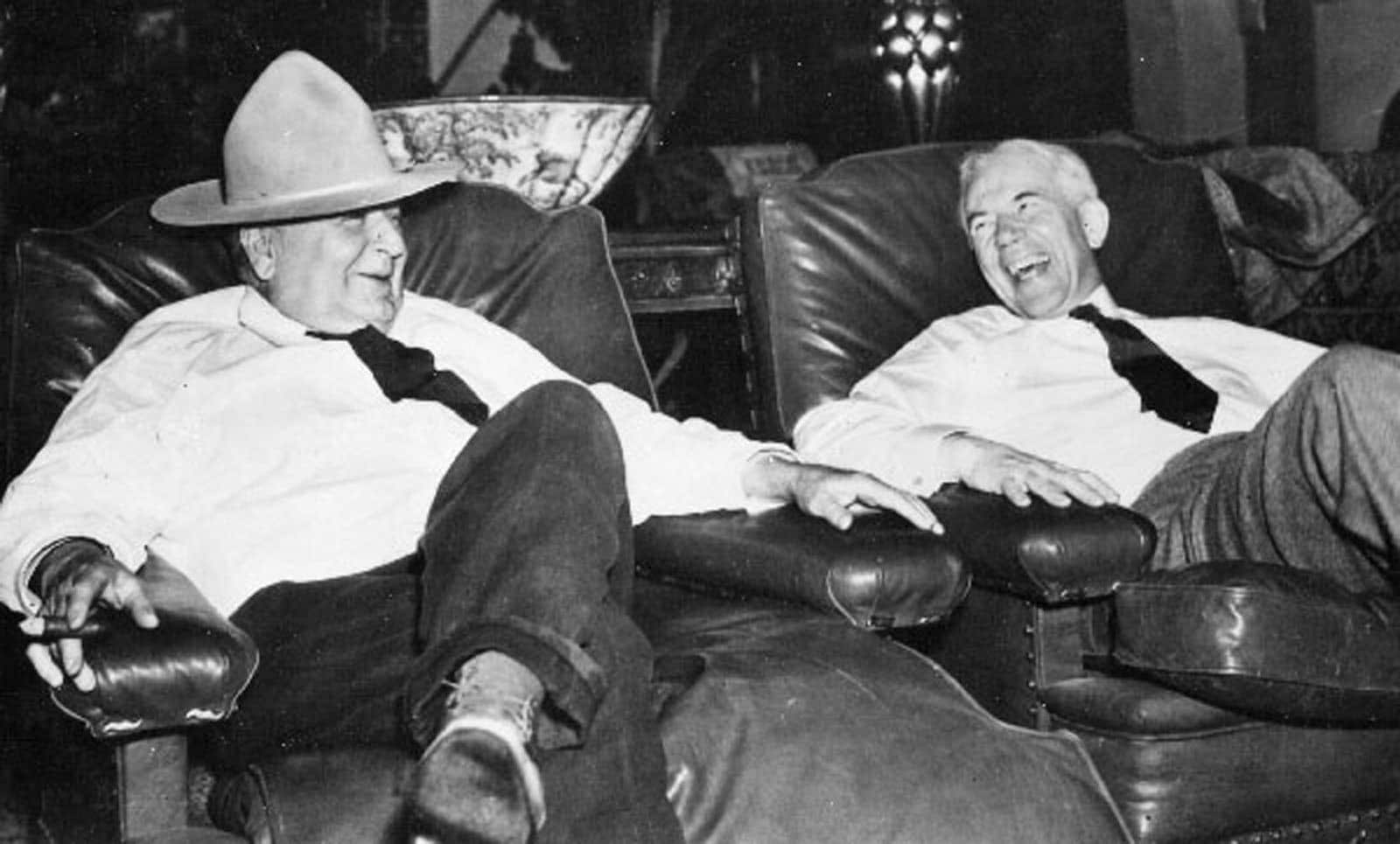
Between the early 1920s and early 1940s, Bessie and Albert Johnson spent winters at their Death Valley Ranch, as a retreat from their busy lives in Chicago and to enjoy the spectacular winter weather in the desert. Originally drawn to Death Valley by Scotty’s wild claims of a hidden gold mine, Albert Johnson eventually learned that the gold mine was just one of the many hoaxes perpetrated by Scotty as a way of conning east coast investors out of their money. By then, though, Johnson had fallen in love with the desert climate and scenery, as well as formed what would become a lifelong friendship with Death Valley Scotty.
What started out as a rustic camp consisting of scorpion and snake-ridden canvas tents eventually blossomed into a “castle” fit for a king, complete with turrets, towers, fountains, a pipe organ, a large unfinished swimming pool, and custom furnishings. It can be said that Bessie Johnson was the true impetus behind the villa we know today as Scotty’s Castle, for it was she who pushed for more comfortable accommodations for the Johnsons’ winter vacations. It cost up to $2.5 million in 1920s dollars.
Hottest, driest, lowest
Death Valley is a place of extremes. According to the National Park’s website, “In this below-sea-level basin, steady drought and record summer heat make Death Valley a land of extremes. Yet, each extreme has a striking contrast. Towering peaks are frosted with winter snow. Rare rainstorms bring vast fields of wildflowers. Lush oases harbor tiny fish and refuge for wildlife and humans. Despite its morbid name, a great diversity of life thrives in Death Valley.”
It was this extreme beauty that caused Albert Johnson and his wife Bessie to fall in love with Death Valley and build their comfortable winter vacation home there. It’s ironic though, that in a place of such extreme drought, flash floods are an ever-present danger.
Too much of a good thing
Death Valley gets an average of less than 2 inches of rain a year, making it one of the driest places in North America. But when a year’s worth of rain falls all at once, that can create big problems. After getting a half-inch of rain on October 17, 2015, that rainfall was followed the next night by nearly 3 inches of rain—more than a year’s worth in just five hours.
As rain and hail fell on the steep slopes of Grapevine Canyon, with Scotty’s Castle below, a flash flood of mud and rocks, flowing at an estimated 3,200 cubic feet per second, rushed down the canyon. That night, park rangers received word that visitors were stranded by flooding near Ubehebe Crater. Rangers evacuated the Mesquite Springs campground and sheltered in place with 20 visitors at a high point on the rim of the crater. As park rangers watched power poles and metal dumpsters float out of Grapevine Canyon, they knew this was going to be a flood of catastrophic impact.
The castle stands strong
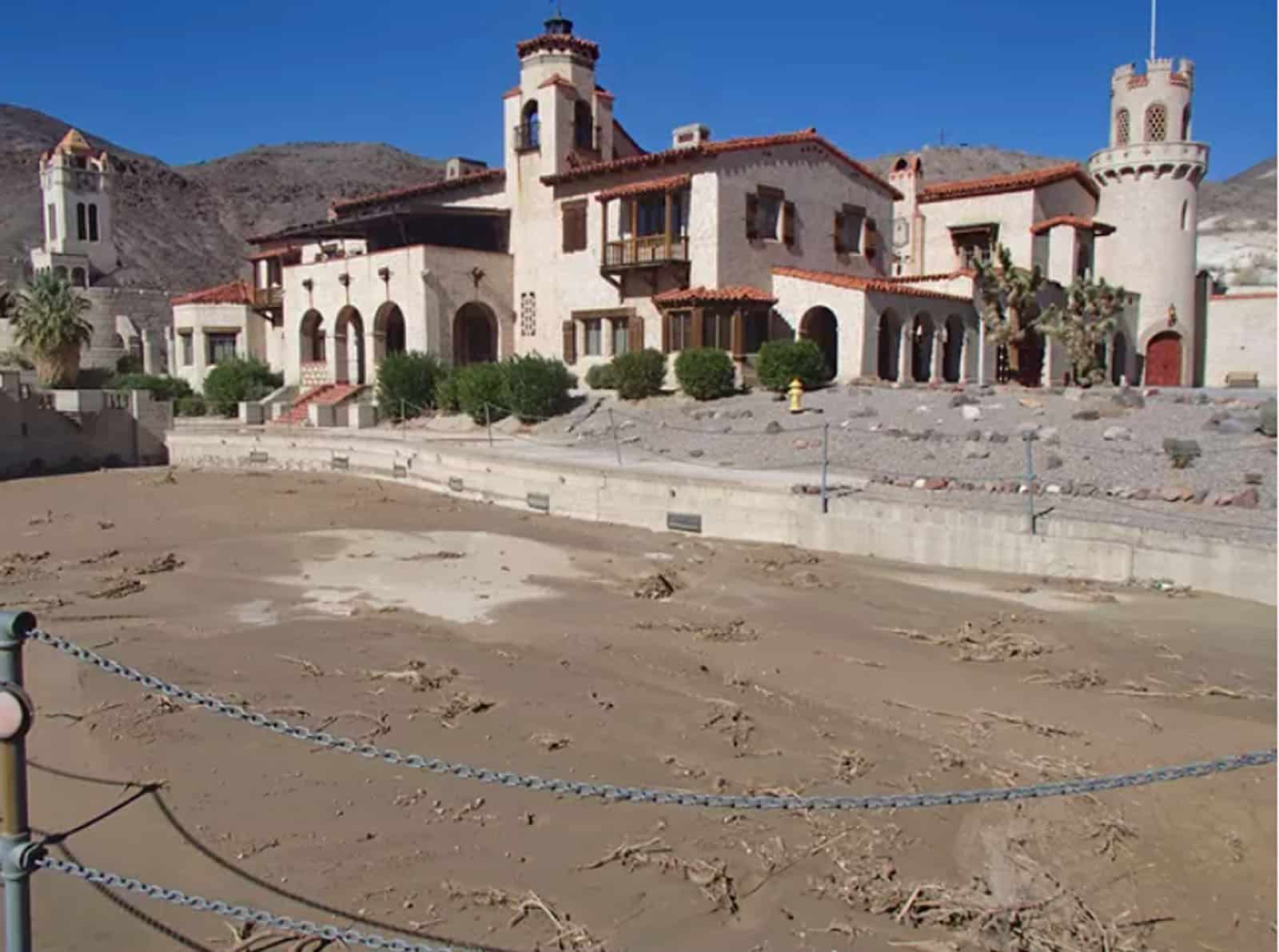
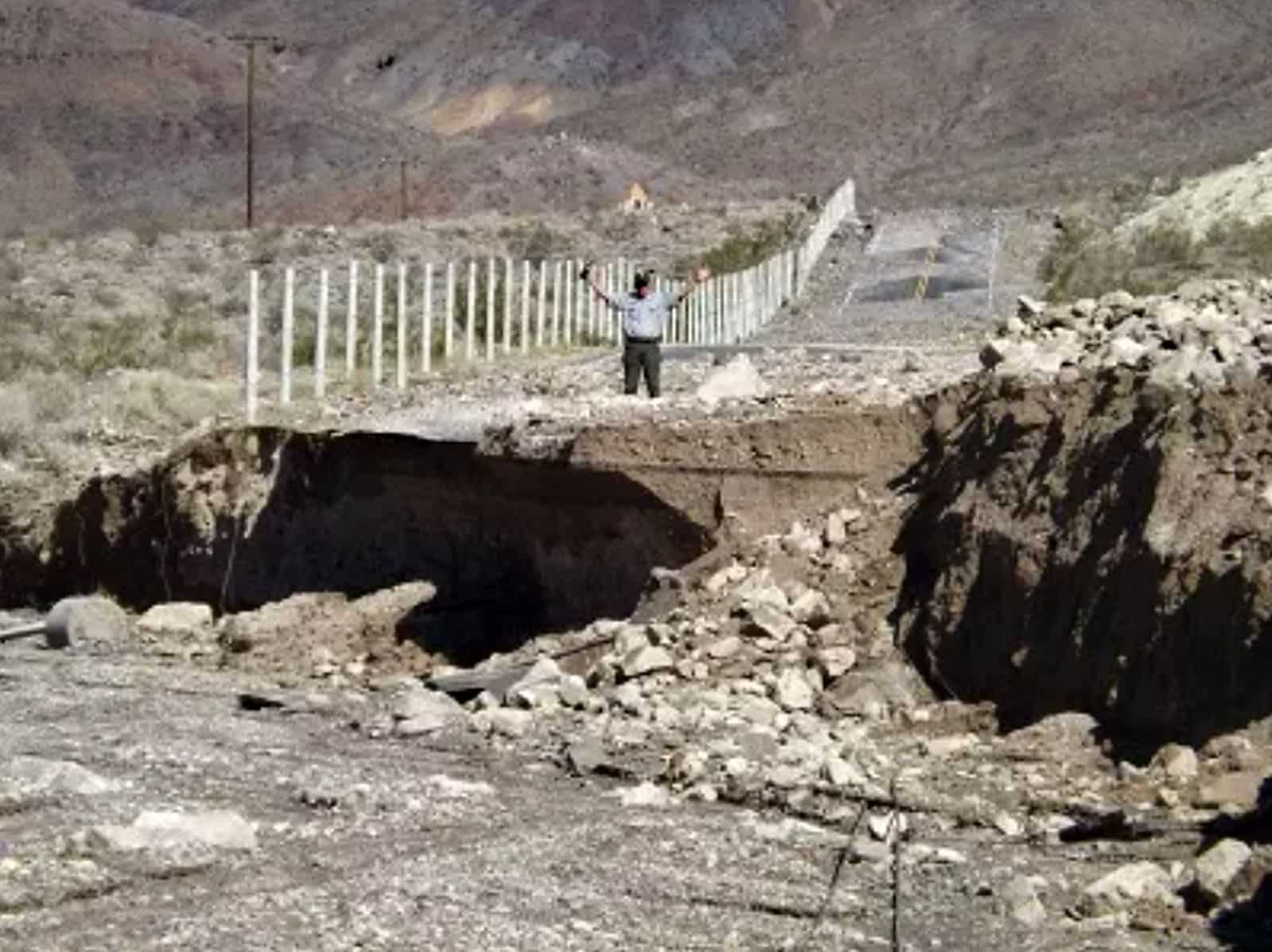
While mud and debris stacked up around the perimeter of Scotty’s Castle, and caused some water damage inside, the structure survived largely intact. The visitor center was filled with water and mud up to a foot high, though, and the 3-mile access road to the property was completely wiped out and destroyed.
As park management surveyed the damage, it soon became apparent that Scotty’s Castle would be closed to the public for an extended period, as repairs were made and a new access road built. Not only did the road need to be rebuilt, it needed to be built better in order to survive catastrophic flooding like this in the future.
Fire
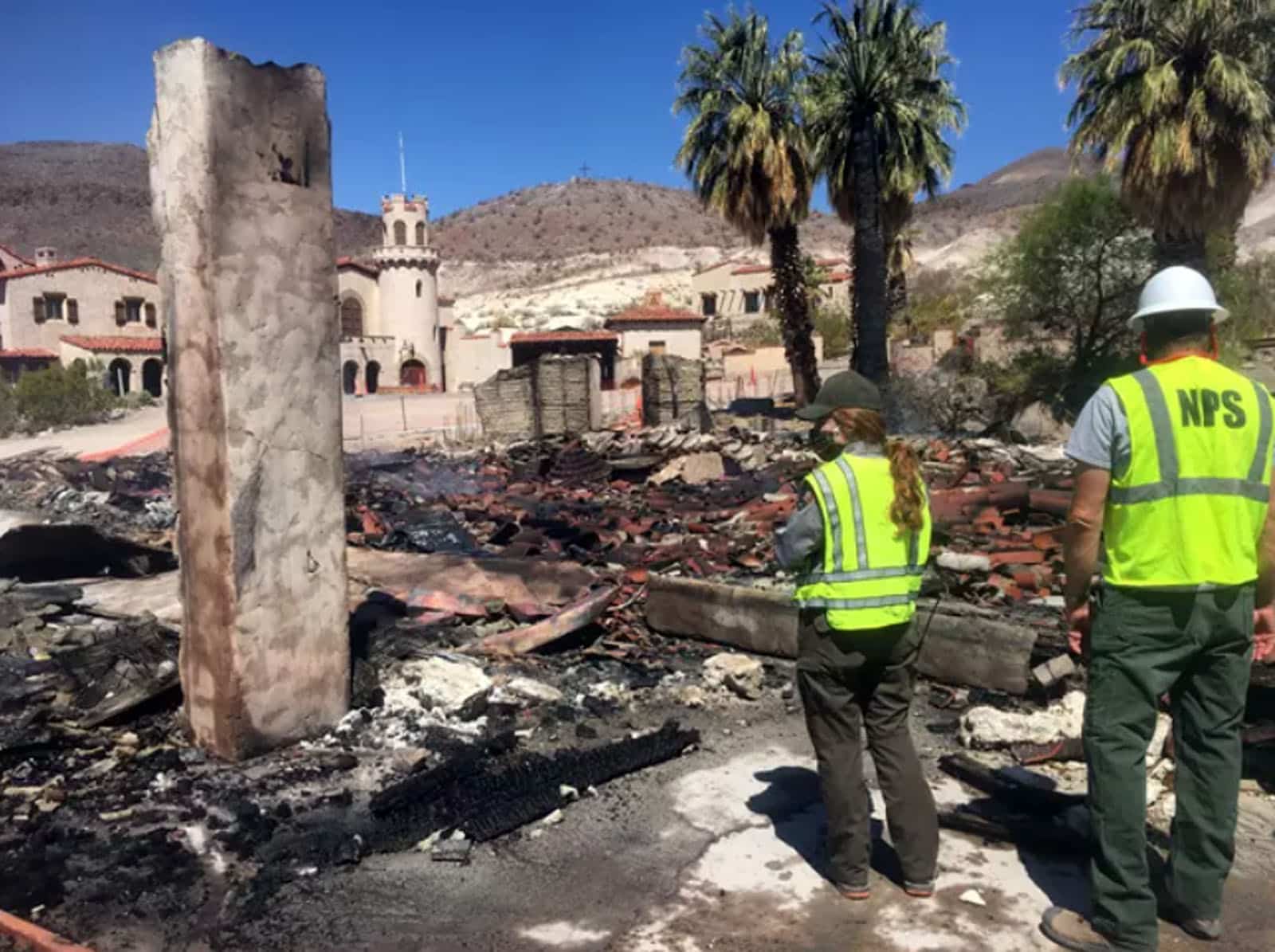
As if the flood damage wasn’t enough to contend with, a fire on April 22, 2021 destroyed the historic garage/workshop that dated back to 1922. This structure had been used as the visitor center in recent decades, and an investigation was not able to conclusively determine the cause of the fire. The fire delayed rehabilitation work, and pushed back the reopening date even further.

Flood recovery tours
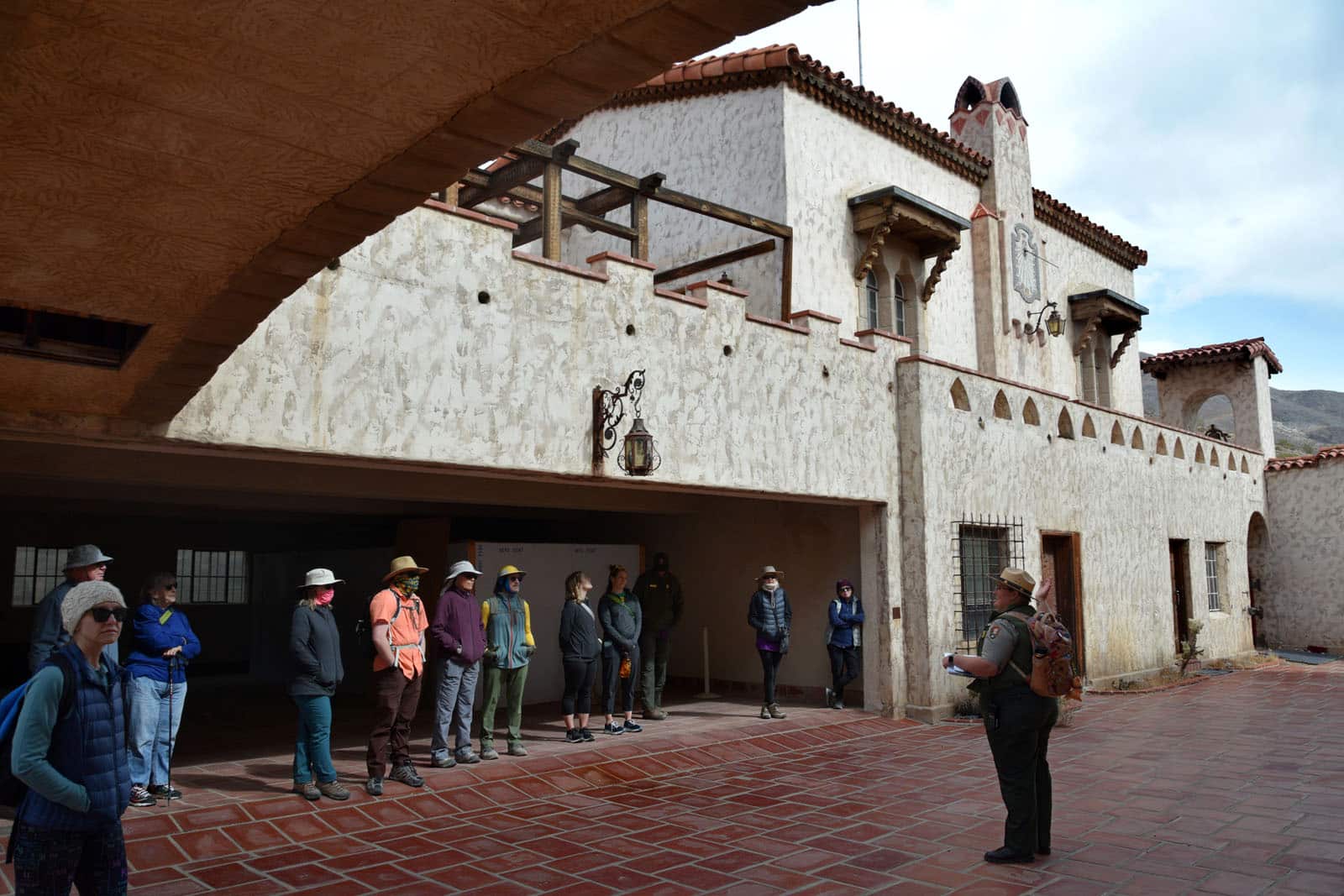
In recent years, the Death Valley Natural History Association (DVNHA) has been offering Flood Recovery Walking Tours on winter weekends. The DVNHA is a nonprofit dedicated to preserving the stories and wonders of Death Valley National Park and the nearby Ash Meadows National Wildlife Refuge. During these Flood Recovery Tours, led by park rangers, visitors learn about the colorful history of Scotty’s Castle, the Johnsons, and Death Valley Scotty. The damage caused by the flood, and the repairs that have been made, are the backdrop and theme of the tour and all proceeds go towards the ongoing recovery efforts.
A rare opportunity
When I encountered an online ad late last year offering a chance to tour Scotty’s Castle on one of these tours, I jumped on it right away. My wife Edie and I have been to Death Valley a number of times over the years, the first time during our first cross-country trip to California in 1984. I couldn’t remember visiting Scotty’s Castle, though, so this was a rare opportunity not only to see it, but to learn about what happened during the flood. With the Sunday morning tour as a centerpiece of the visit, we built a six-day/five-night trip around it, exploring areas of Death Valley’s spectacular scenery that we hadn’t seen before. The Flood Recovery Tours are now closed for the season, and will probably start up again in December. As to the date for the full reopening of Scotty’s Castle, that is currently estimated to occur in the fall of 2026, if all goes well and funding continues. The costs to restore and protect the area are estimated at $66 million.
A castle reborn
I look forward to a future trip to Death Valley, to see Scotty’s Castle when it’s finally opened to the public again, complete with all of its historic furnishings restored to their original places. Once again, we’ll spend our first night camping in the spectacular Panamint Valley, that vast open space between two mountain ranges, bordering the western side of Death Valley National Park. The next morning, we’ll drive the steep grade up to Towne Pass, the location of the tragic death of Bessie Johnson in 1943, when the Johnsons were on their way into the valley and were involved in an accident. From there, descending down towards Stovepipe Wells, the vast basin of Death Valley appears, with the Panamint Range on one side and the Amargosa Range on the other. Endless opportunities for hiking and exploration abound in the largest national park in the lower 48 states, at 3.3 million acres.
A vast and unspoiled land
For a thousand years, this region was the domain of the Timbisha Shoshone tribe, who still maintain a permanent settlement in the park. Archaeological evidence suggests an indigenous presence in the area dating back at least 10,000 years. In more recent history, the valley has experienced many uses, including mining borax, talc, salts, and gold. To protect the unique environment, President Herbert Hoover proclaimed a National Monument in and around Death Valley on February 11, 1933, setting aside almost 2 million acres of southeastern California and small parts of Nevada. On October 31, 1994, during the presidency of Bill Clinton, the monument was expanded by 1.3 million acres and redesignated as a National Park.
Death Valley also offers some of the best stargazing in America. DarkSky International has designated Death Valley National Park a Gold Tier Dark Sky Park, which is the highest rating of darkness. So if you’re craving some spectacular stargazing, you know where to go.
If you go
Death Valley National Park is about 450 miles from Alameda, and there are a variety of accommodations available, from camping to hotel rooms. The best time to go is from October through April, when temperatures are not as hot as in summer.
A good place to start your research is the park website.
To learn more about the Death Valley Natural History Association (DVNHA) and the Flood Recovery Tours, visit the Scotty’s Castle Flood Recovery Walking Tours website.
Contributing writer Steve Gorman has been a resident of Alameda since 2000, when he fell in love with the history and architecture of this unique town. Contact him via [email protected]. His writing is collected at AlamedaPost.com/Steve-Gorman.
