Do you think much about dirt? Most people don’t—but if you garden, you should.
We want our plants to grow, be green, and be healthy. In order to make this happen, we need to give our plants healthy soil. Johnny’s Seeds, a leading supplier of natural and organic seed, states in its Soil Health Strategies presentation that, “Soil health is the continued capacity of soil to function as a living ecosystem that sustains plants, animals, and humans.”
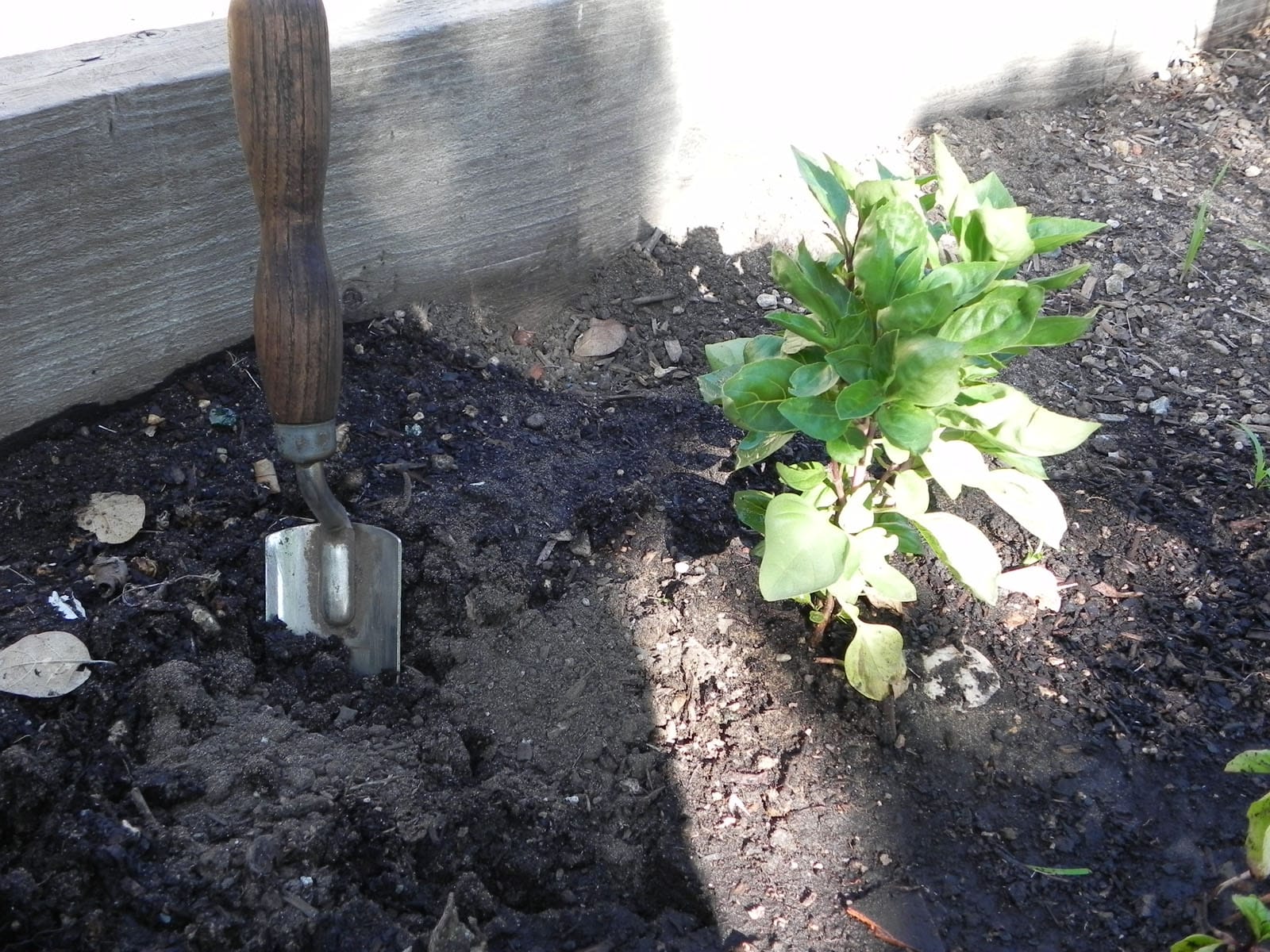
So how do we make healthy soil out of the dirt beneath our feet?
The first step is to figure out whether you have clay or sandy soil. Some of us in Alameda have clay soil, but many of us are gardening on a sand dune. Johnny’s suggests a simple test to determine your type of soil:
- Find a pint size jar with a lid. One with a wide mouth is best.
- Gather some dirt and sift to remove roots and rocks.
- Add sifted dirt to fill the jar one-third full. Fill the rest of the jar with water. Shake well and put on a level surface.
- After one minute, use a magic marker to mark the level of settled material. This is sand. Come back in two hours and mark the level of settled material. This is silt, which has smaller particles than sand. Leave the jar for 48 hours and mark the level of settled material. This is clay. Measure the height of each mark and figure the percentage of sand, silt, and clay in the soil.
Sandy soil is 50% sand. It is easy to dig in, but may be more acidic than vegetables like, doesn’t have much in the way of plant nutrients, and doesn’t hold water. Clay soil is over 50% clay. It holds water, but is difficult to dig in and for plant roots to poke through.
The cure for either sandy soil or clay soil is organic matter. Lots and lots of compost, worm castings, or whatever you can get or afford. You can’t add too much, but if you have to pay for your amendments, the cost can really add up. Check the Alameda Backyard Growers website for a local source of free compost.
Soil with a high level of organic matter holds water and nutrients, is easy for plant roots to grow through, and supports the soil organisms that partner with plants.


Next, you need to know what the nutrition level of your soil is and whether or not any toxic metals are present, such as lead. Unfortunately, Alameda County does not have its own soil test lab (many rural counties do), but the UC Master Gardeners program does have a list of commercial testing labs. Although soil testing can be expensive, be aware that various areas of Alameda have been used as dumping grounds or industrial sites in the last 150 years, so it is best to test.
Garden centers sell inexpensive test kits for the three basic plant nutrients. These test kits will give you a general idea of what is in your soil, but do not give results for toxic metals. If you can afford it, it’s best to have your soil tested by a reputable lab.
If you find your soil is deficient in one or more nutrients, Encinal Nursery or Ploughshares Nursery can give you advice on the most appropriate fertilizer. Organic fertilizer is generally slow to release nutrients, making it harder to over-fertilize. Read the package instructions. More is not necessarily better. Over-fertilizing with phosphorus, for example, may result in stunted growth.
Two other soil amendments you may have heard of are mycorrhiza and legume inoculant. A recent book, Entangled Life, by biologist Melvin Sheldrake states that 90% of plant species depend on a relationship with ground dwelling “mycorrhizal fungi,” which scavenge water and minerals from the ground and provide these nutrients to plants in exchange for the nutrients produced by plants via photosynthesis. He points out that commercially available mycorrhizae may or may not form a symbiotic relationship with your vegetables, and it is better to add compost to provide a friendly environment for locally existing beneficial fungi.
Peas and beans also depend on relationships with friendly bacteria, which assist these legumes to fix nitrogen from the soil. Legume inoculant works in all areas and leads to happier and healthier plants.
So give a little thought to the dirt in your yard, and it will repay your attention with happy and healthy plants—and bigger and better vegetables.
Margie Siegal is a long term gardener in Alameda and a supporter of Alameda Backyard Growers. Reach her via [email protected]. Her writing is collected at AlamedaPost.com/Margie-Siegal.
