Teacher Appreciation Week was a few weeks ago and National Poetry Month was last month. Before either of those, in March, an amazing and beautiful event took place at Books Inc. on Park Street—Will Green’s fifth grade students from Amelia Earhart School gathered with their friends and families for an evening of poetry. After a wonderful introduction by event coordinator Jerry Thompson and an emotional speech by their teacher, Will’s students stepped up to the microphone to read and recite poems they’d written under his guidance.
As a longtime teacher, and someone who’s been in the poem biz for a while, I was moved by two things—the impressive poise displayed by these young writers and the quality of poetry they shared. Adding to that was a remarkable circumstance. Will had collaborated with college art students from Texas to illustrate the poems of his pupils. Learn about how this all came together so beautifully and meet the teacher in 5Q4 Will Green.
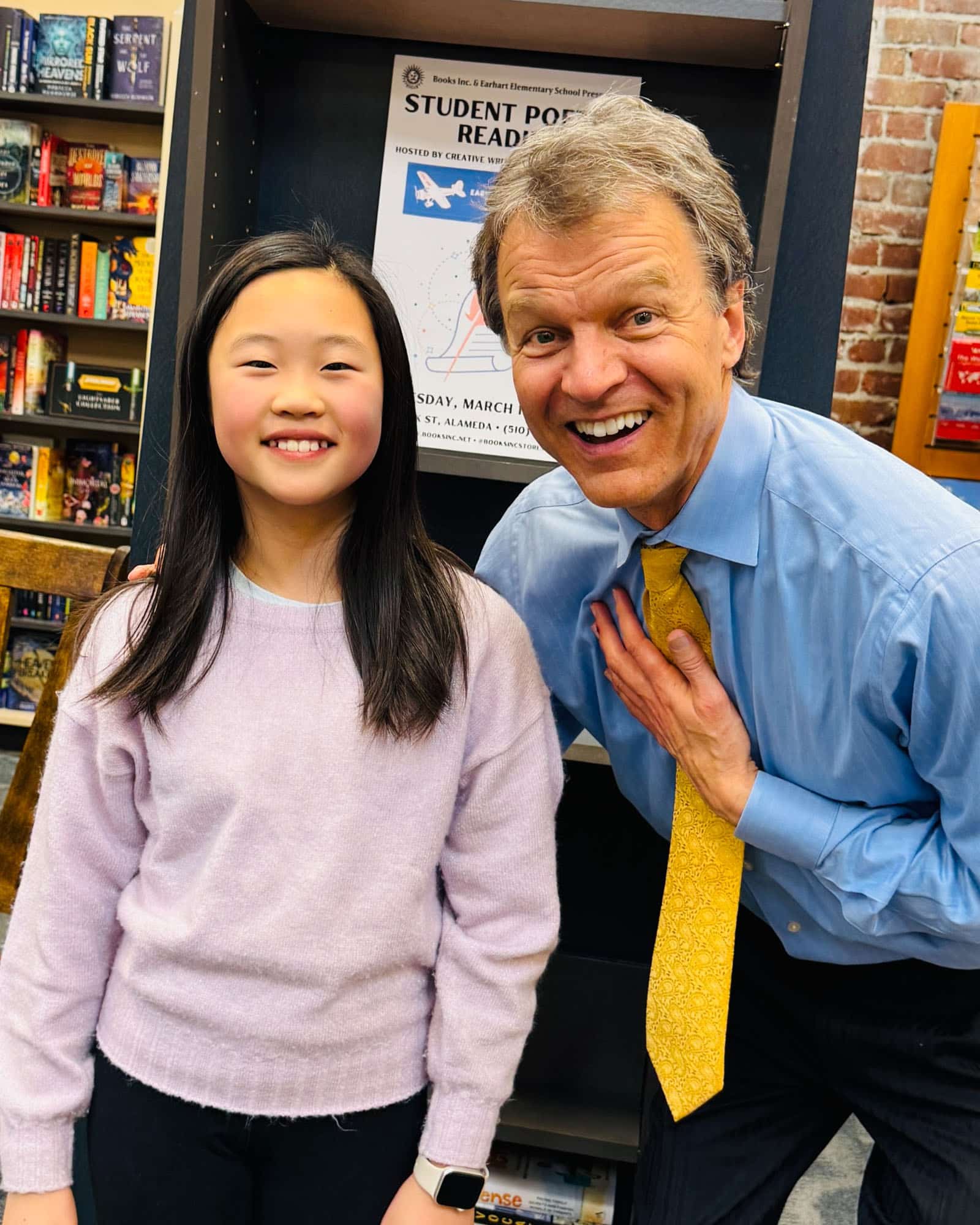
Language arts is a broad and vital part of the curriculum. Why do you choose to focus so passionately on poetry?
There is a kaleidoscope of wonder in the texture and rhythm of words, spoken, written, felt, and discovered. I love to give a questionnaire of what my students know about poetry, at the beginning of the year—usually very little. Then, I get to watch how their knowledge and skills develop as the year progresses. By mid-year, when we work through a particular poem, they are able to “see” the magic of what lifts their spirits. This is why I focus on poetry with such fervor.
By mid-year, the students begin to ask, “What form, meter, and rhyme scheme should we use for this poem?” when I have them write a poem from the ideas we discuss. Overall, I personally love the way words create meaning, feeling, deep emotion, and thought.
You recently collaborated with college students from Texas leading to the publication of Opposites. Tell the story of how that came to be.
The winds of fortune blew like miracles sounding from the tolling bells of the church last summer in Steamboat Springs, Colorado. My family, along with my artist mother, were on vacation in this bucolic mountain town. We came upon an art fair and met Peter Andrew, a professor of art at Stephen F. Austin State University, located in Nacogdoches, Texas. My mother was drawn to his paintings, and I was drawn to his story, his manner, and found a kindred spirit stirring us in the summer winds. We found the passion each of us has for our work. This quickly led to the idea of bringing the art of his students together with the written word, through poetry, of my students.
From that seed, the ideas grew organically, and before long we had a plan for his students to create new pieces that my students would then select and write a unique poem. The theme was “Opposites.” So, each image cast a visual “opposite” and we wrote what we saw.
But it gets better. My students also wrote their own original “opposite” poems. We sent them to Nacogdoches, and each poem was chosen by a student artist who then created a piece of art inspired by the poem.
But, wait, there’s more! In December, as their semester ended, they surprised us with a 120-page book, full-color, capturing each image, mirrored on the next page with the poems, set cover-to-cover in the imagery of opposites. The whole experience was simply driven by the divine winds of fortune and fate.
Tell us about you. Who or what planted this love of poetry in you? And has poetry always been important to your teaching?
My first awareness of poetry was through storybooks, as a child. The playfulness in the rhymes lingered and became seeded within me.
I have always been drawn to words and the meanings of words. In seventh grade, Miss Grayson brought poetry to the classroom. When my family moved from Miss Grayson in Austin, Texas, to Cincinnati, Ohio, she asked me to read the most recent poem that I had written. I felt accomplished and recognized in that moment. This led me to be on the Literary Arts team in high school, where four publications came out each year. My poetry was often found there.



As college began, I found myself taking poetry workshops and really cultivating a more profound sense of the deeper meanings that are layered in exquisite measures throughout line and verse.
When I began to teach poetry, naturally, I nourished, then poured my love of words, meanings, and the written word, into the students in my classroom. I tend to send poems that quiver with imagery or feeling to a national competition. As of this year, over 150 poems have been published from this competition, including two student poets whose work was selected among the Top 10 poems out of tens of thousands of poems for that window of submissions.
From instilling this love into each new group of students, one of my former students became the Poet Laureate for Oakland, and another student has written a book of poetry.
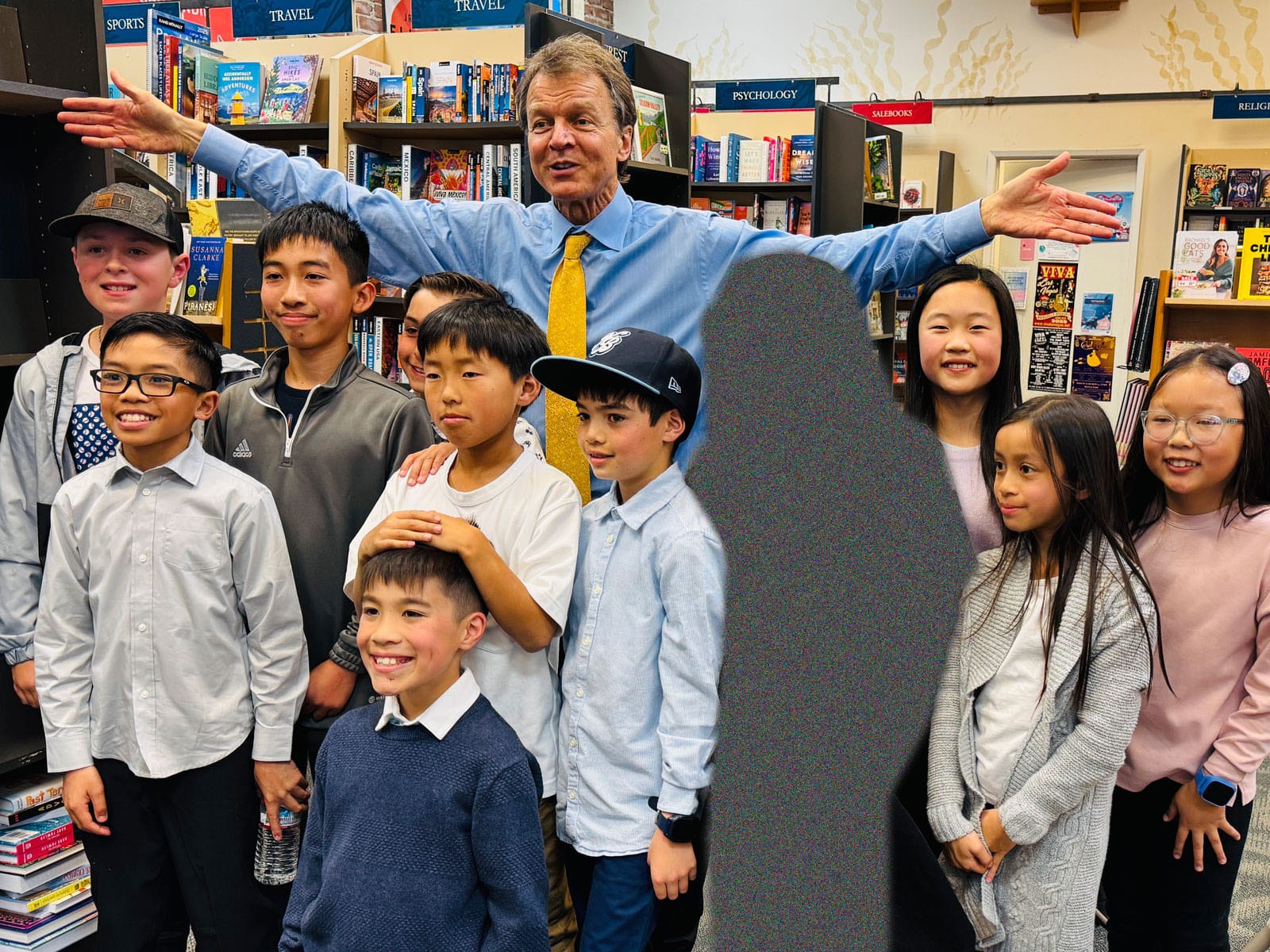
Recently your students read their poetry at Books Inc. What was it like for you to help put that together and then see your kids share their poetic voices?
Kismet sparked the event. In a conversation with Jerry, the events coordinator at Books Inc., I mentioned that my students had had 21 poems and 22 short stories accepted for national publication. Our conversation turned to the collaboration with the University of Texas and, the next thing I knew he said, “We’ve got to have an author’s reading for them!”
When the night arrived for the reading, the very air was crackling with their youthful exuberance! Each student was elated to be sharing their original poem or short story. Hearing them read or recite their poems or short stories from the national publications or from the collaboration with Texas was a divine moment for me. All the goodness in the world flowed from the cornucopia that is harvested from the efforts that they displayed and shared, with poise and confidence in this very public forum.
This group is simply the most skillful, as they really dig deeply into the lessons, but more so, into the ideas and emotion that I try to have them capture—and capture it, they did. Profound, moving, and touching, was I.
Other than the works of your students, do you have a favorite poet whose writing speaks to you most powerfully?
Oh, to limit it to one…let me start by saying that I am more drawn to the poetry itself over and above exclusively the poet. The poem resonates and sings, yet I’m drawn more to poems by a wide range of poets than by specific poets. That being said, I can speak of two that have a particular hold over me. Emily Dickinson, as in college I was brought into the world of a particular poem of hers, “I heard a Fly buzz – when I died.” Just recently, I took a poetry class at Stanford, centered on Emily Dickinson. We were tasked with writing a six-page paper after choosing a single Dickinson poem. Naturally, I chose the one above.
Another poet, whose lyrics are pure poetry, is Joni Mitchell, the musician. Joni’s imagery and emotional expression, along with her word choices, helped develop my vocabulary and range of feeling, more than any other poet or singer. Words she taught me, such as filigree, clandestine, anima rising, arbutus, and the way they are woven into complex ideas—she is truly a wonder of wonders.
Gene Kahane is the founder of the Foodbank Players, a lifelong teacher, and former Poet Laureate for the City of Alameda. Reach him at [email protected]. His writing is collected at AlamedaPost.com/Gene-Kahane.
