With all due respect to the many high schools in the Bay Area that recognize and celebrate the designation of being diverse, I know of none like Encinal Junior & Senior High School in its profound and beautiful heterogeneity. The student demographics stand as statistical proof: 28.5% White, 21.8% Asian, 20.4% Latino, 11.3% African American, 6.4% Filipino, 0.9% Pacific Islander, and 12.7% Two or More Races, according to School Accountability Report Card.
I cite this as prologue to this review of their fall play, Anon(ymous), for the essential connection between a story about a refugee’s immigrant experience in America while searching for his mother, and the cast of actors from a community deeply familiar with those experiences. A quick review of the last names of the thespians offers poetic proof—Tong, Hannigan, Somas, Ross, Evjen, Pandolfo, and Carranza are the first seven listed in the program.
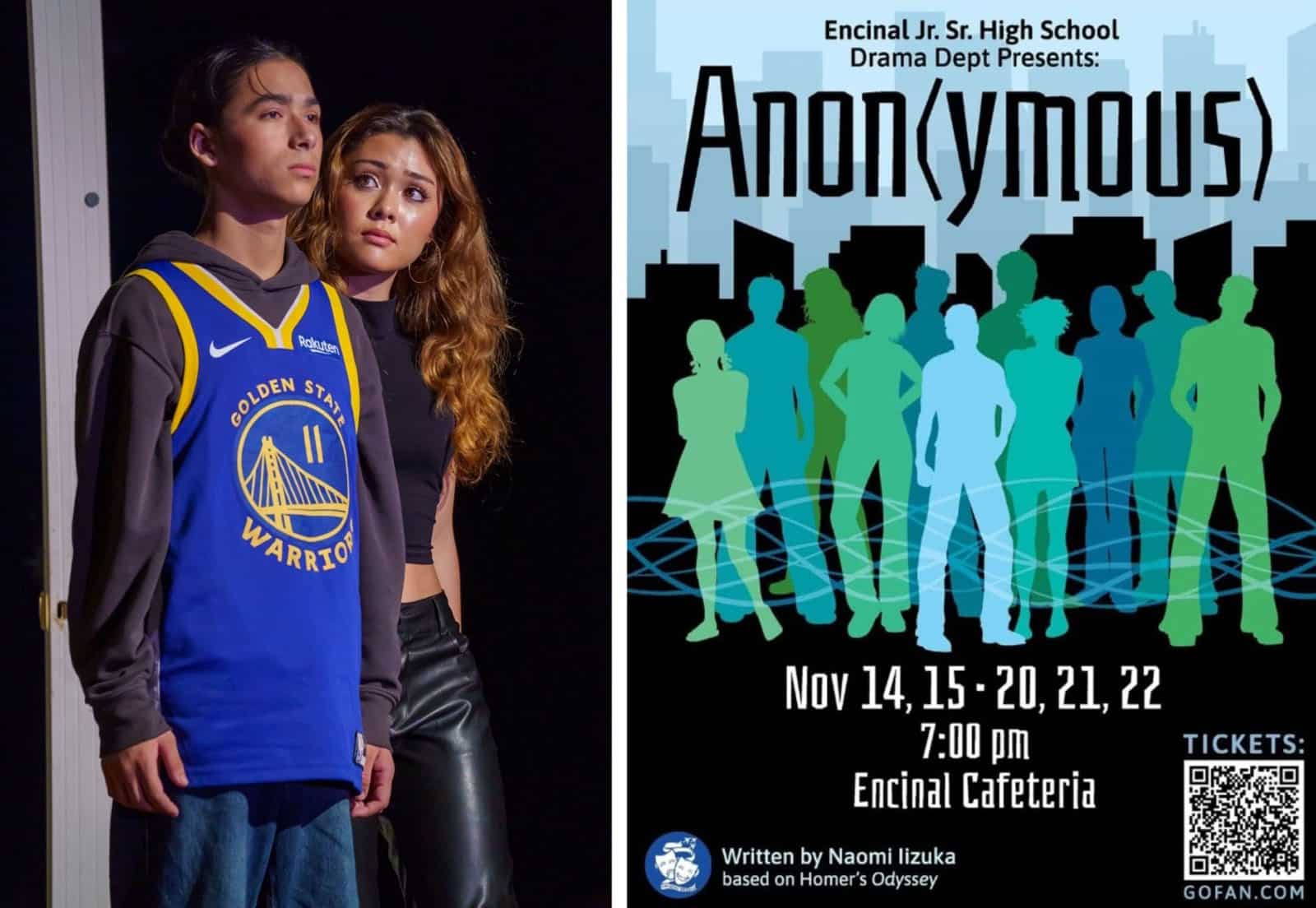
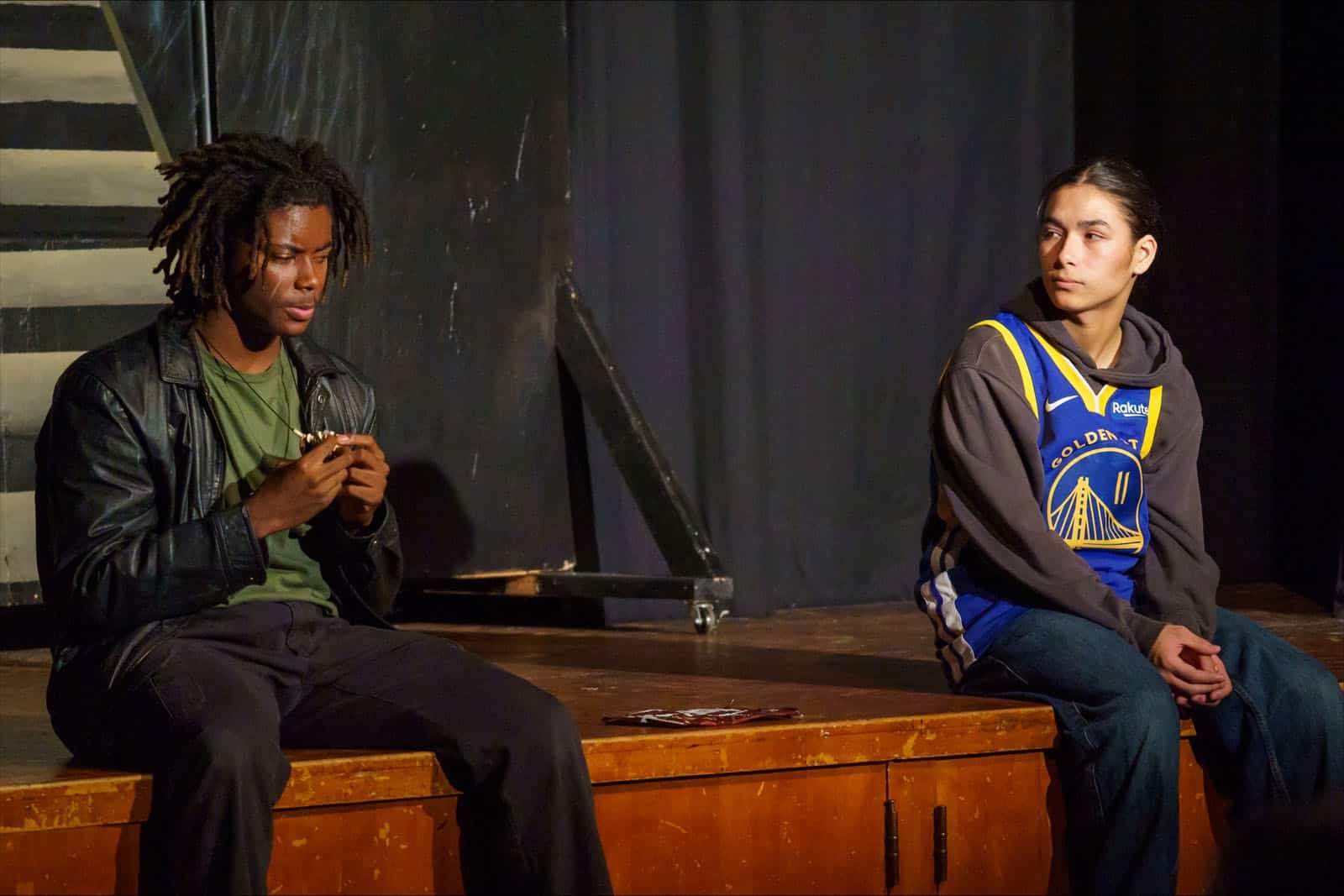
Anon, played solidly by Colby Tong, is that refugee in Naomi lizuka’s play, written in 2006, and his appearance and costume right away identify him. He’s wearing a Klay Thompson Golden State Warriors jersey over his clothes. One of the ways newcomers show their newfound Americaness is to display fealty to a sports team (see Dodger fans in SoCal or Yankees fans in New York, especially when their teams are winning). Anon’s story is the familiar one of a heroic trek, like Shakespeare’s Pericles or Steinbeck’s The Grapes of Wrath—and in this case the playwright has borrowed from Homer’s Odyssey to frame his anguished experience.
A powerful element to the Encinal play, strongly directed by Lachelle Morris, is the use of recorded sound. To help us understand what compelled Anon and his mother, played by the outstanding Delilah Schiraga, to leave their unnamed country, we hear gunfire and rockets exploding. To be honest, it was almost too triggering in how it brought to mind the fighting and killing in Gaza and Ukraine.
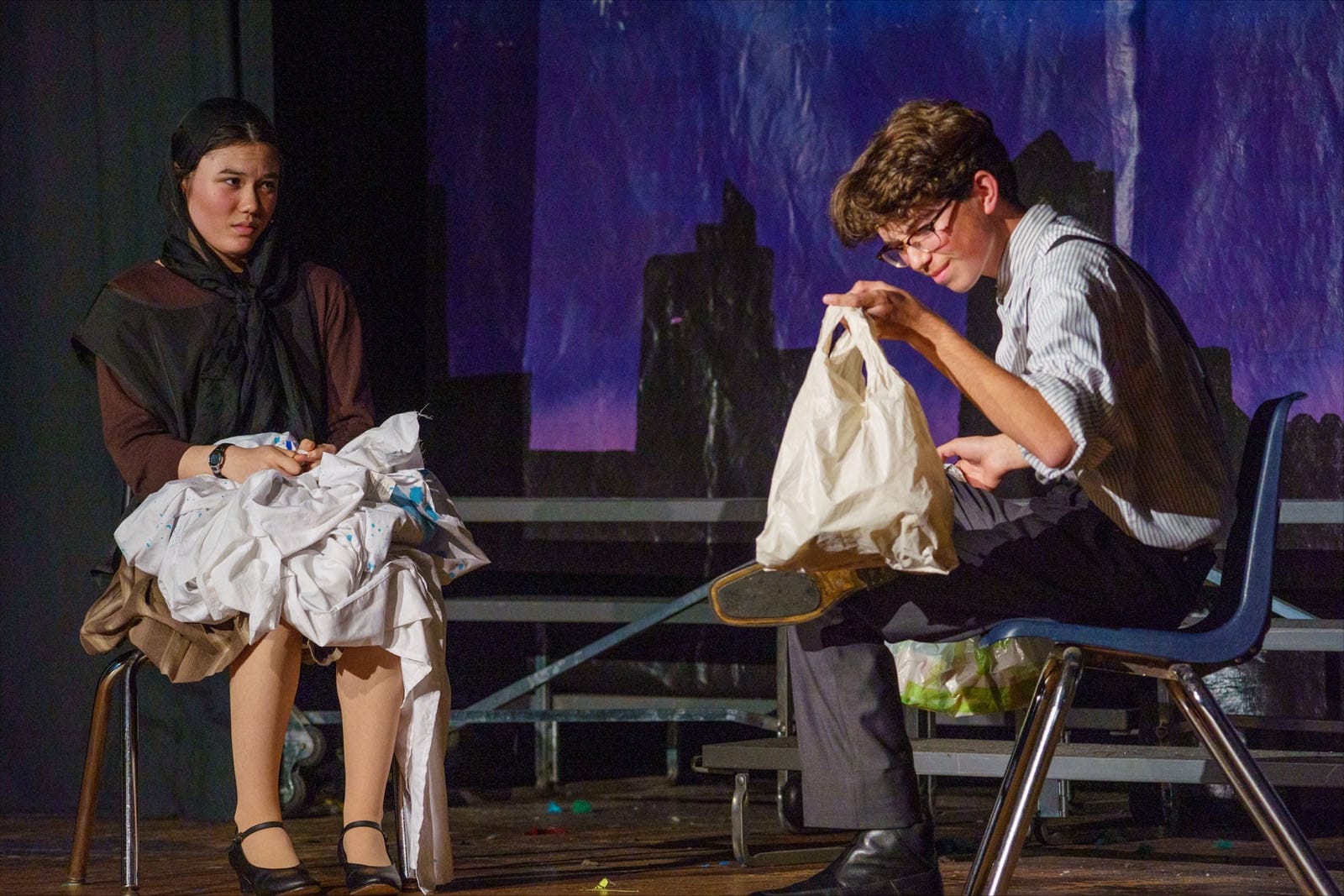
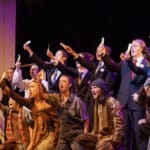
Other special effects and components help to carry this play—multiple uses of long blue cloths to represent the water, the image and sounds of a room full of women sewing under harsh conditions, and the moments when a subset of the cast takes the stage as a refugee chorus. Each of these scenes starts with characters saying, “Where I come from,” before sharing specifics. The varied voices of the variegated ensemble might best be called the Statue of Liberty Moments in the play.

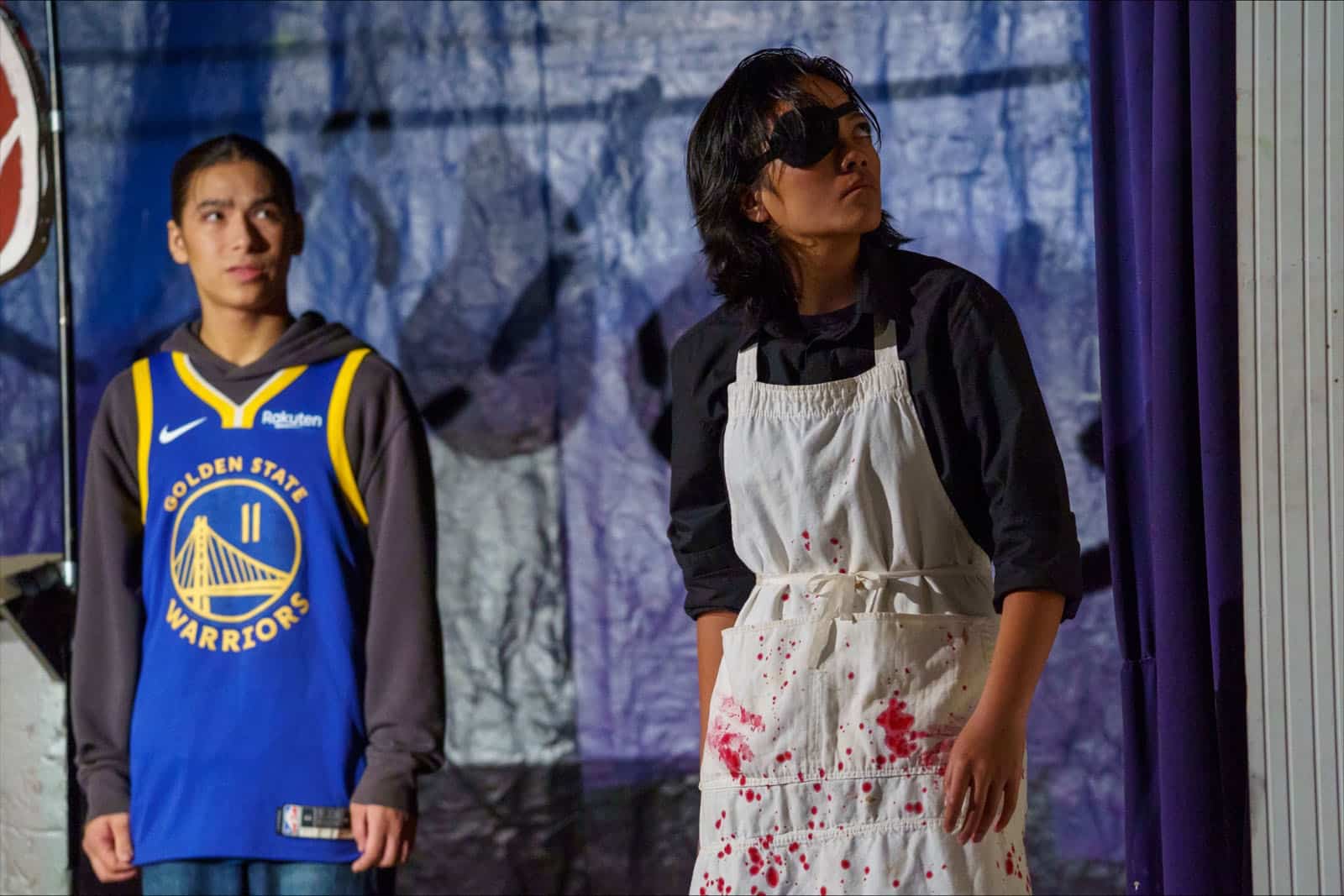
I’m going to invoke a little Hamlet and say there’s a special providence when a playwright, poet, novelist, songwriter, or filmmaker seeks to save the world with their art. It is an act of hubris for certain, but more so a revelation of heart when they use their craft to educate us and move us. lizuka’s play, and the performance of it on the Central Avenue stage, does not flawlessly succeed. The most Odyssey part of Anon(ymous)—or at least perhaps the most recognizable— is when Anon and his friend Pascal (the natural Satchel Mercer) visit a butcher shop for a job. It’s run by Mr. Zyclo (the terrific Jubilee Kaleikau) with help from his pet bird (the remarkable Neea Curtis, in her fifth big show). The meat grinder and hanging meats (prop kudos) adds to what may be the most dramatic scene in the play. But staging challenges affect other parts of the play (limited lighting), as does the experience of the cast. Many of Encinal’s acting stalwarts graduated last year, so this group has nine freshmen or sophomores in significant roles. I look forward to tracking them over the next few years.
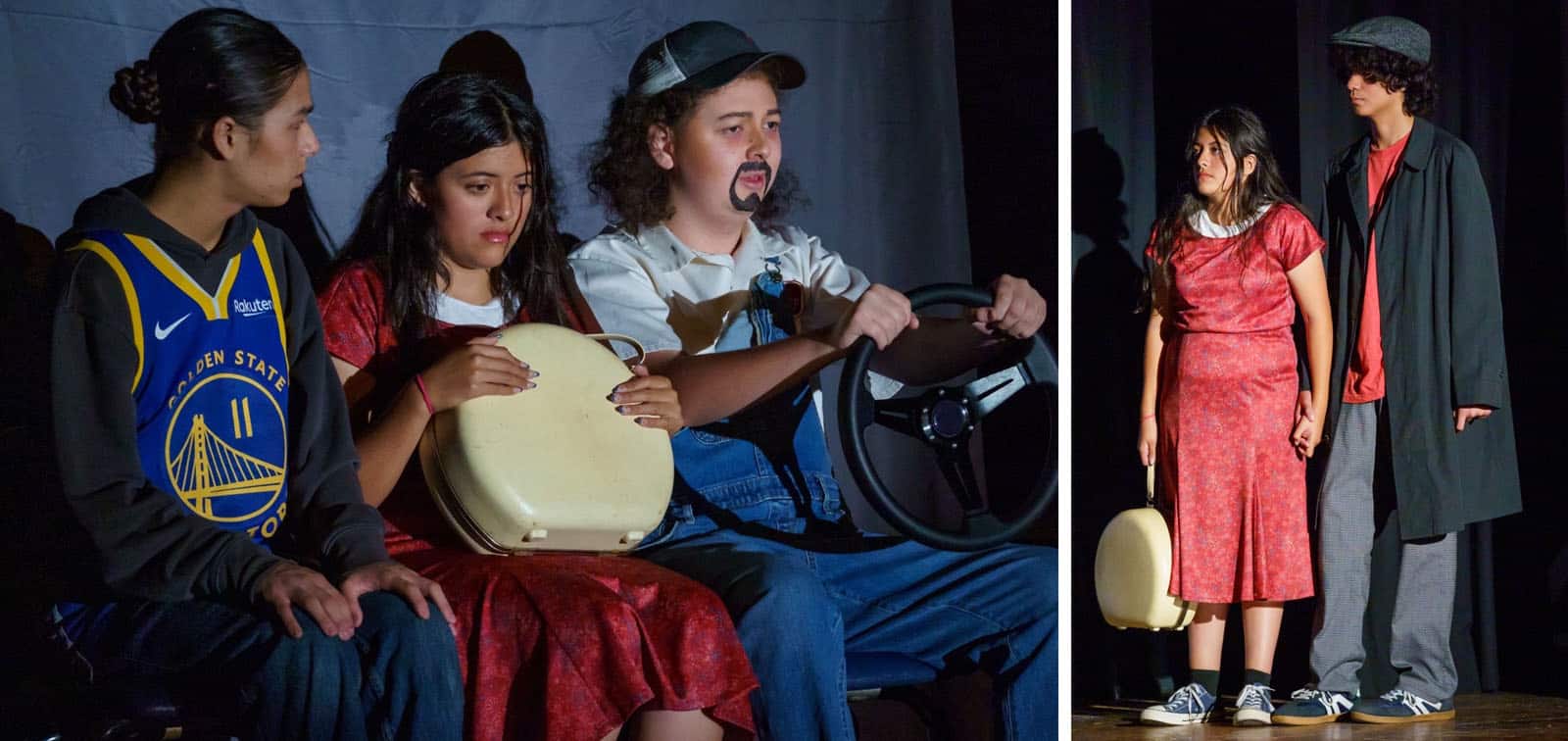
Another element of the play that I want to comment on comes from the playwright and how select scenes were offered. Perhaps contrast can help explain why the characters of color are presented sincerely while the white characters come across as crass, almost comical, stereotypes. While one could choose to identify those opposing groups as heroes and villains, for a play of honest complexity and richness, that juxtaposition and cliched portrayal weakened the story. The white girl obsessed over her pale skin color and enamored with Anon’s tone, along with the white character who pronounced Thai as “thigh” got laughs, but did not match the dignity of the story.
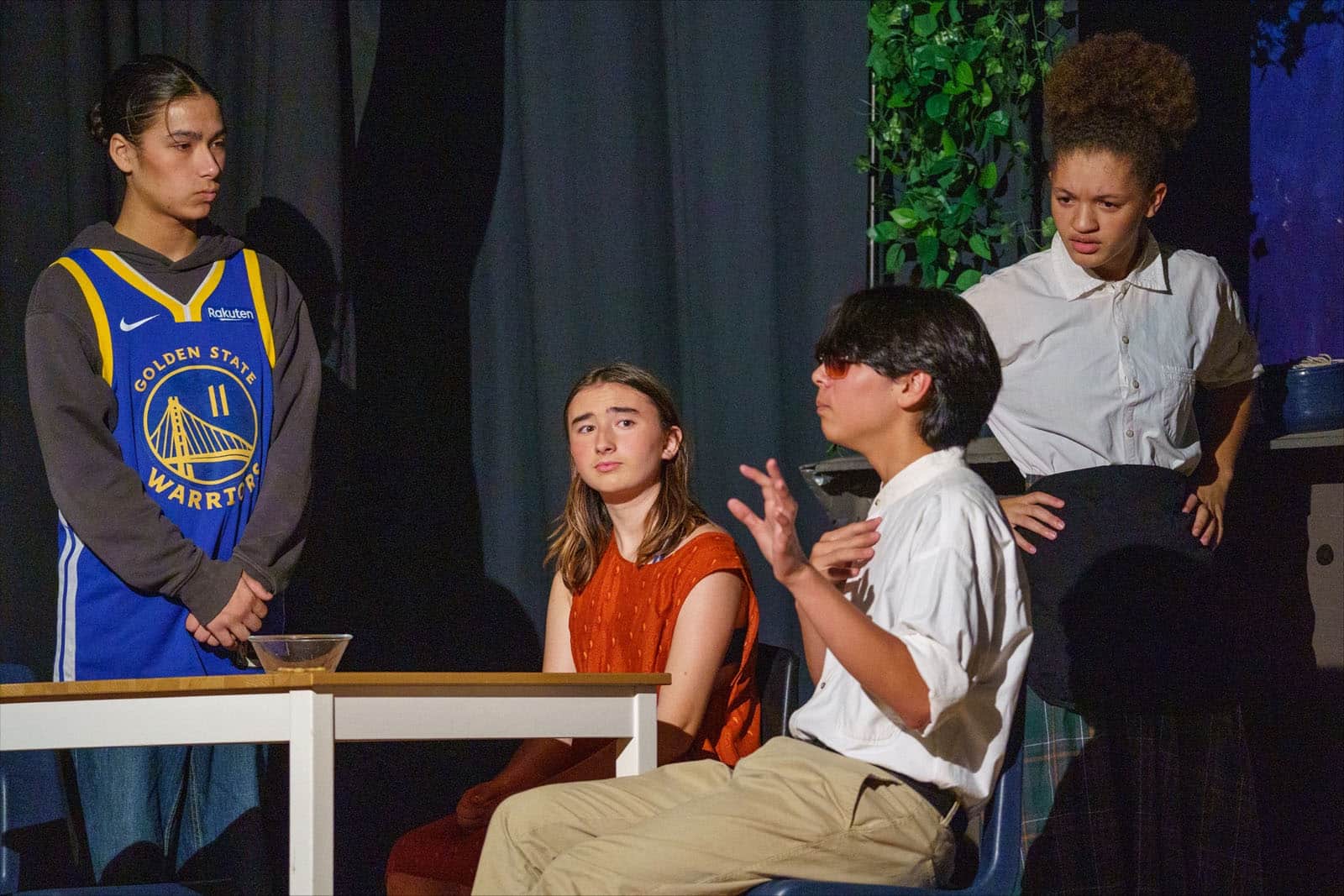
Criticism aside, the choice to do this play and the amount of effort it took to put it up on the stage, make it worthy of our attention and praise. The director describes Anon(ymous) as “a story that captures both the vastness of the refugee experience and that quiet ache of being unseen.” To all of the Encinal theater community, to those who work and learn in this West End high school, we see you. We also, tragically, see those like you on our televisions and phones being chased for deportation and working in fear in our restaurants and construction sites. This country is not an easy place to get to, to survive in, or thrive in. Anon(ymous) reminds us of this in many memorable ways.
Anon(ymous) continues with shows on November 20, 21, and 22 at 7 p.m. in the Encinal Cafeteria. To purchase tickets, visit Encinal Junior & Senior High School Events and Tickets by GoFan. Tickets are $6 for students with ID, $9 for seniors, and $11 for general admission.
Gene Kahane is the founder of the Foodbank Players, a lifelong teacher, and former Poet Laureate for the City of Alameda. Reach him at [email protected]. His writing is collected at AlamedaPost.com/Gene-Kahane.
