As someone who has written poetry, I’ve never felt that I was a poet. I’ve also acted and directed but do not feel comfortable labeling myself an actor or director. At my core, what I’ve put as my occupation on tax forms, was “teacher,” a teacher who’s written, acted, and directed. So when I meet someone like Anita Sulimanovic, I am awestruck for, as she says, she’s exclusively studied art and has been an artist since she was in high school.
There is something amazing and beautiful about that kind of immense singularity. It is, to stray to sports as I’m fond of doing, what defines Steph Curry, Tiger Woods, Simone Biles. Over the course of their lives they have done other things—I’m sure they can each make a sandwich, mow the lawn or fold laundry—but Steph’s been dribbling, Tiger putting, and Simone vaulting for so long that these singular actions have been internally absorbed so as to alter their DNA.
And I have to imagine the same with Anita. When she holds a brush in her hand, or a lump of clay, there must be a thrilling familiarity, a confidence, knowing that what she’s about to do, something new each time no doubt, is also incredibly comfortable. Here then are her answers to 5Q4 Anita Sulimanovic, artist and art teacher extraordinaire.
Both your personal studio and the space where your students learn to draw and paint give off such a warm and eager vibe. How important is that for you as both an artist, and an art teacher?
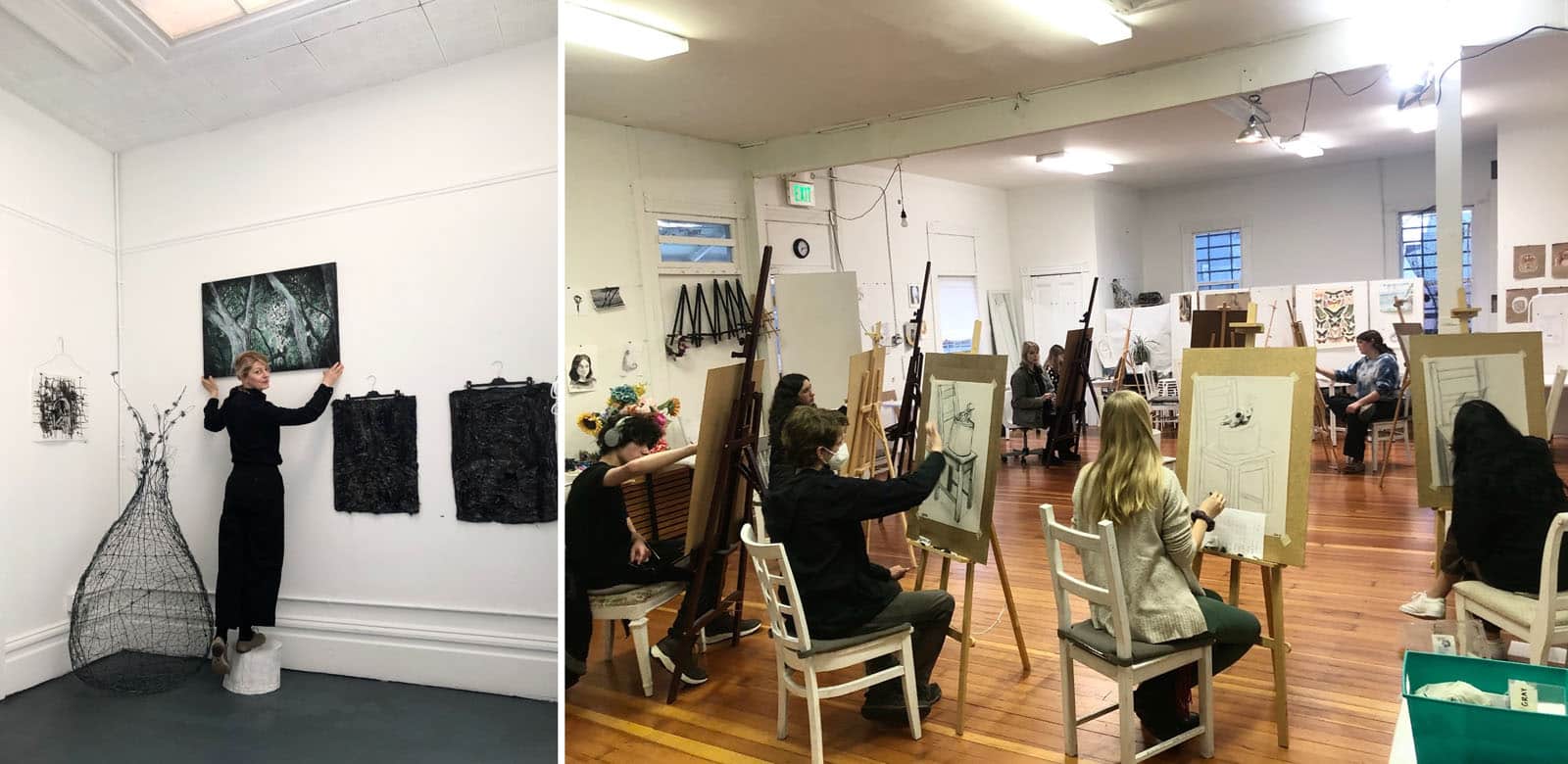
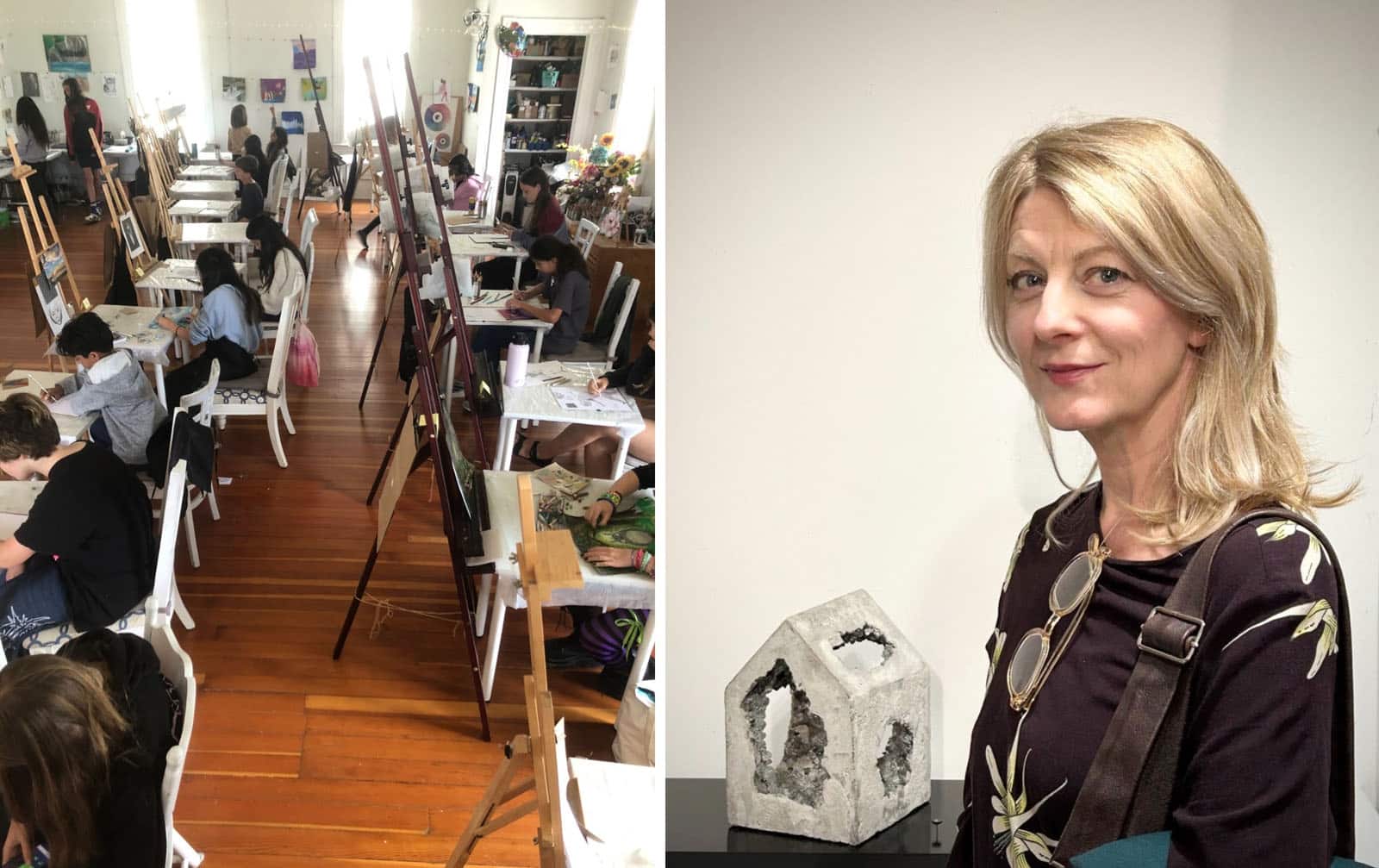
When I first encountered this space on Webster Street, I was immediately drawn to its old-world character, which evoked memories of the ateliers where I trained. I found myself naturally drawn to recreating elements of those inspiring environments, and I’m grateful that you and many visiting artists have mentioned its pleasant atmosphere. Our teaching studio continues to evolve as the artists who work here temporarily display their artworks.
My goal was to cultivate an atmosphere of quiet focus—one that supports deep concentration and creative flow. The personal studio space is more intimate and, like the teaching studio, continues to develop as new projects and ideas take shape.
You are a newcomer to the United States, having been born and first studied art in Croatia. How has your background shaped you as an artist? You have also lived, studied, and created art in Pittsburgh, and before that Scotland. How did those places influence you in terms of how and what you create?
I recently came to realize that all of the vocabulary in my art was established in the first few years of my life and has remained remarkably consistent since then. My most formative childhood experiences were spent examining X-ray images in my father’s medical office and wandering through botanical gardens and exploring plants with my grandmother. These two influences alone reveal much about the origins of my artistic expression.
My foundation as an artist was built during 10 years of formal training in Eastern Europe, and Scotland, an experience that instilled in me both thoroughness and a respect for traditional materials and methods. It not only prepared me technically but also gave me the confidence to teach others. My studies progressed from wall techniques, such as fresco and mosaic in high school, through a bachelor’s degree in sculpture, culminating in an MFA in the same discipline. When people ask how I’m able to teach across such diverse artistic mediums, I explain that art has been my sole academic focus—I’ve simply never studied anything else, since high school.
I spent a few months in London and Paris, and lived in Edinburgh, Los Angeles, and Pittsburgh before coming to the Bay Area. One thing I appreciate about moving is that each time you relocate, you have to radically re-question everything, including how and why we make art. It can sometimes be confusing and cause identity crises, but as artist Jenny Holzer says: “Confusing yourself is a way to stay honest.”
Each of these cities has its own “mannerisms” in art making. As a young artist, I’m guilty of sometimes trying to fit in; however, after a certain number of years, you learn to follow your own voice—as Oscar Wilde says, “Be yourself, everyone else is already taken.”
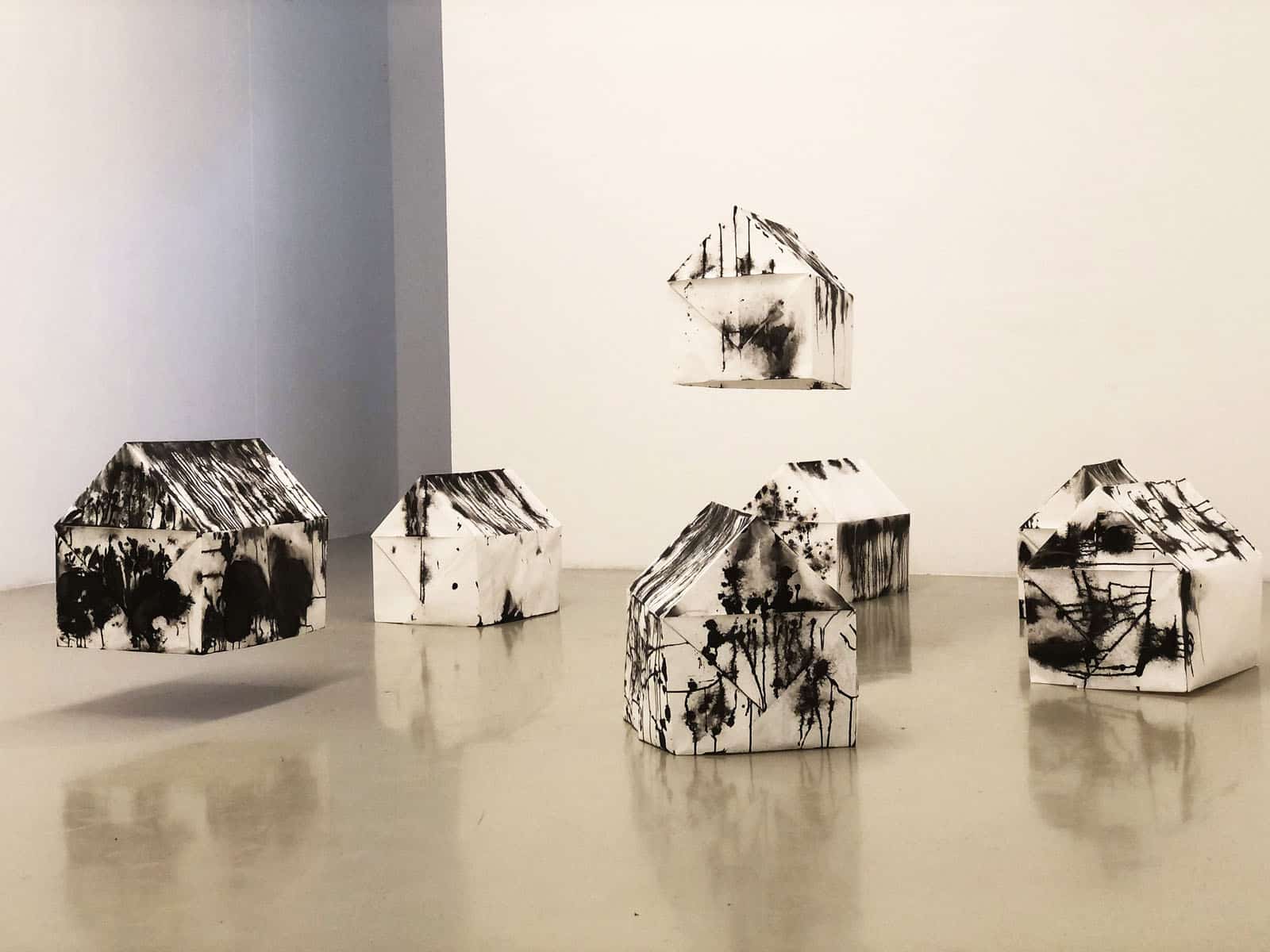
Edinburgh and Pittsburgh both offered small but vibrant artist communities that were welcoming once you became part of them. The Bay Area has been more challenging for me—while there’s incredible talent here, the sheer volume of artists makes it a more competitive landscape to navigate. Fortunately, I’ve maintained my European connections, with my last solo exhibition in Dubrovnik and participating in the Venice Biennale last year.
Artists in the Bay Area tend to be quite transient. A few years ago, I participated in a performance at The Contemporary Jewish Museum with ten female artists, mostly immigrants. We formed close bonds, yet nearly all have since relocated abroad or to the East Coast. When I first arrived and researched local artists, I read a book (title escapes me) noting that most featured artists stayed only about a decade. While the Bay isn’t easy for artists, I feel fortunate to live in what I consider the most fascinating place I’ve ever experienced.
You are both artist and art teacher. How have those two identities informed one another? Do you teach your particular style, and has teaching changed your style?
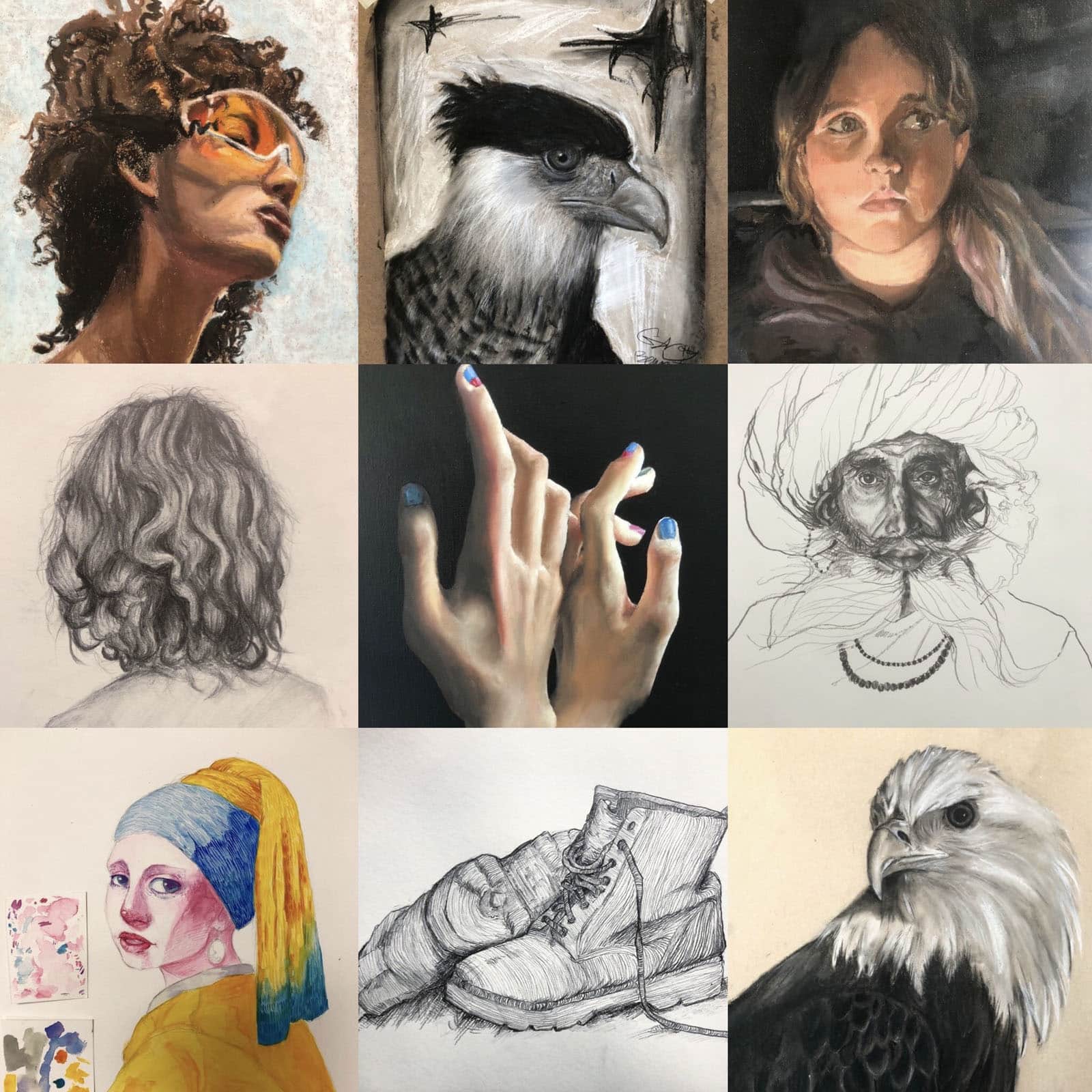
I strive not to impose my own style, but rather to help bring out my students’ personal voices. Teaching art requires an open mind—there are countless ways to create and express. I teach foundational skills in drawing, painting, and sculpture through historically proven methods, and I’ve found that when students gain confidence in their craft, their creative confidence follows. This doesn’t mean we don’t teach art concepts. Quite the opposite. Many of our projects encourage fantasy, problem-solving, imagination and abstract expression. I simply believe one must first know the rules before they can meaningfully break them.



Many people discover in art a source of transcendence or meaning that deepens their understanding of existence itself. We don’t teach art solely to produce artists—we teach it so people can create more meaning in their lives.
My approach varies depending on the student level. When I taught at Edinburgh College of Art, and if I were teaching at a college level (which was my initial plan when I came to the U.S.), the focus would be different, because students at that level need to develop their own distinctive style. However, at my studio, and other venues where I taught in the Bay, such as Kala Art Institute in Berkeley and Oakland School for the Arts, I primarily teach foundational classes that prepare students for art colleges.
While my primary focus is on visually talented youth pursuing art careers, my studio also offers team-building events for groups with little to no art experience—many haven’t created art since elementary school. These participants often arrive feeling hesitant about their artistic abilities and describing themselves as “not creative.” However, once they settle into the process, they typically find themselves enjoying the experience and often discover a creative side they didn’t know they had or had forgotten about. While these sessions require more guidance and encouragement, they’re incredibly fulfilling for me as an educator, as I get to reintroduce art into people’s lives and help them reconnect with their creative potential.
I’m not certain whether teaching has changed my own artistic style, but it has certainly opened me to think differently about art in general.
Did you come from a family of artists, and have you passed your passion for creativity onto your children?
Though not professional artists, my parents were both highly creative. I grew up watching my mom paint on glass and experiment fearlessly with new recipes, while my dad pursued carpentry and construction projects with unwavering confidence. Being hands-on with different mediums felt natural to me. With free education in Yugoslavia, I explored everything from ballet to piano to theatre before choosing visual art as my profession.
My daughter and son have similarly gravitated toward creative pursuits—music (singing, various instruments, electronic music), theater, and creative writing—and have been creating and helping at the studio since its beginnings. But I am not their only influence; my husband is a journalist, and they share with him a deep understanding of world affairs and politics. I’m not sure whether they’ll choose art as their main career, but perhaps because of their exposure to the art world, they’re undeniably creative thinkers.
You both paint and sculpt—from my uneducated perspective two very different skills—do you approach those different mediums in different ways, or do they overlap in any way?
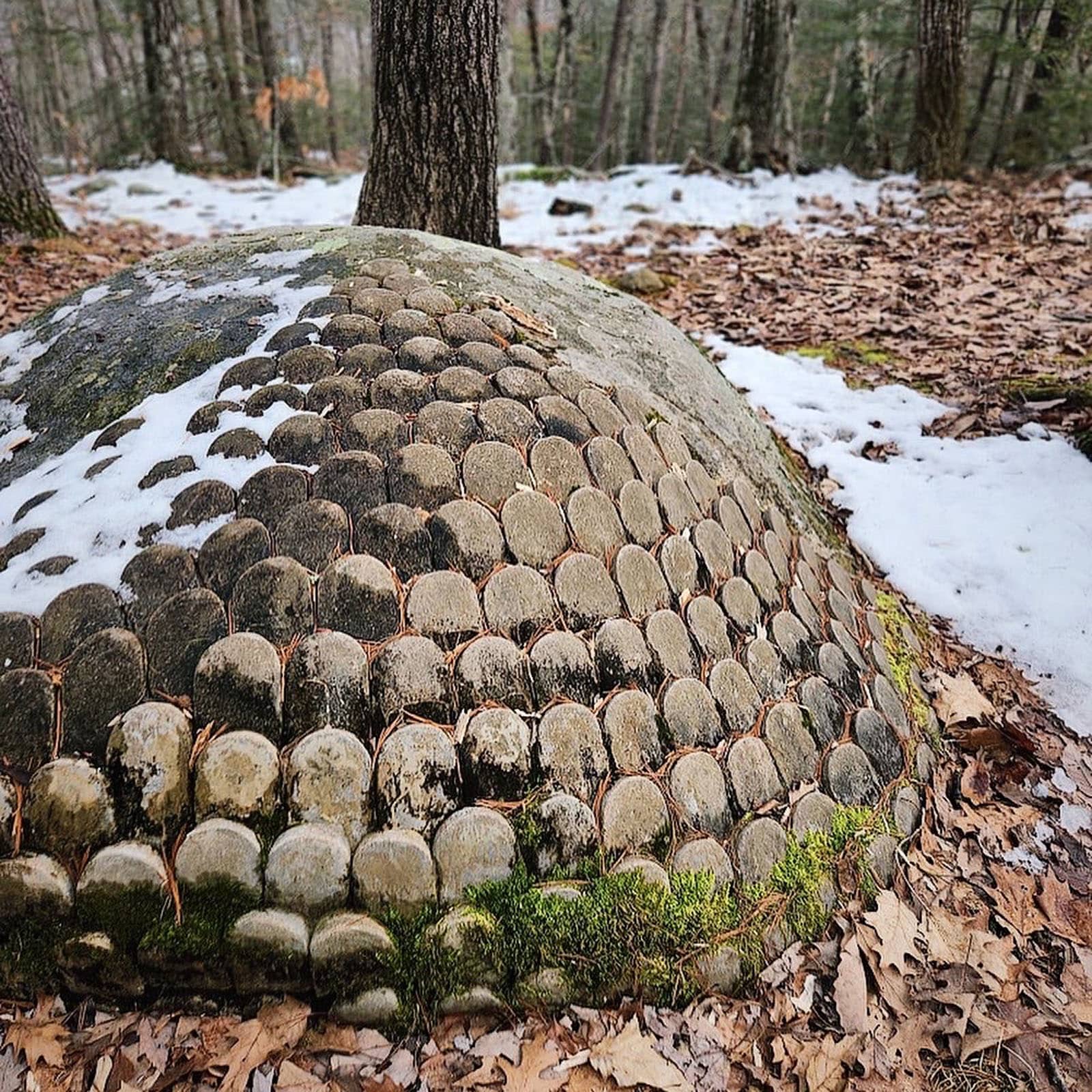
I was trained in both, but my preferred medium is sculpture and site-specific installations. When I do paint, it’s typically due to practical constraints—studio limitations or lack of adequate working space for sculptural work. Even in my paintings, elements tend to project from the surface; I simply can’t think in purely two-dimensional terms.
Drawing is different—it’s an essential problem-solving tool for visual artists. As a teenager, I became very excited about oil painting. I painted and slept in the same room until I actually poisoned myself with turpentine fumes. High school introduced me to fresco, mosaic, and watercolor techniques. But when I rediscovered sculpture—my childhood dream from elementary school—everything clicked. I’ve worked in plaster, clay, wood, and cement on large-scale projects, creating public sculptures in Europe and the U.S.
I spent several years carving stone in my 20s. As an art student, I had the unique opportunity to train at one of the oldest stone masonry schools on the island of Brač, located near its famous quarries—a truly transformative experience. Later, I worked in art restoration throughout Croatia, where there were countless projects given the country’s rich cultural heritage dating back to Roman times, some of which had been damaged by war. This hands-on restoration work deepened my understanding of art techniques and chemistry.
It was a different world when I studied, before computers. We learned logotypes and graphic design at a time when posters were still hand-designed (or used Letraset). At a nearby cultural center, there was actually a person employed full-time whose job was to hand draw and paint posters, banners, and other promotional materials. I know I sound ancient—I’m just trying to describe my background.
It is 2025, we are deep in this digital era, technology, the internet, AI, etc. What role does art have in our culture and lives today?
I think art serves multiple vital roles in contemporary culture and individual lives, functioning as both mirror and catalyst for human experience. On a personal level, art provides a unique language for processing complex emotions and experiences that resist simple verbal expression. Artists often serve as society’s conscience, highlighting injustices, imagining alternative futures, and inspiring action. In our increasingly digital and fragmented world, art’s role in creating shared meaning and human connection may be more crucial than ever.
Gene Kahane is the founder of the Foodbank Players, a lifelong teacher, and former Poet Laureate for the City of Alameda. Reach him at [email protected]. His writing is collected at AlamedaPost.com/Gene-Kahane.
