September’s reason to gather is a free production of Hamlet, Shakespeare’s tragic study of grief, justice, and indecision, staged by the Foodbank Players in a small park on Webster Street and directed by founder Gene Kahane. Donations benefit the Alameda Food Bank.
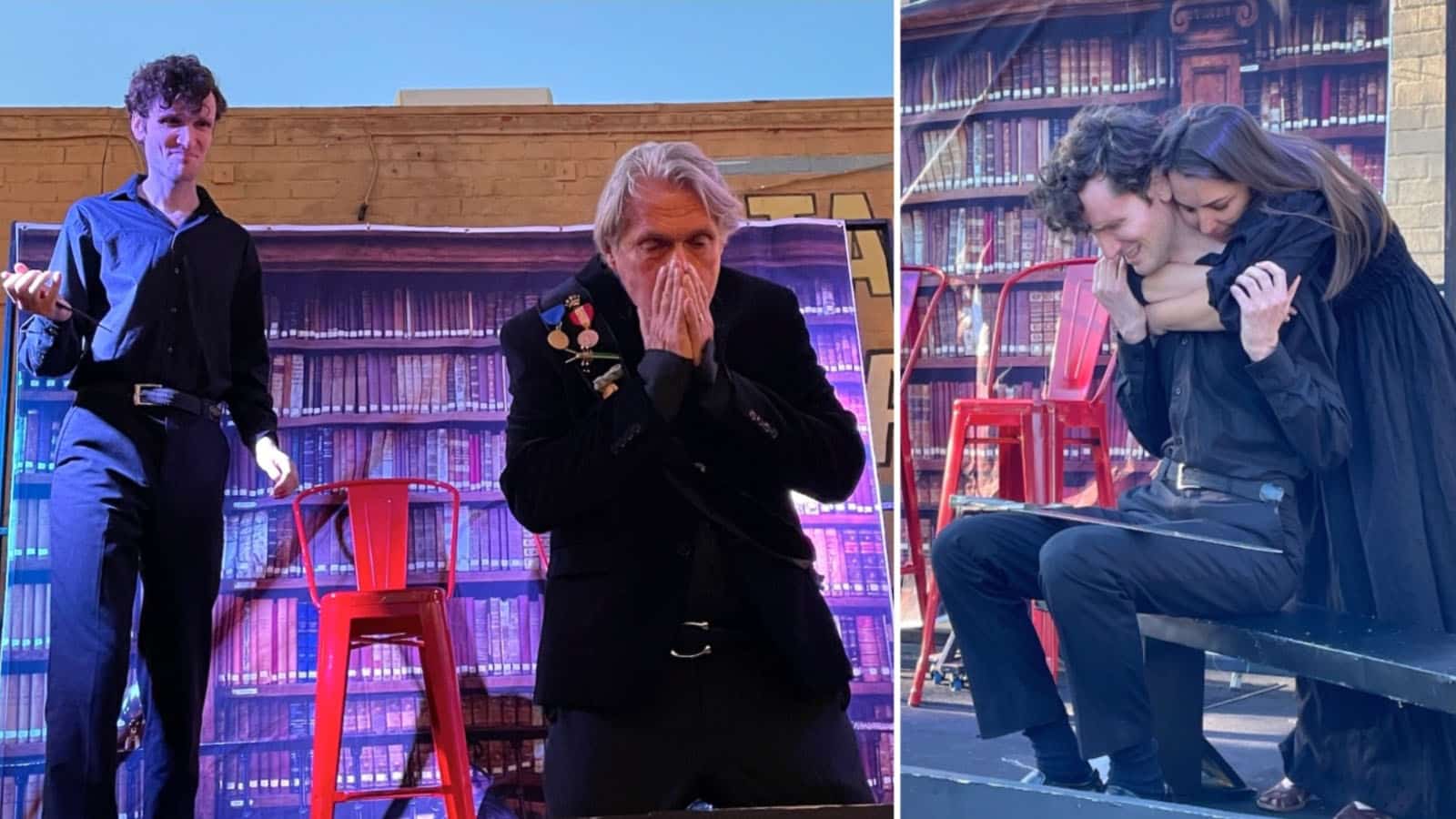
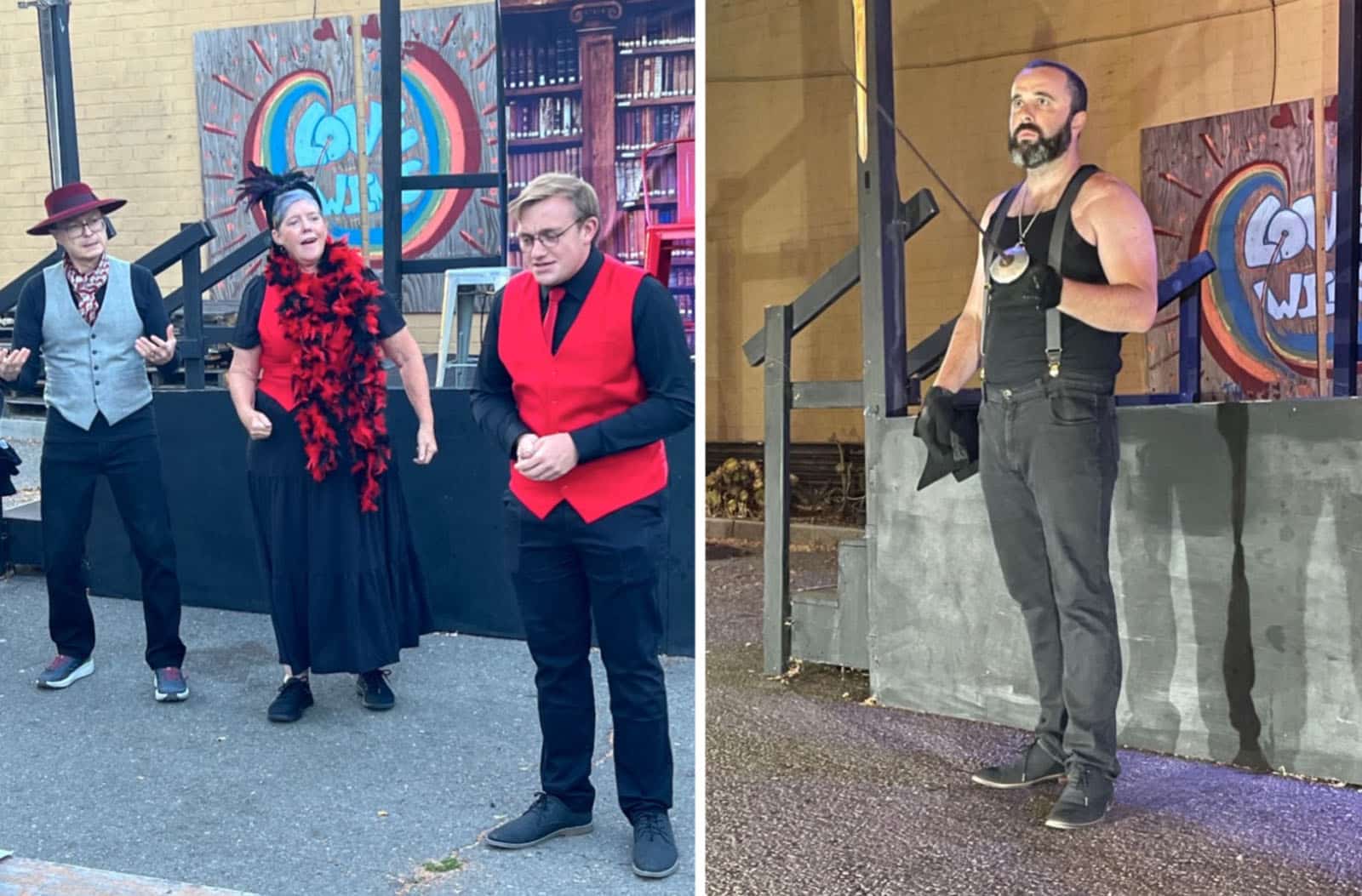
Last Saturday, every picnic table in Webster Park was full–a testament to the accessibility of outdoor community theater. Rather than sitting stationary indoors for hours and dressing formally, the audience gathered in jeans and sweaters, some with knitting in hand, others enjoying free snacks and fizzy water offered at the welcome table. As the actors took to a stage before a mural that reads “Love Wins,” the energy of the space felt comfortable and eager.
Thanks to Disney hit The Lion King, the plot is familiar to many—Prince Hamlet (Paul Bisesi), communes with the ghost of his murdered father, portrayed with wonderful solemnity by Bill Brobeck. Hamlet seeks revenge against his traitorous uncle Claudius (Don Martin) and faithless mother Gertrude (Caitlin Kenney). Along the way, Ophelia (Kelsey Goeres) doesn’t go to a nunnery, Claudius loses his swagger, and Polonius (Jennifer Morrill) tries to uncover the cause of Hamlet’s turbulent moods.
Hamlet gives vengeance a shot, but buckles under the weight of strain and lost love. The story grows dark, mirroring the sky over Webster Park.
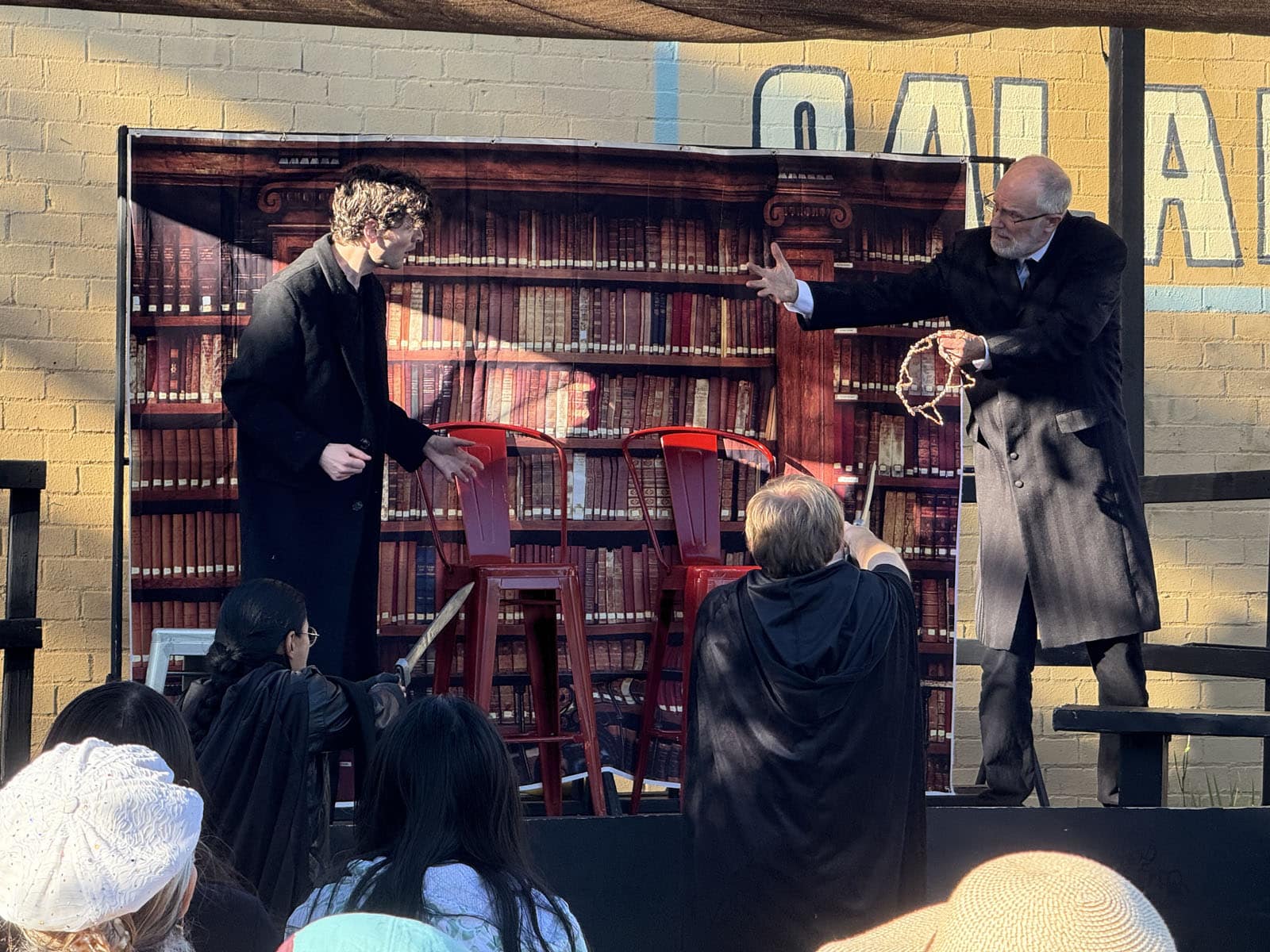
But while Hamlet is famously a tragedy, this production makes the play engaging and humorous rather than merely weepy. This production doesn’t take itself too seriously; Polonius in particular offers a lot of comic relief, in addition to dishing up some serious parental advice. The gravediggers dig up poor Yorick’s grave while playing a Beatles tune. These modern twists keep the audience entertained and lighten the mood without deterring from the story’s darkest moments.
Stage manager Yela Rivera selected resourceful sets and costuming. On either side of the stage hang Hamlet’s sword and Ophelia’s flower crown, signifying the binary themes of violence and romance that battle throughout the play. The props evolve the way grief does—absorbed into the background until they suddenly demand attention.
Though Shakespeare’s language can seem historically distant to modern audiences, this production makes the words feel natural, thanks in part to some cleverly directed body language. The production opens gently, as Hamlet and Ophelia share a tender, silent moment that makes Hamlet’s eventual “I loved you…once” all the more heartbreaking.


Bisesi plays Hamlet with startling youthfulness. As the tragedy progresses, he crouches and hurls himself through the action like an angsty teen barely holding it together.
When Hamlet’s behavior becomes erratic and physical, both Gertrude and Ophelia react with what feels like real fear, making the scenes intense. As Horatio, Maggie Deagon plays the role of one of the play’s only steady, loyal characters, and redeems Hamlet somewhat through abiding friendship.
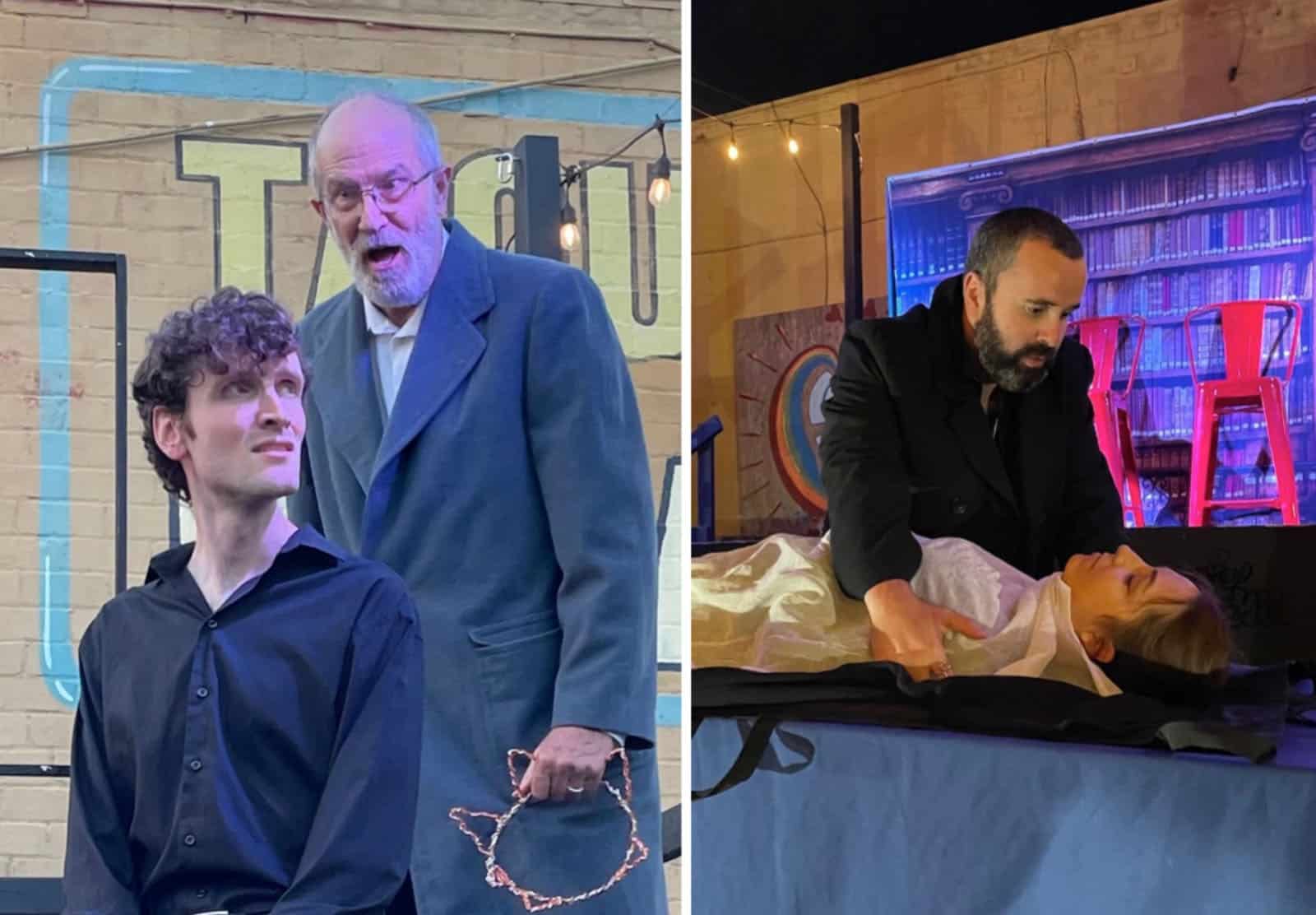
The city’s ambient noise becomes as much a part of the soundscape as the occasional strain of live drum, flute, and recorder. During Bisesi’s excellent “To be or not to be” soliloquy, a motorcycle revs on Webster Street; the modern dangerous vehicle sharpens the intensity of the moment rather than distracting from it. The fourth wall is broken in other delightful ways. Actors weave through the audience, exiting through the side street or pausing just inches from a viewer’s seat. As Ophelia struggles with grief, she sings beautifully and bawdily, then hands out flowers to audience members, reversing the custom of throwing flowers onto a stage. Thanks to these details, the performance comes alive.
Moments of grief bring still-relevant themes to the forefront. The play’s iconic lines, like “nothing is good or bad but thinking makes it so,” relate strongly to modern discussions around mental health. How can individuals cope in a violent world? The communal nature of community theater itself might be one answer. Though hunger for vengeance is difficult to satisfy, this production helps alleviate real hunger in Alameda.
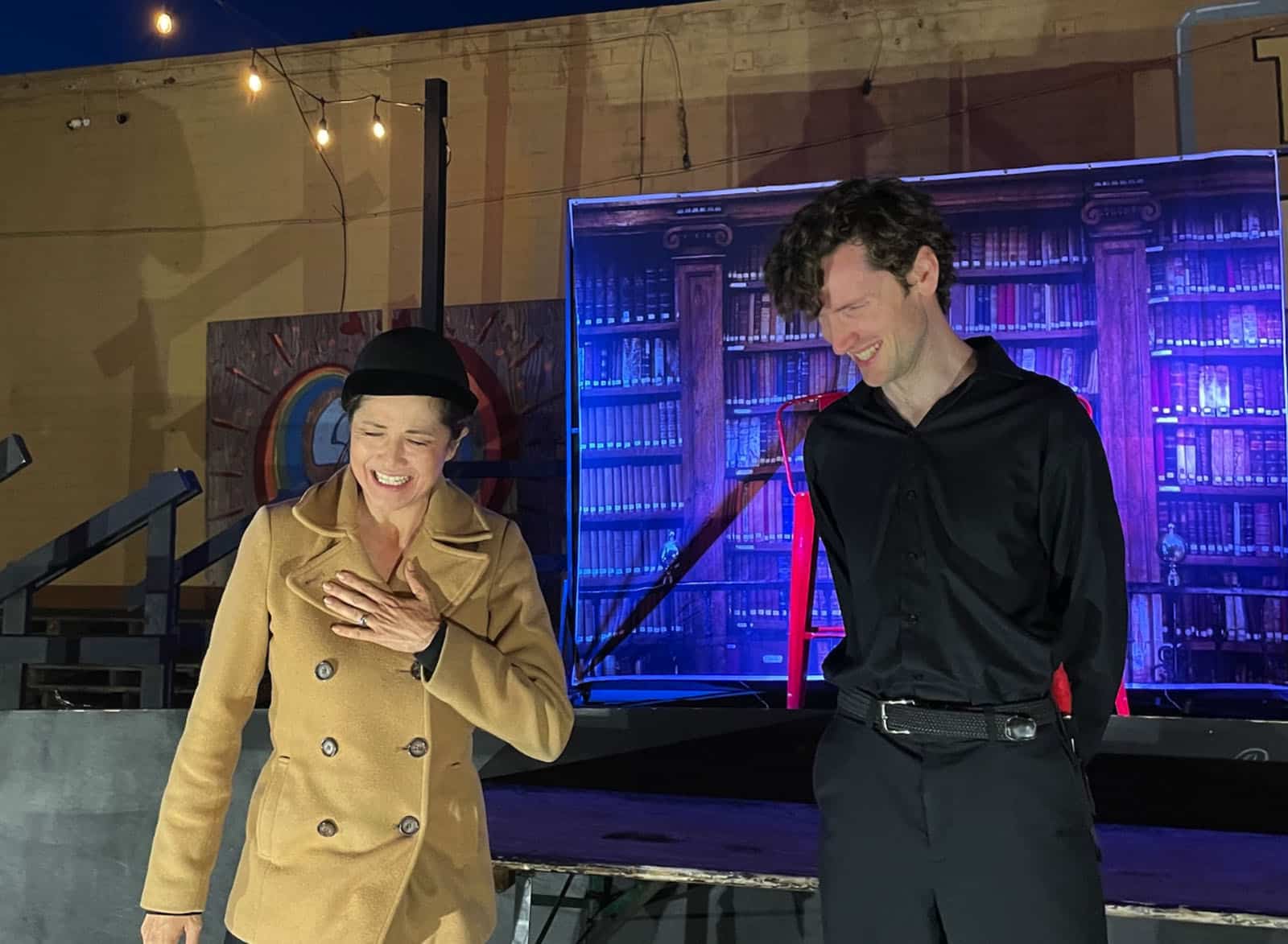
Hamlet’s last performances will be held Saturday, September 20, at 5 p.m. and Sunday, September 21, at 3 p.m. in Webster Park, 1435 Webster Street, Alameda. Donations to Alameda Food Bank are accepted at the performance, in cash or online (link provided at venue).
Editor’s Note: Goeres is the Managing Editor of the Alameda Post and Jensen and Kahane are Post reporters.
Vivian Delchamps Wolf (English PhD, UCLA, 2022) is a professor of English at Dominican University of California. She is also a disability justice advocate, ballroom dancer, cat lover, and board game enthusiast.
