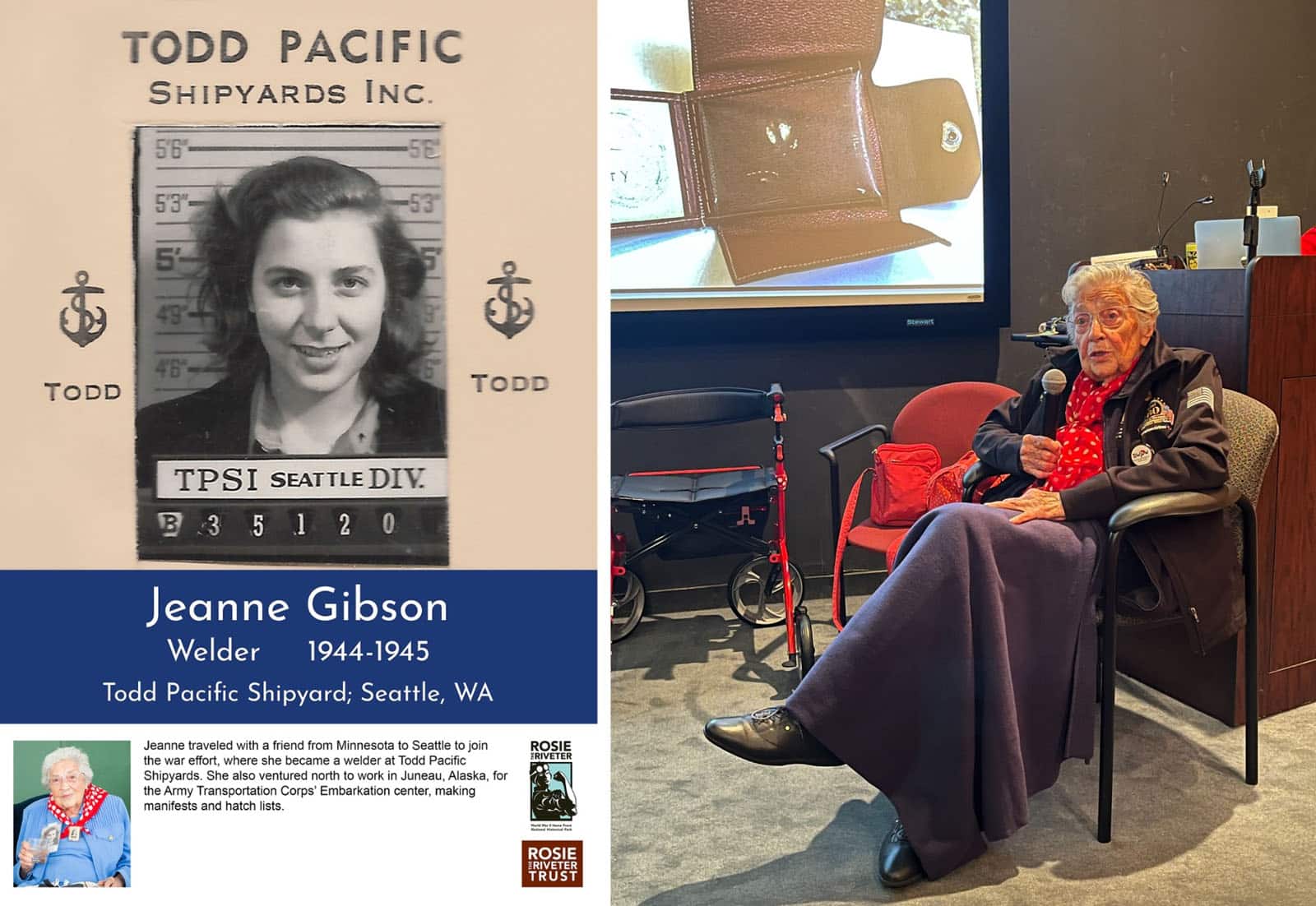
“I graduated from high school, continued on to university, went for two quarters, but at that point felt guilty for not doing something for the war effort.”
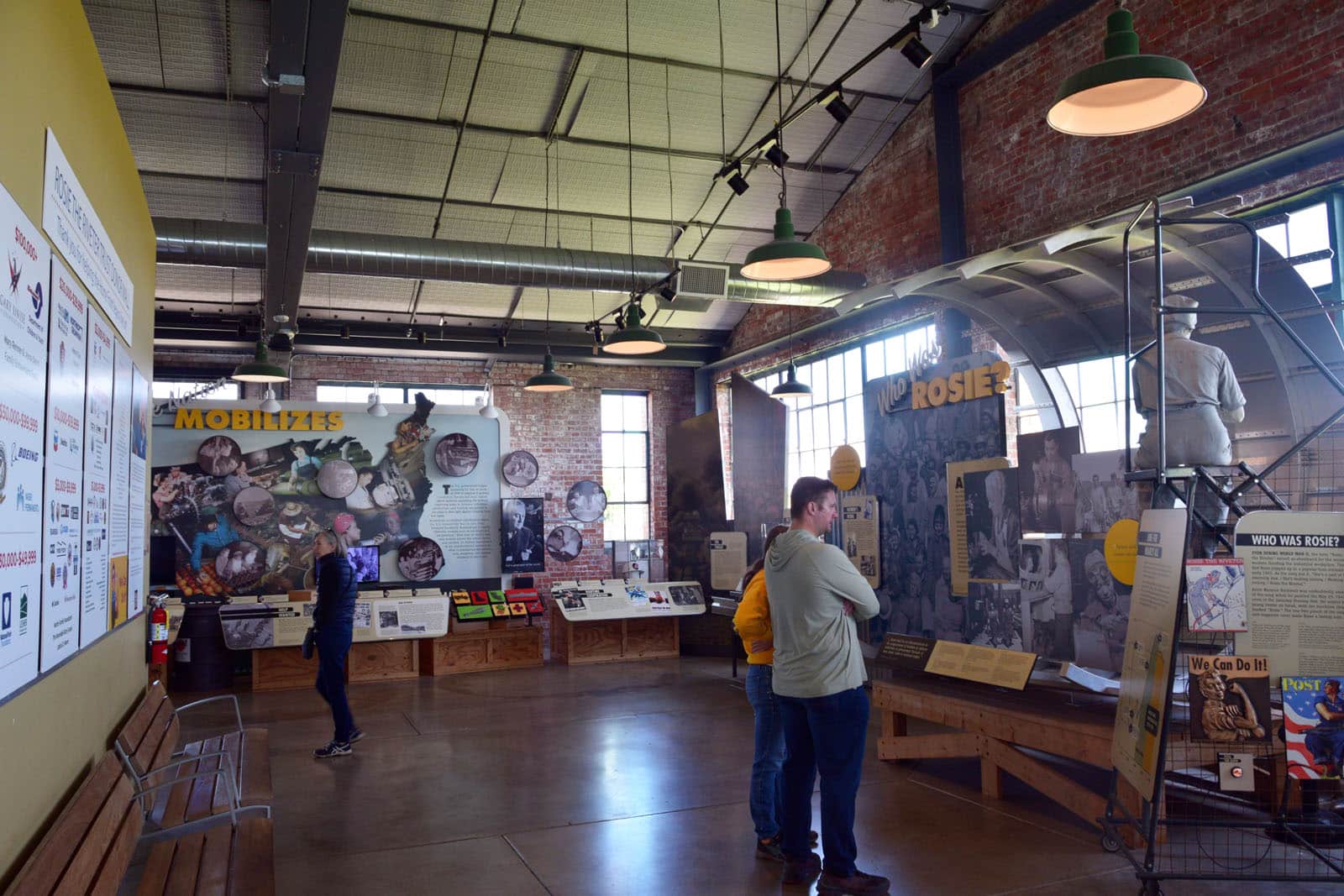
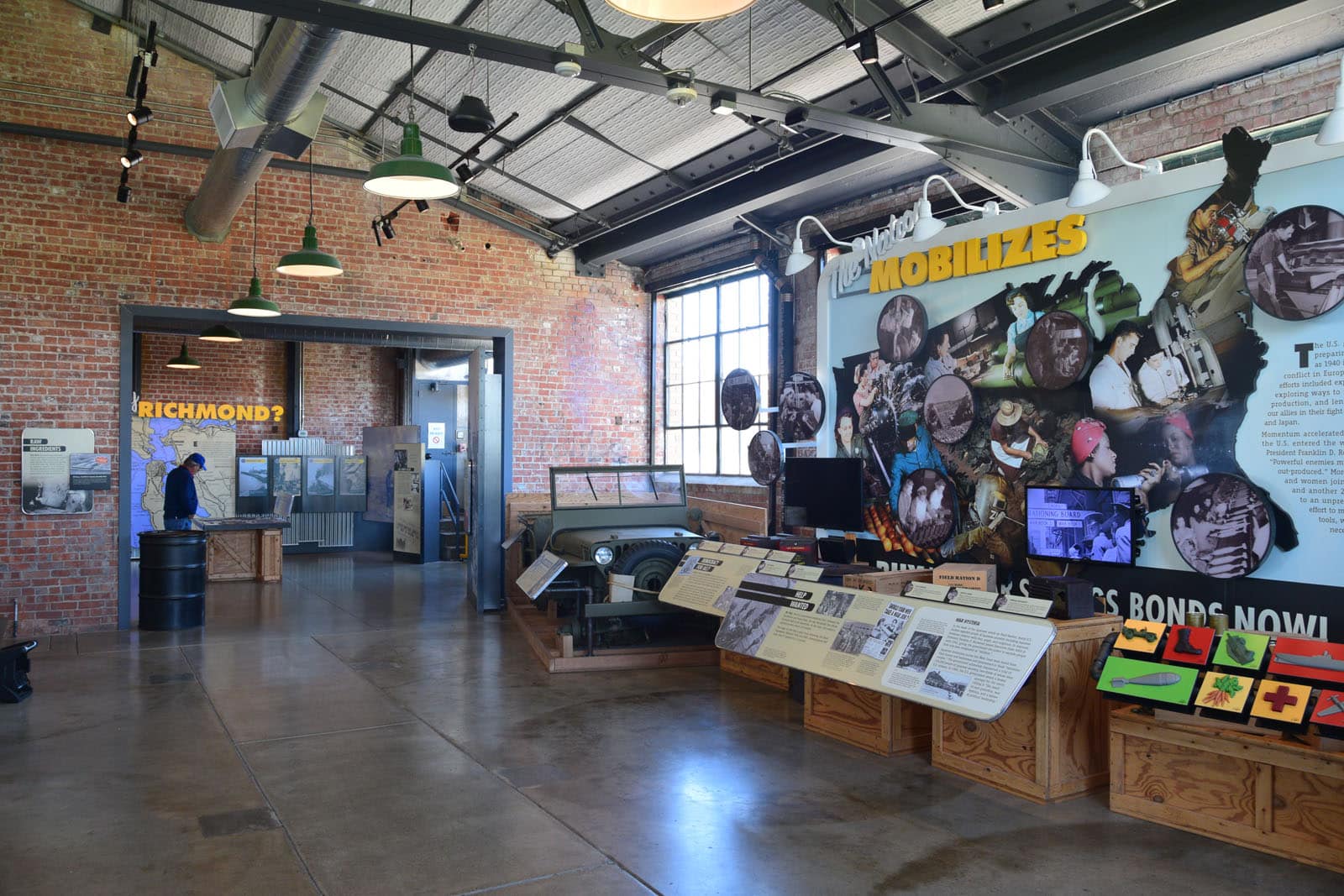
These are the words of 99-year-old Jeanne Gibson, spoken recently at the Rosie the Riveter/WWII Home Front National Historic Park in Richmond, California. There, on most Fridays, the public has the opportunity to actually see, meet, and hear from some of the original “Rosie the Riveters,” as they share their experiences working in war industries during World War II. Though most of them have passed on by now, there are still a handful of these original “Rosies” left, and it is a special experience to get to meet them, learn about their lives, and thank them for their service.
Mobilizing America
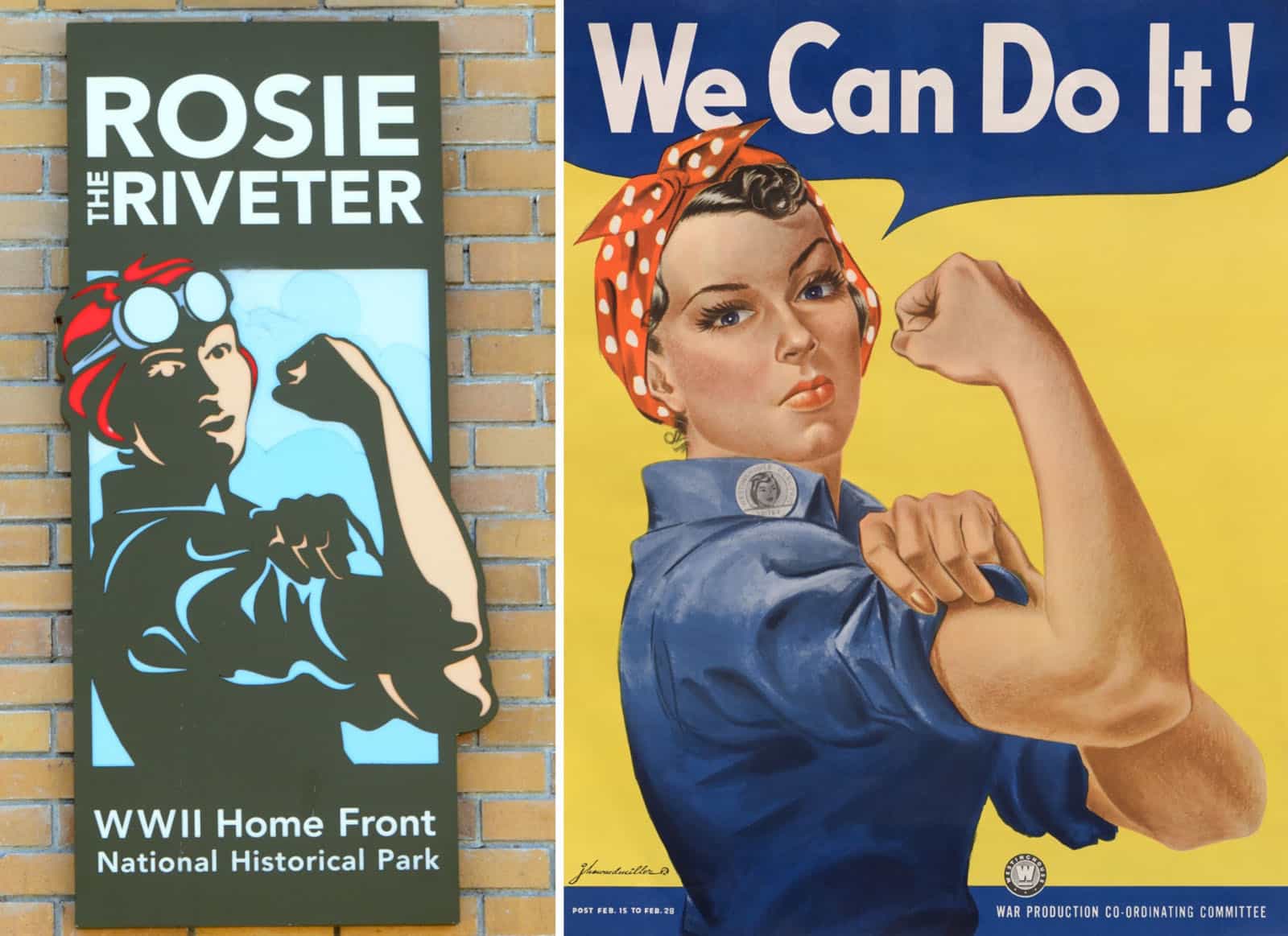
America’s entry into the war after Japan’s attack on Pearl Harbor on December 7, 1941, created a massive need for factories and workers to produce ships, tanks, trucks, munitions and other supplies, while men were joining or being conscripted into the armed forces. Part of the answer to Roosevelt’s call for America to become the “arsenal of democracy” was to convert civilian factories to military production, operating around the clock with day, swing, and graveyard shifts. But that alone wasn’t enough to meet the demand. A key factor in America’s eventual success in the war was to bring in the formerly untapped resource of women into the workplace. This is where the legend of Rosier the Riveter began.
Six million strong
According to the National Park Service, “Some six million women entered the U.S. workforce during the war. While many needed no urging to aid the war effort, the government actively recruited them, first targeting single white women. The appeal later extended to married women, then minority women.” As women entered industries traditionally dominated by men, they had to face depression-era attitudes about women taking jobs from men—and about married women working at all. Gradually, they were mostly accepted, as they proved themselves skilled in the jobs they were tasked with.
Old enough to be our fathers
According to Jeanne Gibson, who started working in the shipyards at 18 years old, “The men we worked with were old enough to be our fathers or grandfathers. They were very nice to us, and they did not resent us. It was later in the war at this point, and that resentment business had worn off. They kind of took care of us, in looking out for us.”
Ship building pays better
Jeanne, and her friend Esther Harri, boarded a bus from Minnesota to Seattle in the summer of 1944. Like millions of other women, they were answering the nation’s call to join the war effort. After arriving and finding a place to live, their landlady told them there were two main war industries in Seattle, coaling and ship building. “Ship building pays better”, she said. So, they went down to the Todd Pacific Shipyards to apply for work. They first had to join the union—the International Brotherhood of Boilermakers, Welders and Helpers—and were then given two weeks of training before starting work.
Welding like sewing
“Welding itself is not hard, it’s the positions you have to get into to weld that can be difficult. But when you’re 18, you can do anything”, said Jeanne. She continued, “Welding is the meticulous nursing of a puddle of molten metal across a seam. It’s very much like sewing. Some of the terms are even the same; you tack pieces together before welding them, just like in sewing.”
Long John underwear
Because it was cold on the waterfront in Seattle, one of the first purchases Jeanne and Esther made with their first paychecks were pairs of 50% wool Long John underwear. They bought second sets as soon as they could afford it. They worked six days a week, sometimes seven. After a year of this hard work assembling destroyers, they decided to make a move.
On to Alaska
Esther had a bucket list item of going to Alaska, and though Jeanne initially resisted, Esther eventually wore her down. Sailing to Alaska on the Princess Nora, they then managed to find an apartment above a store in downtown Juneau, and while Esther landed a job with the U. S. Forest Service, Jeanne found a position with the U. S. Army Transportation Corps. Much of the war effort had shifted to the Pacific by that point, and when islands were captured by the Allied forces, they needed lumber and other supplies for buildings. Jeanne worked on the paperwork and hatch lists for the ship manifests.
Celebrating in the streets
“I was in Juneau when the war ended. We saw the soldiers celebrating and the enlisted men were cutting the ties off the officers, as crowds were jubilantly going up and down the streets,” said Jeanne. After that, there was no reason to stay in Alaska, so Jeanne and Esther went back to the University of Minnesota and attended school for a year.
California bound
The two friends then came out to California, crossing the Bay Bridge on Esther’s birthday, July 22, 1946. While apartments were very scarce, they managed to find a place to live in a private home. “Both of us got jobs with an insurance company,” said Jeanne. “I was very happy until I found out that my file clerk was getting five dollars more a month than I was, because he was a man. I quit. I got another job with a large company and got promoted after six months or so. The job was really wonderful and I enjoyed it, but after several years I went to the boss to ask where I could go from there. He just told me that I was young, was going to get married, and leave them. So I had run into a glass ceiling.”


Sputnik happened
Jeanne moved to Berkeley, went back to school at Cal, finished her Bachelor’s degree, got her masters degree and then her PhD in Educational Psychology. She taught Ed Psych to graduate students there, all the while working in poultry husbandry for money to put herself through school.
“Then Sputnik happened,” said Jeanne, and it was found that science education in America was substandard. Sputnik was the first artificial satellite to orbit the earth, launched by the Soviet Union in 1957. It triggered the Space Race between the United States and the Soviet Union.
“The AAAS, American Association for the Advancement of Science, decided that they would come up with a curriculum, so they gathered professional people in the sciences that summer. I worked with them for four years as a writer for the group”, explained Jeanne.
Learning to fly
“I got to be in my 40s,” Jeanne said, “and my bucket list had getting a pilot’s license on it, so I went to night classes in Albany for ground school, and then to Napa to learn to fly. I became a member of the 99s, which is the International Association of Women Pilots, started by Amelia Earhart when there were only 99 women that were licensed pilots.”
Words to live by
Speaking before a rapt audience in Richmond, Jeanne said, “I taught school in Berkeley for 30 years, and I’m here now teaching again, telling young people and young women to advocate for themselves. Don’t let them not give you a job if you think you can do it. Also, if your country needs you, this is what we do to preserve our country. And remember, education is your key to advancement.”
Honoring the Rosies
According to the National Park Service website, “This year marks a major milestone for Rosie the Riveter/WWII Home Front National Historical Park—we’re turning 25! Since the park was officially established by Congress in 2000, we’ve been dedicated to preserving and sharing the inspiring stories of the WWII Home Front. This year’s theme, ’The Rosie Spirit: Continuing to Answer the Call,’ honors the resilience and unity of those who shaped our nation during this pivotal time.”
I’m so glad that I finally got to visit this important historical site, and that I did it while some of the original Rosies are still alive to tell their stories. It may have taken me 25 years to finally get here, but you don’t have to wait that long. Stop by some Friday, and meet one of these historical figures while you still can.
If you go
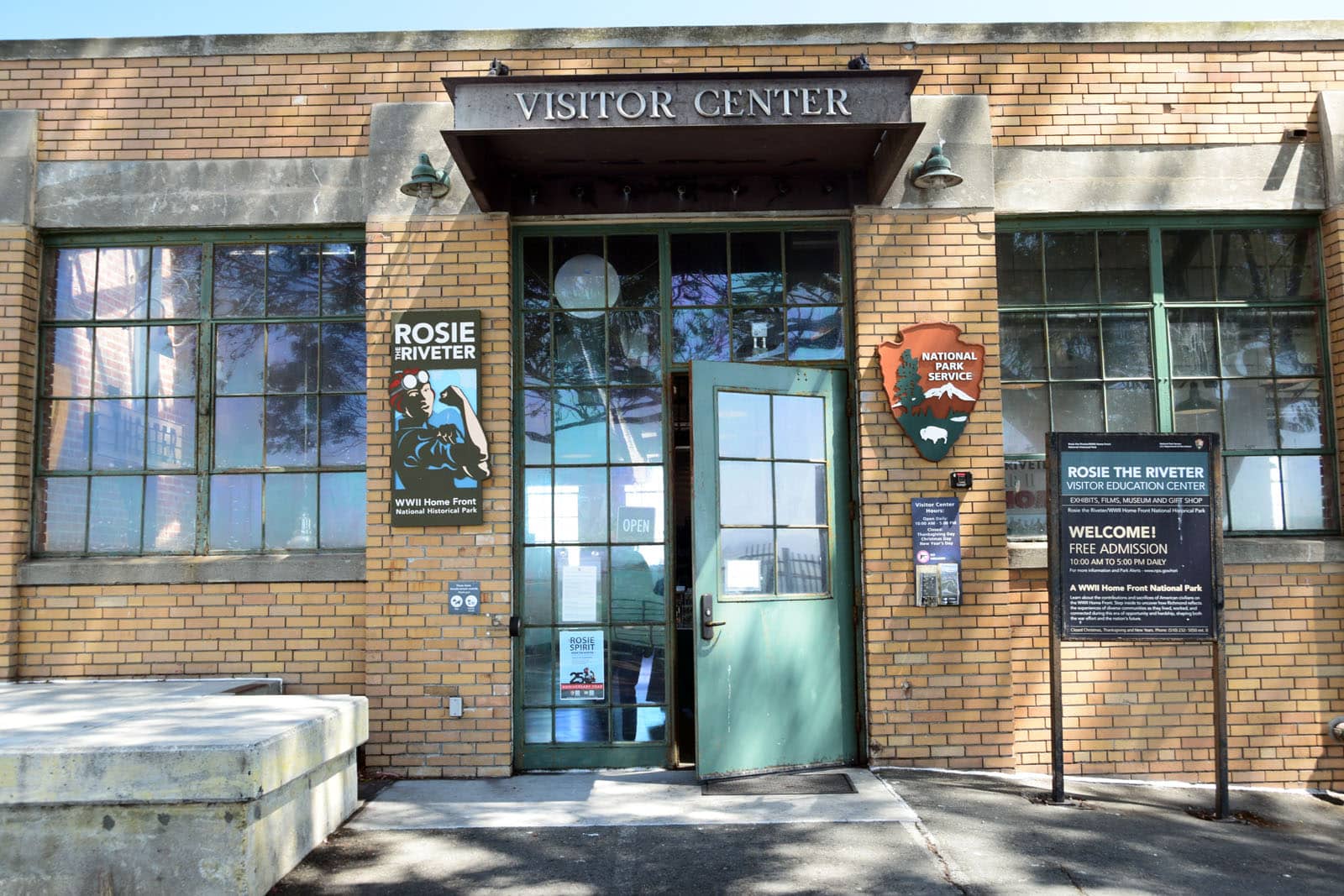
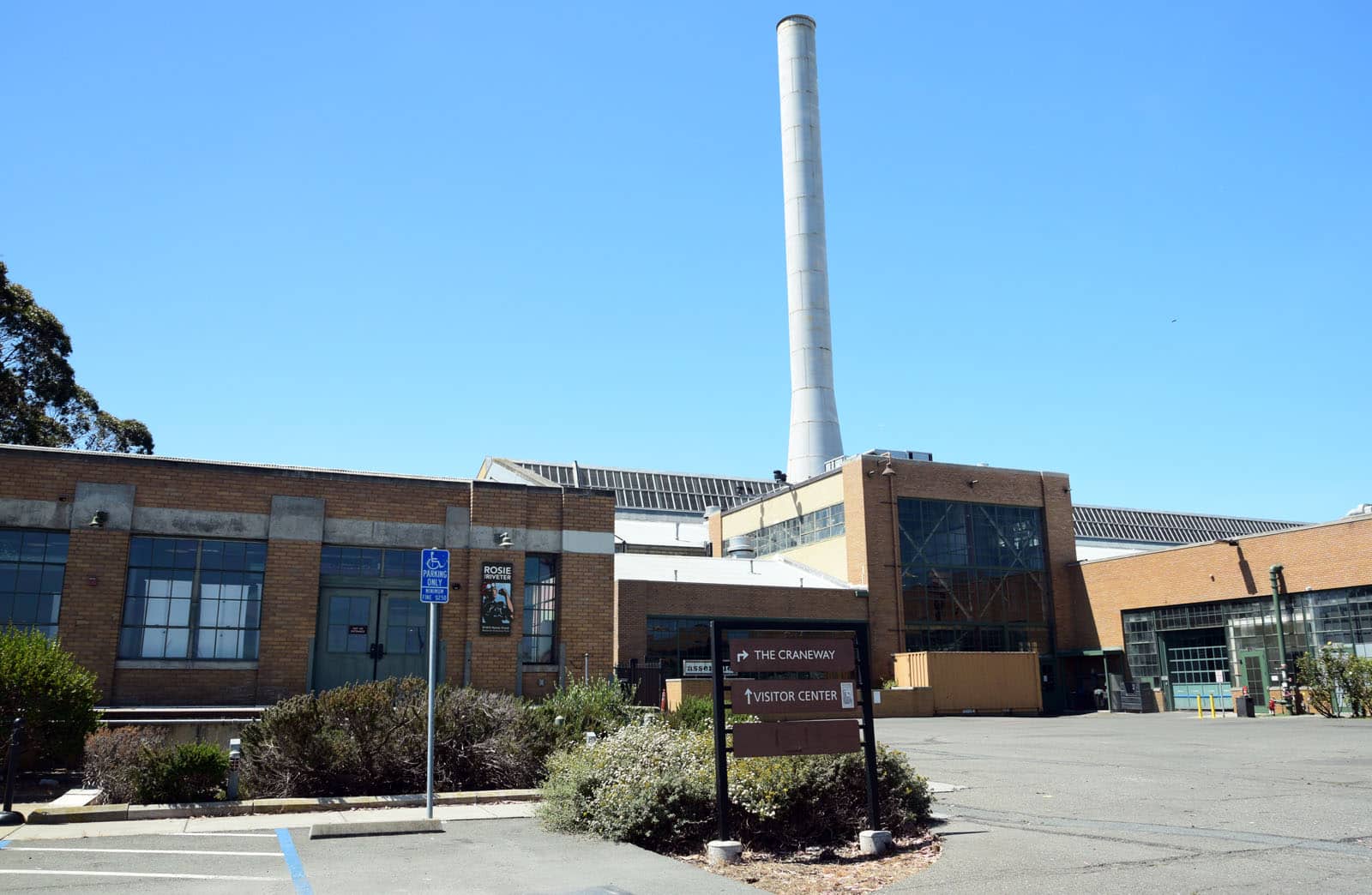
The Rosie the Riveter/WWII Home Front National Historic Park is located at 1414 Harbour Way South, Richmond, CA 94804. The phone number is 510-232-5050. Call ahead to find out if a “Rosie” is going to be there. They are usually there for talks on Fridays at 10:30 a.m. and 11:30 a.m.
The visitor center is open every day from 10 a.m. to 5 p.m., except for Thanksgiving, Christmas, and New Year’s Day. Admission is free, but donations are gratefully accepted.
Learn more at the Rosie the Riveter/WWII Home Front National Historic Park website.
Contributing writer Steve Gorman has been a resident of Alameda since 2000, when he fell in love with the history and architecture of this unique town. Contact him via [email protected]. His writing is collected at AlamedaPost.com/Steve-Gorman.
