The USS Hornet recovered both Apollo 11 and Apollo 12 after their splashdowns in the Pacific, bringing the astronauts and their capsule aboard within minutes of landing. Walking through the ship today, you can still see the real hardware from those recoveries—including the test capsules, quarantine facility, and aircraft that made the mission possible.
While our waters at Seaplane Lagoon may not contain astronauts and space capsules (if all is going well), splashes continue in front of the Hornet.
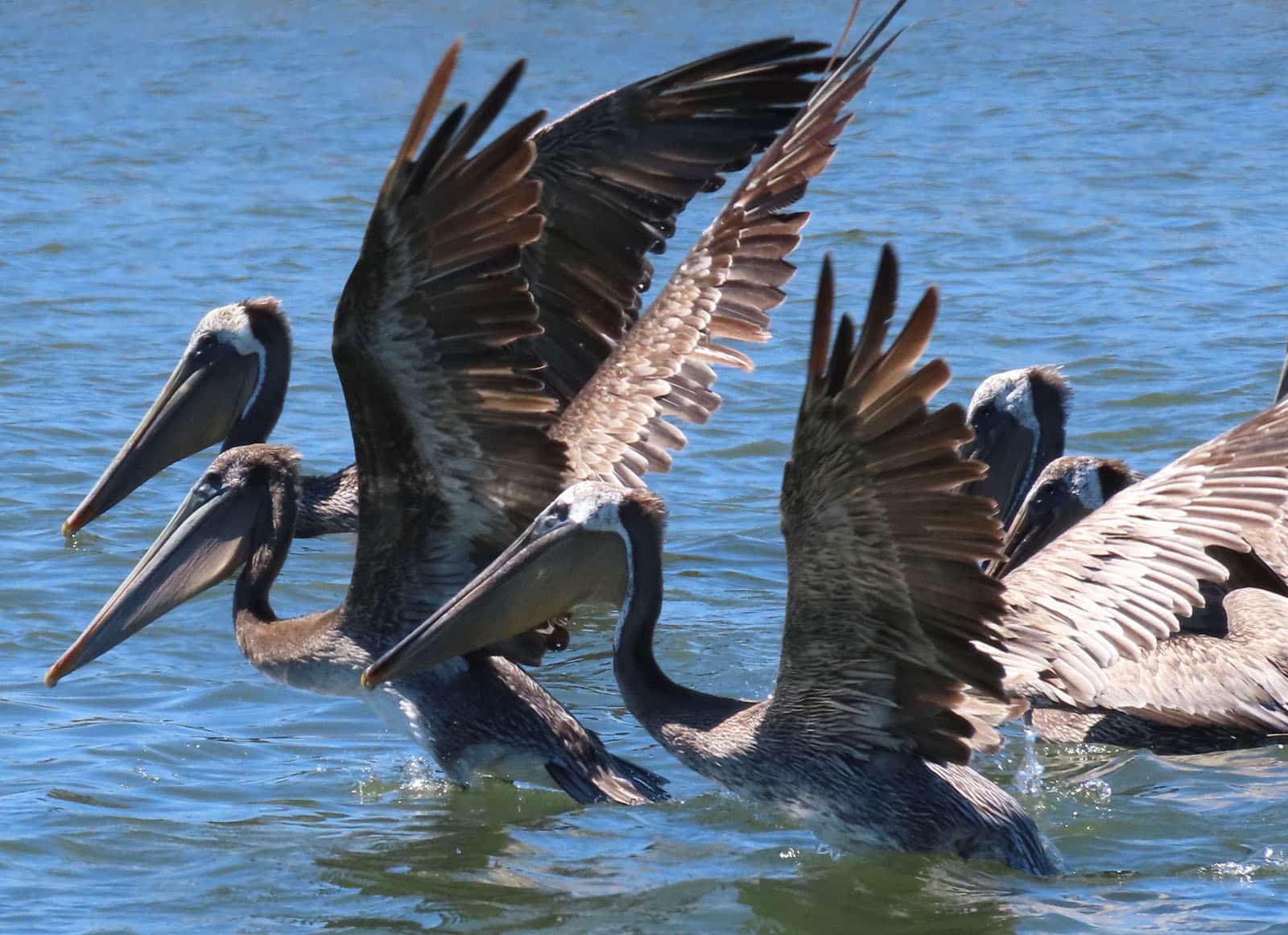
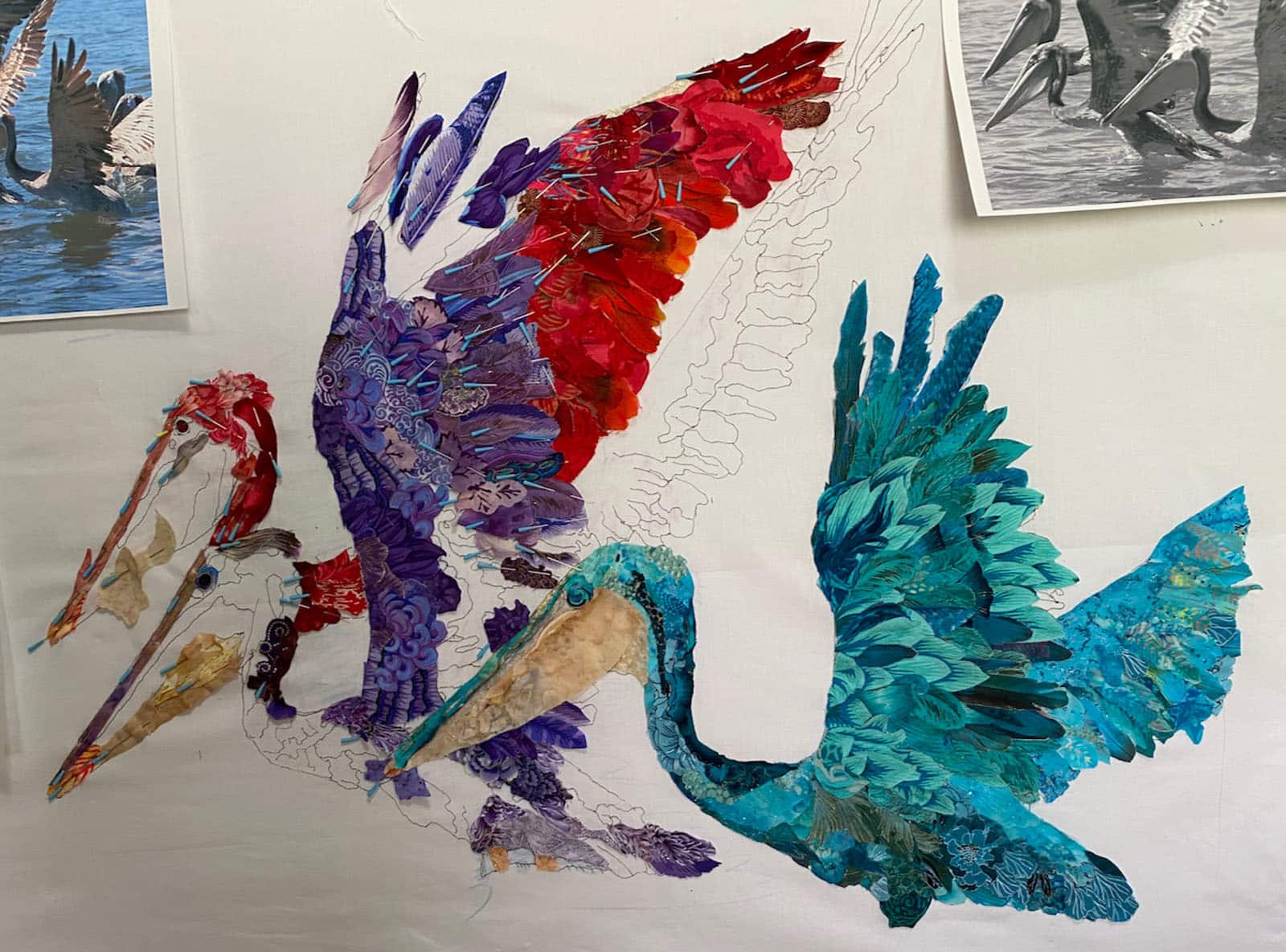
During a recent visit to Alameda, my mother caught one of those moments—a flock of pelicans skimming the water in unison. Based in Santa Cruz, her art form is collage quilting with the Pajaro Valley Quilt Association, and that photograph became the inspiration for one of her newest pieces.

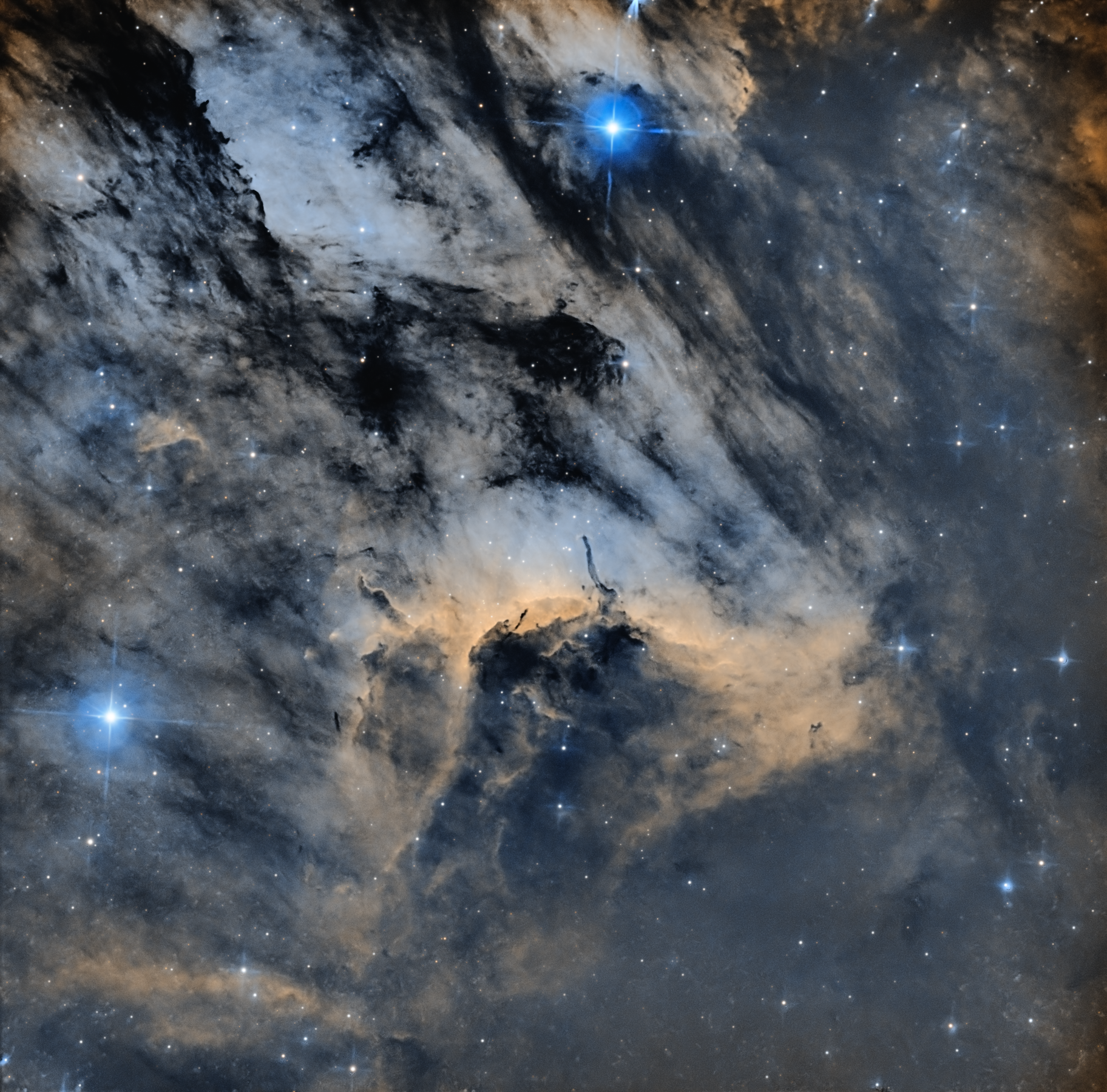
1,800 light years away, a natural collage fills a huge portion of the sky. The Pelican Nebula, also known as IC 5070, shines in the constellation Cygnus, and is associated with the greater North America Nebula region. Nearby stars ignite gas, creating a bright patchwork of clouds with deep shadow regions full of thick dust. The boundary where cold gas gives way to hot, glowing gas appears as a bright orange texture near the lower center of the image. Because the region is actively heating and igniting, this photograph would look entirely different in the past and future. In Fall 2025, I photographed it for the first time.
Can you spot the pelican? I asked a few astrophotographers if they could, and not everyone said yes. I felt like I could make it out, so I composited a pelican head from my mother’s picture onto the nebula.



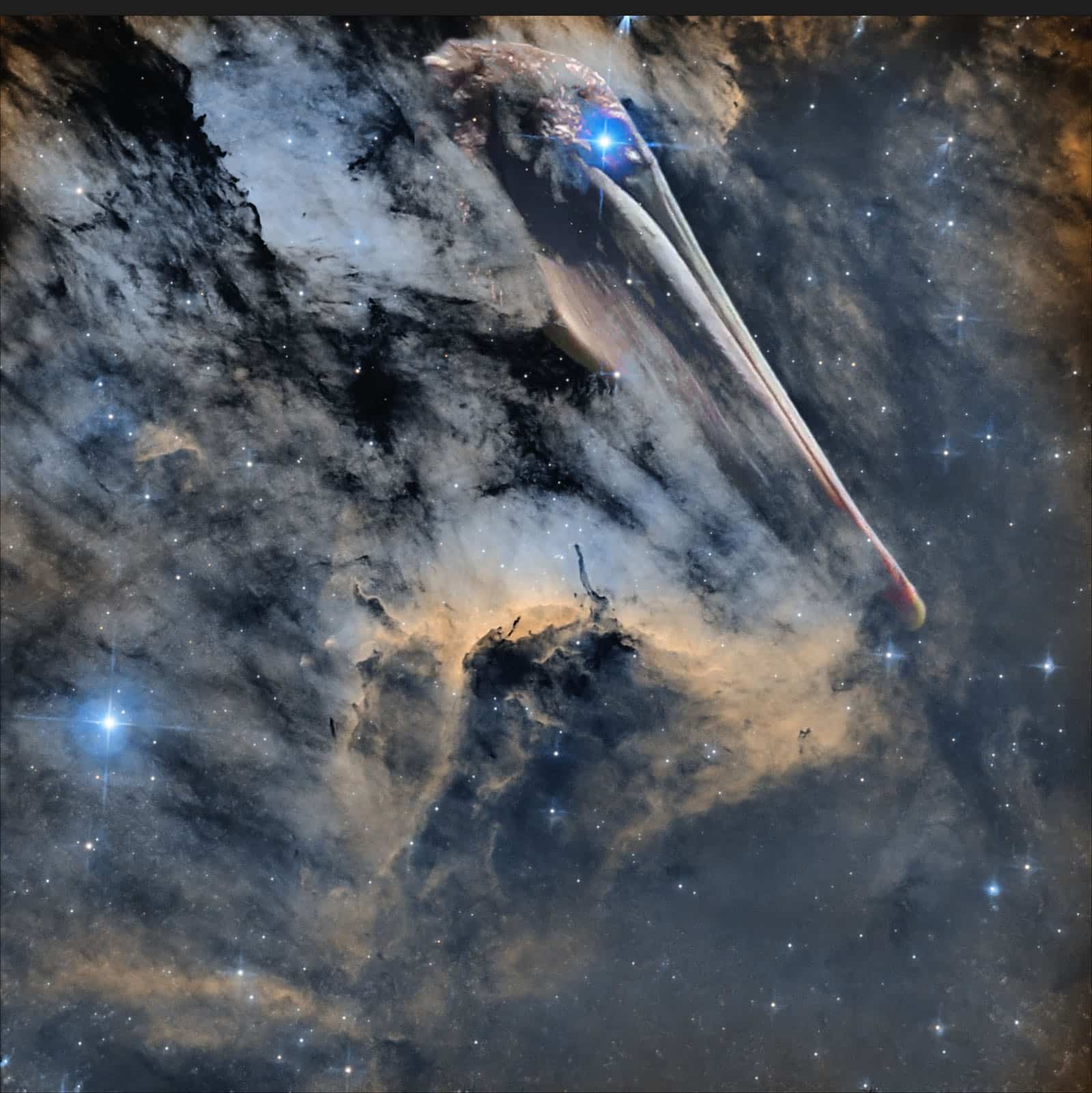
Spotting the pelican is a matter of imagination and forced perspective. The field of view and even geography play into what an observer can imagine. That is to say, zooming in or out of this area of sky changes how the nebula is interpreted.
Where you are viewing it from Earth changes your POV even further. Earth is a sphere, and every latitude gives you a slightly different angle on the stars. As you move north or south, the constellations, and in turn deep-sky objects, appear to rotate in the sky. At the equator, constellations and nebulae are tilted substantially compared to how they are seen in Alameda. Cross into the opposite hemisphere, and some seem to flip “upside down.”
A fun, interactive website called the Rotating Sky Explorer allows you to see what some constellations look like from any point on Earth. Depending on your latitude, the “pelican” shape looks upright, sideways, or tipped over.
Changing perspectives around the world creates multiple meanings, but at the end of the day (no pun intended), we’re all experiencing the same universe, just from different points of view.
While on vacation at Timber Cove in 2020, Evan Gomez-Shwartz accidentally photographed the Milky Way with his phone. Since then, he’s been taking photos of outer space at every opportunity possible, now with better equipment. The Alameda-based astrophotographer’s favorite subjects to photograph are nebulae and galaxies. Reach him via [email protected].
