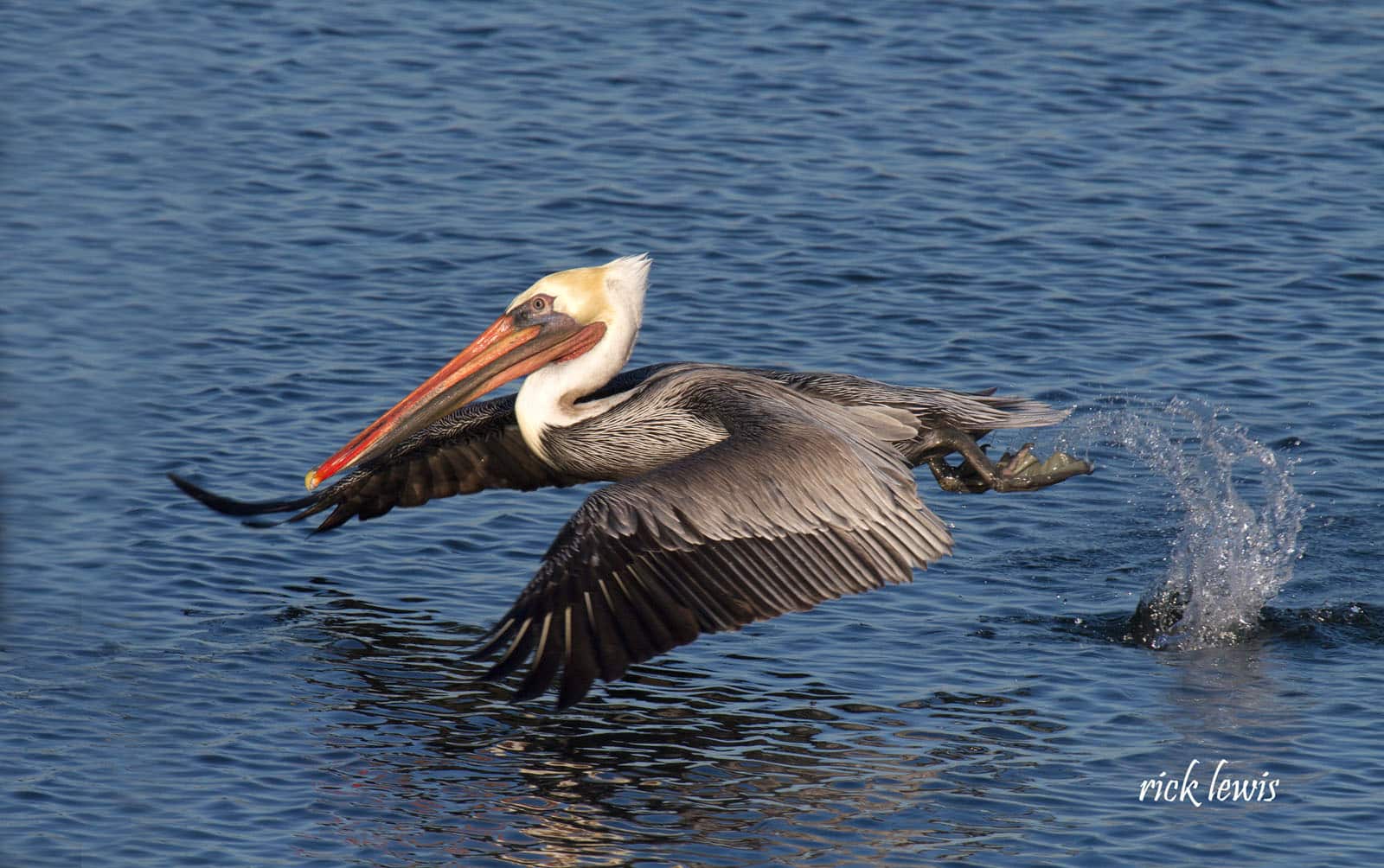
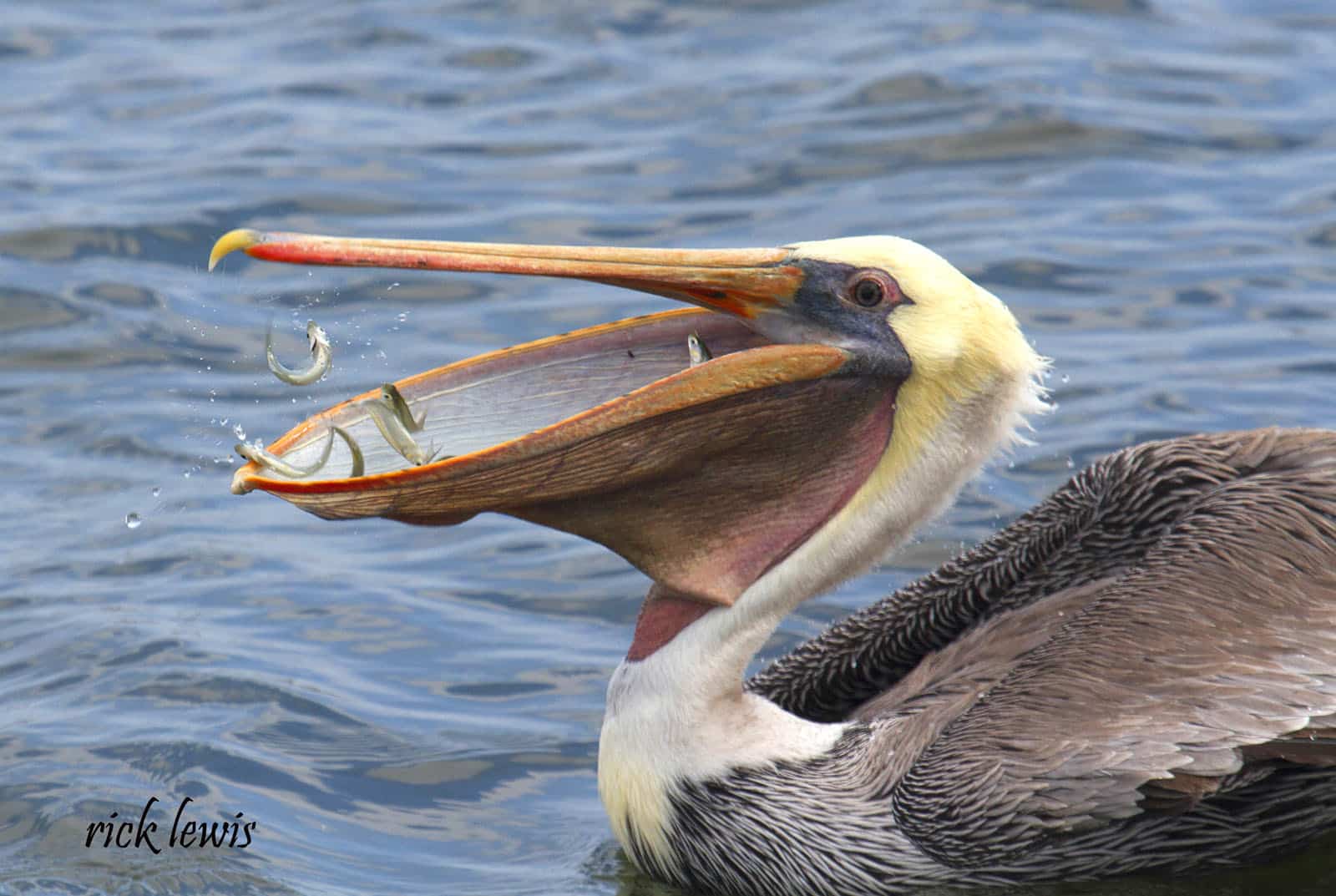
I can’t claim brown pelicans as my gateway, or “spark” bird, the bird species that showed me just how amazing the avian world is, but I do count brown pelicans as one that sustains my love of birding. With their large, 6.5-foot wingspans, heavy bodies, large bills, and impressive pouches, they’re hard to miss and instantly recognizable. Whether gliding silently over the beach at sunset or perched in a great lineup along one of our local seawalls, it’s impossible for me to be unmoved by the sight of one or a dozen pelicans when they start to show up along our local shores in Spring.
I’m hardly the first to be impressed by the huge birds. Pelicans have long shown up in art and literature, from Ancient Egypt, where they were associated with the afterlife, to Shakespeare, who referenced them in Hamlet, King Lear, and Richard II. More recent characterizations include Nigel, the animated pelican in Finding Nemo, voiced by Geoffrey Rush. John James Audubon featured brown pelicans (Pelecanus occidentalis)—a permanent coastal resident of central North America southward to northern South America—prominently in his Birds of America, various religions associate them with piety, and the brown pelican was named the state bird of Louisiana in 1966.
The pelicans we see in Alameda are a subspecies of brown pelicans, the California brown pelican (pelecanus occidentalis californicus), smallest of the seven pelican species found around the world. The only other North American pelican is the American white pelican (pelecanus erythrorhynchos) which has an all-white body with black primaries and does not dive.
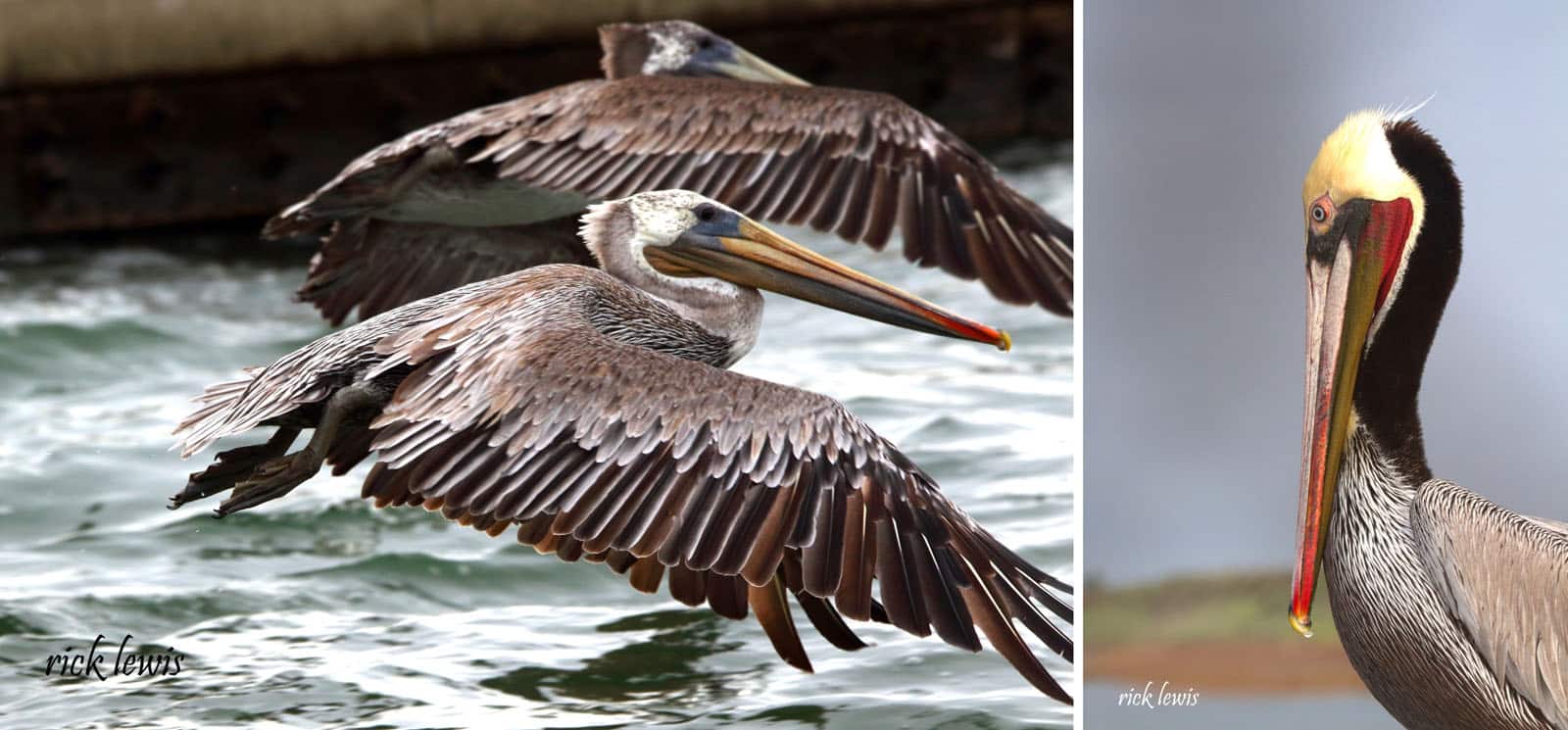
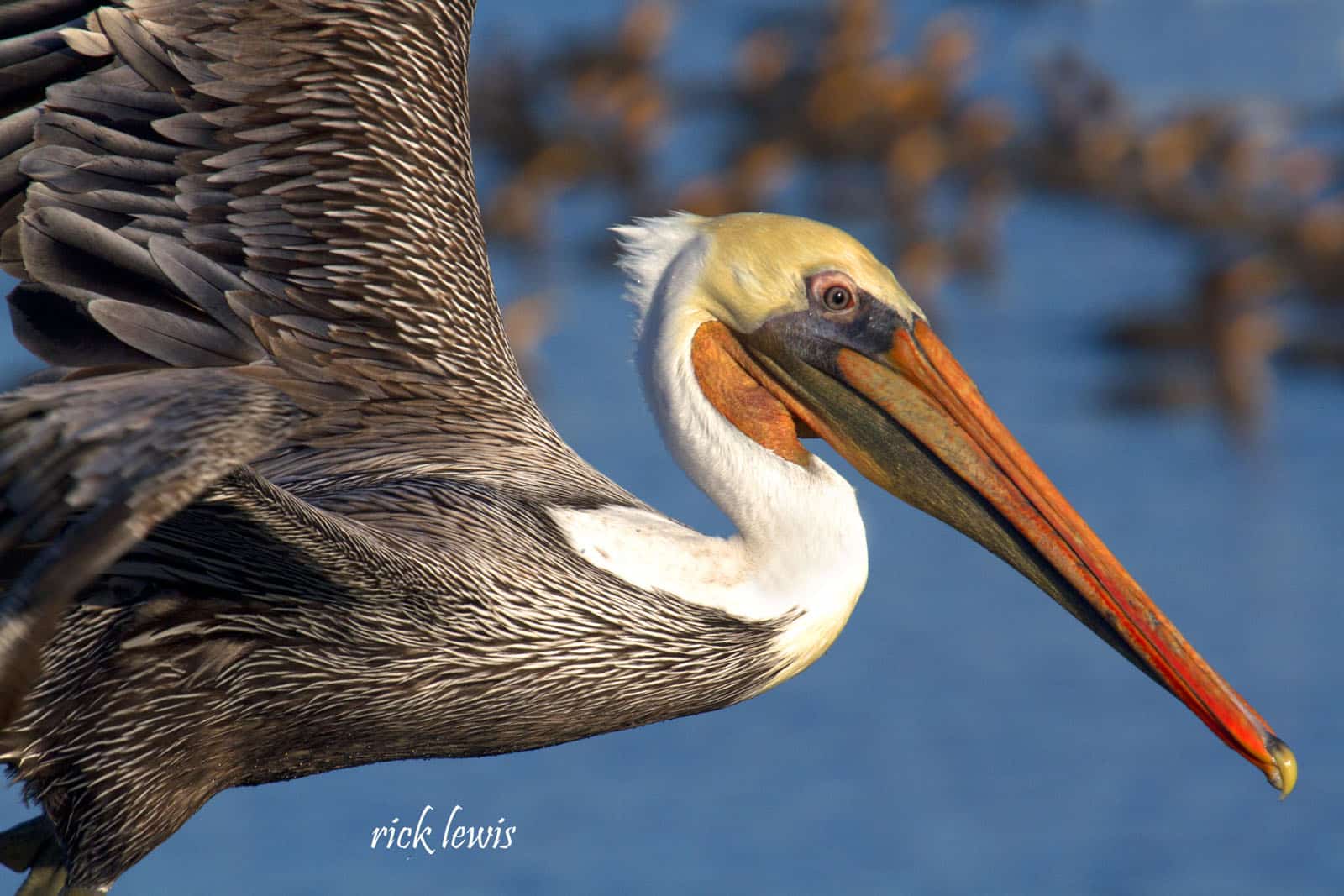
Juvenile brown pelicans are brown with white bellies, and gradually assume their definitive adult plumage between the ages of 3.5 and 5 years, the same age they reach sexual maturity. Adults have gray to gray-brown upperparts, black-brown bellies, and go through a complex molt cycle each year, with their heads going from white to pale yellow and their neck going from white to dark brown.
Most California brown pelicans nest in colonies in Mexico—the only long-term breeding colonies of California brown pelicans in the United States are on Anacapa and Santa Barbara islands—but their non-breeding range extends north to Vancouver, Canada. Typically, nesting season peaks in March and April, and first-year pelicans begin to arrive in the Bay Area in April.
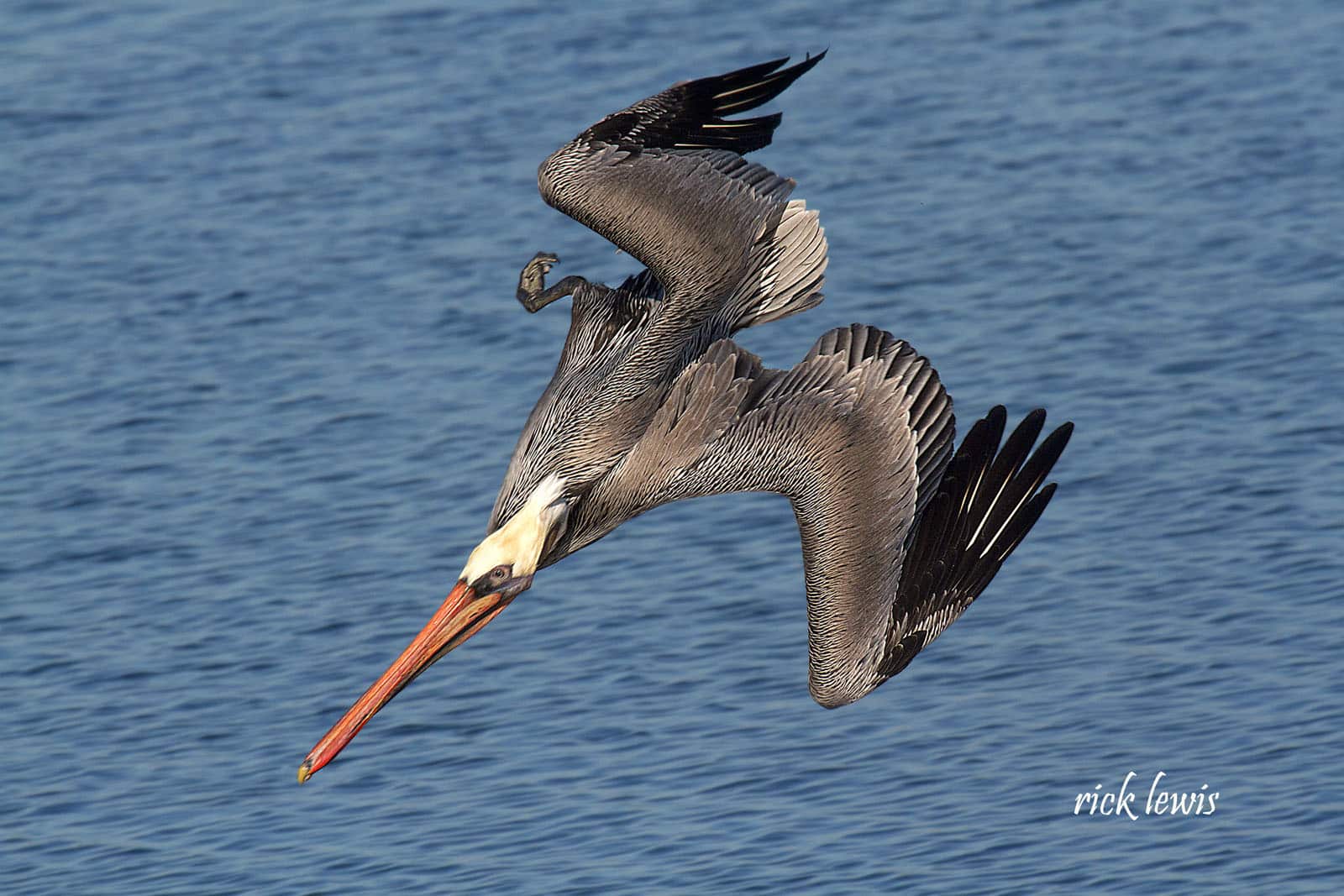
Fish eaters, pelicans forage along estuaries and shorelines extending within 12 miles from the shore. After spotting their prey from above, they sometimes dive from as high as 60 feet in the air into the water to scoop up fish with their pouch, which can hold up to two gallons of water. Strong swimmers, they use their webbed feet to swim after prey and have also been known to scavenge dead animals and steal fish from other seabirds. While it’s thought that only 30% of brown pelicans survive their first year, the average lifespan for wild birds is from 15 to 30 years. Captive pelicans have been known to live more than 50 years!
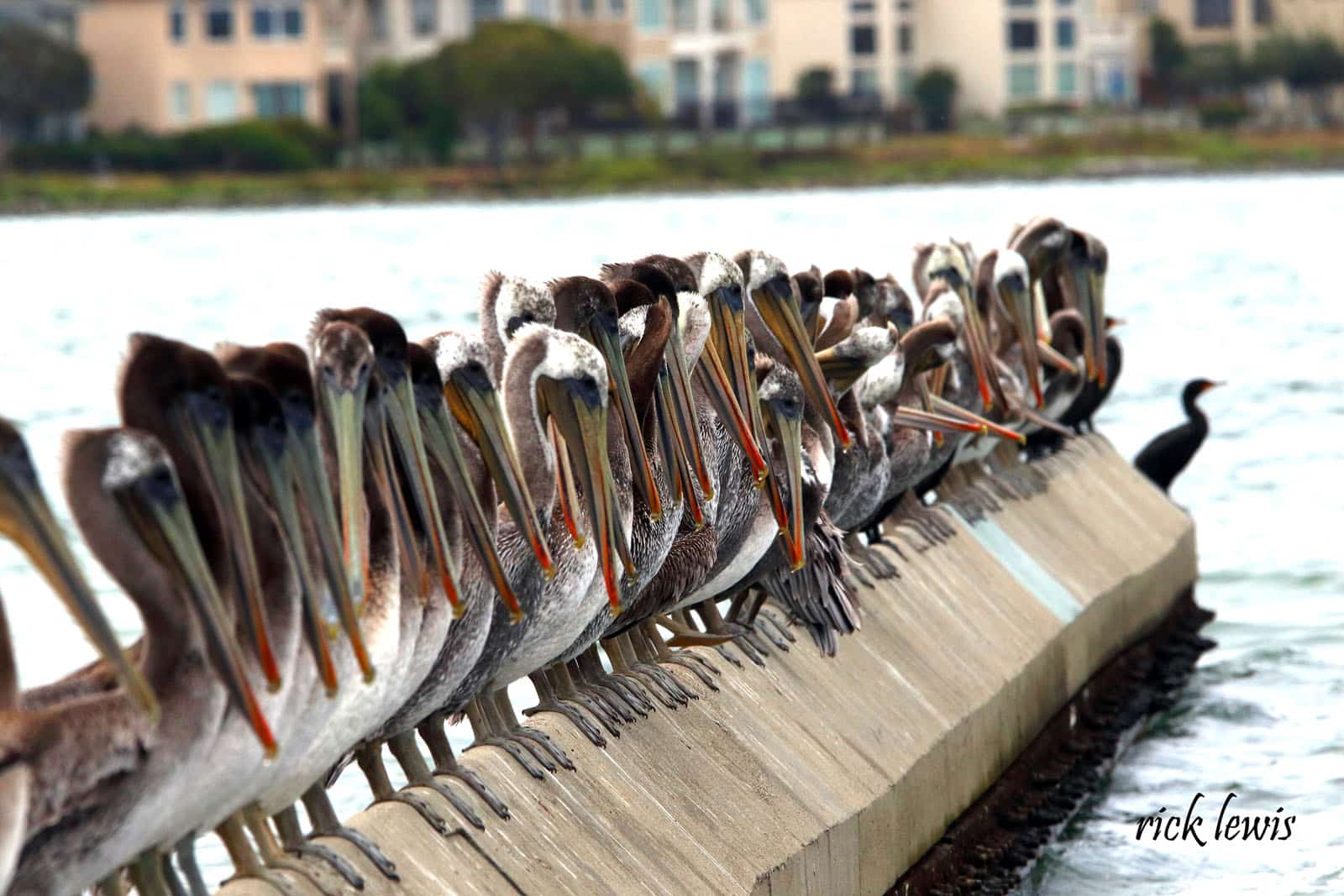
For most California residents living along the shore today, brown pelicans are a common sight, but it wasn’t always that way. Brown pelicans were among the many bird species whose populations declined precipitously during the last century due to the use of deadly pesticides such as DDT. By 1970 they were listed as a federally endangered species. The ban on DDT use in the US in 1972, coupled with reintroduction efforts, allowed brown pelican numbers to bounce back and by 2009 they were removed from the Endangered Species List. Now up to 8,000 California brown pelicans have been counted at their roost along the seawall off Alameda Point at Breakwater Island, one of their preferred “loafing sites” where they rest and preen between forays for fish.
Despite their current abundance, brown pelicans still face challenges to their survival. Last spring, a rash of disoriented, emaciated pelicans began to show up on airport tarmacs and in backyards in search of food. One struggling brown pelican even landed on the ball field during a San Francisco Giants game, highlighting the extent of the crisis. In total, International Bird Rescue treated more than 425 pelicans in 2024.
This disturbing trend has continued in 2025—IBR had already admitted more than 100 pelicans to its two centers by the end of April. The pelicans arrived at the center cold, anemic, and in many cases, with serious injuries from fishing hooks and line. Faced with starvation, desperate pelicans were risking their lives by going after fishermen’s catches.
While Avian influenza has been linked to deaths of brown pelicans in North Carolina, wildlife experts surmised that late spring storms—a similar weather scenario to that of 2022—churned up offshore waters and made it difficult for the California brown pelicans to find food in 2024. More recently, the Southern California population of pelicans and other seabirds also have been contending with an outbreak of domoic acid (caused by ocean blooms of algae), which has not been detected in the Northern California population.
Given the threats to their continued health, the California Department of Fish and Wildlife (CDFW) and other agencies continue to monitor brown pelican populations. If you notice a sick or otherwise ailing brown pelican, contact animal control or call the International Bird Rescue Northern California Bird HelpLine at (707) 456-4528.
Deborah Crooks is a local songwriter and longtime bird lover. She is a member of the Golden Gate Bird Alliance and its Alameda Conservation Committee, Friends of the Alameda Wildlife Reserve and a hawkwatcher for the Golden Gate Raptor Observatory.
This article is part of a series written by Friends of the Alameda Wildlife Reserve (FAWR) members, FAWR is a Conservation Committee of Golden Gate Bird Alliance (formerly Audubon). To find out more about birds and GGBA’s free guided trips see www.goldengatebirdalliance.org
