Fee–fi–fo–fum! Do you remember the story of Jack and the Beanstalk? Jack, a poor kid who lives with his widowed mother, trades a cow he was supposed to sell for magic beans. His mother throws the beans out the window and the next morning there is a mile-high beanstalk next to their cottage. Jack climbs up the beanstalk and finds an ogre from the land above the sky who eats people. Jack then steals a bag of gold, a hen that lays golden eggs, and a magic harp from the ogre, who chases him back down the beanstalk. Jack gets to the bottom first, chops down the beanstalk, and the ogre falls to his death. Jack and Mom live happily—and wealthily—ever after.
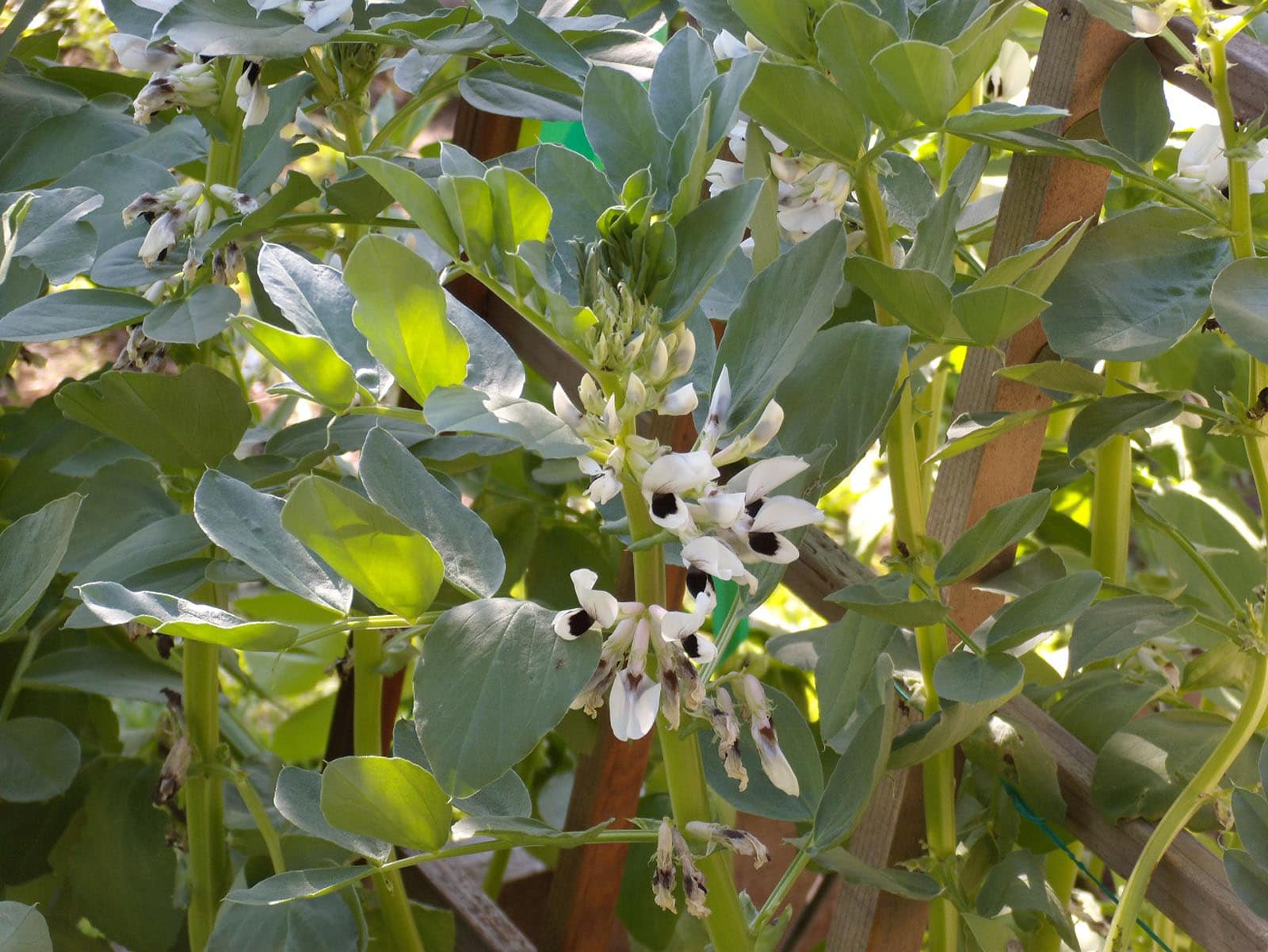
Although it is very, very unlikely that your beans will make you rich, bean plants will provide you with tasty dinners while improving your soil. Bean plants work in tandem with beneficial bacteria to make nitrogen in the soil available to growing plants. According to the American Heart Association, green beans are anti-inflammatory, a good source of protein, fiber, and vitamins, and are low in fat.
Types of beans
Humans have been cultivating beans for thousands of years, and in that time have developed many different varieties.
Fava beans, a different species from other types of beans, like cold weather. In Alameda, favas can be started in the fall for an early spring harvest.
Runner beans, also a different species, are more closely related to green beans. They require less light and colder weather than regular green beans, but will do their best in a warm, sunny spot. The tall vines—over six feet—have lots of bright red flowers. Train them up an arch for an ornamental entry to your garden! For tender beans, pick at five inches or less. Larger beans can be tough.
Green beans come in many different varieties. Some are yellow (wax beans) and some are purple. They can be round or flat (romano). The original green bean was a tall vine, and bush beans were developed to cut down on farmers’ work. Bush beans are great if you have lots of space, but not so good in cramped urban gardens, where there is usually a lot more vertical than horizontal space.

Yard-long beans are an Asian variety that like hot weather. I would not try growing them in Alameda. Soybeans also like hot weather, and I have had no luck growing them.
Growing beans
Beans grow easily from seed. All varieties of beans are grown the same way. Pole beans can be trained up a trellis, or string can be stretched between poles. It is best to have the support for the vines in place, and compost dug in, before you plant. Beans do not need a lot of fertilizer, but will do better if you treat the seeds with inoculant, which contains the beneficial bacteria. Bean inoculant is inexpensive and can be purchased from Plowshares Nursery at 2701 Main Street, or Encinal Nursery at 2057 Encinal Avenue. Follow the instructions on the package.
In my experience, the best time to start fava beans is in October or November. They will grow slowly until early spring and then take off. Runner beans can be started in April or May. I would not start green beans until late May, which is about the time my fava beans are dying down. I pull out the spent fava bean plants, amend the soil a bit, and plant my green beans.
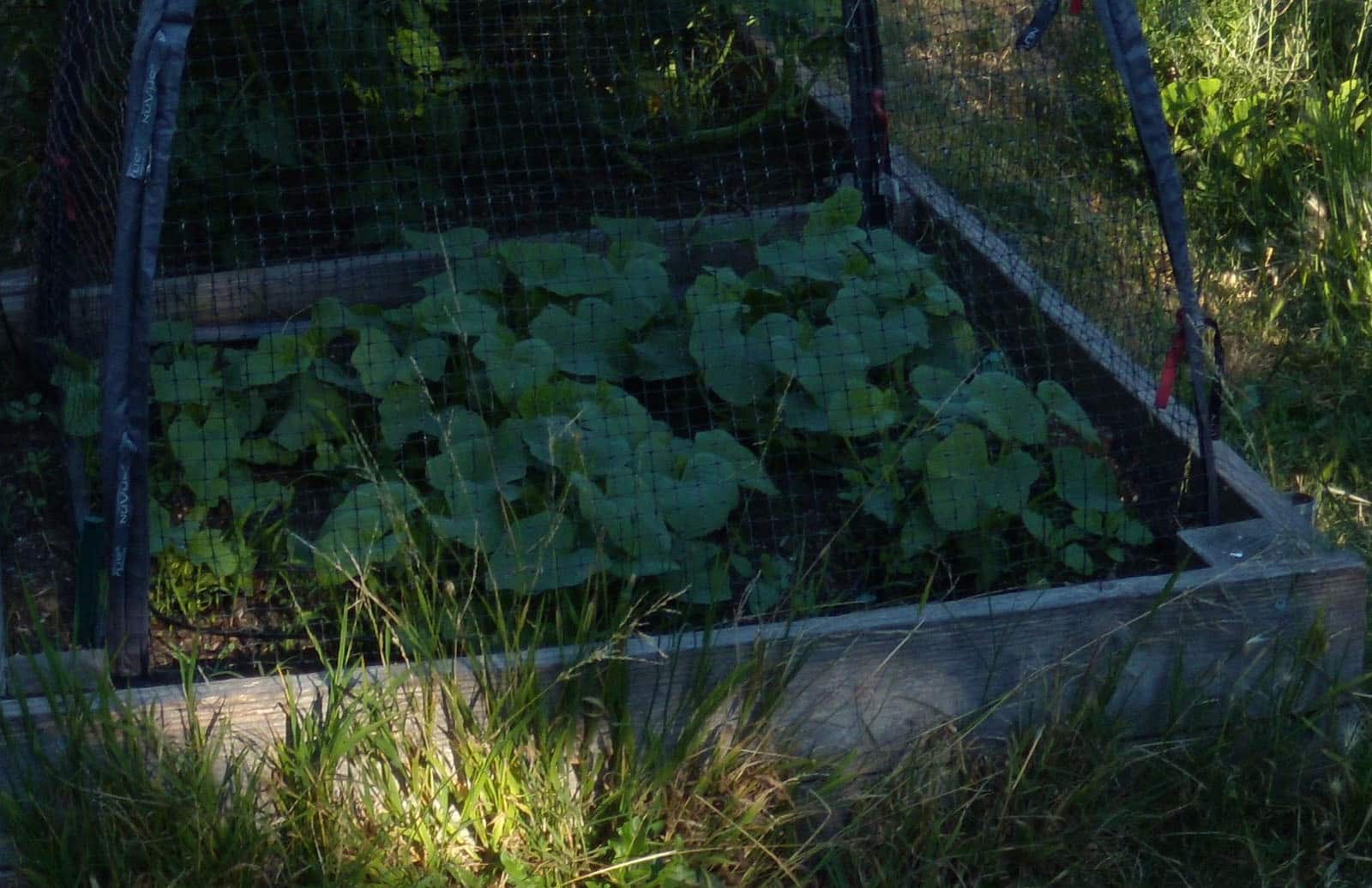
Dig a shallow trench in front of the poles and drop in your bean seed, an inch or two apart. Beans don’t mind being a little crowded. Cover the beans to the depth stated on the seed envelope, generally one inch. Water well and keep moist. You should see sprouts in a week or so. Local birds like to eat bean sprouts, so cover the area you planted with chicken wire until the young beans are six inches tall. If some of the vines can’t seem to find the trellis, tie string to one side of the trellis, corral the bean plants and gently pull them up to the trellis, then tie the string on the other side.
You should start picking beans in a couple of months. Pick fava beans when the pods are well filled out. Pick all other beans when four to six inches long for best flavor. Just-picked beans should be steamed for no more than five minutes—or sauteed with mushrooms. Yum!
Margie Siegal is a long term gardener in Alameda and a supporter of Alameda Backyard Growers. Reach her via [email protected]. Her writing is collected at AlamedaPost.com/Margie-Siegal.
