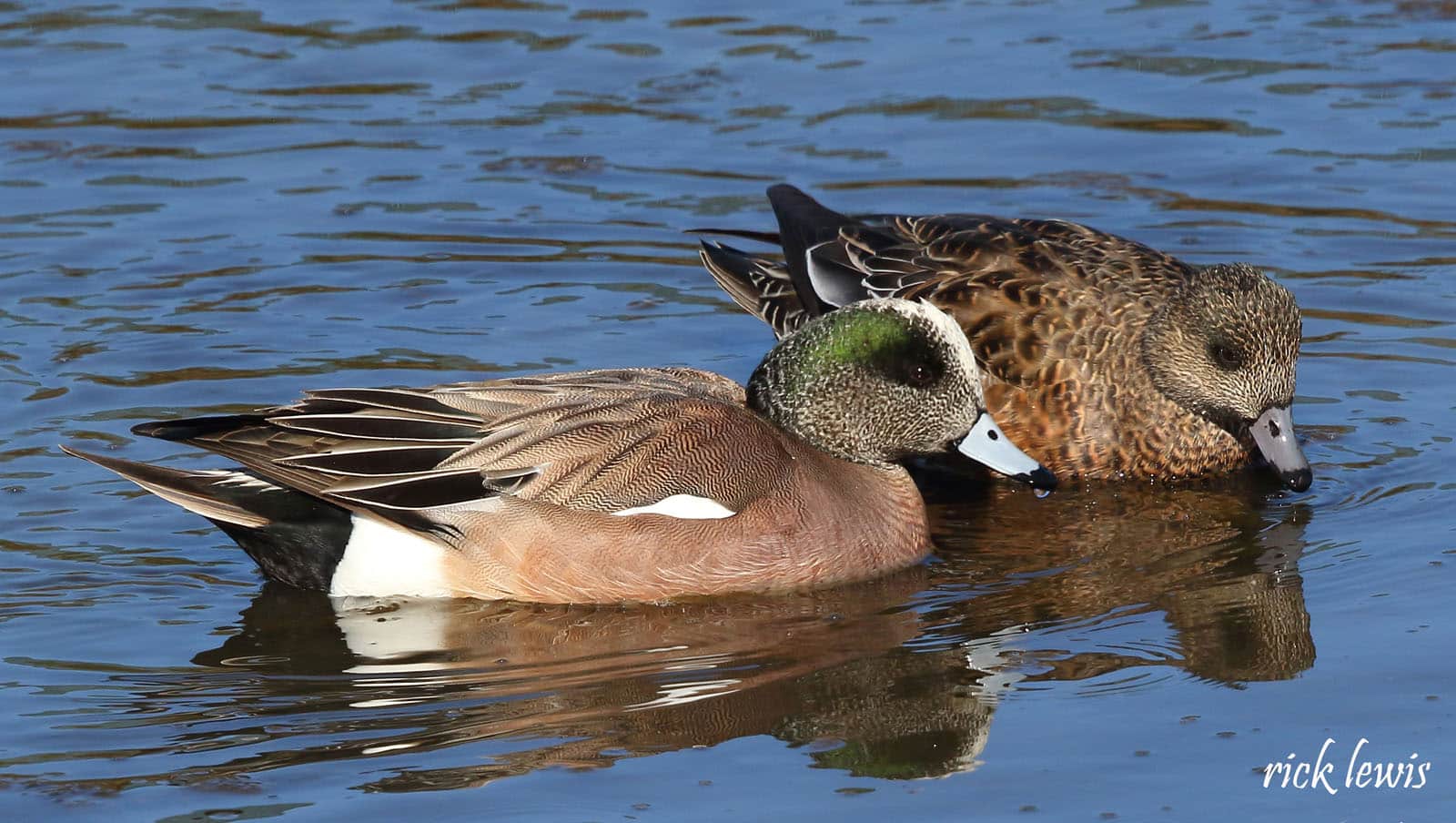
While we can see ducks throughout the year in Alameda, some species leave in the spring to raise their young in other places and return in the fall to winter in our waters. Wigeons are one of the partial-year species. Most of them leave in April to breed in western Canada and then return in September or October, although a few do stay here each summer. While here in winter, they often feed at night. During the day they hang out in fresh water or at sheltered spots at the edge of the Bay, so look for them in ponds, including the lagoon near the beach at Crab Cove and the edge of the water at Elsie Roemer as well as multiple ponds and marshy areas throughout the East Bay.
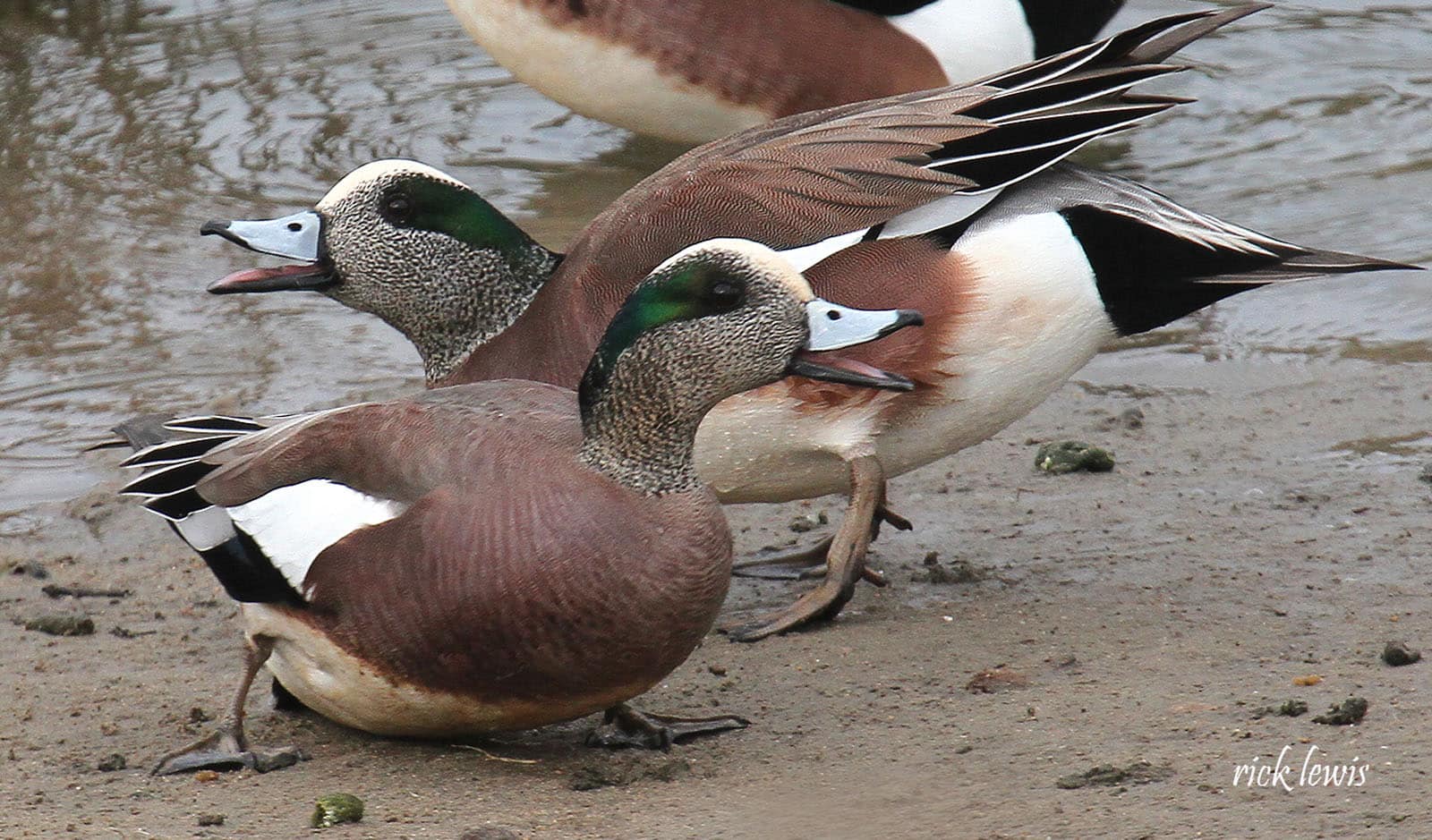
Like most ducks, the male wigeon has more showy plumage than the female. He sports a white forehead. A friend once told me that a smidgeon of white on a duck’s forehead signals that it is a wigeon, so I can always immediately identify a male wigeon. Below and behind the white mark, the male has a wide green stripe, and its cheek is pale gray. Depending on the light, the green stripe may be dull or as shiny as a new Christmas tree ornament. The body is a dark peach color, with a white patch on the sides just before the black tail. When the wigeon is swimming or walking on land, the black wingtips rest on its back just above the black tail.
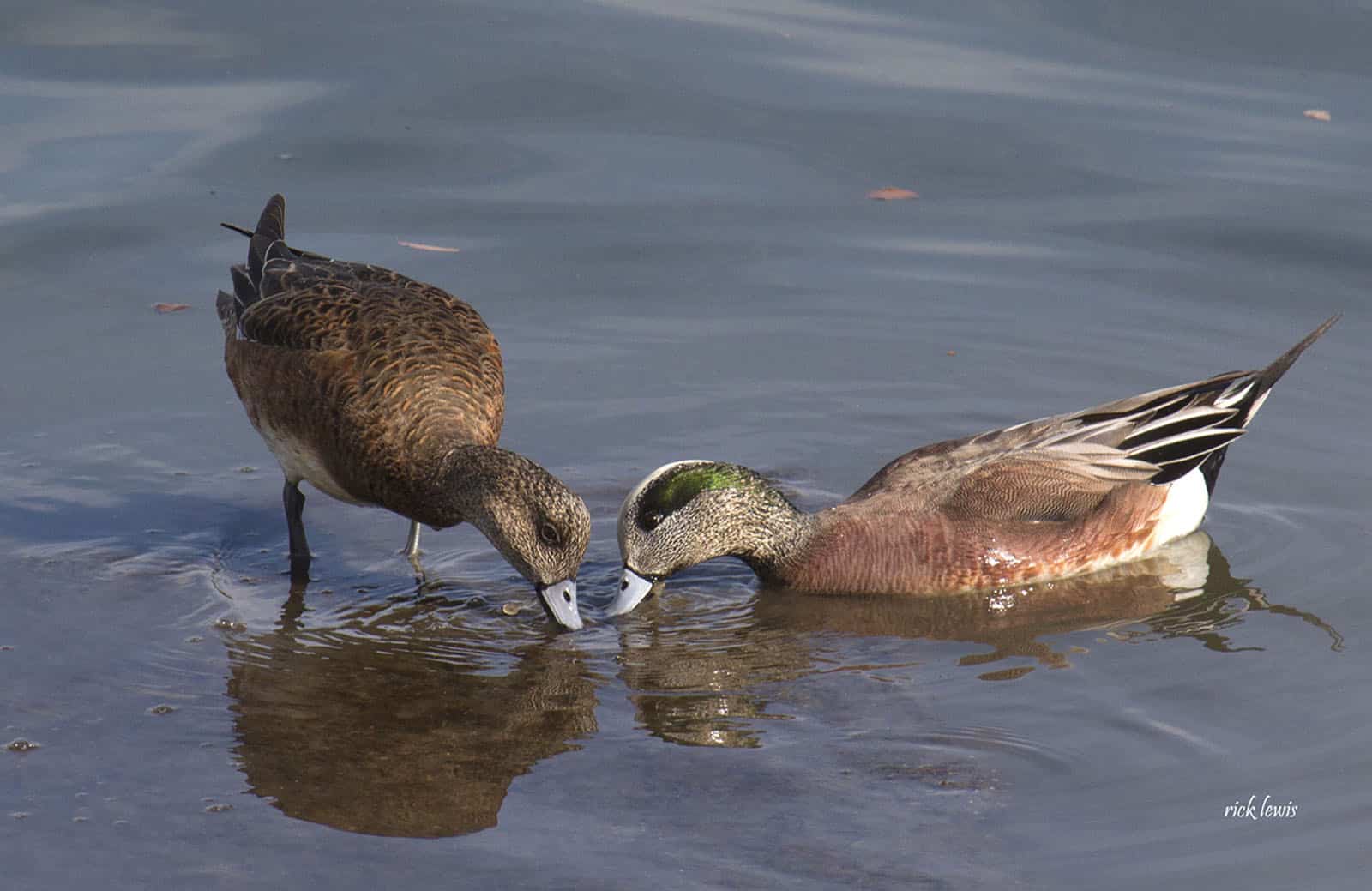
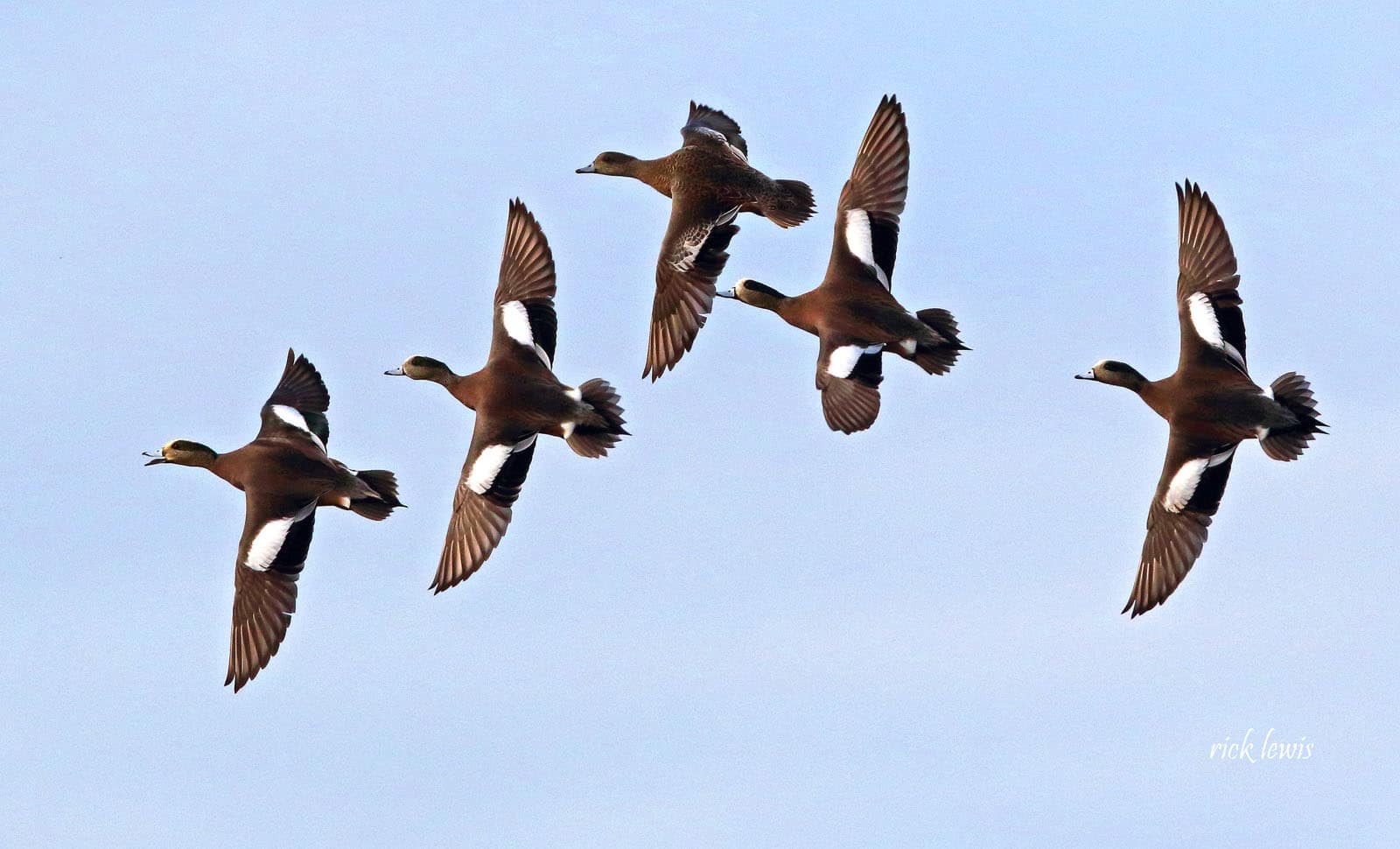
The females, like most female ducks, are more subtly outfitted; ornithologists assume the subtle colors let them “disappear” more easily into the background as they sit on eggs in the grasses. This camouflage is important because both eggs and young chicks can become food for several kinds of predators. The female’s head, including her forehead, is pale gray and the green stripe is replaced by a dark smudge near the eye. The white side patch and black tail of the male are very muted in the female, and she is pinkish brown on the side of her body. Both male and female wigeons have a white belly and white streak on the top of and under their wings, strikingly visible when they fly.
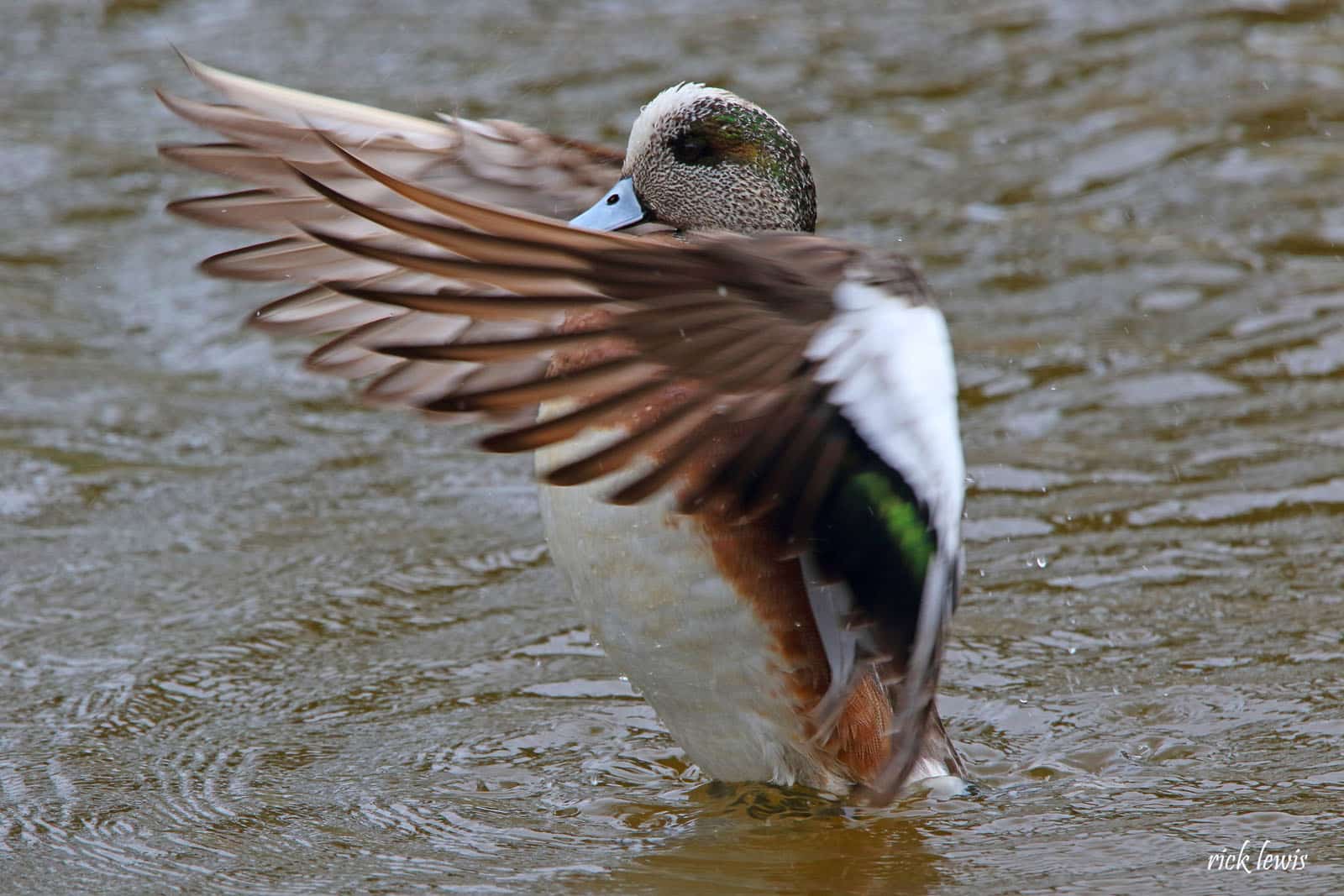
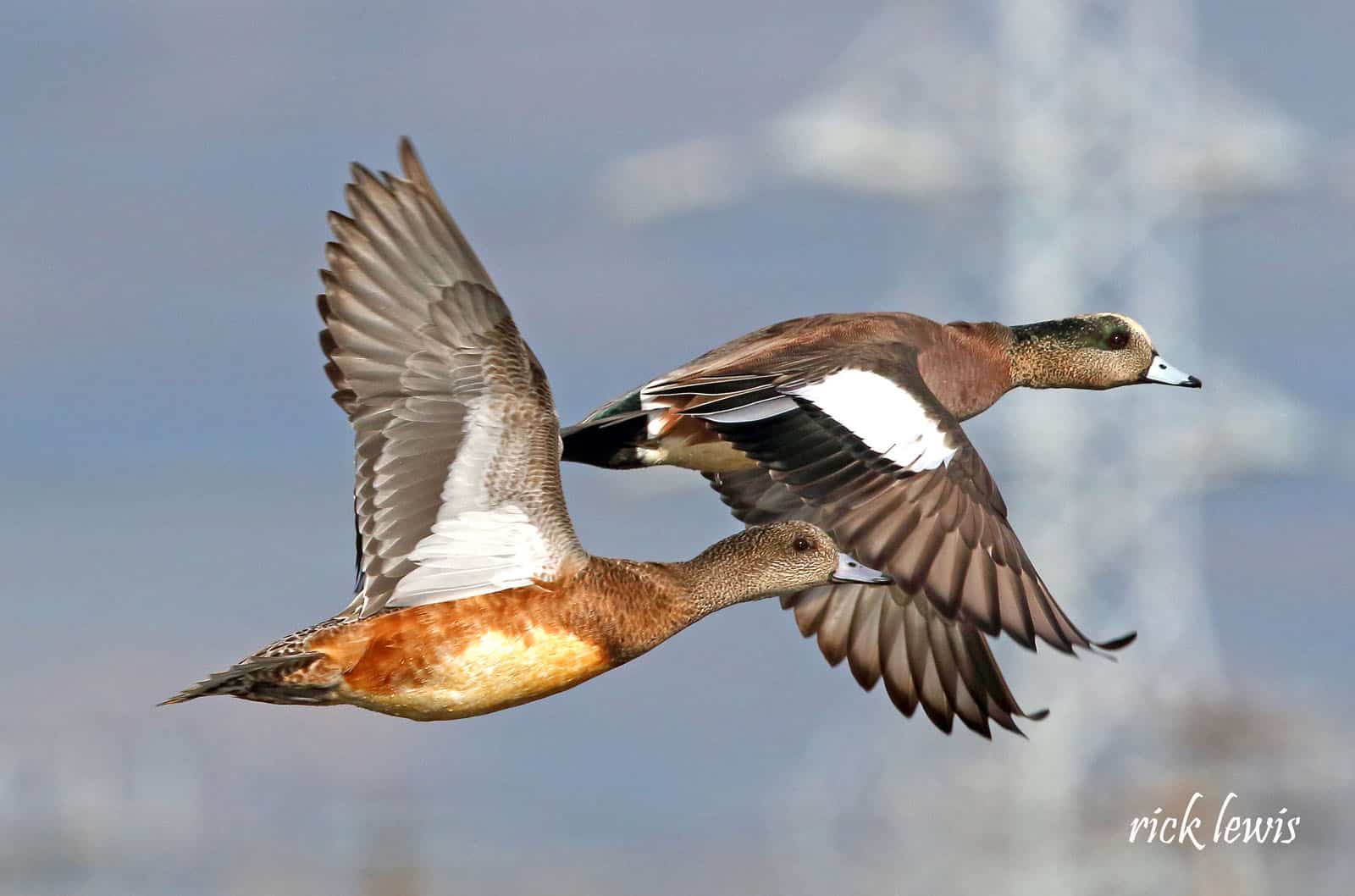
Wigeons, like many species of ducks, feed on plants on top of the water or grass on the bottom of ponds, which they reach by tipping their heads into the water and pointing their tails to the horizon or the sky, a process known as dabbling. They also eat grass on land, so I look for them on golf courses, other large grassy spaces, and in wet winters in flooded fields. When breeding, they eat more seeds, fruits, and flies, and feed their chicks flies and other bugs.
Most wigeons select their breeding partner for each year at their wintering location. At the breeding area in Alaska or western Canada, the male defends the female while she sits on the nest that is hidden in grass or bushes to incubate the eggs for the 3½ to 4 weeks until they hatch. Once the chicks are hatched, the female keeps them warm and guards them as they grow—they hatch with the ability to walk and peck the ground for food. The male leaves as the chicks grow, flies to a sheltered location where he molts his worn feathers, then travels south and sometimes east for the winter. The female molts her feathers before she travels to the wintering spot.
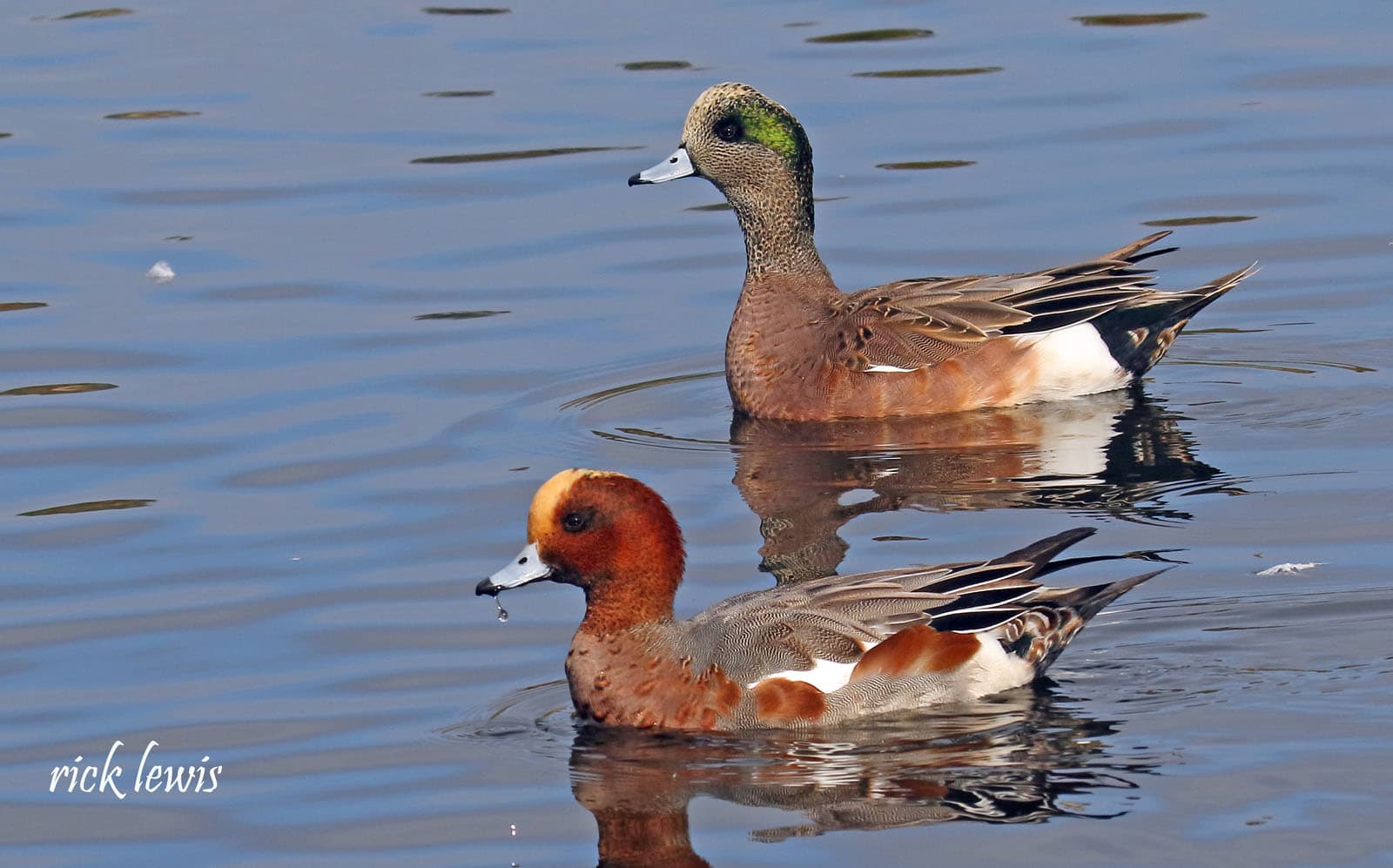
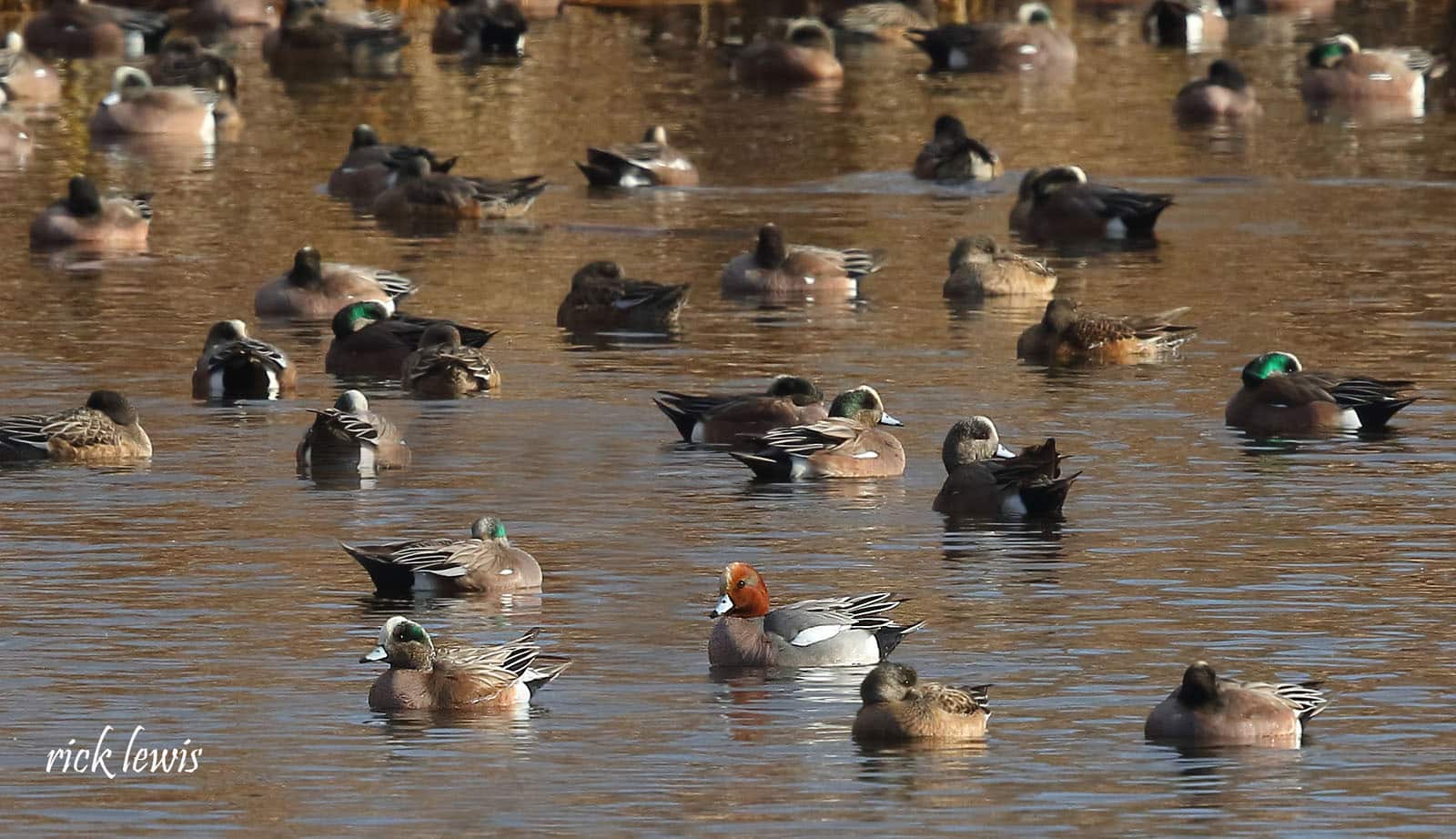
The majority of wigeons in the United States, including Alameda, are American wigeons, but on the West Coast we see a few Eurasian wigeons, the species that lives in the north of Eurasia, from Scandinavia east to Siberia. Eurasian wigeons winter in eastern Africa or southern Asia, but some come to America, including the West Coast. One has wintered at Crab Cove for the past few years, and others are routinely reported around the East Bay.
The male Eurasian wigeon has the same white top of head and forehead, but the rest of its head and face are a deep rust color, its back and wings are a black-and-white tweed, and its breast is a pale rust color with a white mark before its black tail. The female has a gray-rust head, breast, and sides, darker back and wings, and a smaller dark smudge around its eye.
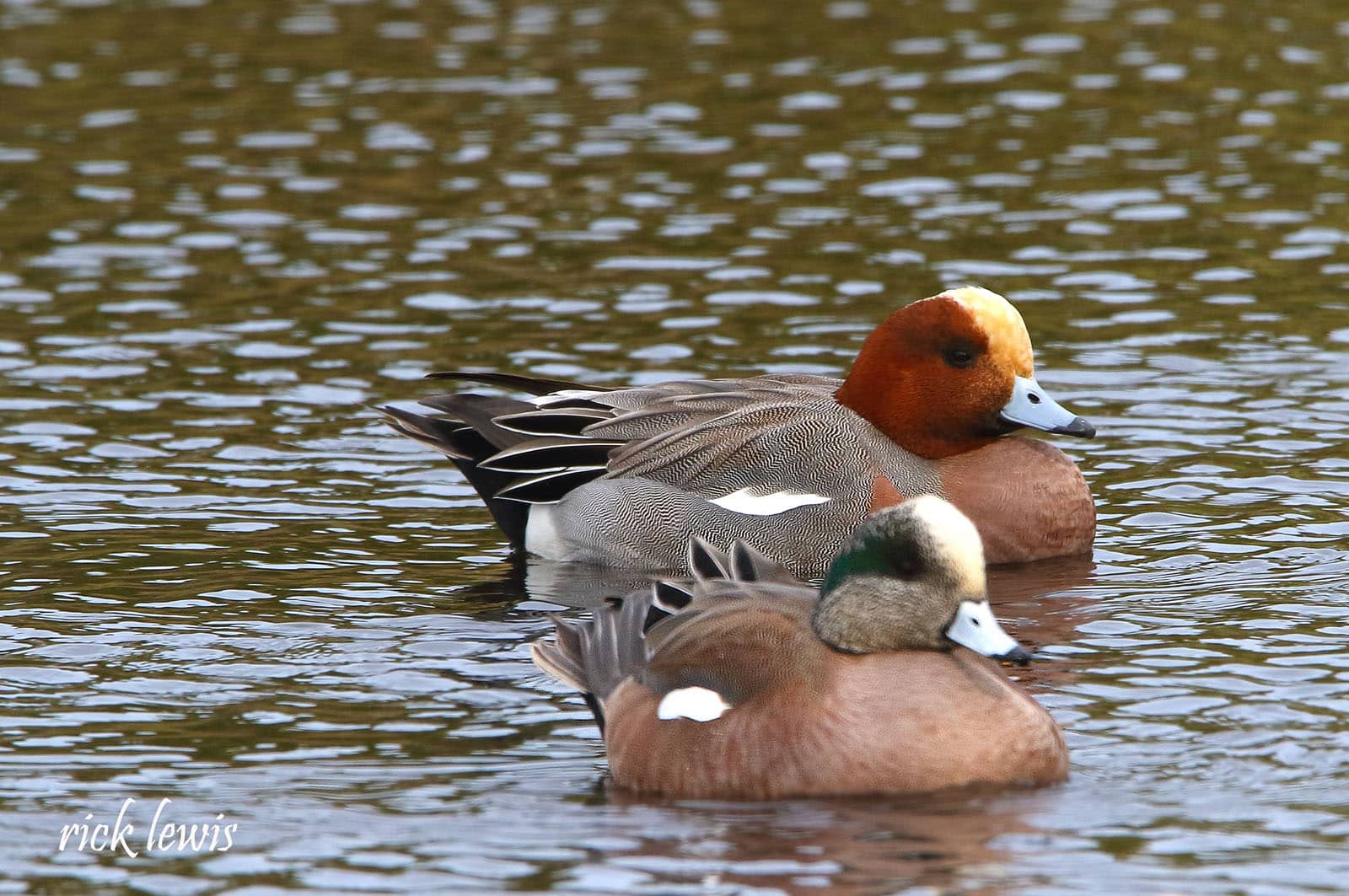
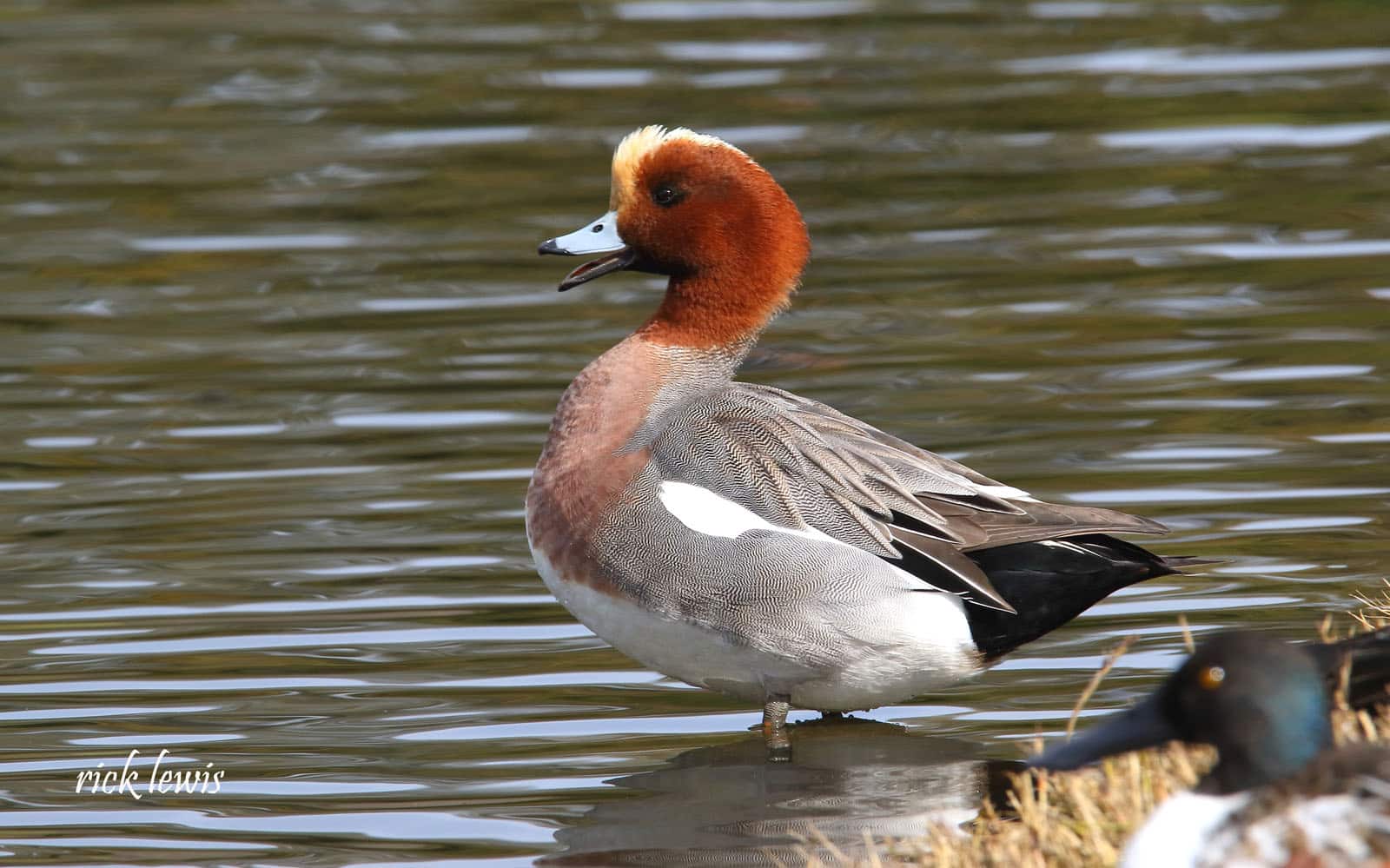
Eurasian wigeons may breed with many other species of ducks, forming hybrids that some birders can identify in our winter waters. But all of us can look for the occasional Eurasian wigeon among the American wigeons along our coastline and in the marshes. Can you find one in the photo below? Now can you find the live Eurasian wigeon with the American wigeons in the lagoon or at the edge of the rocks near the breakwater at Crab Cove?
Marjorie Powell is a member of the Golden Gate Bird Alliance (GGBA) and its Alameda Conservation Committee, Friends of the Alameda Wildlife Reserve (FAWR).
This article is part of a series written by FAWR members. To find out more about birds and GGBA’s free guided trips visit the Golden Gate Bird Alliance.
