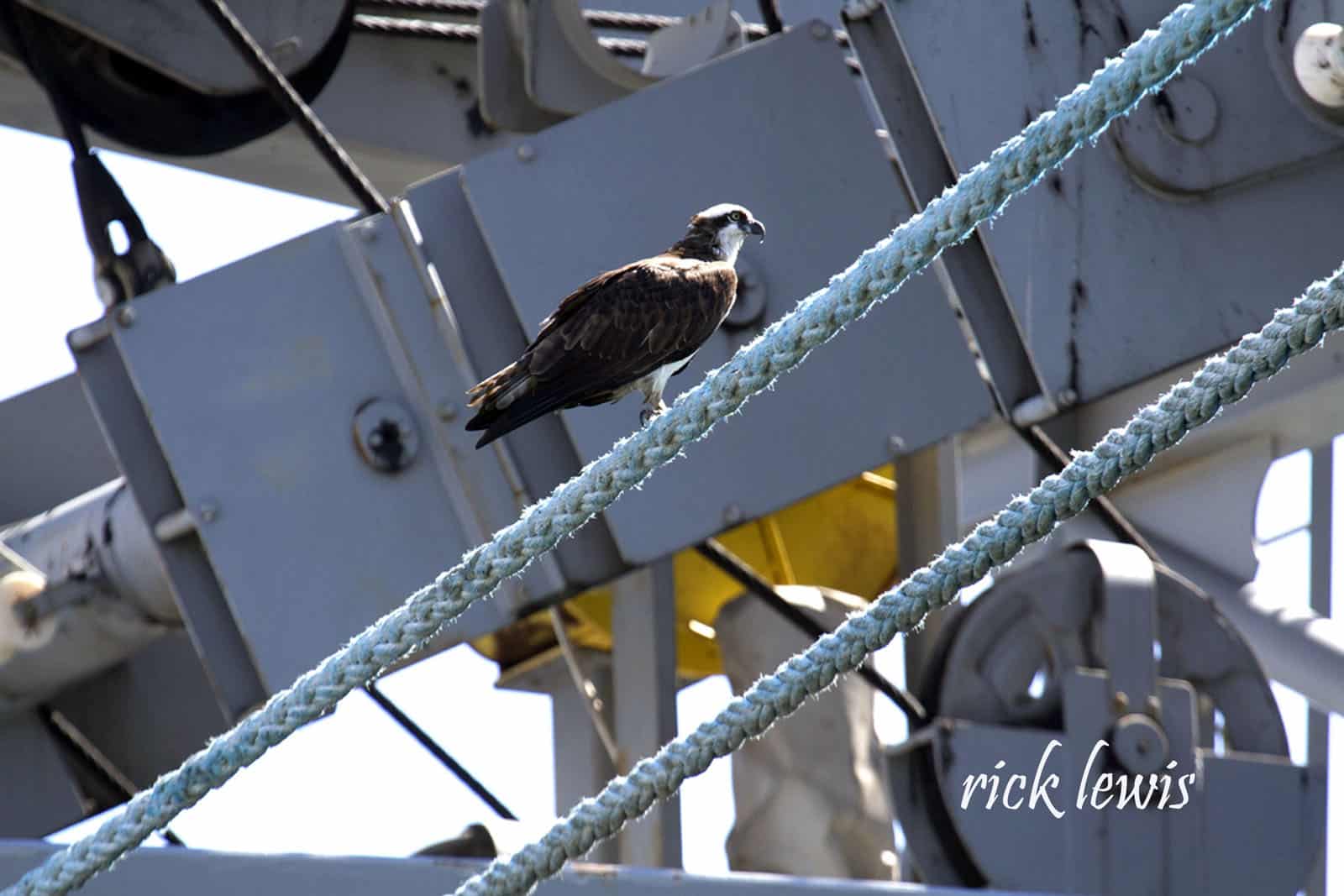
Often when we see nesting birds, their trials and tribulations regarding this miracle are under-appreciated. We take it for granted that a nest is required to raise a bird family, therefore it is built and voila! Presto! There you have it! That’s not quite the case for the pair of ospreys at Alameda Point in 2025. Following is the story of their nesting journey and the different locations they chose—or were forced to choose.
Unfortunately, they were not able to raise young this year due to interruptions. Nesting ospreys returned to Alameda Point 15 years ago and have had mixed success since then.
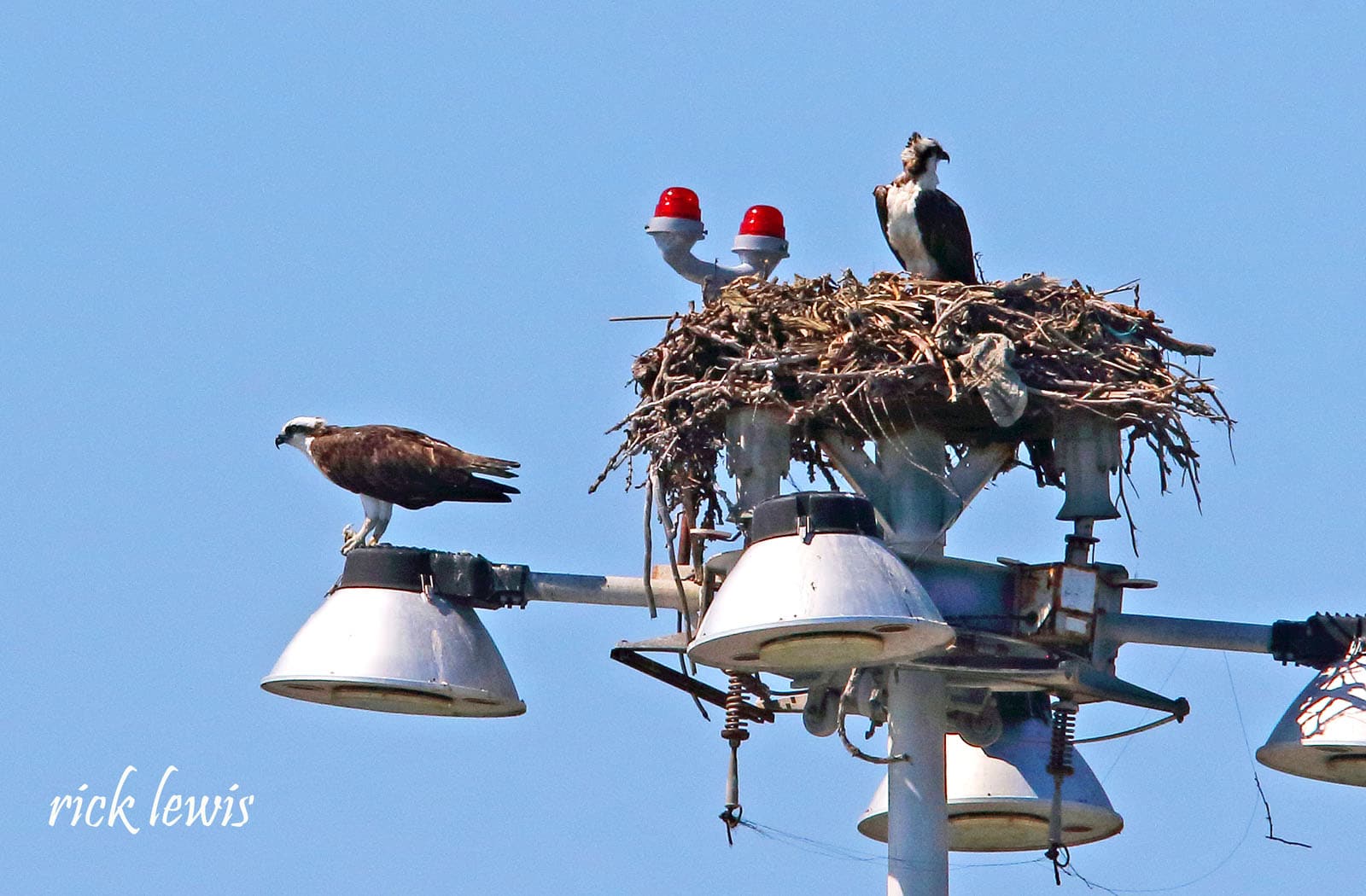
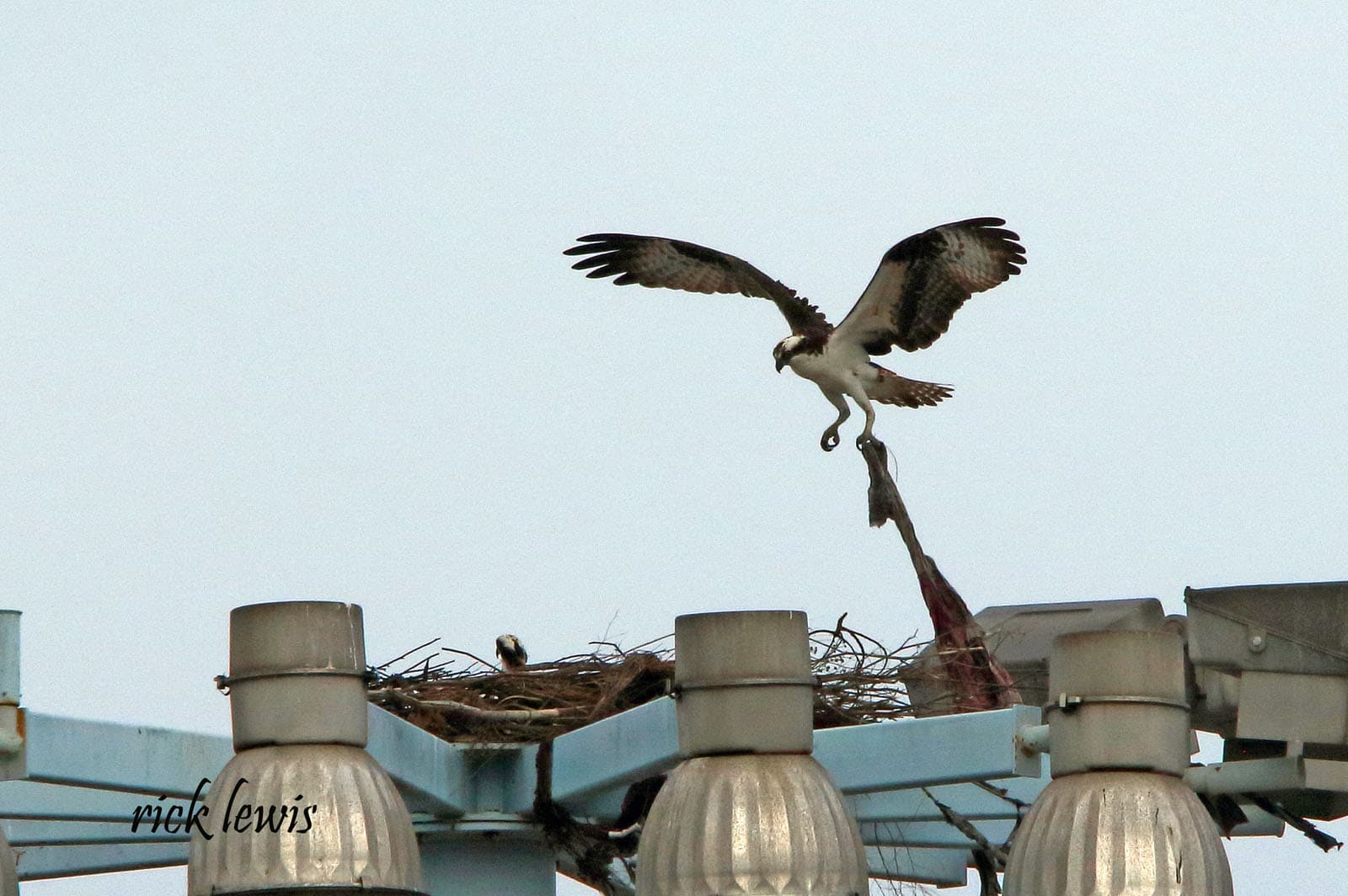
This resilient and determined pair had four nest sites this year. The USS Hornet, Seaplane Lagoon, and Ferry Terminal are good landmarks with which to establish the nest locations. For reference, the USS Hornet is at Pier 3 and the Seaplane Lagoon Ferry exits the lagoon at the end of Pier 1. They started out on last year’s nest on the first light pole of Pier 2, then moved to a construction piling on Pier 1, then moved briefly to a previously used platform on the end of Pier 1, then to the second light pole on Pier 2, and finally back home, where they had started out, on the first light pole of Pier 2, located directly across from the USS Hornet. (See map.)
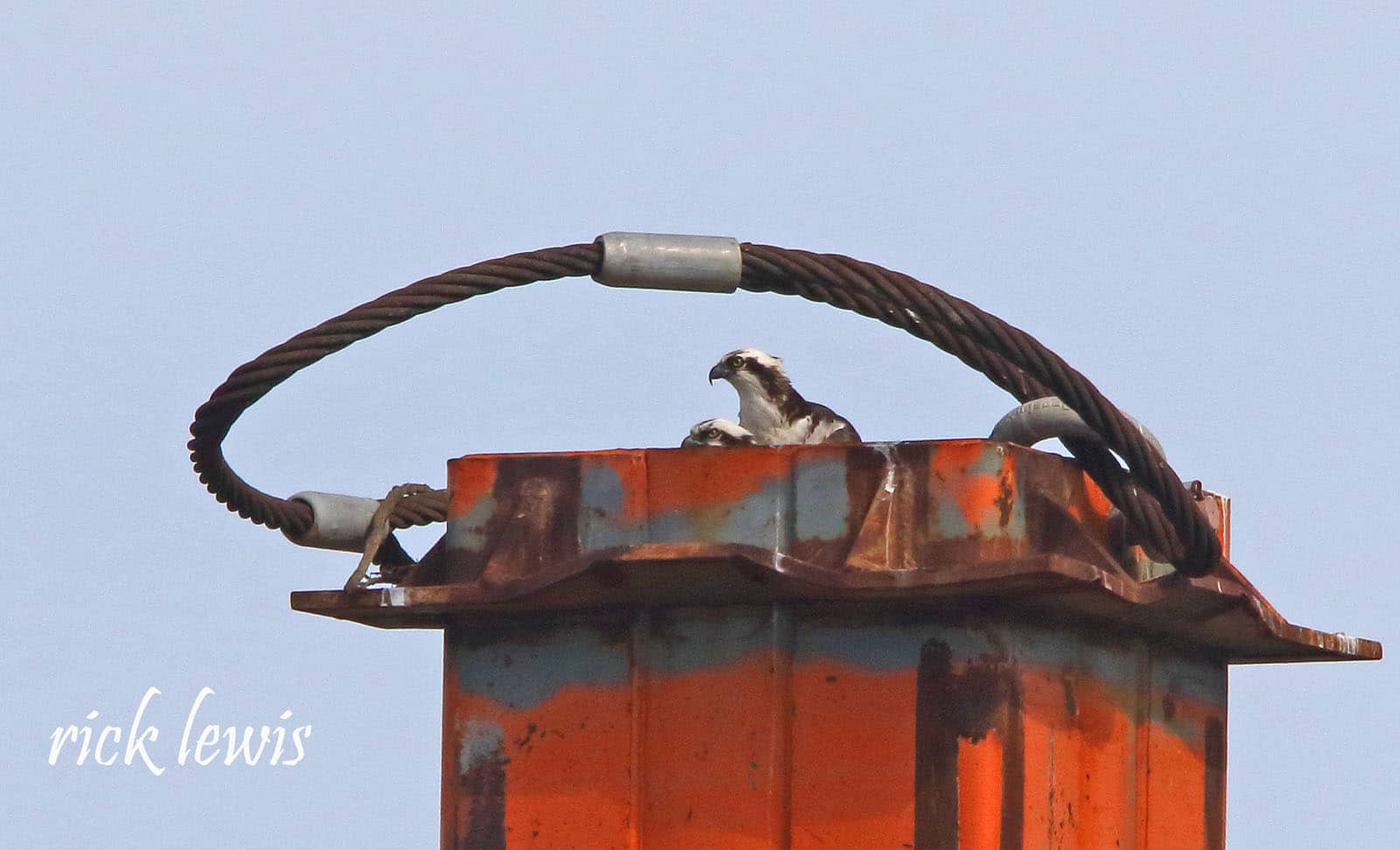
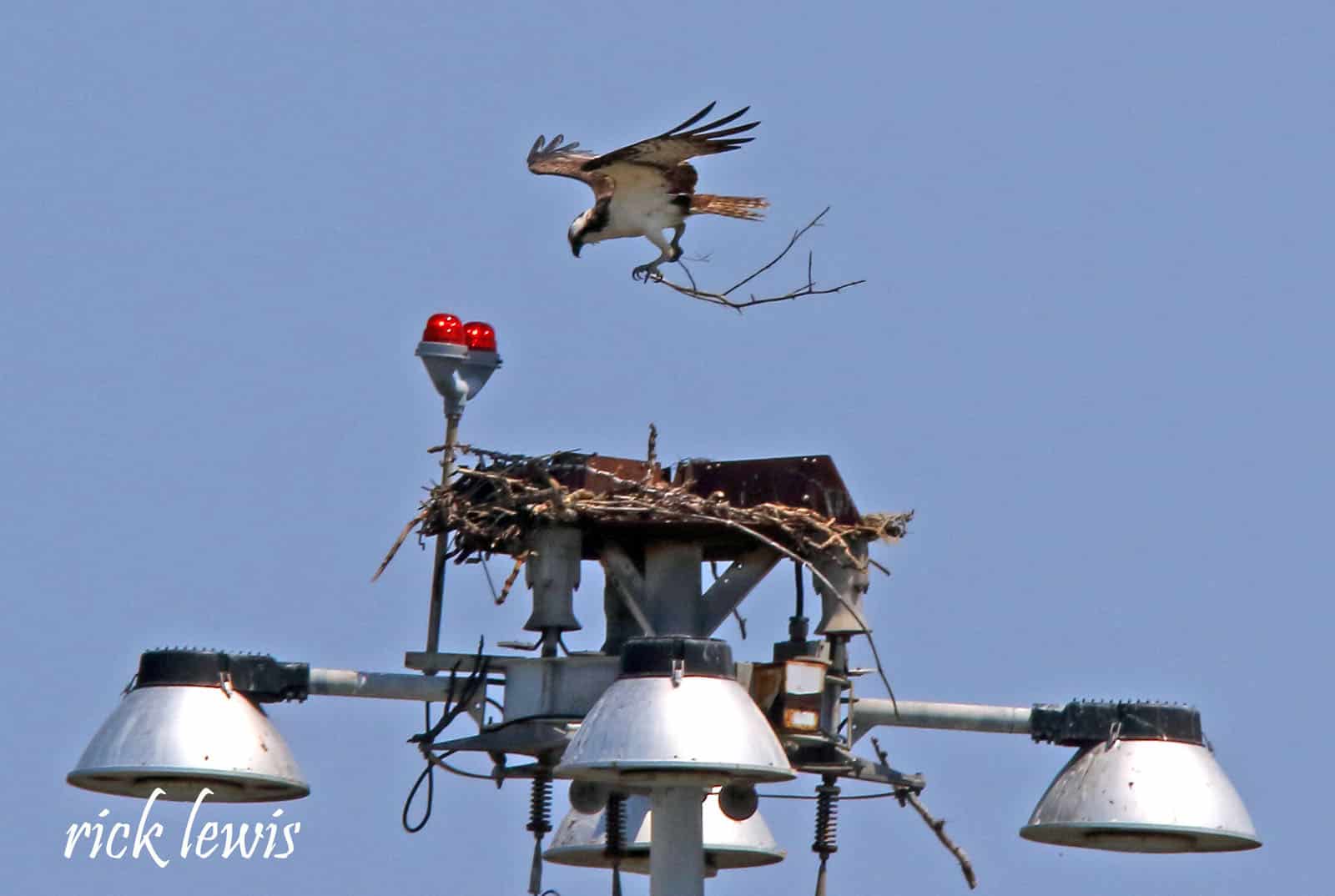
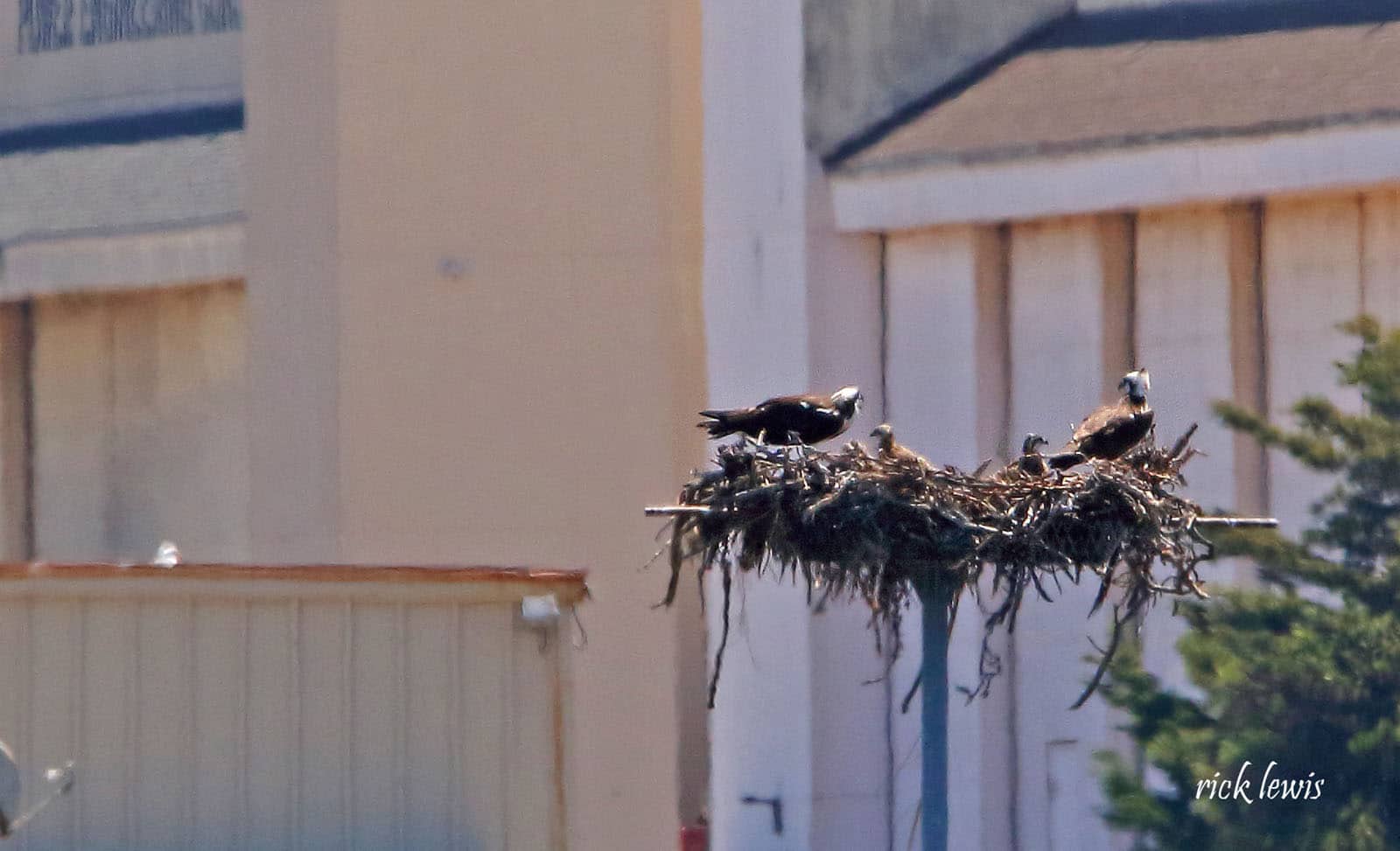
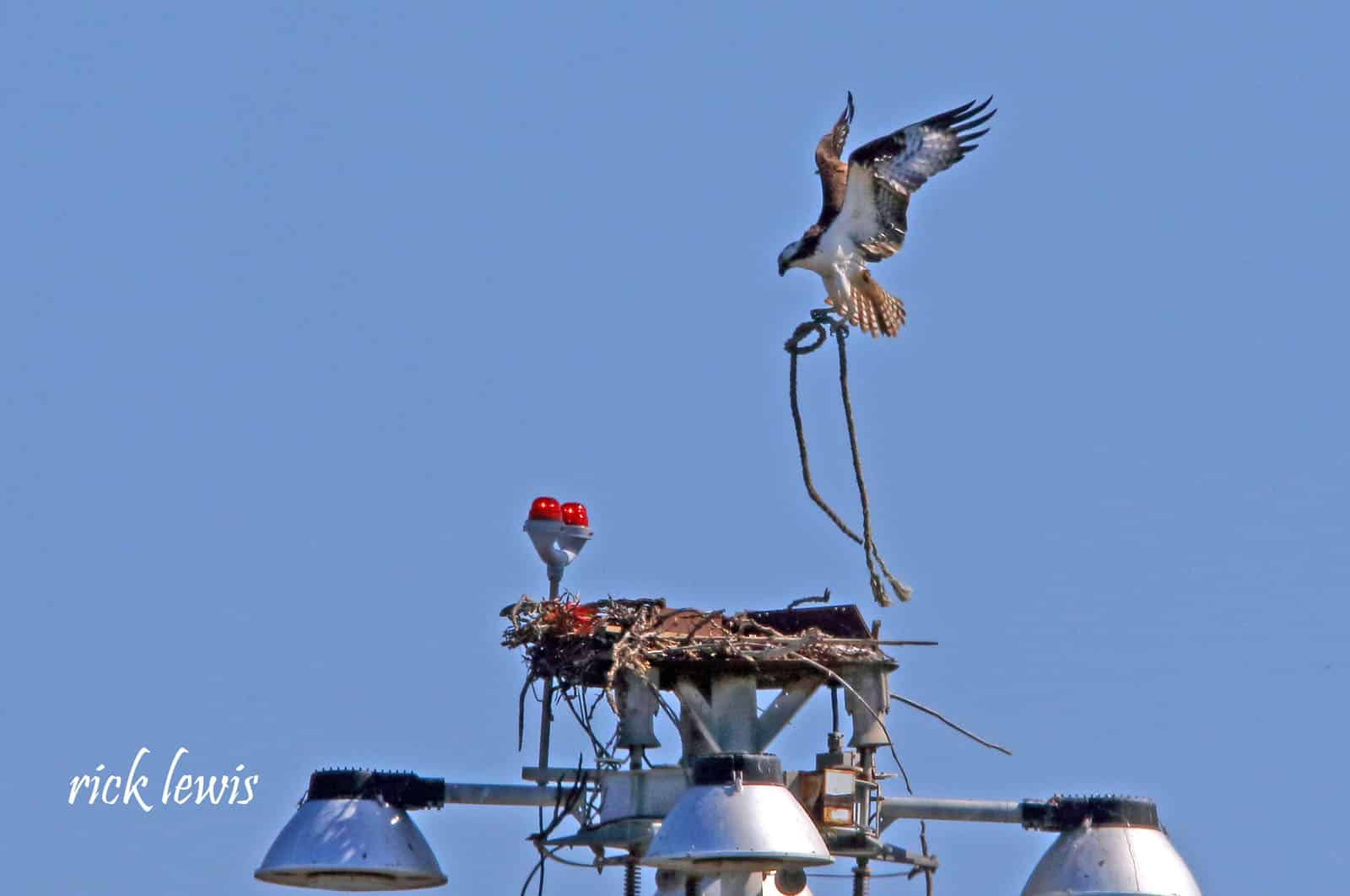
The cause(s) of the interruptions or disturbance and reason(s) why the ospreys moved their nest sites are unclear. As an environmentalist, birder, and photographer, this series of events was frustrating and disappointing to witness; hard to imagine the turmoil the ospreys were experiencing. Notice that these nest sites were all man-made structures, illustrating that ospreys readily use artificial structures.
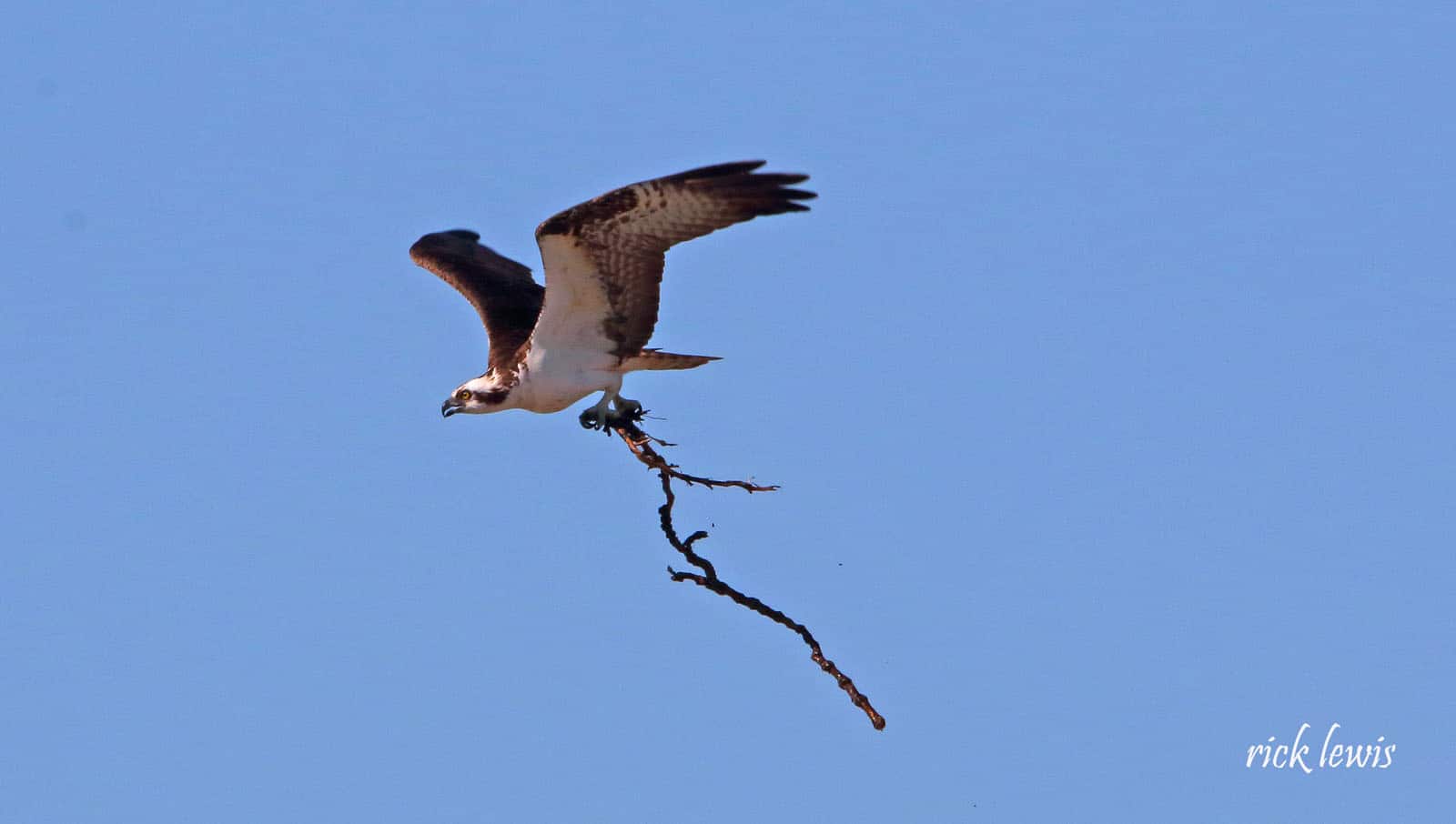
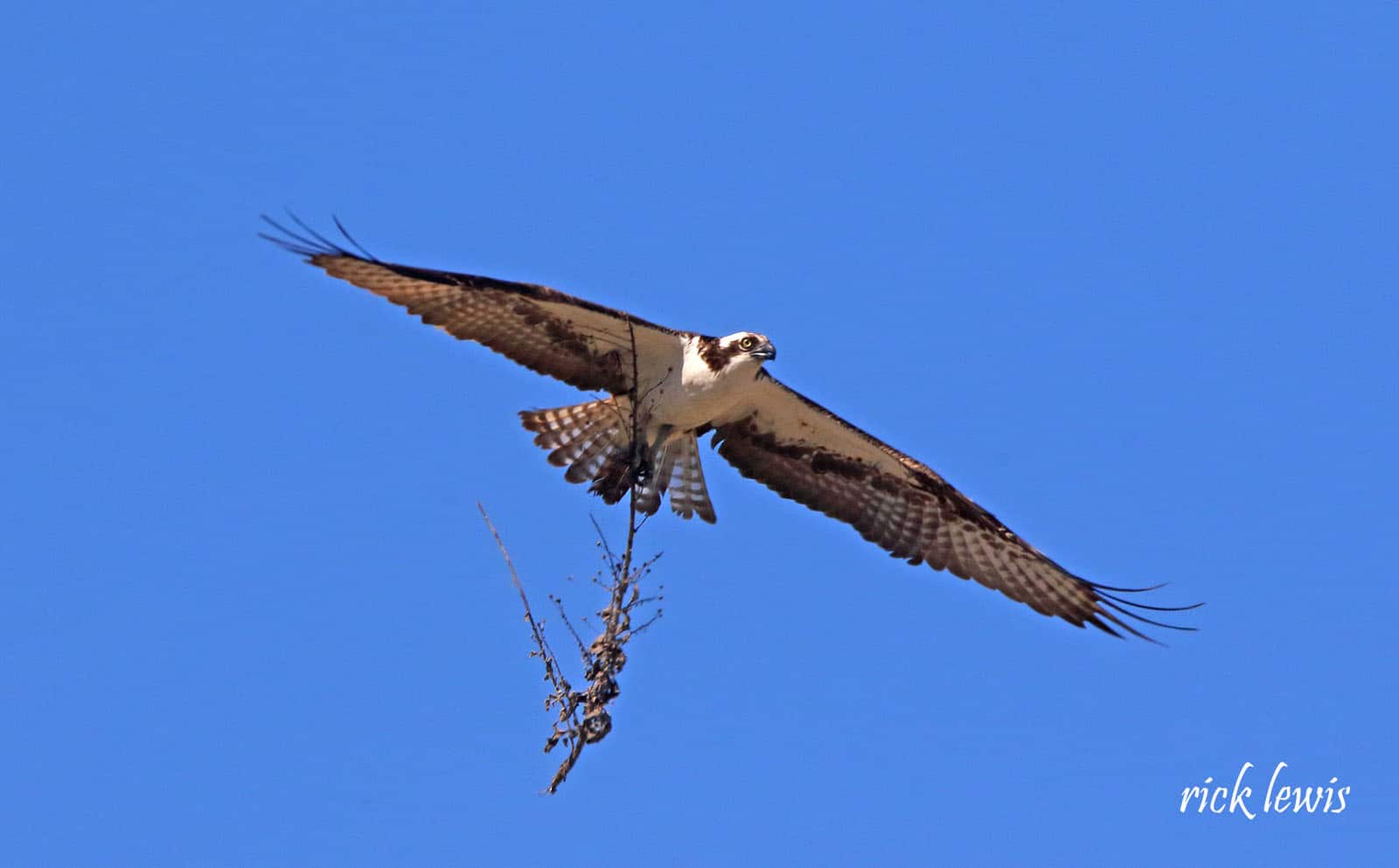
I asked myself, “How many sticks does it take to build an osprey nest?” After doing some research and not finding an exact “estimate,” I concluded that it takes a lot of sticks to build an osprey nest. In fact, the nest is often described as “a mass of sticks.”
Nests can be quite large, measuring 10 feet deep and 3 to 6 feet across. Suffice it to say that an enormous amount of energy is used in building the nest. And when they need to eat, they often bring in fish to share with their mate. They also bring in some unusual and problematic items such as rope, plastic, fishing line, bags, and toys. These items pose an entanglement risk and sometimes lead to devastating consequences for the birds. Famously, the Bay Area osprey cam of Rosie and Richmond captured the male, Richmond, bringing in a stuffed monkey doll for the nest. Smiles all around.
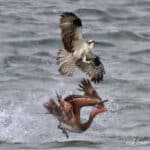
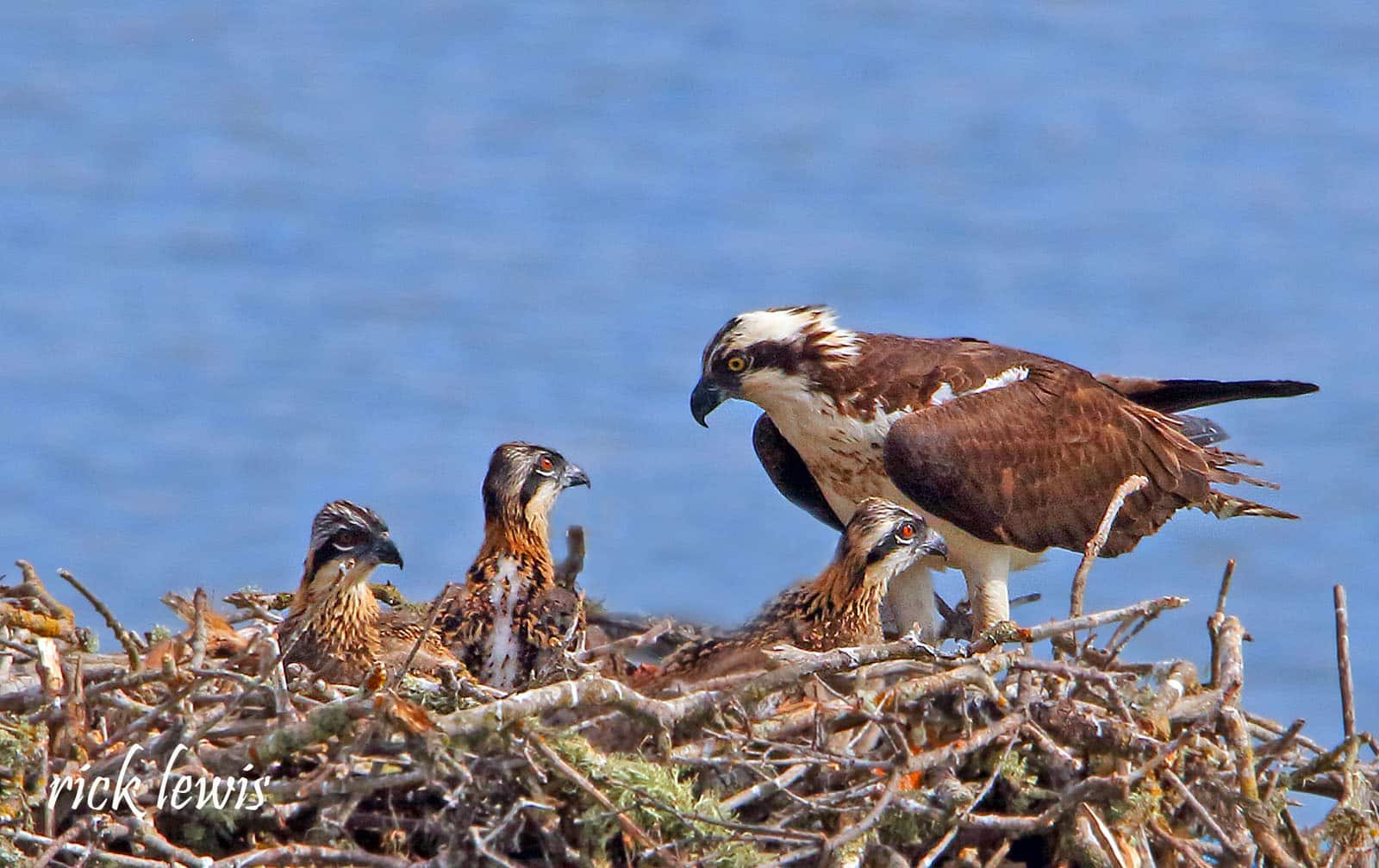
Pandion haliaetus is the scientific name for osprey. Pandion was a mythical king of Athens, whose daughters turned into birds, and haliaetus means sea eagle. The common names of fish hawk, sea hawk, and river hawk aptly describe this unique bird. Their diet is primarily fish. The Sibley field guide gives measurements as length 23 inches, wingspan 63 inches, and weight 3.5 pounds. These birds are monogamous, with an average lifespan of 15 to 20 years. Clutch size is one to four eggs, incubation 38 days, fledged at 50 to 54 days.
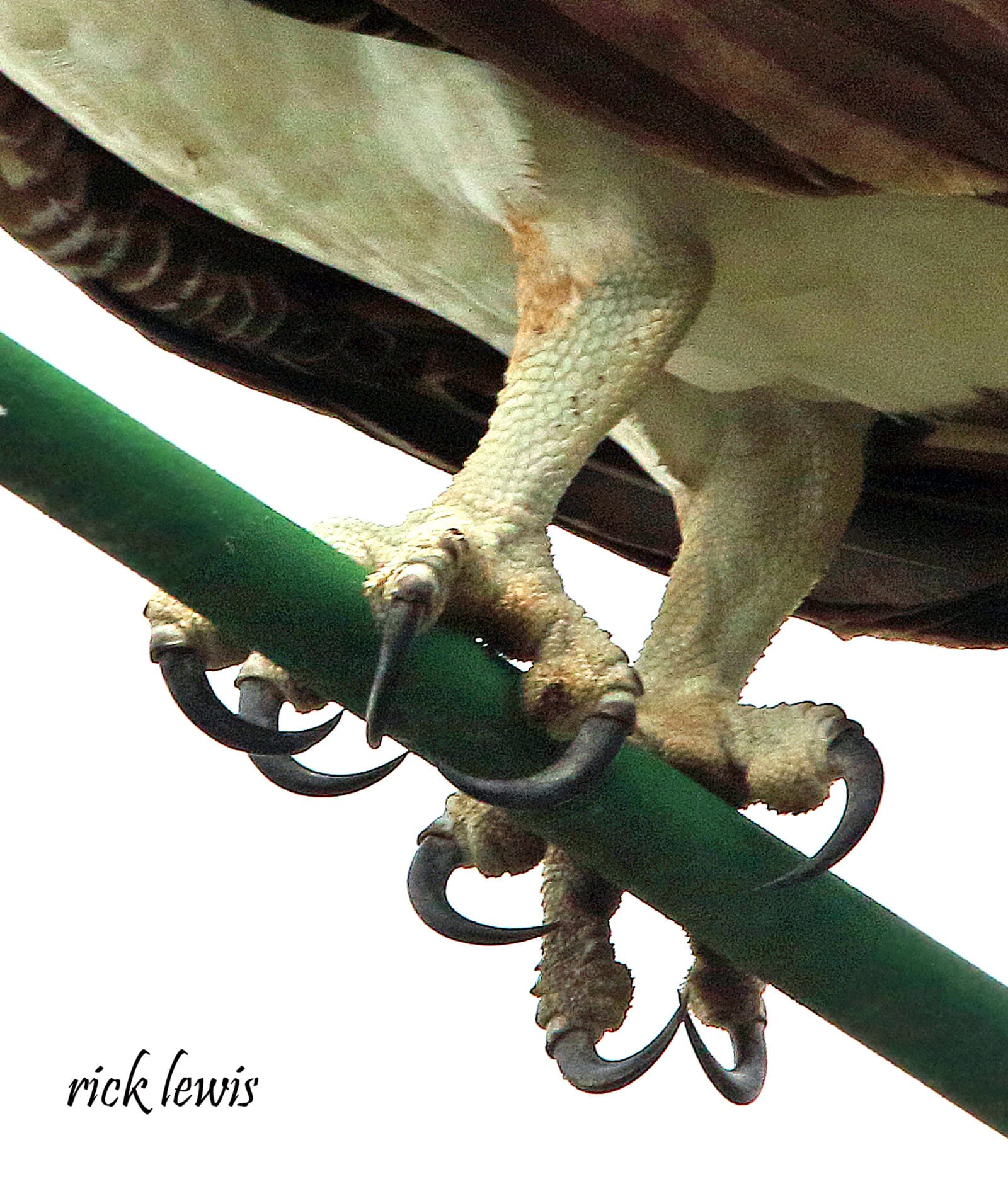
The Cornell Lab of Ornithology describes these birds as, “brown above and white below, and overall they are whiter than most raptors. From below, the wings are mostly white with a prominent dark patch at the wrists. The head is white with a broad brown stripe through the eye.” Several guides mention that at first glance, ospreys are suggestive of bald eagles.
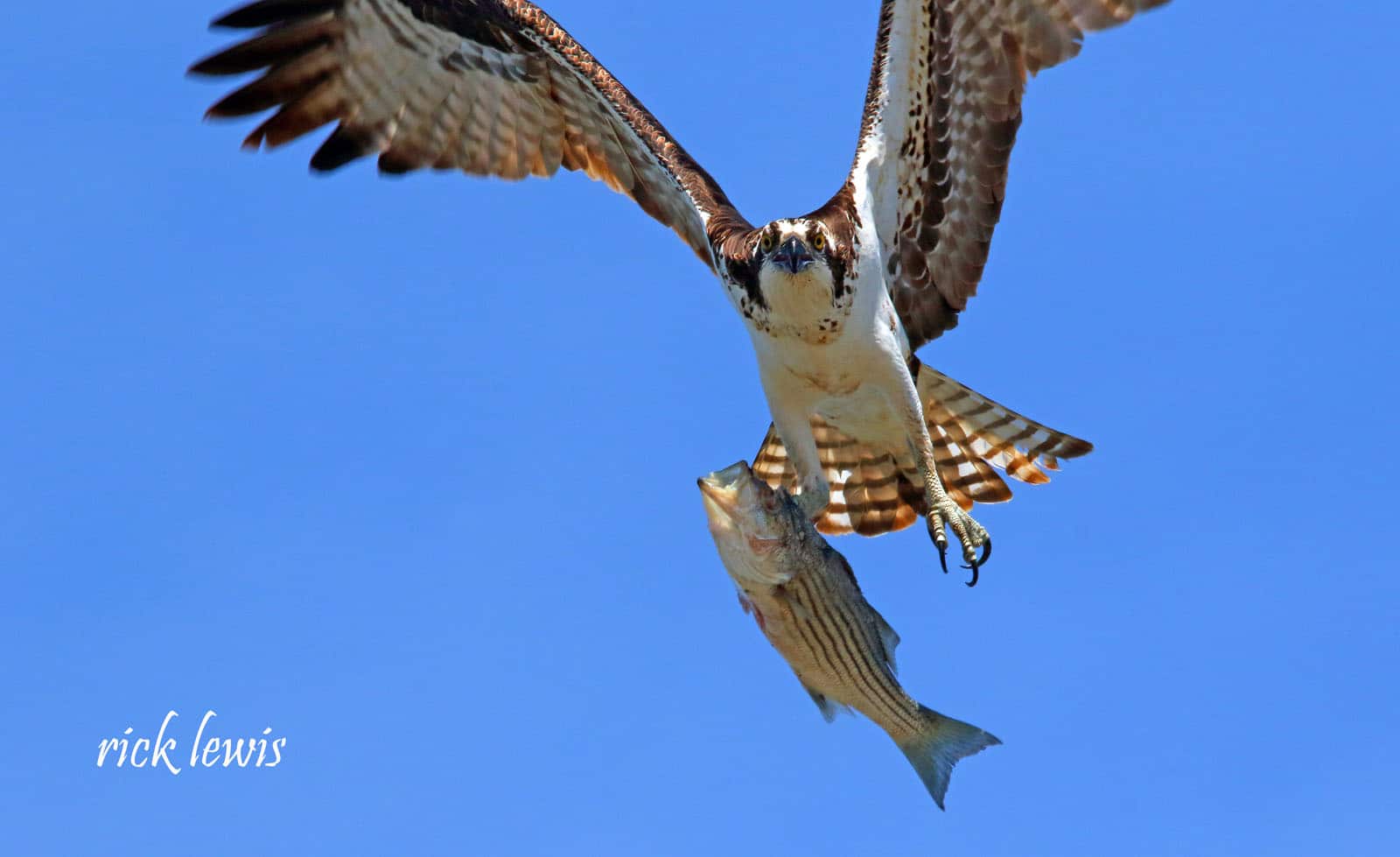
Ospreys face all of the challenges of nesting birds throughout the world—habitat loss, environmental pollution, industrial construction and development, and a variety of human interference. And since they are completely reliant on oceans, rivers, lakes, ponds, creeks, estuaries, bays, and reservoirs, wherever fish thrive, ospreys are eminently equipped to reflect the health and vigor of our essential life source—water. Beautiful in the air and water, ospreys are worthy of our admiration and protection.
Rick Lewis is a long-time member of Golden Gate Bird Alliance and other environmental organizations. He contributes often to Bay Area and Central Valley birding groups that promote wildlife and habitat conservation.
This is part of a series of articles coordinated by the Friends of the Alameda Wildlife Reserve (FAWR), a Conservation Committee of Golden Gate Bird Alliance.
