In a previous lifetime, when I worked in environmental consulting, my boss and I once discussed the possibility of me being the health and safety supervisor for a large-scale hazardous waste cleanup project—work which would be performed by an otherwise all-male construction crew of backhoe operators, laborers, and haulers.
“No offense,” my boss said, “but I won’t put you in that situation.” With a laugh, he added, “We need someone burlier.”
Far from being offended, I breathed a sigh of relief.
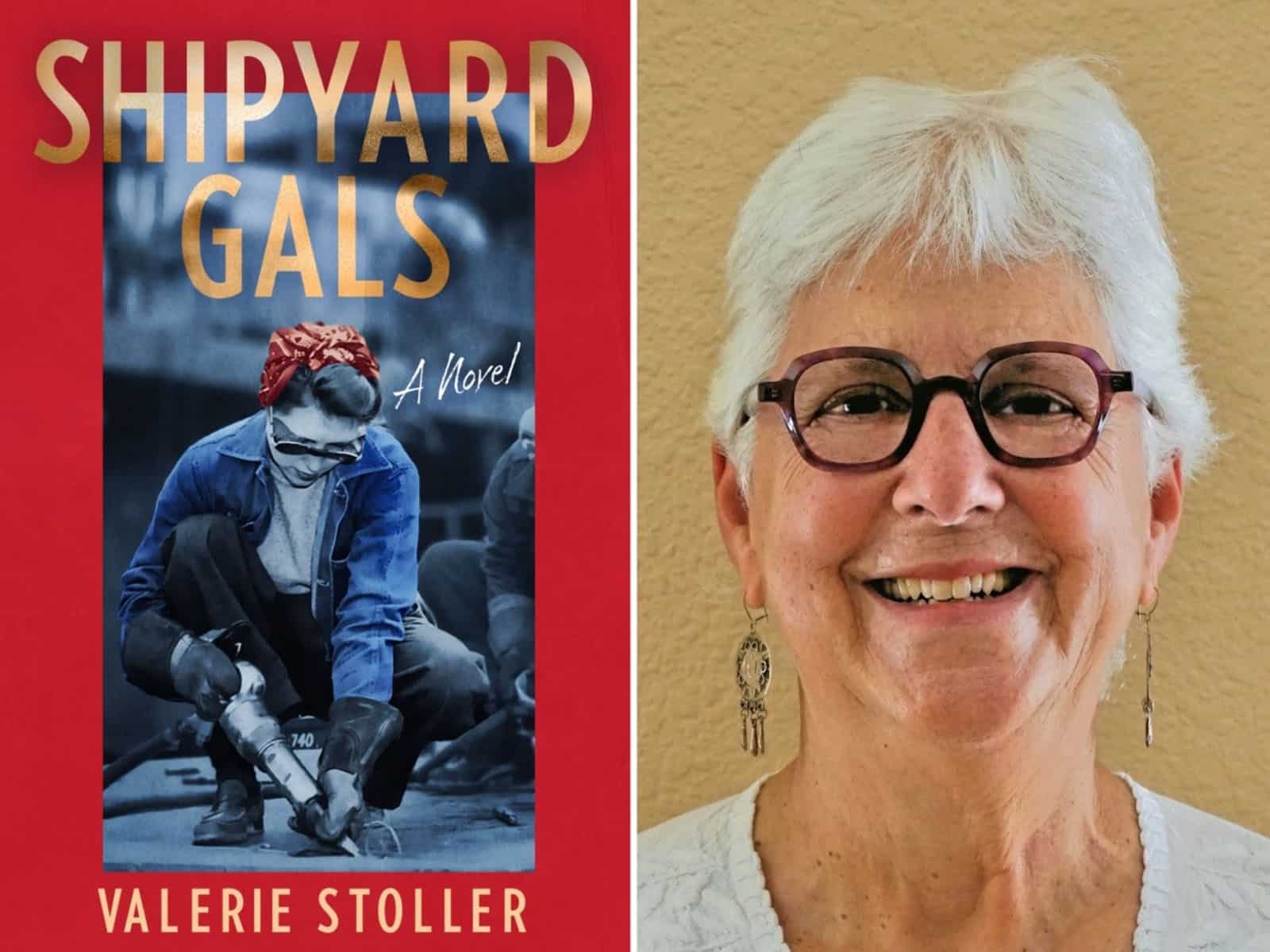
And so, I have every admiration for the Rosie the Riveters of World War II, the women who worked in factories and shipyards doing traditionally male-dominated work such as welding and riveting to produce warships and supplies. Shipyard Gals, a debut historical novel by local author Valerie Stoller, brings their world vividly to life, offering a compelling perspective on how the war reshaped American society on the domestic front and the realities beyond the “We Can Do It!” slogan.
Overview
Shipyard Gals is set in 1944 California and centers on the lives of three diverse women whose paths converge at the Kaiser shipyards in Richmond—a critical hub of wartime ship production. There’s Elena, a spirited journalist from El Salvador who fled violence in her home country and is determined to find work and support her family. Ruby Mae is a young Black woman from Baton Rouge, Louisiana, who arrives hoping the Bay Area will offer an escape from Southern racism and will bring her better pay, only to discover new forms of harassment along with the dangers of a high-pressure industrial environment. And there’s Rachel, a Bay Area nurse from a Jewish family, who grew up relatively sheltered, and now must confront her own fears as she works in the hectic shipyard clinic, tending to a constant stream of worker injuries.
Together, they grapple with the immense pressures of wartime labor, even as they grow into an increasing sense of self-determination and purpose. The narrative incorporates real history, including the devastating Port Chicago Naval base explosion, which resulted in the deaths of over 200 Black sailors and a public reckoning about racial injustice in the segregated Navy of World War II. The deaths deeply affect the community and inspire each woman to confront discrimination, relying on one another for support.
Through alternating perspectives, the novel explores themes of friendship, resilience, and courage as these women push against social barriers while contributing to the home-front war effort.
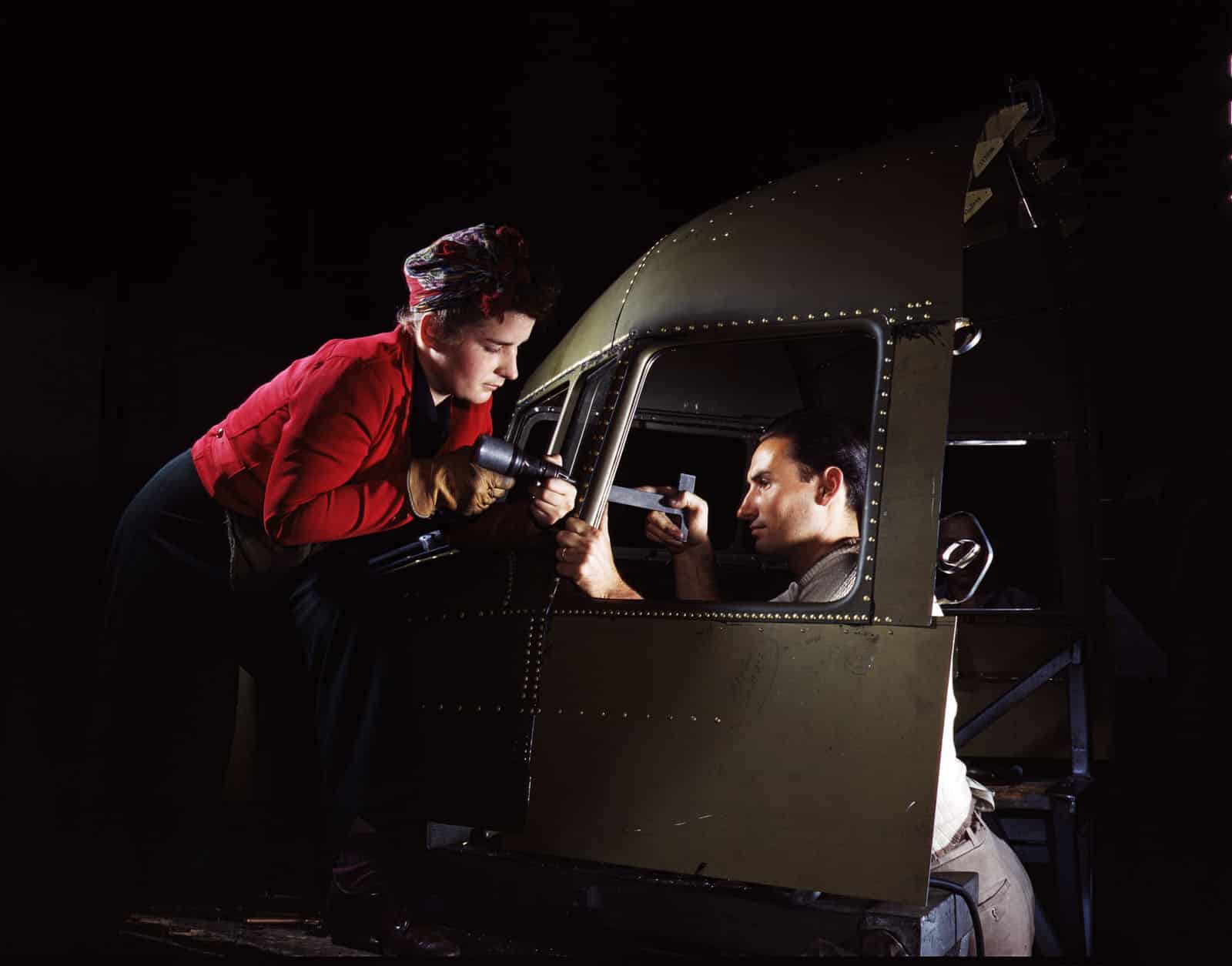
World War II beyond the battlefield
“The noise down at the docks was unbelievable…” Set against the clang and smoke of wartime industry, the book focuses less on the war and more on the human transformations that occurred when women stepped into jobs—and independence—previously denied to them.
In her home country, Elena was a talented journalist for her father’s newspaper, yet violent retaliation for her family’s reporting drove her out. Here in the U.S., she faces a different kind of danger as she performs shipyard welding despite a shortage of adequate protective equipment. She feels proud earning enough to help her family; she genuinely appreciates the opportunity. Still, she longs for more fulfilling work. When the Port Chicago Disaster happens, she seizes the opportunity to put her passion for reporting to work.
Ruby Mae takes great pride in her vastly improved pay as a riveter compared to what she was earning as a housekeeper in Louisiana. For the first time, she can afford small luxuries, like going to the nightclub where she meets her sweetheart. Still, she’s worried her temper will be her downfall when faced with harassment on the job. Ultimately, in contrast to her parents, who can’t adapt to their new life and decide to return to Baton Rouge, Ruby Mae finds a solution, thanks to the community she builds.
Rachel takes immense pride in her contribution to the war effort: “They were all in this together, men and women, everyone doing their part to help win the war. Rachel felt humbled to have this job.” At the same time, when she encounters casual antisemitism, she struggles to find her voice, to even admit out loud that she is Jewish. Ultimately, in working to stand up for the Black sailors of the Port Chicago Disaster, she learns to speak for herself.



The Port Chicago Disaster
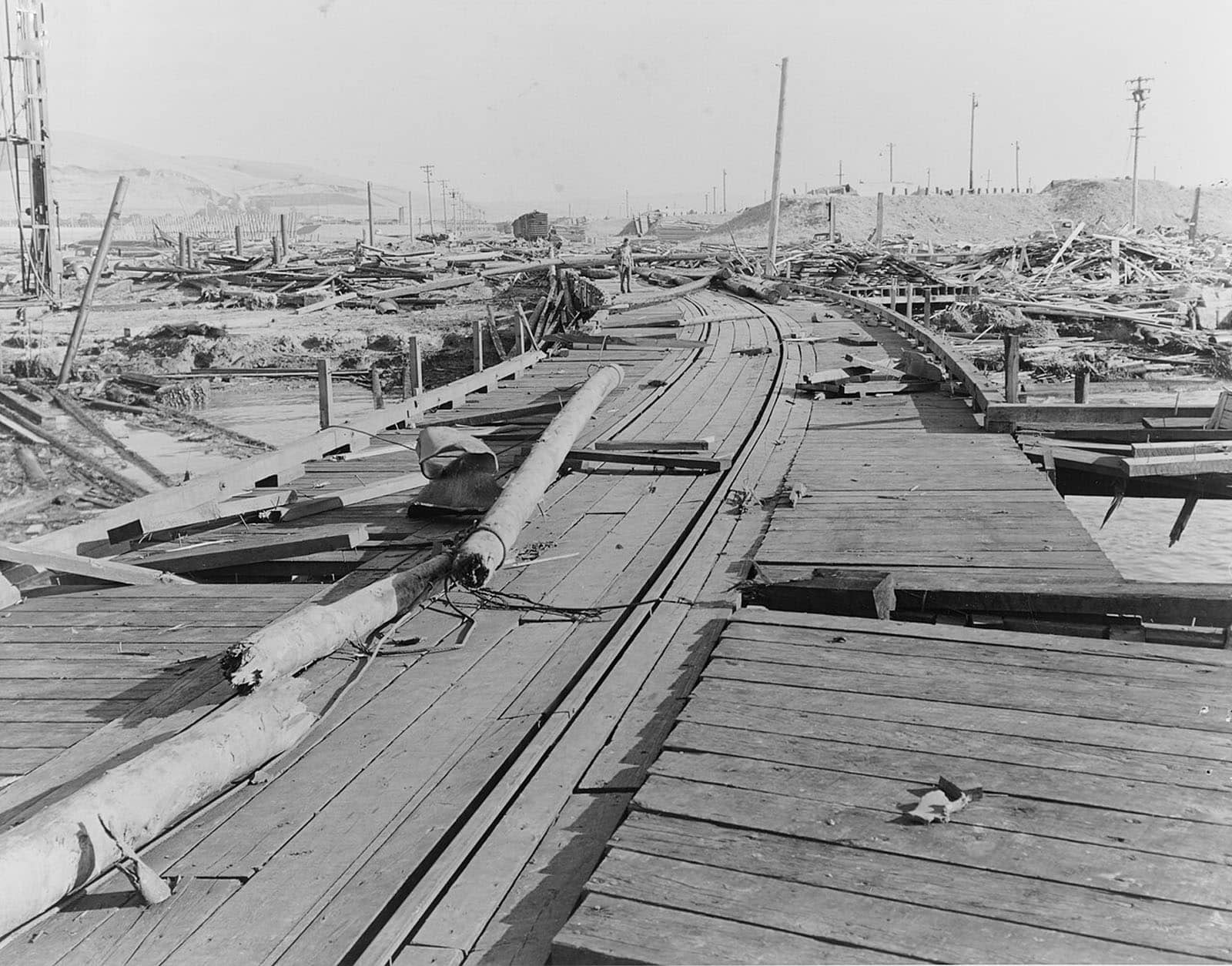
Port Chicago was a town on the banks of Suisun Bay, in Contra Costa County. The Port Chicago Disaster was a deadly munitions explosion on July 17, 1944. Munitions being loaded by African American sailors onto a cargo vessel bound for the Pacific Theater detonated, killing 320 sailors and civilians and injuring at least 390 others.
A month later, when continuing unsafe conditions prompted hundreds of Black servicemen to refuse to load munitions, they were accused of mutiny. Ultimately, more than 200 were convicted of minor charges, but fifty were convicted of mutiny and sentenced to 15 years of prison and hard labor, as well as dishonorable discharge.
Amazingly, I had never heard of this incident until 2024, when local news reported that the Navy posthumously exonerated all 256 men convicted during the court-martial. I never learned about this in history classes, despite it being a landmark incident that sparked widespread protests, leading the Navy to desegregate in 1946 and free the servicemen that year.
I am grateful that Shipyard Gals brings this essential Bay Area history to life. Ruby Mae’s sweetheart is a serviceman stationed at Port Chicago. “The truth is,” he says, “all of us men loading ammo 24/7 know how dangerous it is. The officers don’t care if something happens to one of us. We’re just the dumb Negro sailors.”
The magnitude of the explosion, involving over 4,600 tons of anti-aircraft ammunition, aerial bombs, and high explosives, is captured when Ruby Mae and her friends are watching a movie all the way down at the Fox Theater in Oakland and believe they’ve experienced a powerful earthquake, only to learn that the shaking was the result of the explosion in Contra Costa County (almost 30 miles away).
The subsequent injustice of the sailors’ convictions unites the women in helping to organize and join a local protest. They find their voices.
Recommendation
Shipyard Gals is a warm, accessible historical novel that brings to life the overlooked experiences of women who poured into American shipyards during World War II. With its rich themes—immigration, workplace equity, racial discrimination, friendship and solidarity, and the lasting impact of war—the novel lends itself well to thoughtful discussion.
Stoller’s strength lies in her characters. The women at the heart of Shipyard Gals forge friendships through long shifts and workplace hazards, as well as the giddy pursuit of romance. The novel captures the exhilaration of newfound purpose alongside the persistent undercurrent of loss and anxiety that defined the home front. Stoller’s portrayal of wartime losses of loved ones, along with the aftermath of the Port Chicago Disaster, in terms of lives lost and devastated, was particularly moving.
Shipyard Gals succeeds in honoring the everyday courage of women whose labor quietly reshaped American society. Readers who appreciate intimate, human-scale stories about resilience and community during moments of national upheaval, rather than action-heavy or military-focused war novels, will enjoy this.
As of this writing, Shipyard Gals is in stock at Books, Inc. and is also available at the Alameda Main Library.
Contributing writer Karin K. Jensen covers boards and commissions for the Alameda Post, as well as book reviews. Her book, The Strength of Water, an Asian American Coming-of-Age Memoir, was named a 2025 Book of the Year and is also available at Books Inc. and the Alameda Main Library. Her writing is collected at https://linktr.ee/karinkjensen and https://alamedapost.com/Karin-K-Jensen.
