I love when hidden connections are found while researching our Alameda Treasures, such as our subject today, 1528 Mozart Street. Those connecting threads can take a while to find, but once you do, you realize they were hiding in plain sight all along.
Foreshadowing
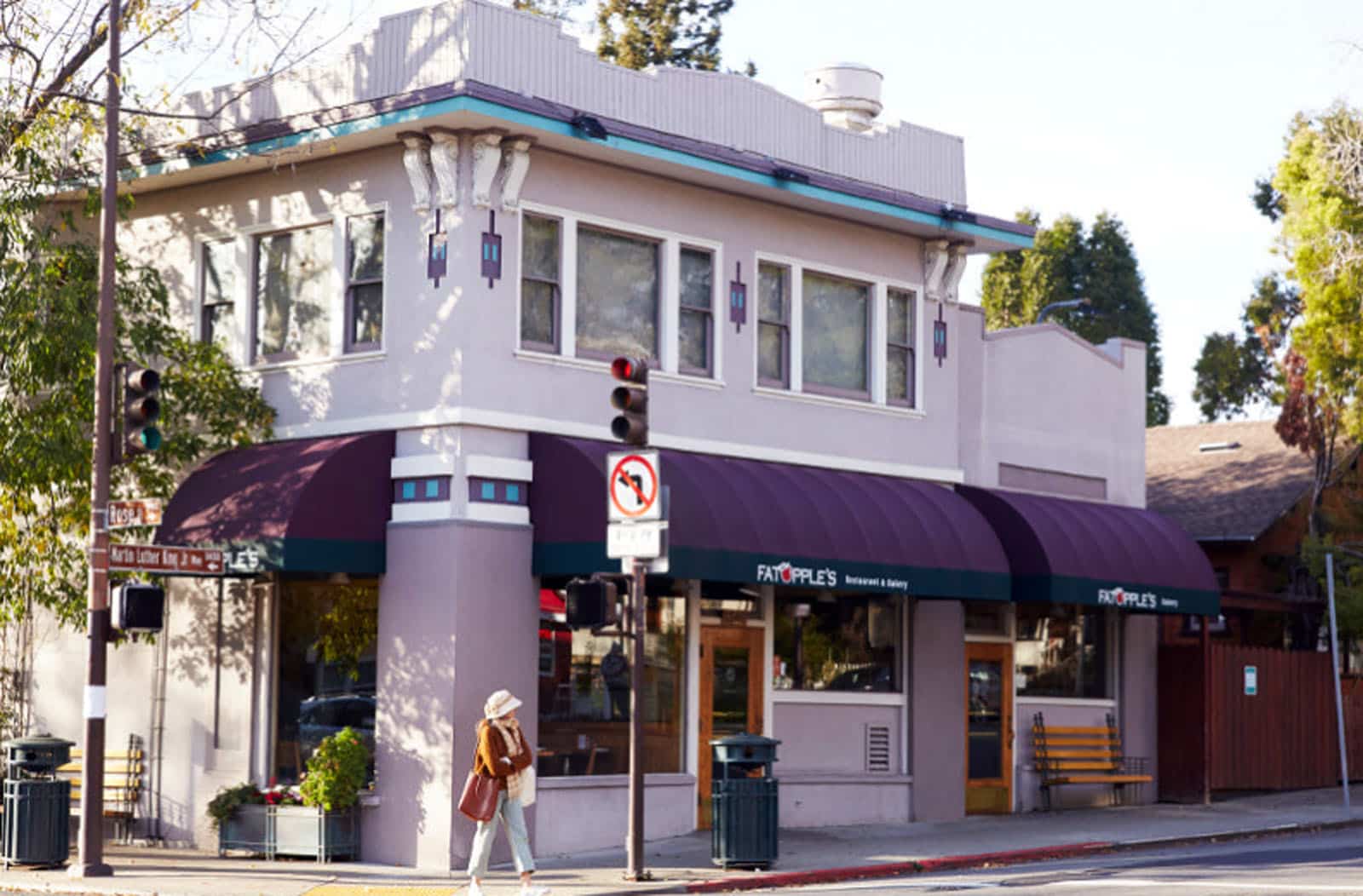
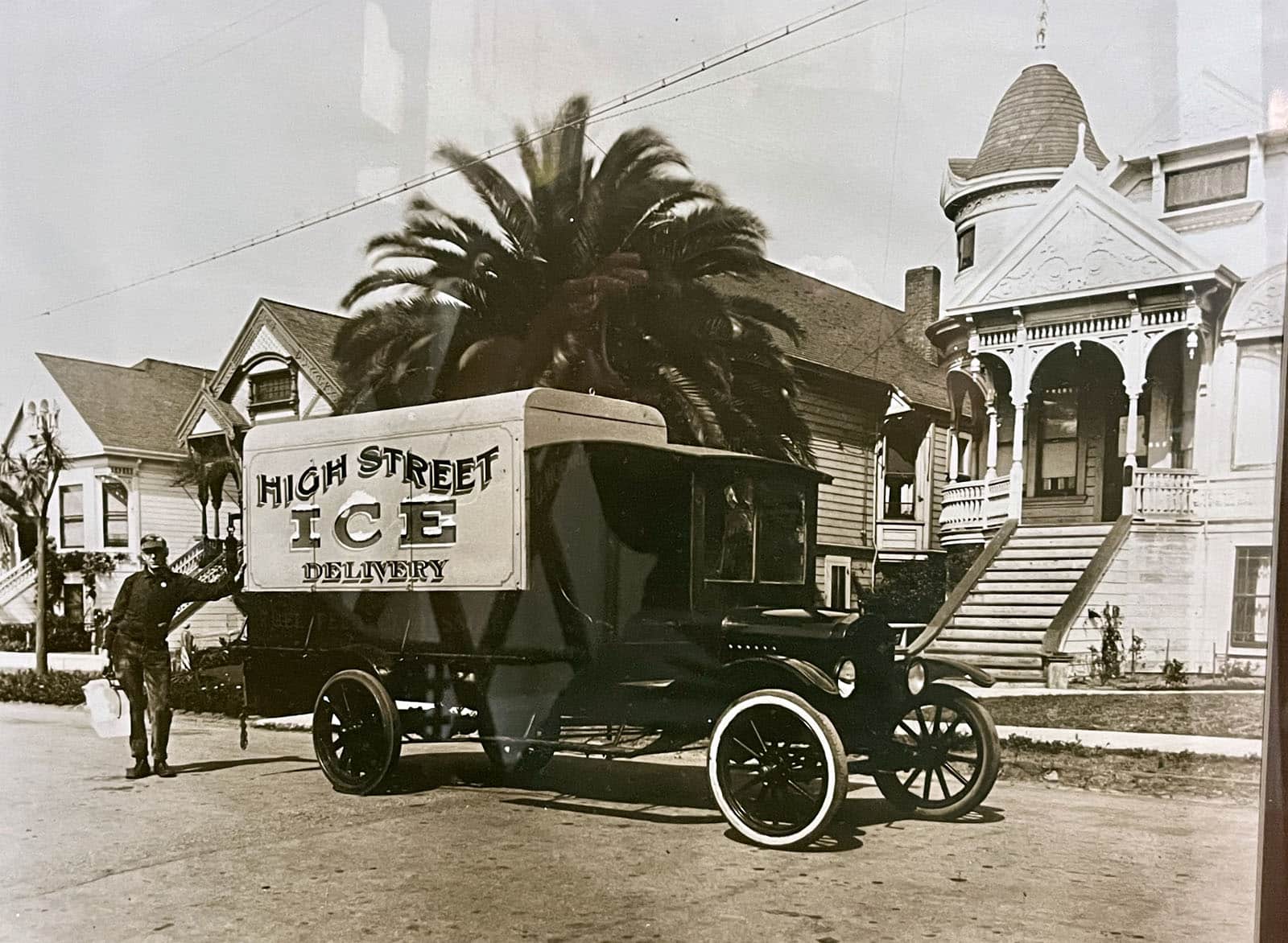
1528 Mozart Street homeowner Joyce Boyd moved to California from Detroit, Michigan, after college, and for years lived in Berkeley. It was there in Berkeley around 1998 that she used to frequent one of her favorite eateries, Fatapples Restaurant and Bakery. During those many visits to Fatapples, Joyce noticed an interesting historic framed photograph hanging on the wall, which depicted an old-fashioned ice delivery truck parked in front of an ornate Victorian-era home. The photo would always attract her attention, but she never knew that it was a foreshadowing of her future.
An unexpected gift
Fast forward to the year 2015, when Joyce and her husband Peter Conn were closing on their “new” home on Mozart Street, and were given an unexpected gift by the home seller, Susan Viray. As Susan handed Joyce an 8 x 10 framed photo of an ice truck parked in front of a house, Joyce looked at it, feeling confused. Recognizing it as the photo she used to see at Fatapples, she asked, “Why are you giving me this?” Susan then told her that it was actually 1528 Mozart Street depicted in the photo, and that she wanted Joyce to have it as part of the home’s history. Joyce was amazed that the photo she first saw in a Berkeley restaurant when she first moved to California decades earlier, and which she always felt drawn to, was now her home. They say that there are no coincidences in life, and perhaps this is a good example of that.
A further connection
In a further twist to this story, my wife Edie has worked at Fatapples Restaurant for years as a food server. I asked her if she had ever seen this photograph, but she didn’t remember ever having seen it. Edie then questioned the restaurant’s founder, Hilda Marsh, who is now mostly retired from daily operations but still stops by sometimes. Hilda definitely remembers the photo, but has no idea where it is now. It was probably removed years ago during some remodeling or renovation work, and its whereabouts are unknown. Who knows, maybe it’s hanging in some other home or establishment now, where it’s serving as a foreshadowing for someone else who will own this home one day far into the future. When it comes to this particular historic photo, there are no coincidences.
Stewards of the past and future
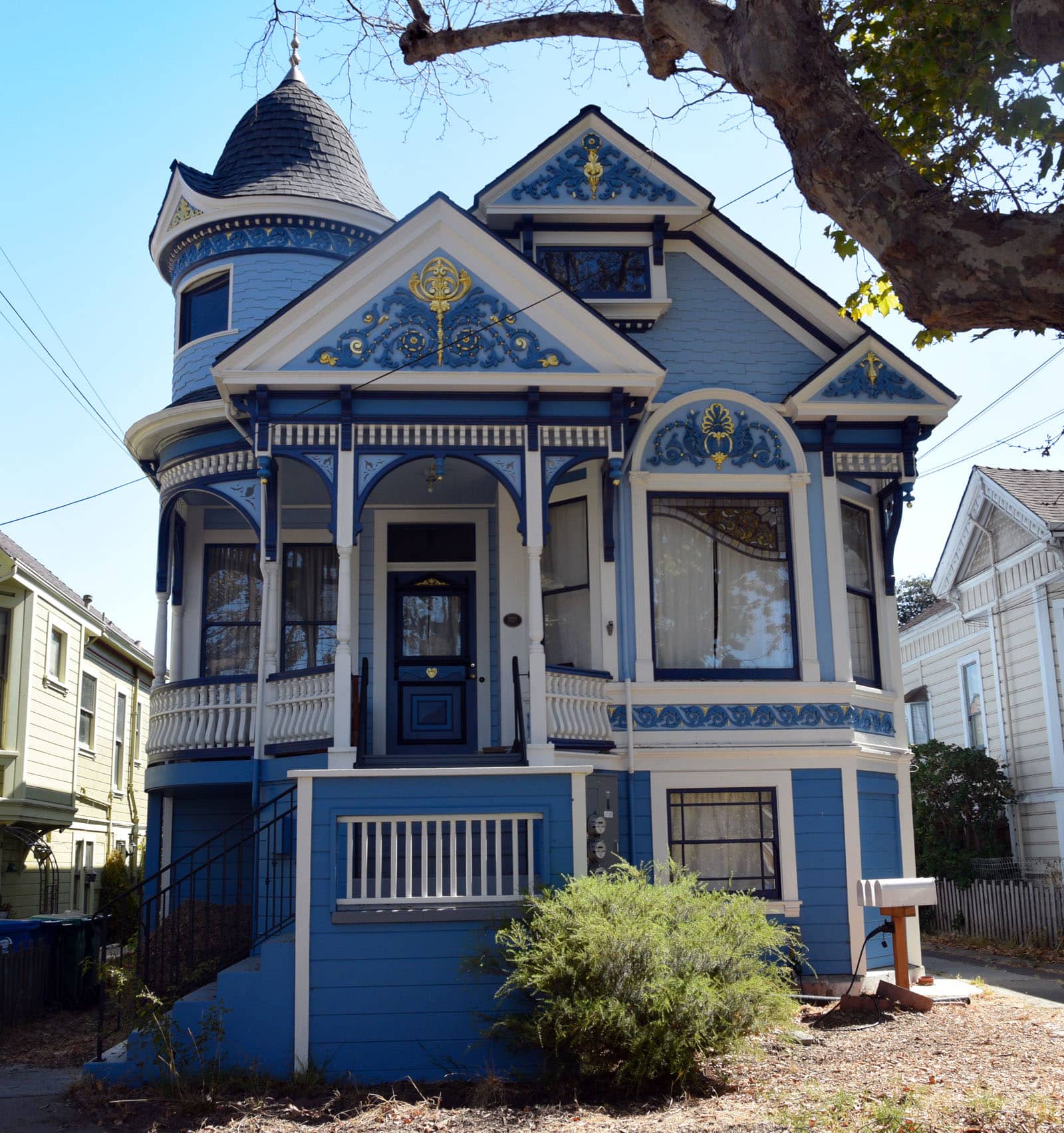
Once the historic photograph changed hands and the closing documents were signed, Joyce and Peter were the official owners of this historic property. When you take possession of a storied property like this, one that was designed and built by one of Alameda’s most renowned firms, Marcuse & Remmel, you are more than just an owner. You are a caretaker, a steward, a keeper of the flame, who will take your place in a long lineage that started in the 19th century and will hopefully extend far beyond the 21st.
Projects galore
Joyce describes the inspection report they received for the property as being “thick as a book,” with many issues of deferred maintenance to be addressed. Neither she nor Peter had any restoration experience, but they rolled up their sleeves and got to work doing what they could themselves, such as stripping layers of paint off of painted redwood moldings, and hired professionals for the rest. Among the first projects was to replace the brick foundation and crumbling chimney, working with John Jameson Construction. Ken Shelby of Piggery Panes restored the collapsing stained glass panel in the front bay window, along with re-creating missing leaded and stained glass windows in the dining room and attic.
Joyce and Peter joined the Alameda Architectural Preservation Society (AAPS) to start learning more about Victorian-era homes and get tips on restoration. They used TEC Electric to upgrade the electrical system of the two ground floor rental apartments—Joyce describes finding a rat’s nest of wires held up by a nail—and hired Advanced Roofing Services to replace the roof, while Jenks Gutters and Downspouts handled the gutters.
Saving up
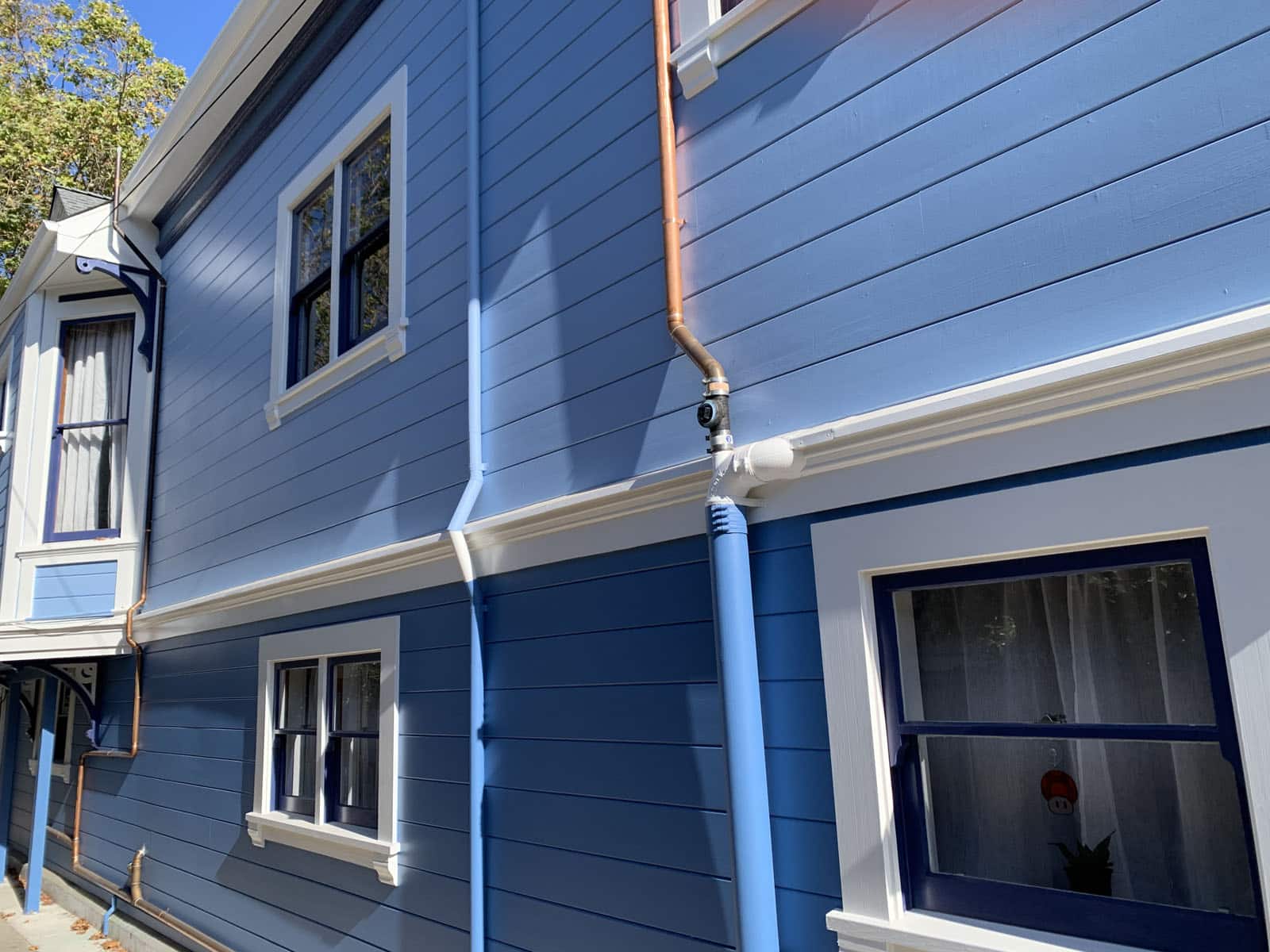
As one can imagine, work like this can be expensive and time-consuming, so it must be done in stages. As Joyce says, “We restored the rest of the outside of the house in stages as we saved up money for each phase.” Although much of the paint was peeling on the old-growth redwood siding of the house, luckily there was not much water damage and only 40 feet of siding needed to be replaced. Aluminum windows on the lower level were replaced with more period-correct wooden ones by Russo Windows and Doors, while A. T. Weber Plumbing repaired and replaced gas and water lines as needed.



Many hands
As you can tell by now, restoring a Victorian-era home takes the help of many skilled tradespeople and artisans. As work continued, Pacific Northwest Painters and Construction (PNPC) did work on the sides of the house, as well as extensive restoration to the front. By the time final painting was to begin though, the owner of PNPC had retired, so Olson Painting was hired to complete the job. But final painting couldn’t be done until the delicate plaster restoration on the front of the house was completed.
Kollmeyer to the rescue
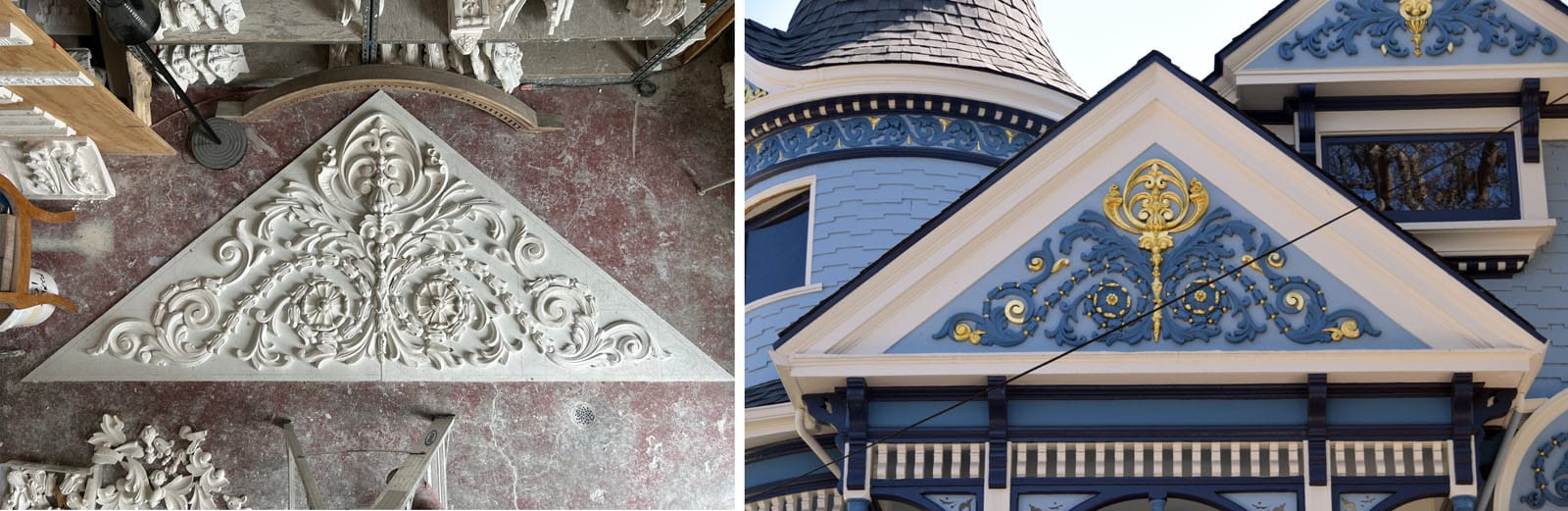
Lorna Kollmeyer has been mentioned in previous articles about Alameda Treasures, due to her unique role in preserving an art and trade that is almost lost to time now. Described by 7×7 magazine as “the last remaining guardian of Victorian plaster ornaments,” artisan Kollmeyer has dedicated herself for more than 40 years to crafting the delicate, intricate medallions, scrolls, rosettes, cartouches, and plaques that bejewel the painted ladies of San Francisco and the Bay Area. Operating out of a shop at Hunter’s Point Shipyard, Kollmeyer Ornamental Plaster is the last remaining repository of this once thriving artistic trade.
Once again, the historic photo of the High Street Ice Delivery truck parked in front of 1528 Mozart Street enters the story. The photo shows enough detail of the home’s original plaster ornamentation that Kollmeyer had at least a guide to go by as she worked to restore the façade to its original 1894 look. Once this detailed and intricate work was created and installed, the home was ready for final painting.
Final touches
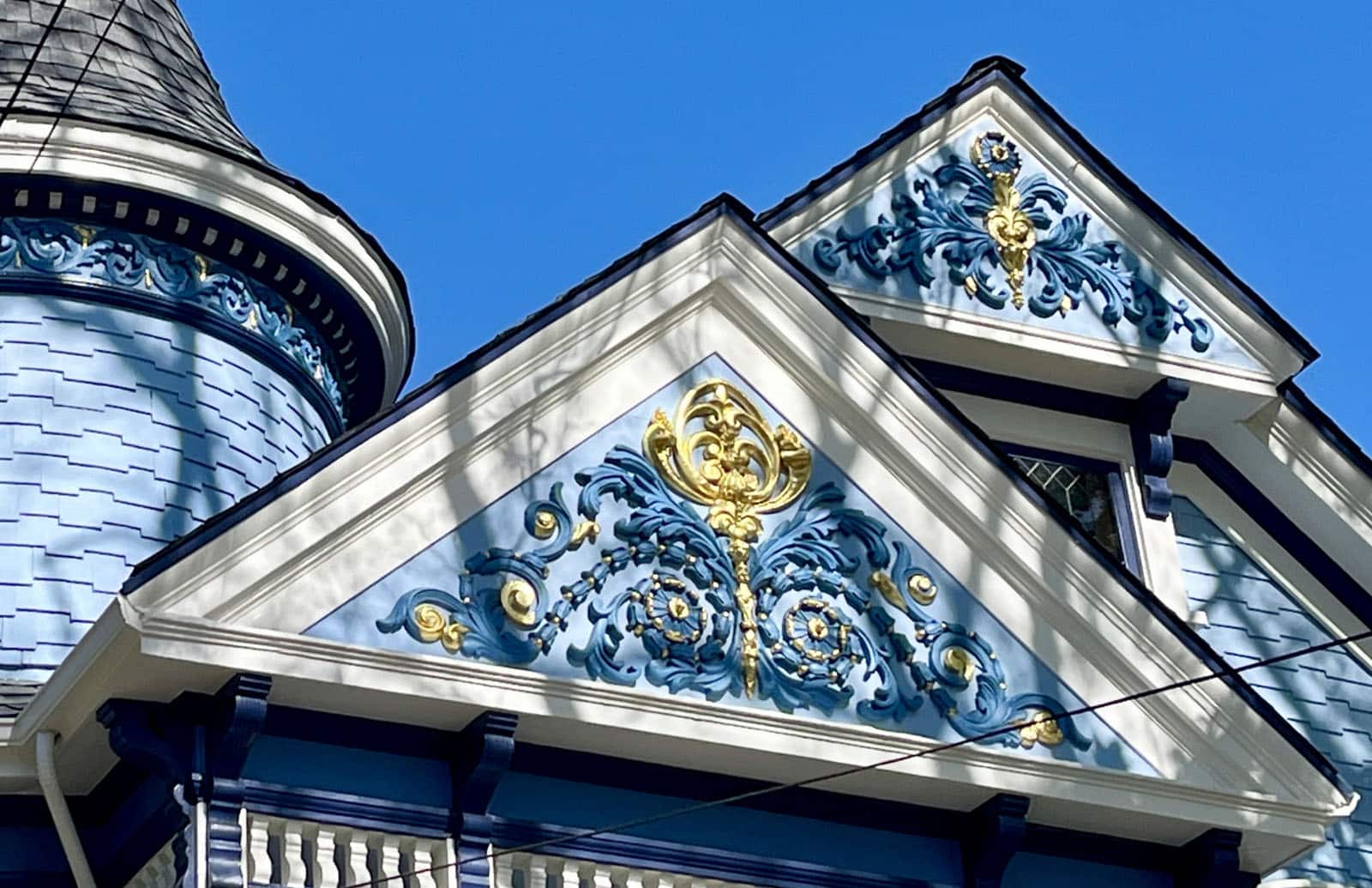
Cornelia Grunseth of the Color Lady & Associates was selected to help Joyce and Peter select a color palette for the exterior of the house, and their friend Robert (Bob) Farrar expertly applied the gleaming gold leaf accents. Finally, the homeowners found a replacement tower finial, purchased from Weathervanes of Maine. The gold finial is five feet tall, which seemed quite large to Joyce when she was ordering it. Once installed way up on the turret roof though, she realized that she actually could have gone with the seven-foot tall one.
A rewarding experience
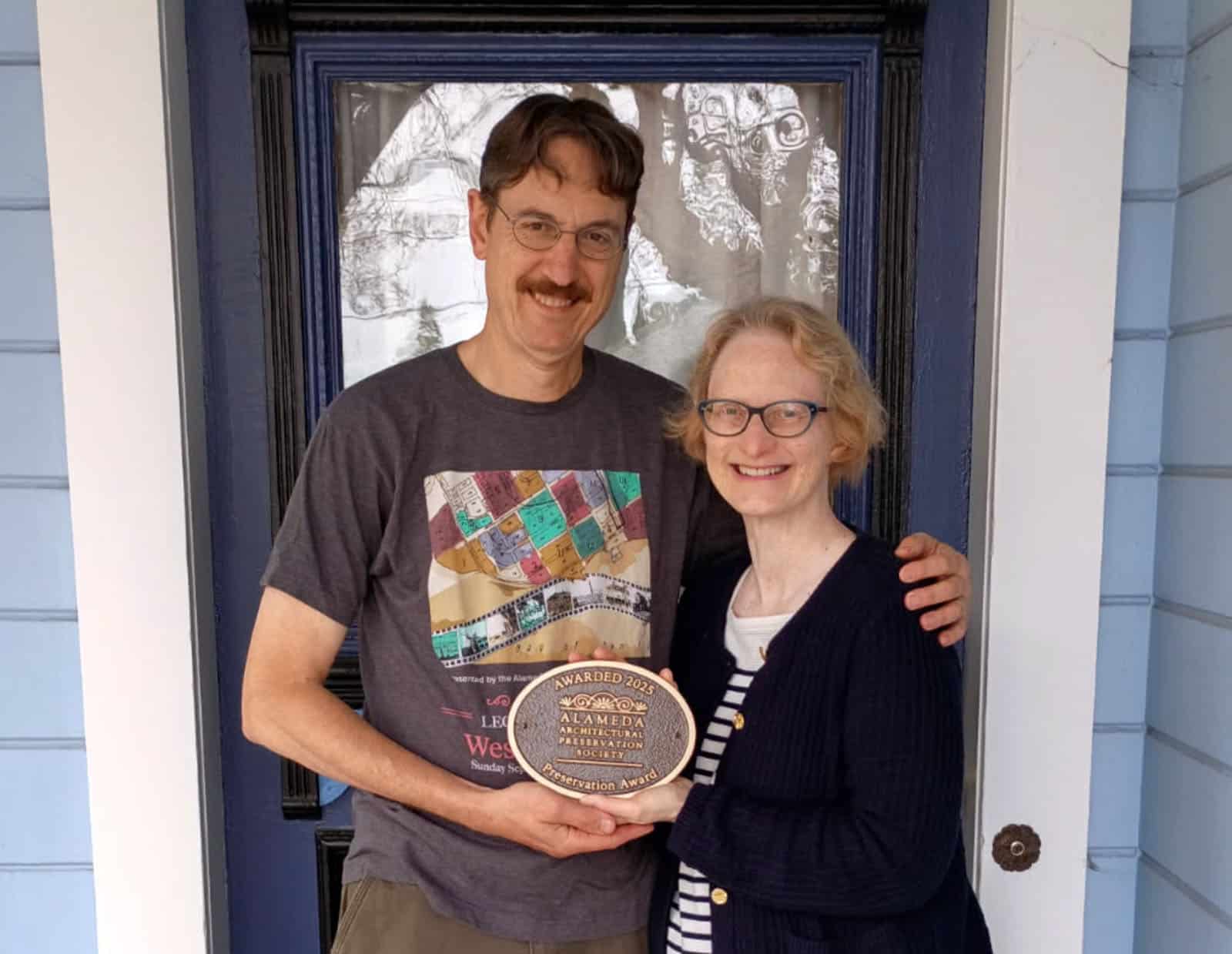
For their work restoring 1528 Mozart Street to the fine condition it’s in today, Joyce Boyd and Peter Conn received a Preservation Award this year from the AAPS. In order to receive an award, homeowners must fill out a detailed form about their home, provide photos, and explain why their property merits a Preservation Award. The AAPS website states: “Nomination can include any activity that preserves, maintains, restores, or reuses the exterior or publicly accessible interior of a significant older property in a manner that retains or enhances its historic architectural character.”
Still to do
While the exterior of this home now causes passersby to stop, look, and take photos, the interior still needs work. Some work has already been done to strip layers of paint from original carved redwood moldings, but there is still a long list of interior work to be done. On the to-do list is upgrading the electrical on the main level, refinishing the hardwood floors, painting interior rooms, rebuilding an old back deck, creating a new laundry room, building an outdoor kitchen, and finally, when all the workmen and women have finished traipsing in and out, creating a newly landscaped front yard.
Up next
Here we are nearing the end of Part 3 of this series and we still haven’t gotten to the story of Benjamin Blotcky, the 12-year-old former resident of 1528 Mozart Street who made headlines in 1908 when he refused to eat. How his parents handled this worrying situation, and what happened when he went before a judge to determine his sanity will be explored in Part 4 of the story of this home, along with more photos and historical information dug up from the past. All that, and more, when our story of 1528 Mozart Street continues.
Special thanks to Joyce Boyd and Peter Conn for opening up their home and its history for Alameda Post readers. Information about the 2025 Preservation Award was sourced from the newsletter of the Alameda Architectural Preservation Society.
