In Part 1 of this series, we learned about the origins of Mozart and Verdi streets, how they were developed rather late in Alameda’s pioneer history period (1884), and how Caroline Dwinelle, former wife of Alameda co-founder William W. Chipman, named the streets for her favorite composers.
Encinal Park
These housing tracts, located in an area once called Encinal Park—parts of which are referred to as the “Gold Coast” today—were owned by German émigré Emile Kower, who finally began selling them in 1884, just two years before his passing in 1886. Perhaps he felt his life drawing to a close and decided to liquidate his holdings to make things easier for his heirs—his wife and three children. Even upon his death in February of 1886, however, he still owned sixty lots in Alameda, worth $20,000, along with lots in Fruitvale and San Francisco worth another $38,000 (Alameda Times Star, February 20, 1886). Kower, a native of Stuttgart Germany, was just 63 years old at the time of his passing, and died a wealthy man.
A woman-owned property
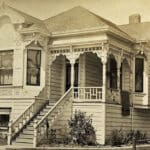
Looking through Alameda historian George Gunn’s books on our city’s Victorian-era buildings, one can’t help but notice that the vast majority of original owners were men. It wasn’t as common for women to be property owners in those days, but there are a handful of homes with women listed as the original owners, and 1528 Mozart Street is one of them.
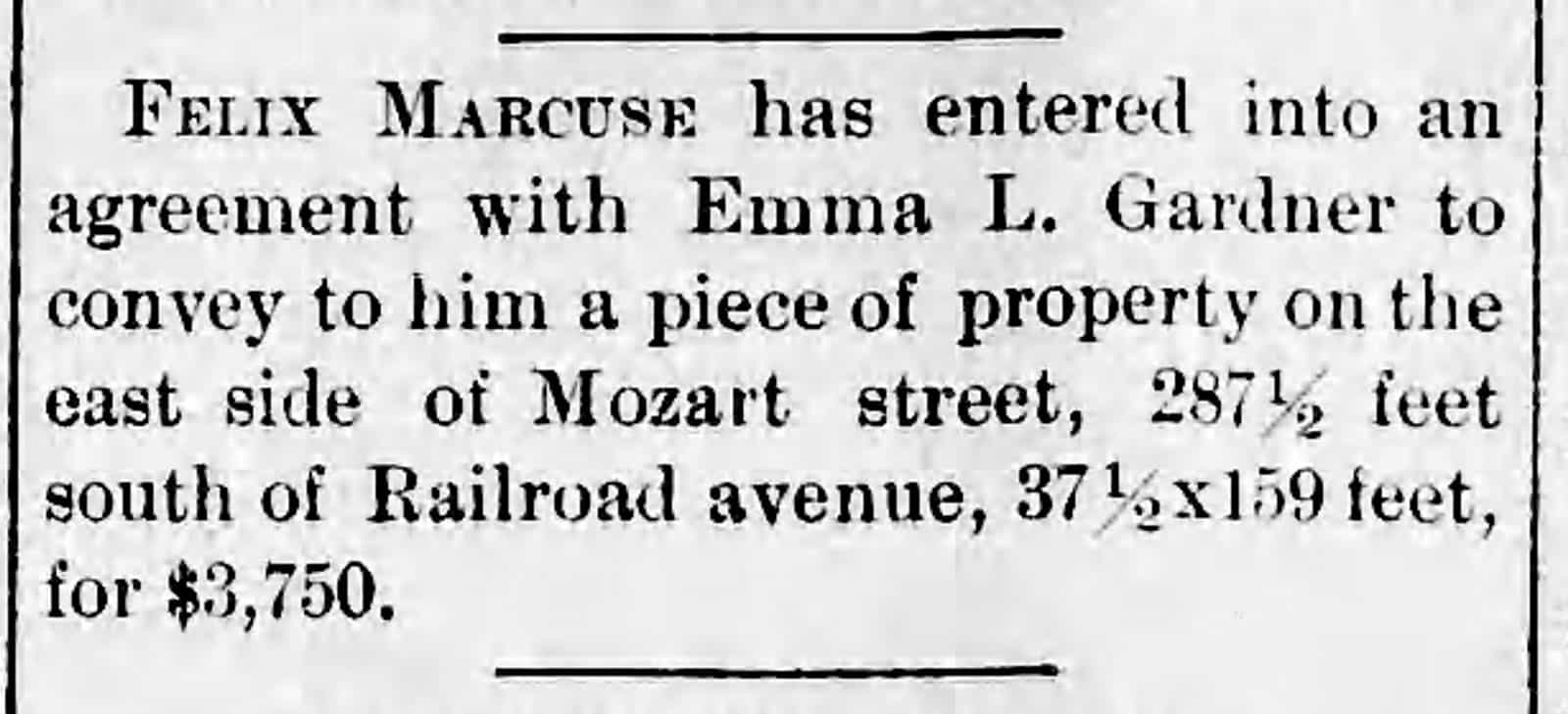
Gunn’s book lists the original owner of 1528 Mozart Street simply as “Mrs. E. L. Gardner.” It didn’t take too much more research to learn that her name was Emma L. Gardner, and that she had been widowed by John Gardner. A real estate listing in The Daily Encinal, on July 19, 1894, stated that “Felix Marcuse has entered into an agreement with Emma L. Gardner to convey to him a piece of property on the east side of Mozart street, 287½ feet south of Railroad Avenue, 37½ feet x 159 feet, for $3,750.” A couple of months later, on September 15, 1884, another real estate listing, this time in the Alameda Times Star, stated, “Felix and Delfina Marcuse to Emma L. Gardner, lot, 37.6 x 150, on east side of Mozart Street, 287.6 feet south of Railroad Avenue; $10.”
These listings seem to indicate that Emma Gardner first sold the plot of land to Felix Marcuse (of the building firm Marcuse & Remmel) for $3,750, and then had it deeded back to her a couple of months later. This is interesting, because it suggests that perhaps Emma Gardner had purchased her lot directly from Emil Kower, then sold it to Felix Marcuse, who built her house on it with his firm Marcuse & Remmel, and she then bought it back for just $10. Since the cost of her house was $2,800, this sounds like a shrewd deal made by Mrs. E. L. Gardner. Perhaps some money or land changed hands that was not mentioned in these real estate listings.
Camping and decamping
Emma L. Gardner must have led a quiet life after moving into 1528 Mozart Street, because no other mentions were made of her in the local papers until June 1897, when the Alameda Times Star reported that, “Mrs. Emma L. Gardner of 1528 Mozart Street is camping with her daughter at Corte Madera, Marin County.” Those were the days when going on a camping trip was worthy of a blurb in the local newspapers, much like a Facebook status update today.
Then, 13 years after Emma Gardner had purchased her new home on Mozart Street, a real estate listing in the Alameda Times Star, on September 17, 1907, announced, “Emma Gardner has transferred to M. I. Blotcky property on the east side of Mozart Street 287 feet south of Railroad Avenue, 37×150.” It is not known how much she sold her house and property for, but it is likely she made a tidy profit before decamping to Oakland, where her next address is listed as Linden Street, in the 1907 Oakland city directory.
The Belle Époque
Emma’s travels and moves weren’t yet done. The 1909 Oakland city directory lists her whereabouts as, “Gardner, Mrs. Emma L., moved to Paris, France.” Hopefully Emma had a wonderful time during the two years she spent in Paris, but by 1911 the Oakland city directory once again showed her as a resident, living at 782 14th Street. After that, the trail of our Alameda pioneer homeowner Emma L. Gardner goes cold, but perhaps it’s time to move ahead in time to meet the current homeowners.

Current owners
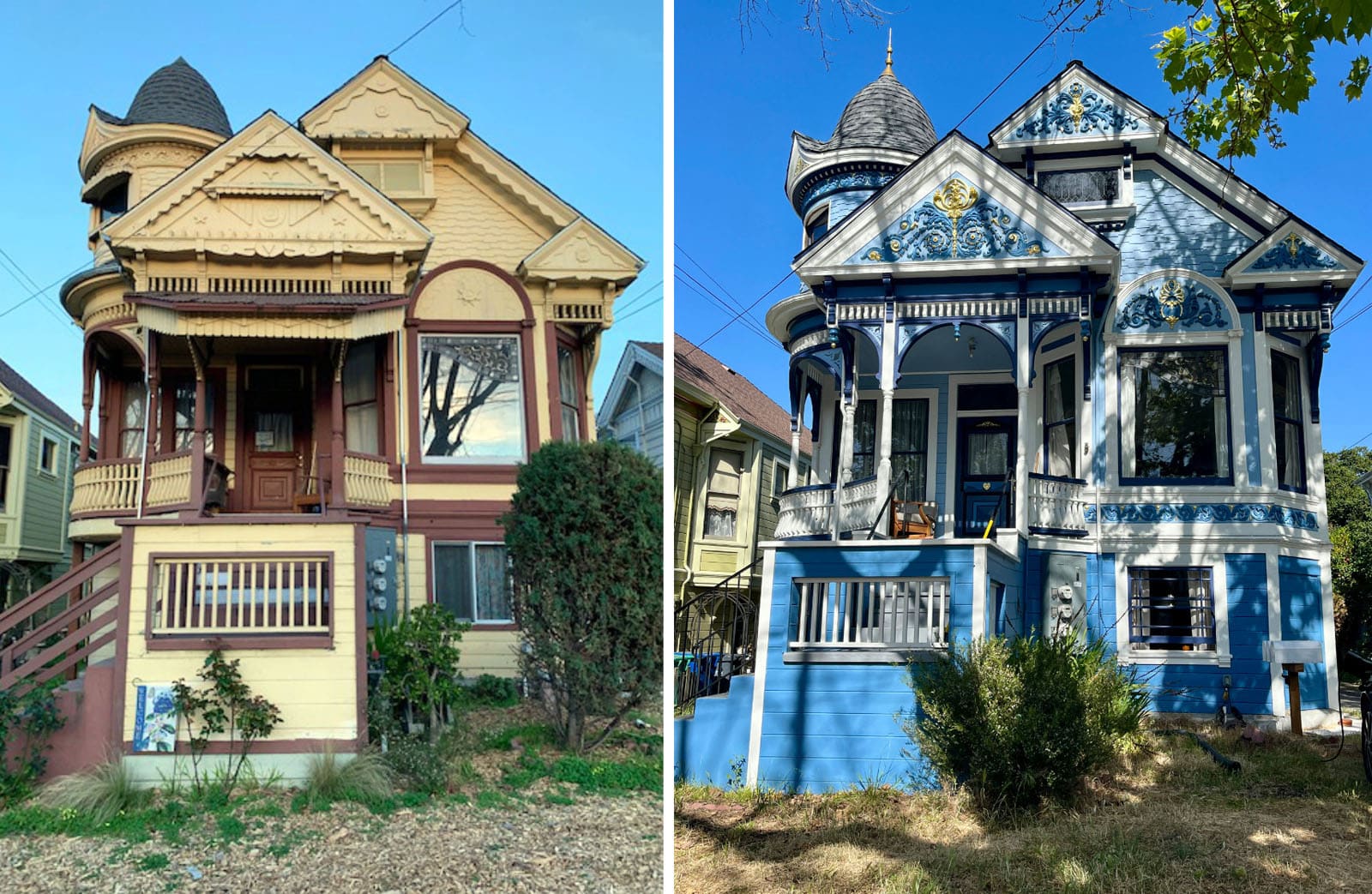
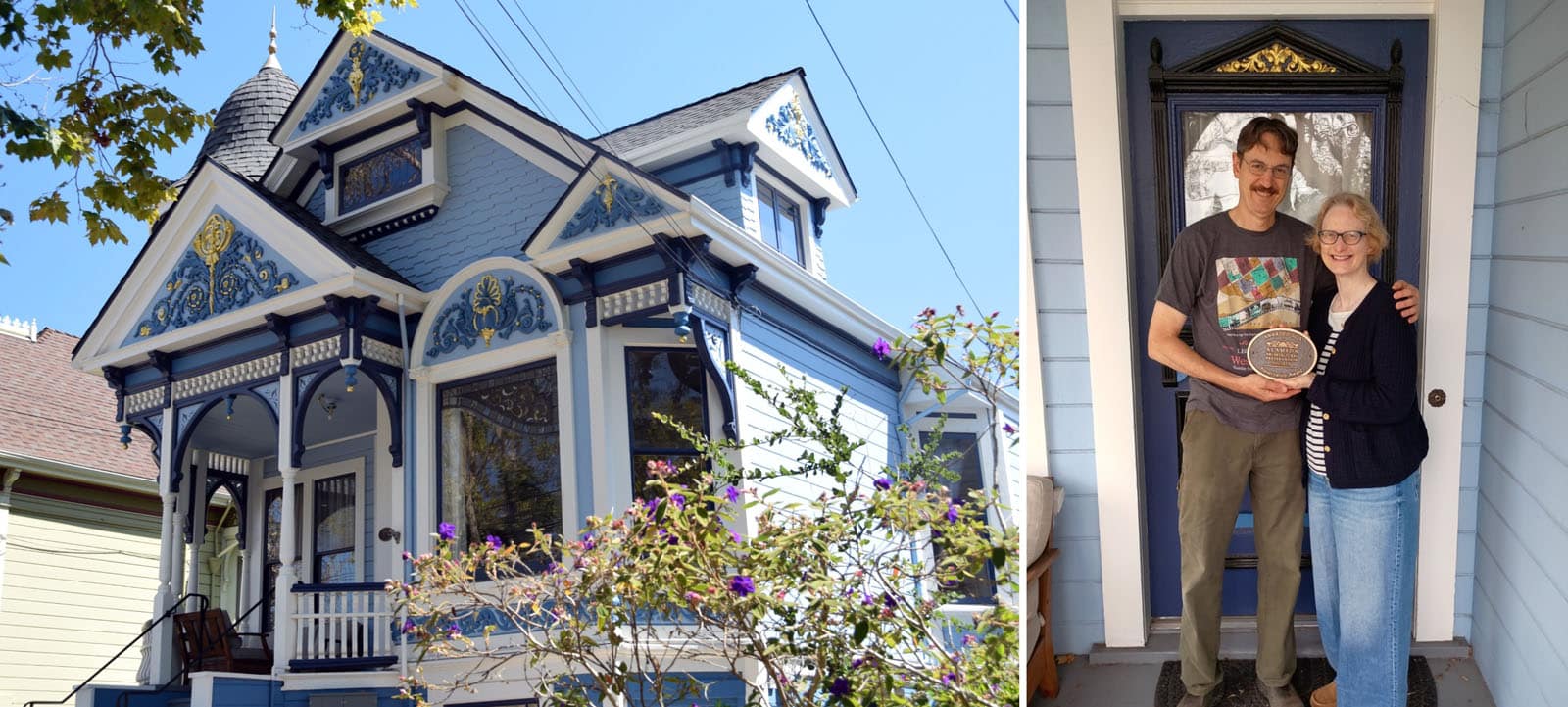
There are more previous owners to explore, and a tragic story involving the son of the Blotckys, who bought 1528 Mozart Street from Emma Gardner in 1907—we’ll get to that later—but we shouldn’t let any more time go by before meeting the current owners of this home, since they’ve done so much to restore the 131-year-old Alameda Treasure to the spectacular condition it’s in today.
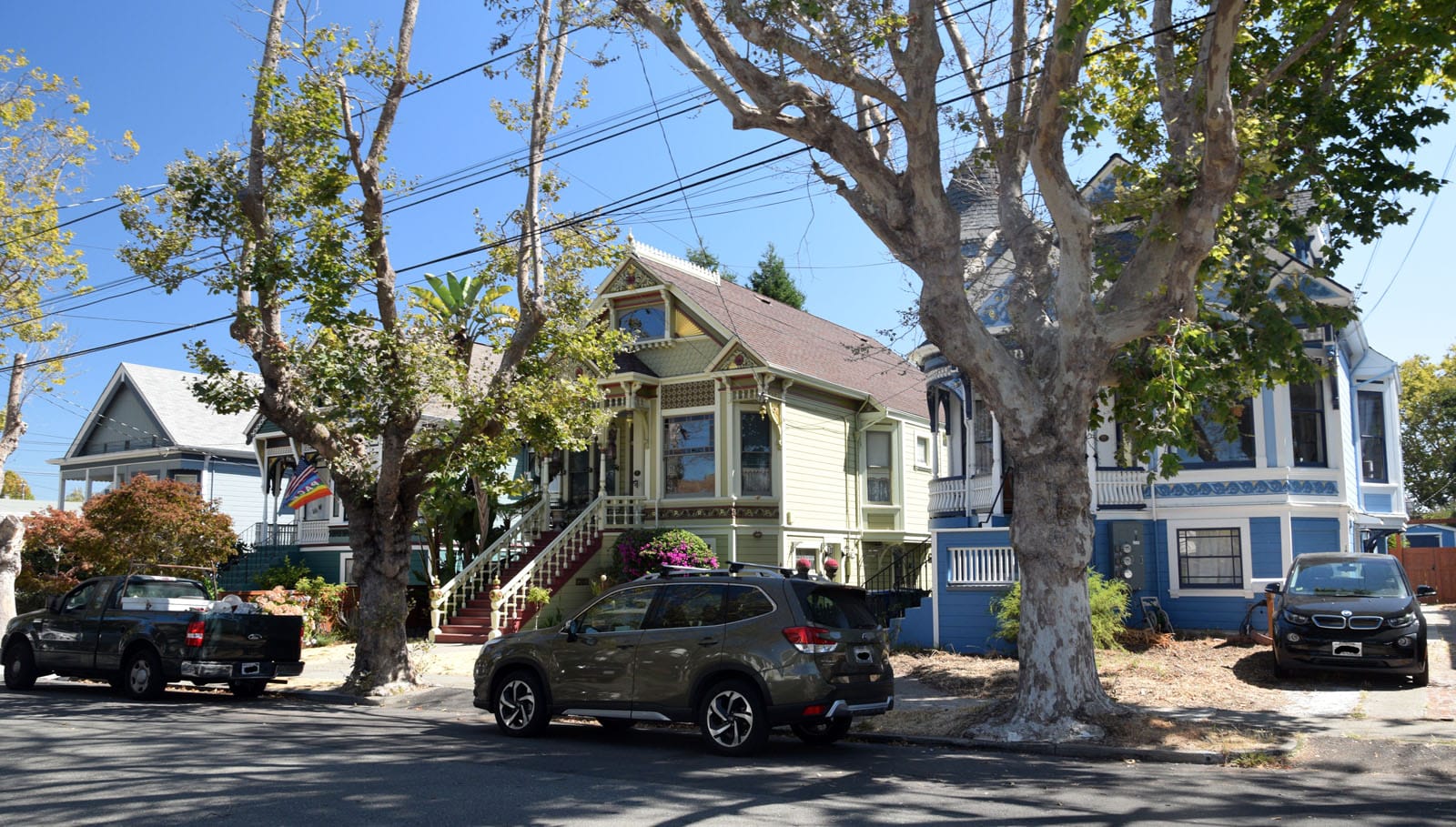
Joyce Boyd and her husband Peter Conn have owned the home at 1528 Mozart Street since 2015, when they purchased it from the Viray family, who had owned it since the mid-1960s. While the home had “good bones,” it was in need of some serious renovation work, and Joyce describes the inspection report as being “thick as a book.” Neither had restored a Victorian-era home before, but they were drawn to the size and historical significance of the home, as well as the beauty of Mozart Street. Although this house would be their “project” for many years to come, Joyce and Peter felt this would be the perfect home for their family of four, which includes their daughter Josie and son Liam.
From duplex to Victorian
The Boyd-Conn family had been living in a duplex in Alameda with another family, but as a family of four they were feeling the need for more space. A connection put them in touch with the owners of 1528 Mozart Street, who were looking to sell their home after 50 years of Viray family ownership. At that point, the Viray parents, who had purchased the house in about 1965, had passed on, and it was the grown children who were still living in the house in its three units (main upstairs level, and two lower apartments). After moving in, the Boyd-Conn family did indeed have more space, but they also had a lot more items on their to-do list.
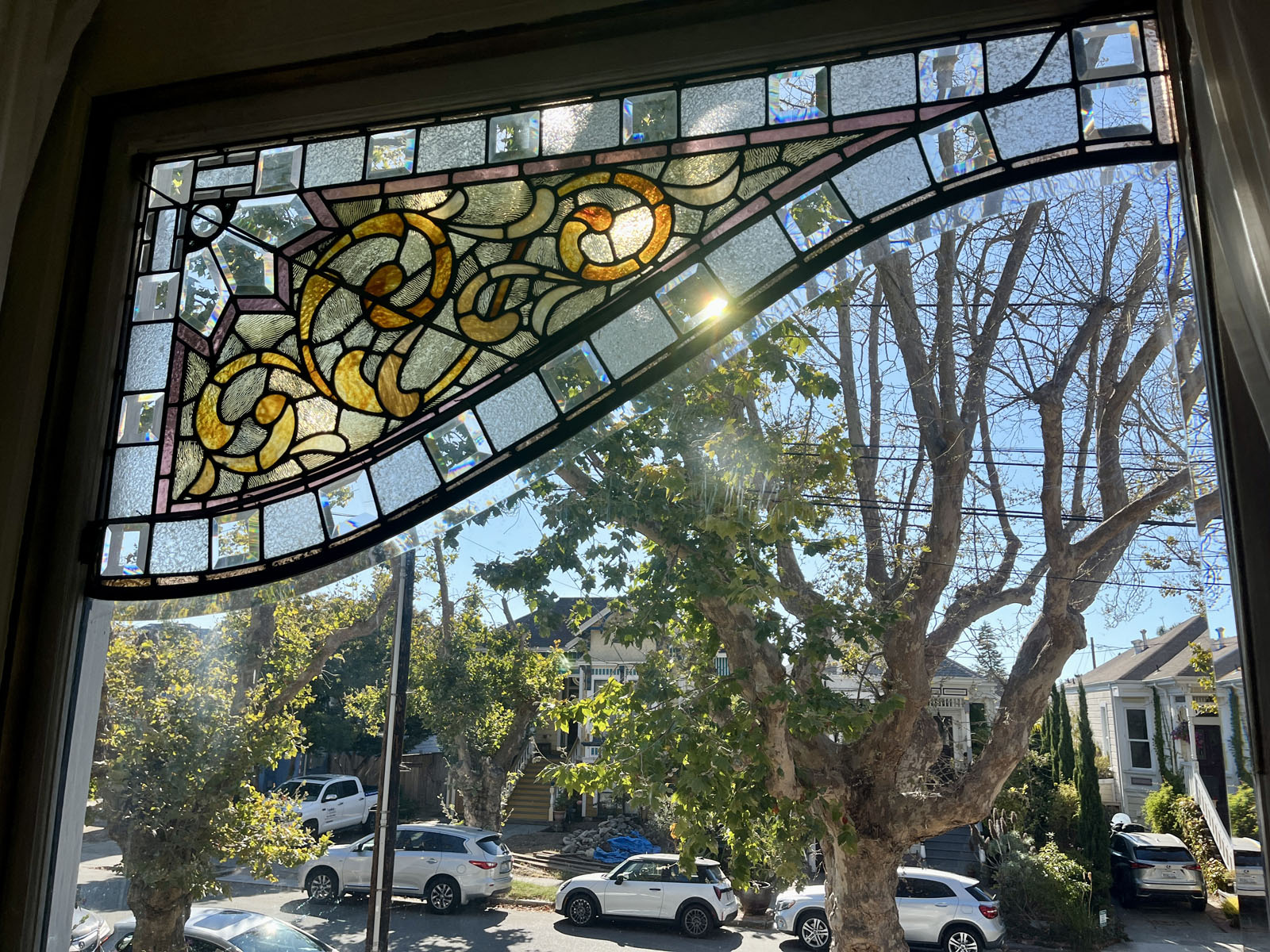
In an upcoming article, we’ll explore the many renovations and repairs that the family took on, as they started on the long and expensive journey of restoring this home to its former glory. In many ways, when a restoration is done right, it makes a historic home actually far better than it was originally. Not only do you get all of the original beauty, detail, and quality craftsmanship, but you also get today’s safer and more efficient systems and utilities such as foundations, windows, roofing, electrical, and heating. A well-restored Victorian-era home can be the best of both worlds.
Up next
We’ll soon be learning about some of the previous owners and occupants of 1528 Mozart Street, which had a variety of residents between 1909 and 1965 when the Viray family purchased it. One of those early residents was 12-year-old Benjamin Blotcky, the “boy who refused to eat,” and we’ll be exploring his story too.
We’ll also be taking a look at the many renovations that have taken place at this home over the past 10 years, along with the skilled tradespeople and artists who have done this work. There is also the story of a vintage 1920s photograph of 1528 Mozart Street with an ice wagon from the High Street Ice Company parked in front. This photograph served as a premonition that Joyce Boyd would one day own this home, decades before she even knew about the house. In a further twist, this same photograph has a connection to my own family, which makes my working on this story all the more “connecting.”
That’s what I love about these deep dives into our Alameda Treasures. You never know what connections will be made, and how the past and the present will intersect in unexpected ways. The stories and connections are out there—it’s just a matter of digging them up.
Contributing writer Steve Gorman has been a resident of Alameda since 2000, when he fell in love with the history and architecture of this unique town. Contact him via [email protected]. His writing is collected at AlamedaPost.com/Steve-Gorman.
