After exploring downtown Napa last month for our story on the Cedar Gables Inn, the sister-house to Alameda’s Girls Inc. building, my interest in the history of the Napa Valley was piqued enough that I planned another trip north, this time to the famous hot springs resort town of Calistoga. By the way, “Sarafornia” is not a typo in the headline, it’s actually a part of the history, which will be revealed below.
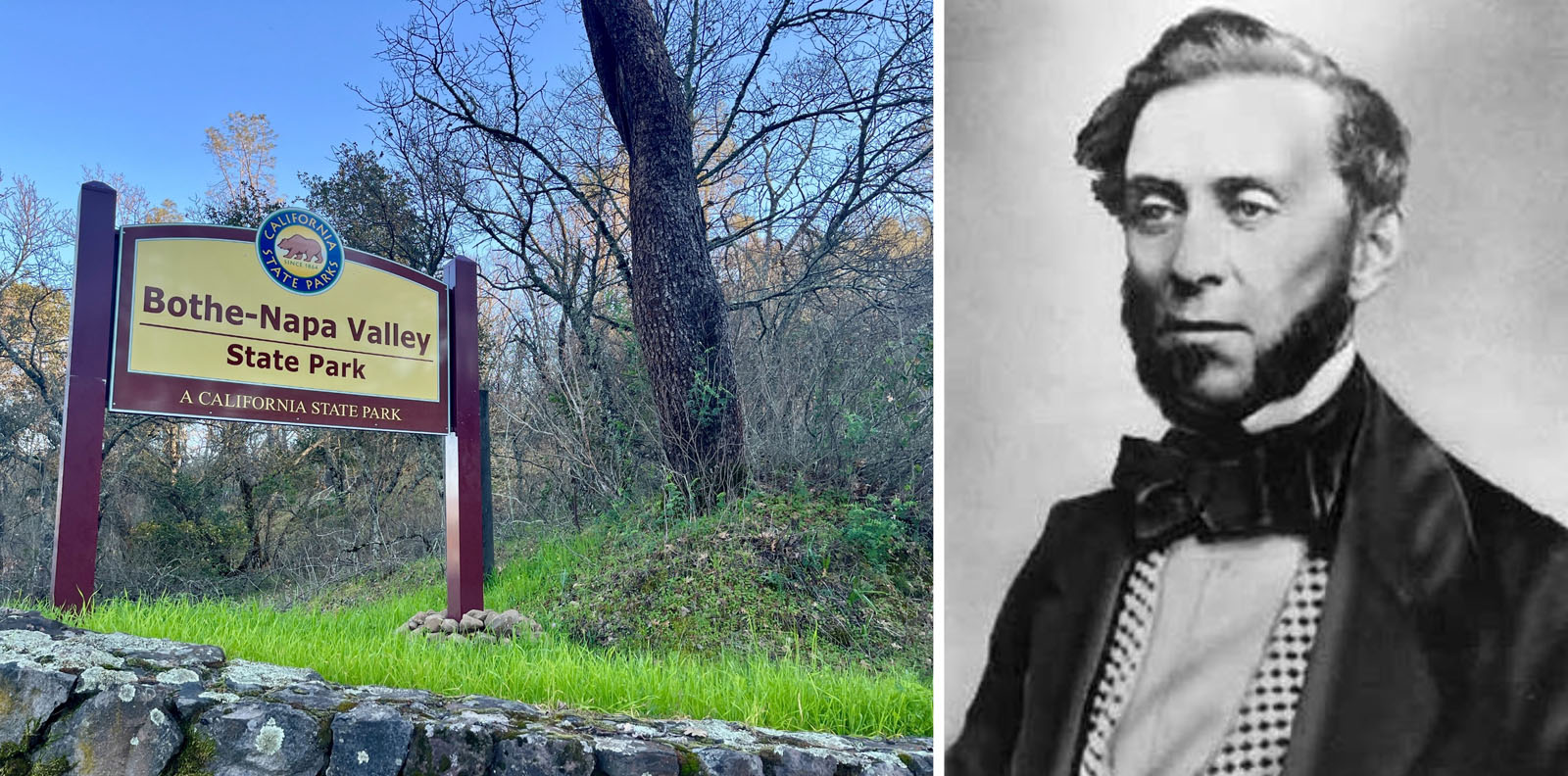
California’s first millionaire
Samuel Brannan (1819-1889) was an American settler, journalist, businessman, and prominent Mormon who had an outsized influence on San Francisco and California history. As a young man growing up in Massachusetts and Ohio, Brannan worked as a printer, and then joined the Mormon Church at age 23. In the 1840s, with the Mormons facing rising persecution in the eastern U.S., Brannan, as the highest-ranking Mormon leader in New York at the time, convinced a group of church members to join him on an expedition to California. He chartered the ship Brooklyn, and set sail for California in January 1846. After a six-month voyage, the ship arrived at Yerba Buena Cove (today’s San Francisco) on July 31, 1846.
Using the printing press he had brought with him on the Brooklyn, Brannan established San Francisco’s first newspaper, The California Star, which debuted on January 9, 1847. He also began to open stores, including one at Sutter’s Fort, in what later became Sacramento. When gold was discovered on the American River in 1848, Brannan’s newspaper was unable to report on it because all of his staff had headed for the hills looking for gold. Some reports also suggest he held back the news until he was able to fully stock his store. Either way, he was able to capitalize on the Gold Rush by buying up all the picks, shovels, and pans he could find, and selling them to would-be gold-seekers at a significant markup. He promoted his store by running up and down the streets of San Francisco shouting, “Gold! Gold on the American River!”
Using his business profits, and possibly the tithings paid to him as an LDS Church representative, Brannan increased his land holdings in California, and even in Hawaii, where he purchased large amounts of land in Honolulu. Although there were some financial ups and downs along the way, Sam Brannan became California’s first millionaire, and was elected to the California State Senate in 1853, in the new state’s capital of Sacramento.
Sarafornia Dreaming
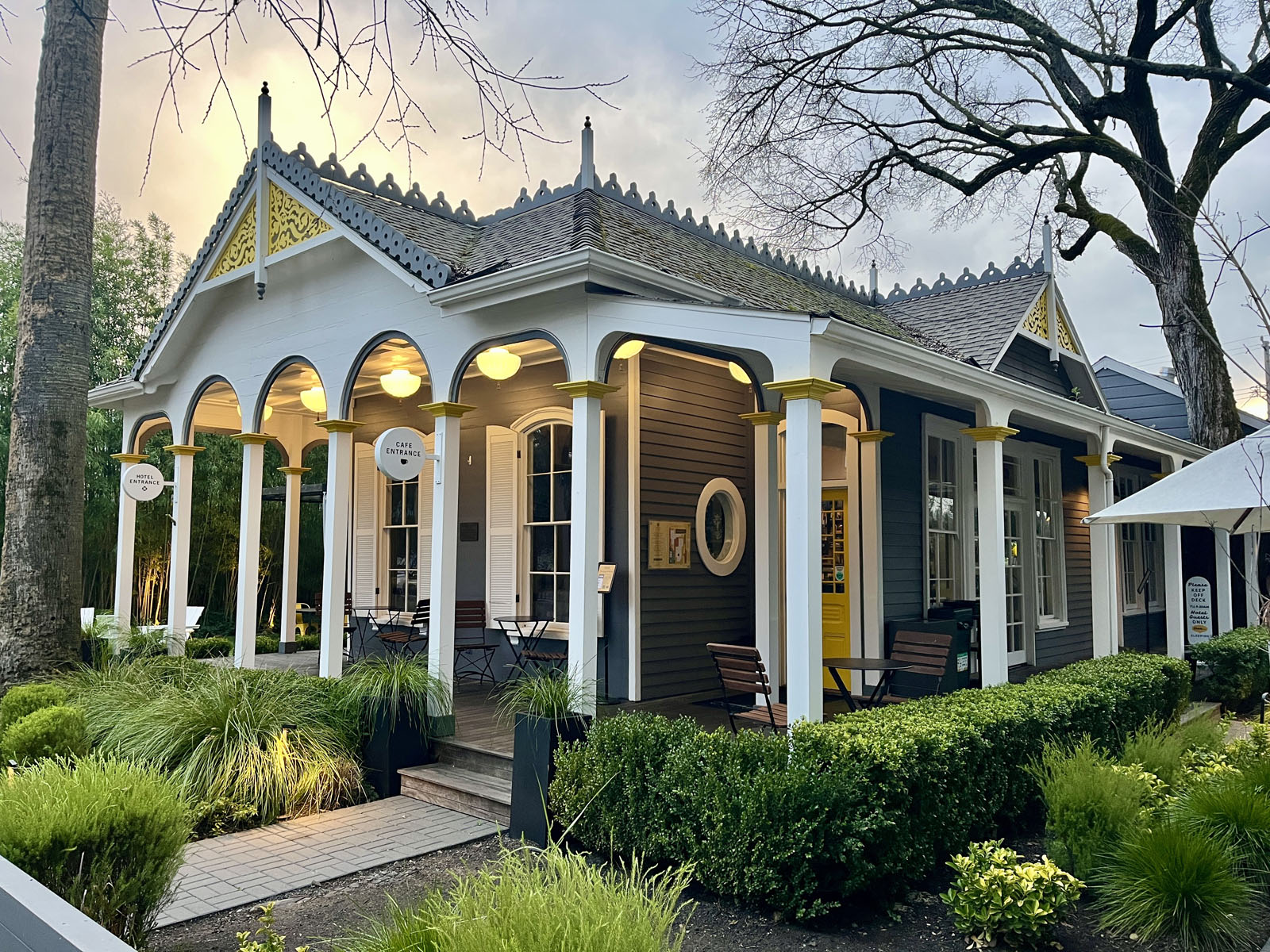
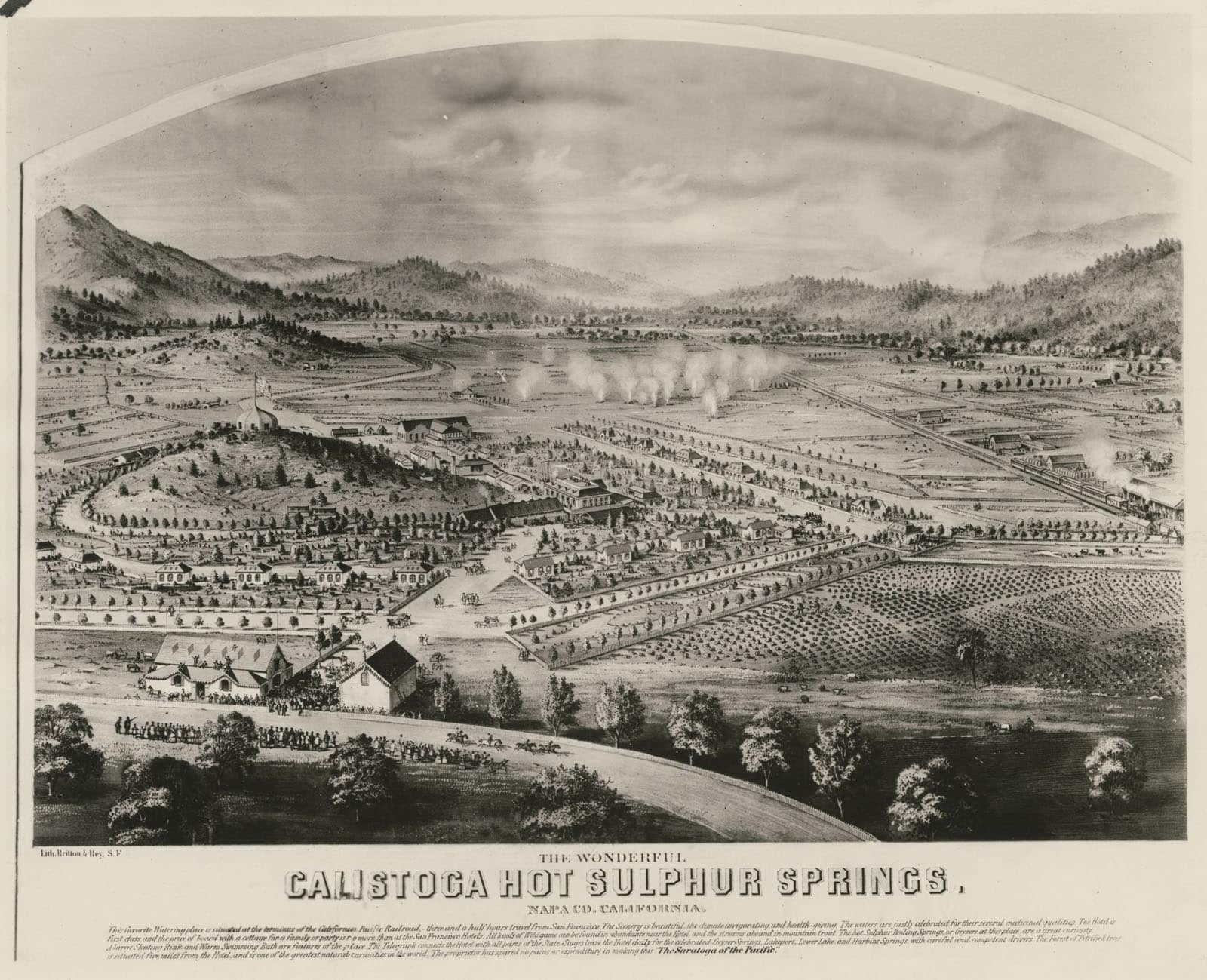
After visiting the hot springs in the upper Napa Valley in the late 1850s, Brannan was so enchanted with the beauty and peace of Napa’s “Upvalley” region that he purchased 2,000 acres of land and planned a hot springs resort. By 1862 his resort had opened, soon featuring 25 guest cottages with gingerbread trim, a hotel, bathhouse, racetrack, stable, distillery, telegraph office, and restaurant, all set among wide avenues, palm trees, and manicured lawns.
The story of how Calistoga got its name is in some dispute, but the most common and colorful account is that Sam Brannan, while standing up to make a speech at an 1866 dinner party, intended to announce that he was going to make his hot springs resort “the Saratoga of California,” after the famous Saratoga Springs in New York state. But with his lips lubricated by brandy, likely from his own distillery, his words came out instead as, “the Calistoga of Sarafornia.” The name stuck, but it wasn’t until 1876 that Calistoga was officially incorporated as a town, and then later as a city on January 6, 1886. The place had previously been called Hot Springs by the few Americans who were around, and Agua Caliente by the Spaniards and Indians. Long before the name Calistoga was ever uttered, though, the native people known as the Ashochimi called this place Nilektsonoma, which means “the Chicken Hawk Place.”
Railroad arrives
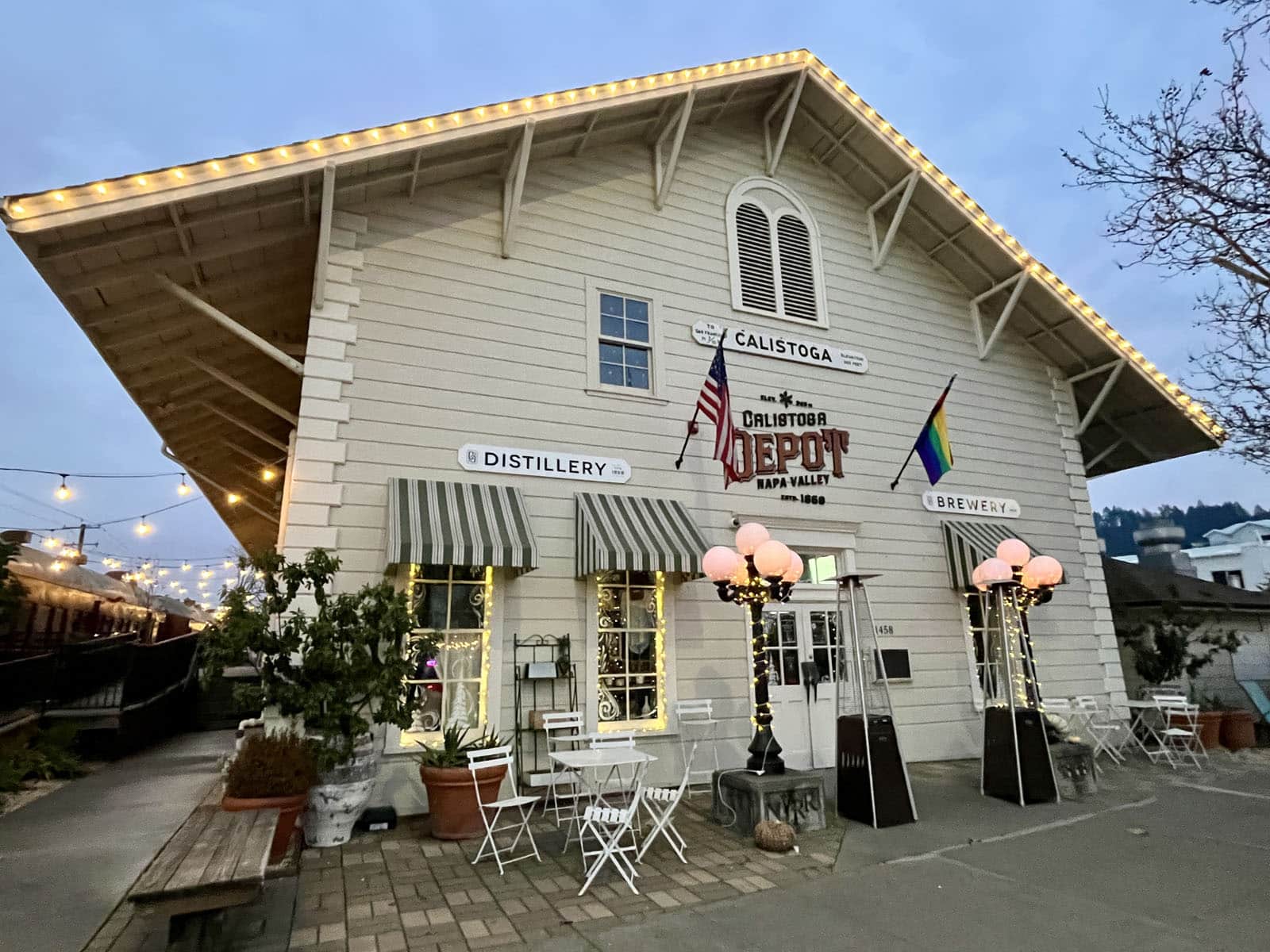
Despite the beauty and grandeur of Brannan’s resort, its remote location proved challenging in terms of enticing enough patronage to support his costly venture. Initially Brannan brought visitors to his hot springs via a 24-passenger horse-drawn stagecoach, and then in 1868 he built the Calistoga Rail Depot to serve trains of the Napa Valley Railroad, of which Brannan was a major backer. Passengers were able to disembark from their ferries at Vallejo for the train journey up to Napa, Oakville, Yountville, St. Helena, and Calistoga. The ferry/train route from San Francisco to Calistoga took up to five hours, but the reward was a stay at the luxurious Brannan’s Hot Springs at Calistoga, the “Saratoga of California,” or as Brannan would put it, the “Calistoga of Sarafornia.”
Bothe-Napa Valley State Park
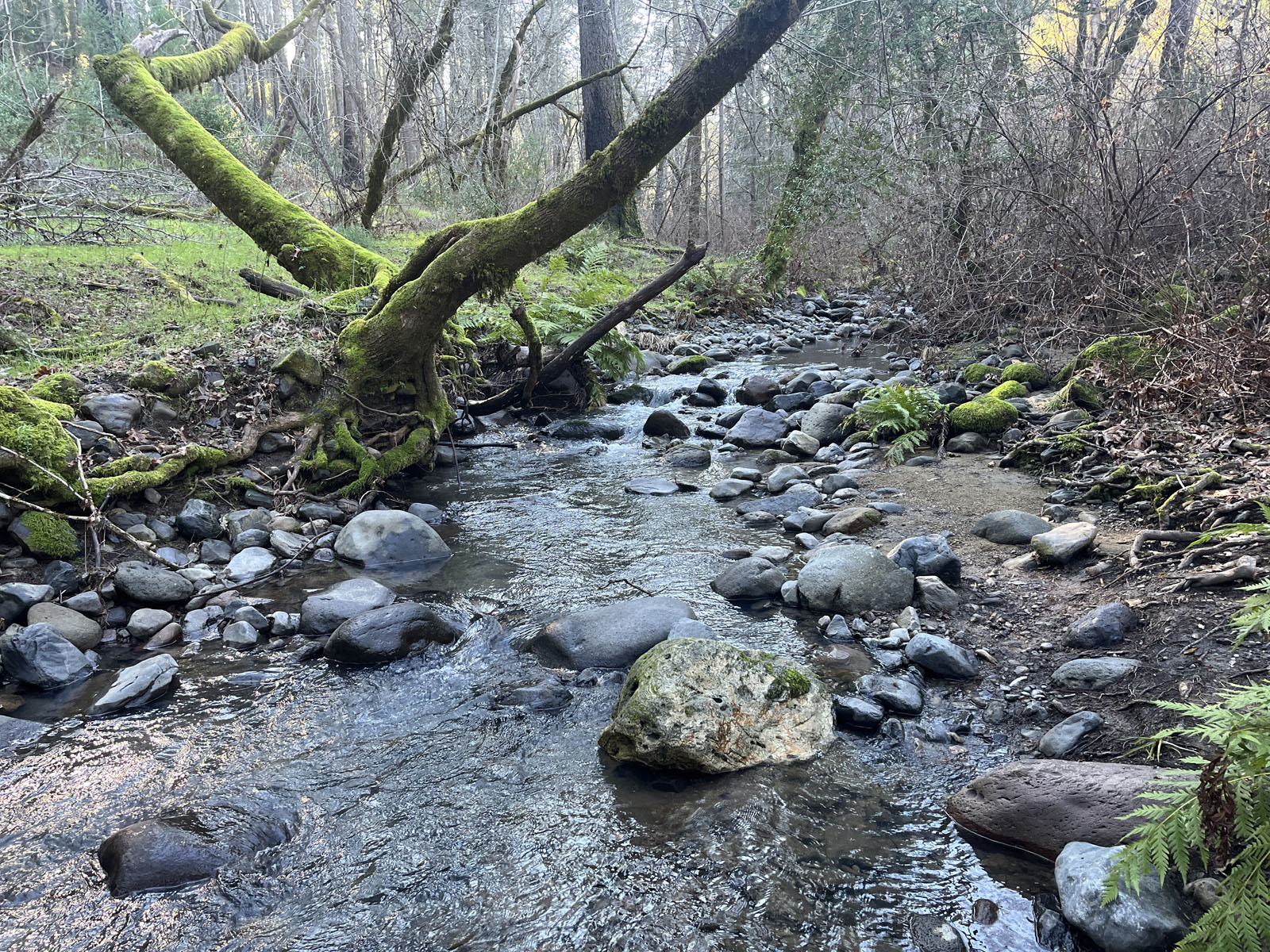
Our home base on this trip to Calistoga was Bothe-Napa Valley State Park, just five miles south of the downtown area. In this forested and hilly park along the banks of Ritchey Creek, we had the campground mostly to ourselves on a midweek camping trip in January.
The park brochure describes the original inhabitants of this area as the Koliholmanok people, who lived here for thousands of years and numbered about 2,000 before the Europeans came to Alta California. The Spanish settlers called these people guapo for their bravery, daring, and good looks, and the Native People eventually became known as the Wappo. Mexican land grantees and gold seekers upset the Wappo way of life in the early 19th century, and diseases such as smallpox devastated their population.
Early pioneers
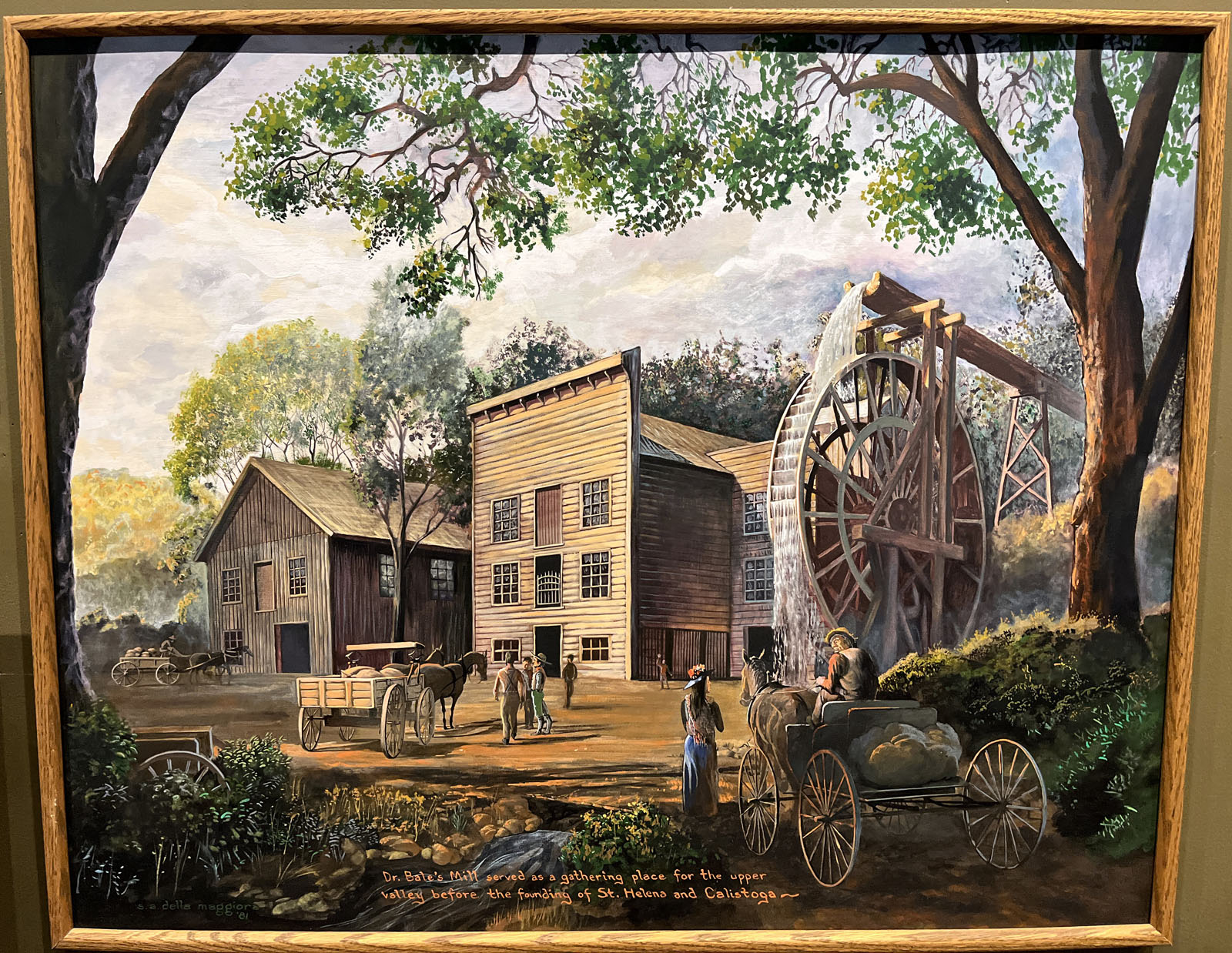
Dr. Edward T. Bale, an Englishman who came to California in the 1830s, married into the prominent family of General Mariano Vallejo in 1839, when he wed Vallejo’s niece Maria Soberanes. General Vallejo appointed Bale surgeon-in-chief of the Northern Mexican army in 1840, and Bale applied for Mexican citizenship. In 1841 Governor Juan Alvarado granted Bale over 17,000 acres of land in the upper Napa Valley, encompassing today’s Calistoga and St. Helena. Bale built an adobe home in what is now St. Helena, and, in 1846, built a large grist mill in what is now Bothe-Napa Valley State Park.
Bale’s grist mill became an essential part of the community, as locals brought their wheat, corn, oats and barley to the mill for grinding into flour. Though his mill was a success, he was caught up in the “gold fever” of 1848 and headed up to the hills to seek even greater fortune. He returned ill with a real fever the following year, and died in October of 1849 at just 39 years old. His young wife Maria was left with six children, along with debts, liens and mortgages.
Grist for the mill
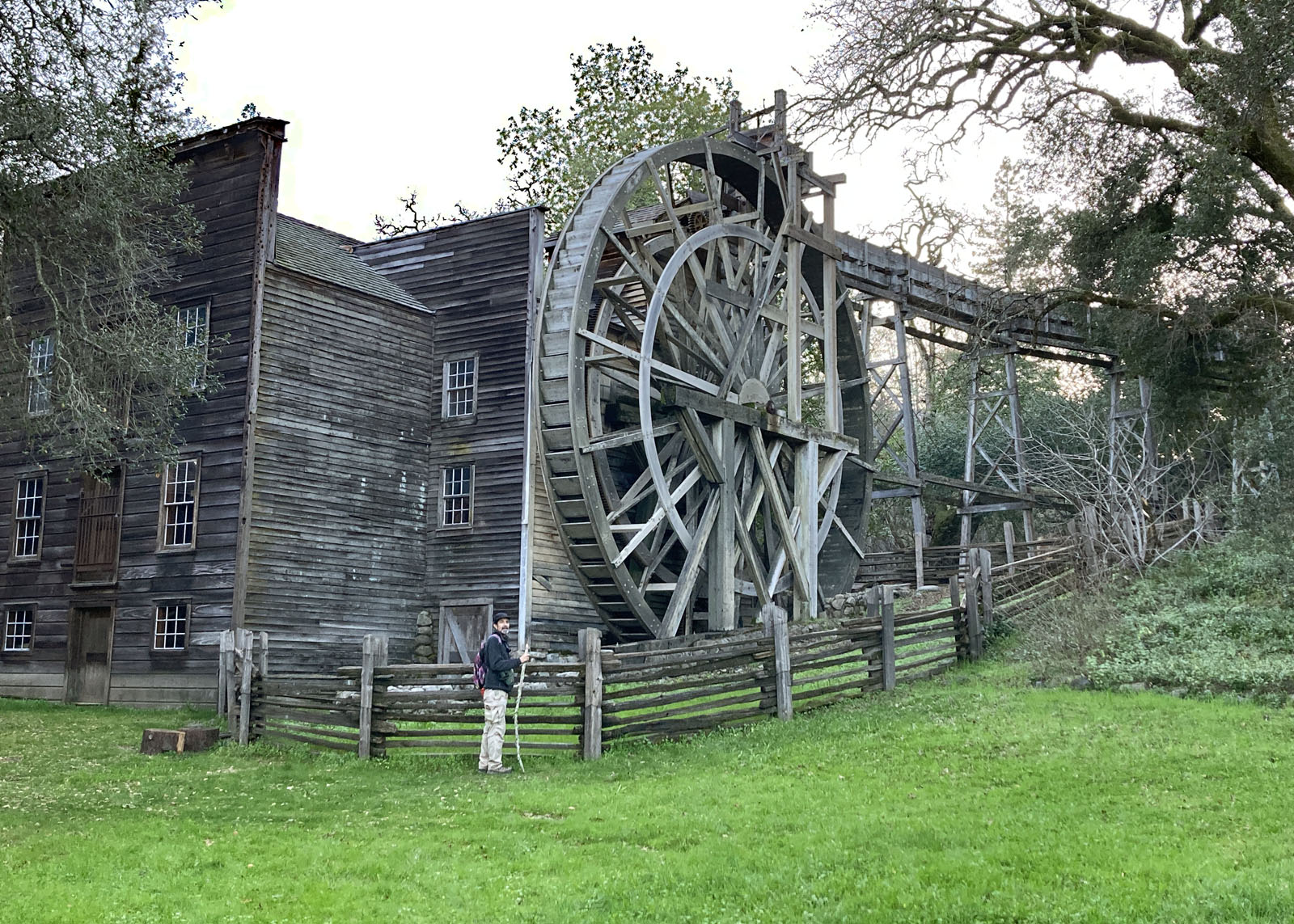
By 1850, Bale’s 27-year-old wife Maria Soberanes Bale had only about 1,550 acres of land left, out of the original 17,000 acres granted to her husband less than a decade earlier. She hired Leonard Lillie to expand the grist mill, installing the larger 36-foot waterwheel still in use today. Maria managed to pay off her husband’s debts, and hold on to portions of her land as bequests to her children. She remarried, and the mill was later sold by her daughter Isadora Bruck in 1860. A succession of owners then operated the mill, along the way installing a steam engine to power it during times of drought. The mill was purchased by Reverend Theodore Lyman in 1871, and it continued to operate for decades before it finally ceased operations in 1905 – a victim of newer and more efficient mills, and possibly the availability of ready-made flour in the stores.
The Lyman family donated the mill to the Native Sons of the Golden West in 1923, and in the 1970s the California State Parks acquired the property and began a major restoration project. The historic mill was restored to operating condition and milled grain once again in 1988. This important and precious piece of early Napa Valley history is open on weekends and Monday holidays, with the last tour taking place at 3 p.m.
From riches to rags
Financial advisors often say that getting divorced can have more of a negative impact on your current and future financial well-being than almost any other event in your life. Of course, sometimes it’s necessary and unavoidable, and can lead to a happier life in the end. In the case of Sam Brannan though, he never recovered from his divorce.
In 1870, Brannan’s wife, Anna Eliza Corwin, filed for divorce. There was talk of philandering, and they had grown apart as Eliza lived in Europe for a time while Brannan stayed in California. A judge ruled that Eliza was entitled to half of their holdings in cash, and since the majority of Brannan’s holdings were in real estate, he had to liquidate the properties to pay the divorce settlement. By 1875, Brannan had sold his beloved hot springs resort, become a brewer, developed an alcohol problem, and moved south to Mexico. He eventually quit alcohol, settled all his debts, and died at age 70 in Escondido, California, on May 5, 1889, without even enough funds to pay for his own funeral. California’s first millionaire—a man who founded Calistoga and Yuba City, led a group of Mormons to California in 1846, and has a street named after him in San Francisco and an island named for him on the Delta—died in relative obscurity.
Up next
When this finishes up in Part 2, we’ll learn about a famous resident of Calistoga in the 1880s, a well-known writer you’ve surely heard of. How he came to spend his honeymoon at an abandoned mining camp in Calistoga ended up being the subject of his 1883 book, Silverado Squatters. We’ll also learn why the historic town of Calistoga has very few chain stores, what it’s like to wander through an old, barely maintained cemetery on a cool, foggy morning, and how a history walking tour printed from the internet was an excellent way to spend an afternoon in the old hot springs town of Calistoga. All of that, plus a connection to the infamous Donner Party, when our story continues.
If you go
Bothe-Napa Valley State Park has 47 tent/RV campsites, 10 yurts, and five cabins with bathrooms/showers, heat, and kitchenettes. There are 10 miles of trails, in 12 different loops, available to hikers. Reserve sites online at California State Parks’ Reserve California.
Bale Grist Mill State Historic Park is open weekends and on some Monday holidays, 10 a.m. to 4 p.m.
Contributing writer Steve Gorman has been a resident of Alameda since 2000, when he fell in love with the history and architecture of this unique town. Contact him via [email protected]. His writing is collected at AlamedaPost.com/Steve-Gorman.
