Alameda, like many places, hosts different bird species during its different seasons. Many of our birds migrate so they can take advantage of the different resources available in different areas. As an example, Alaska and other far Northern areas offer huge numbers of insects in the summer; some of the birds that live in the Bay Area in the winter nest there in the summer and use this high-protein food source to feed their young. In the winter, of course, these Northern areas have few insects or other food resources, so these birds may seek out warmer climes with more food.
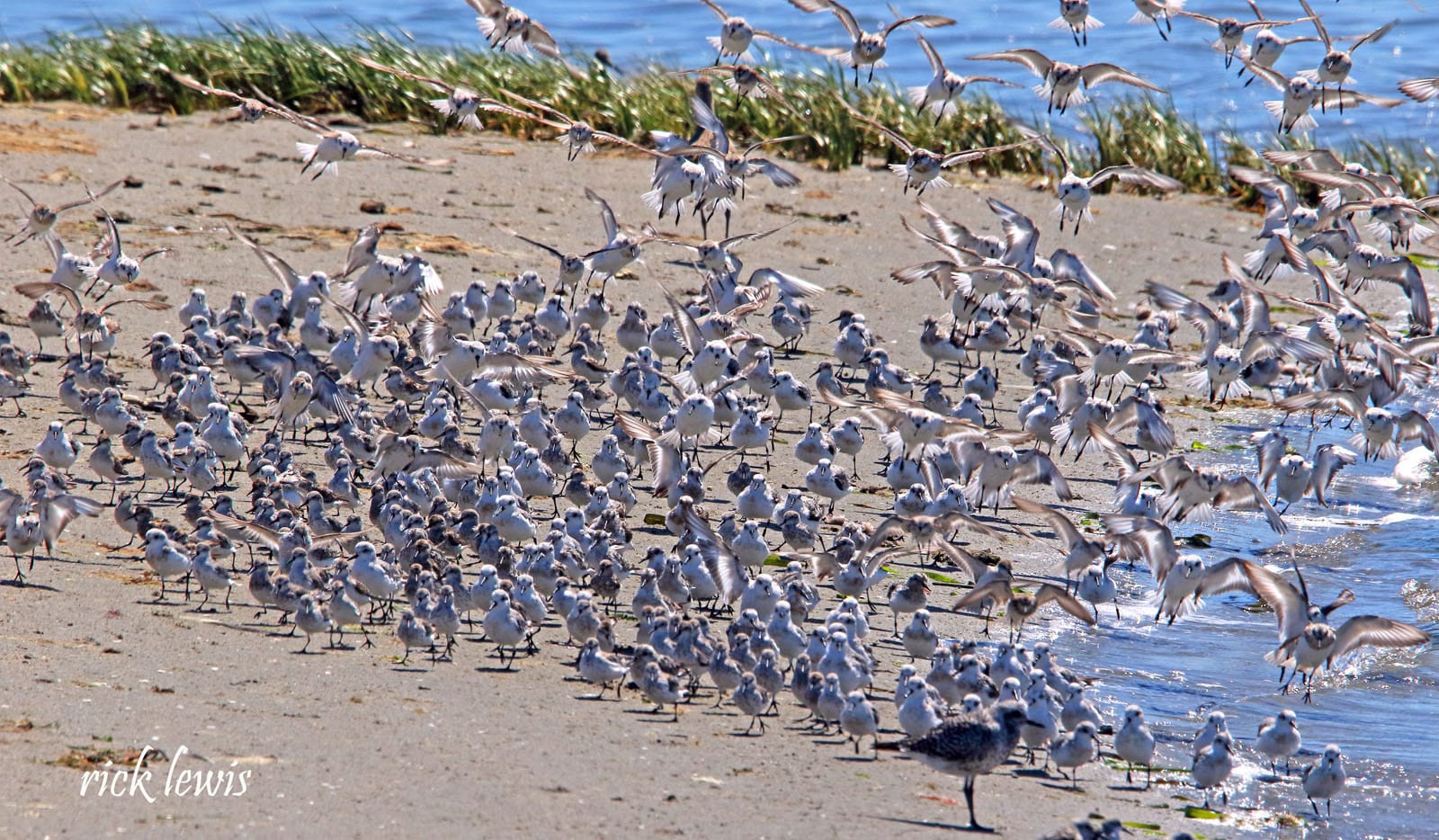
Alameda is fortunate to have the resources that fall-migrating shorebirds need, so we have many more birds and more types of birds on our shoreline and in our coastal waters during fall and winter than in summer! Migrating birds, particularly many shorebirds, define the fall/winter season differently than most humans do. Fall migration is in full swing in early August for many birds, and our beaches are already supporting many new migrant arrivals.
Many types of shorebirds find rest and food here, too many to feature in one post. This article focuses on what birders sometimes call “peeps”— small shorebirds in the Calidris genus. These birds all nest in the far North and migrate south in the fall, staying for much of the winter. These “peeps” have relatively long bodies and medium to long legs; most have a narrow bill and their length ranges from five to almost nine inches long.
Here are Alameda’s peeps:
Least sandpiper (Calidris minutilla)
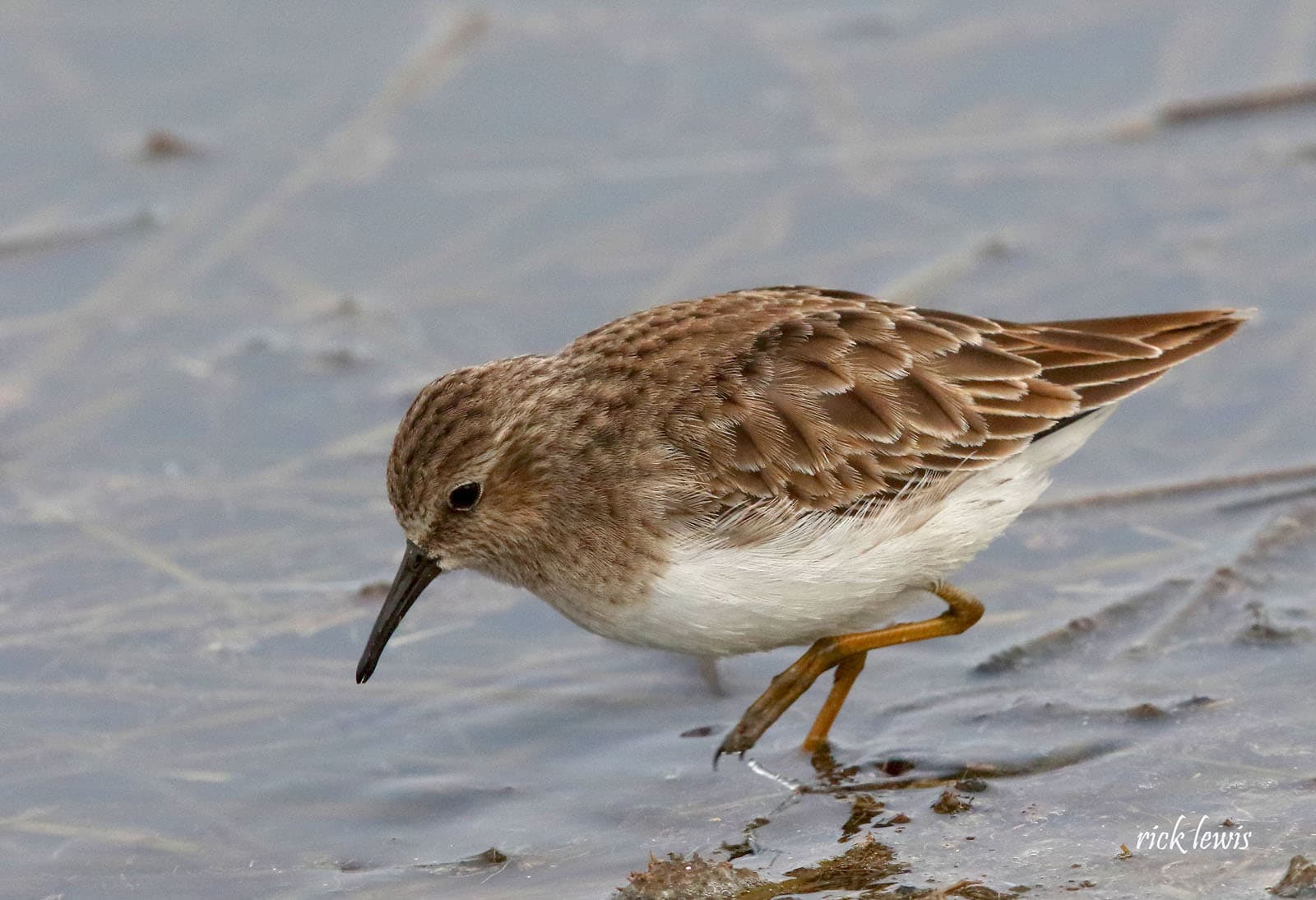
The least sandpiper is the smallest shorebird in the world, measuring between 5.1 and 5.9 inches long. It has a brown back with feathers showing a scalloped pattern; its white below with smudgy, streaky brown on its breast. Its legs are a distinctive yellow, although the color is sometimes obscured by mud or sand. In summer, least sandpipers nest in Alaska and across the northernmost parts of North America.
All our peeps feed by pecking at the surface and/or probing in the damp mud for buried prey. When probing in the mud, the least sandpiper can use the surface tension of the water to transport the prey quickly from the tip of its bill to its mouth. Least sandpipers typically eat insects and other invertebrates. In Alameda, look for them especially at and near Elsie Roemer Bird Sanctuary.
Western sandpiper (Calidris mauri)
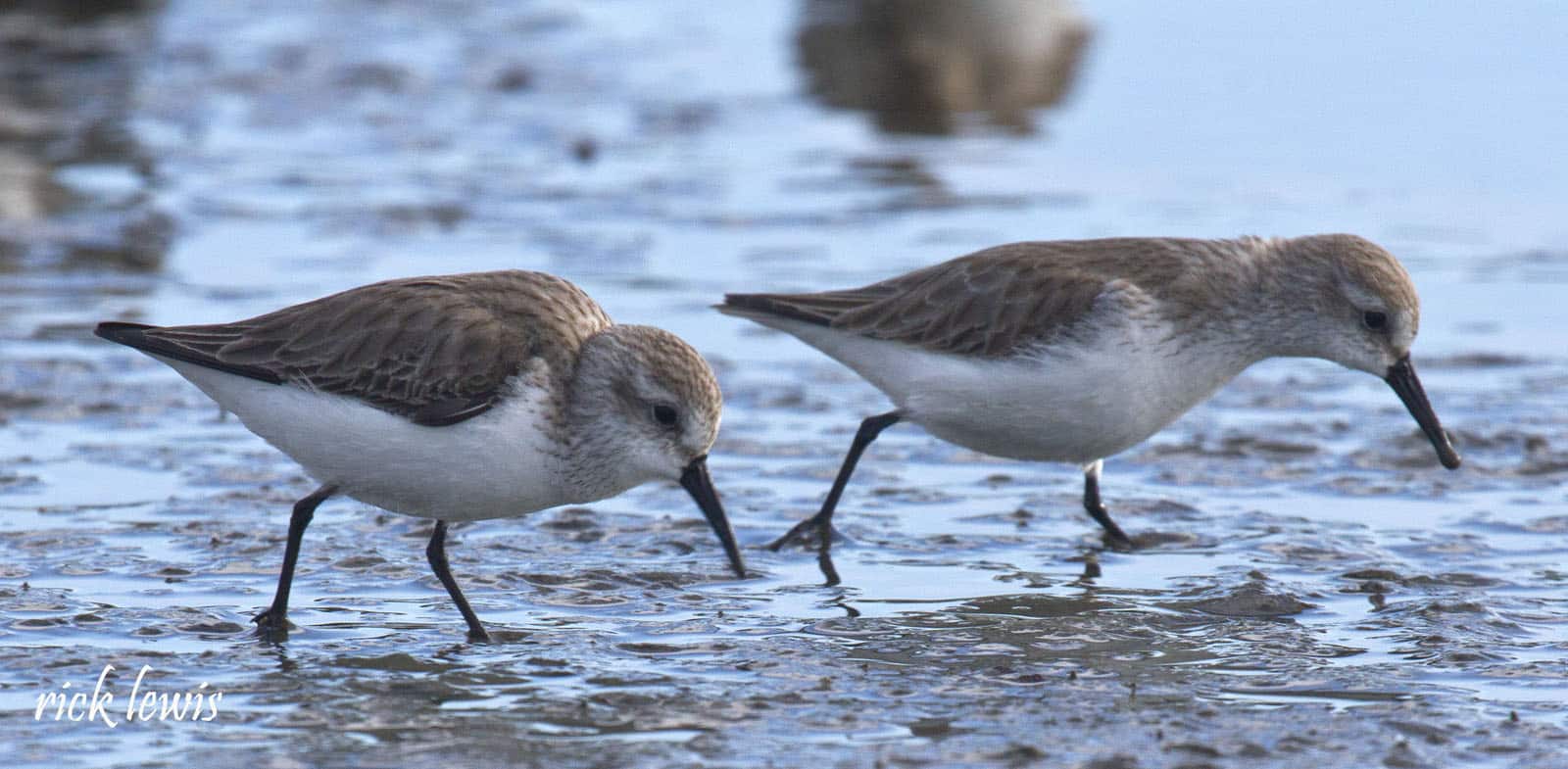
The western sandpiper is a bit larger than the least sandpiper, at 5.5 to 6.7 inches. Its back has the same scalloped feather pattern as the least sandpiper, but its back color is brownish grey. Again, it has white underneath, its breast has little streaking, its legs are black, and its bill appears to be “droopy.” Most western sandpipers spend the summer in the coastal tundra of western Alaska and far-Eastern Siberia.
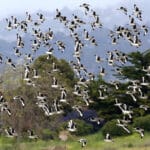
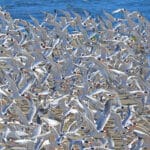
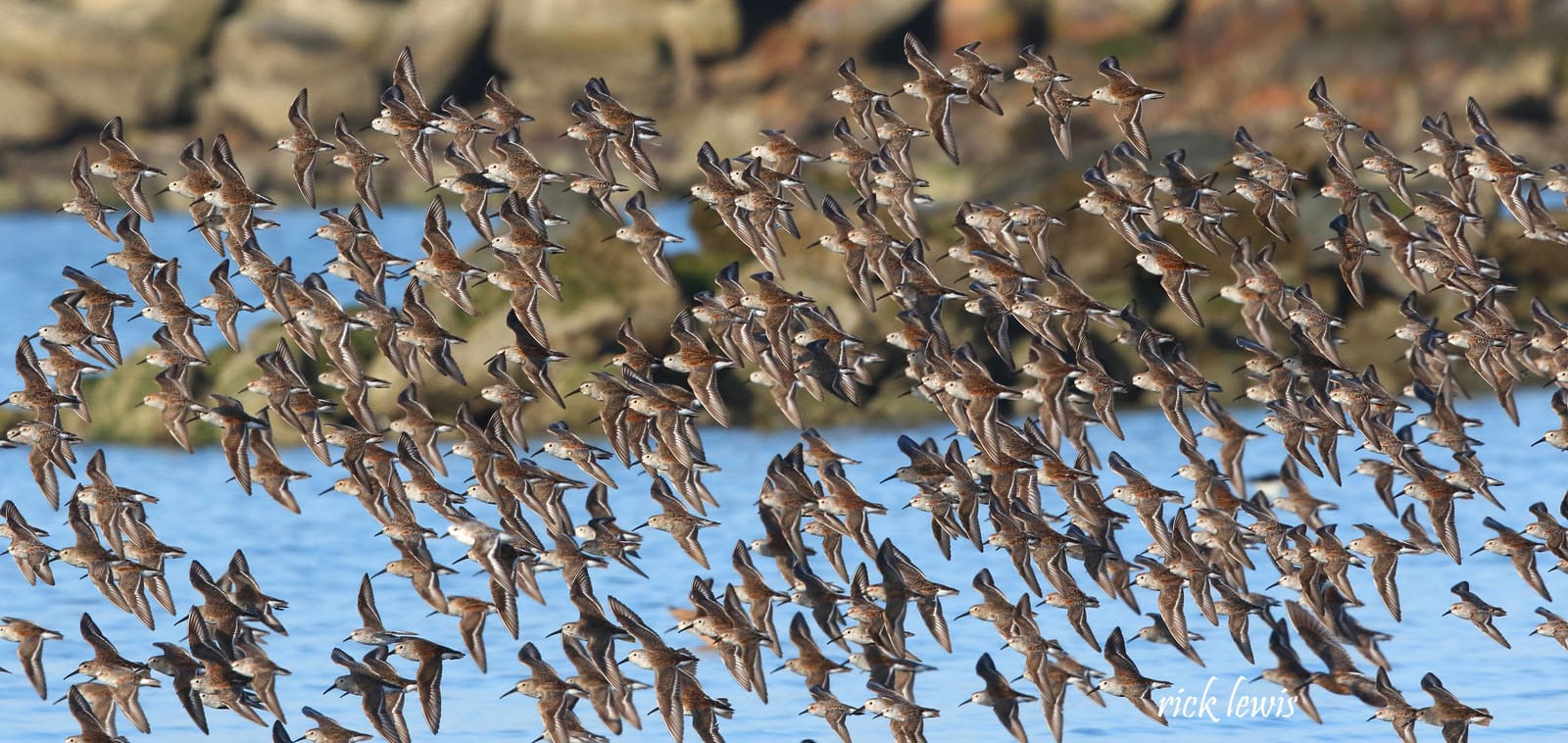
Western sandpipers also feed primarily on invertebrates. A recent finding: western sandpipers and other small shorebirds also graze on biofilm on the surface of the water. This biofilm is made up of algae, microbes, detritus and sediment. Western sandpipers congregate in large flocks. If you see a large flock of small birds flying in twisting patterns with flashing changes of colors, at least some of the birds in that flock will be western sandpipers.
Sanderling (Calidris alba)
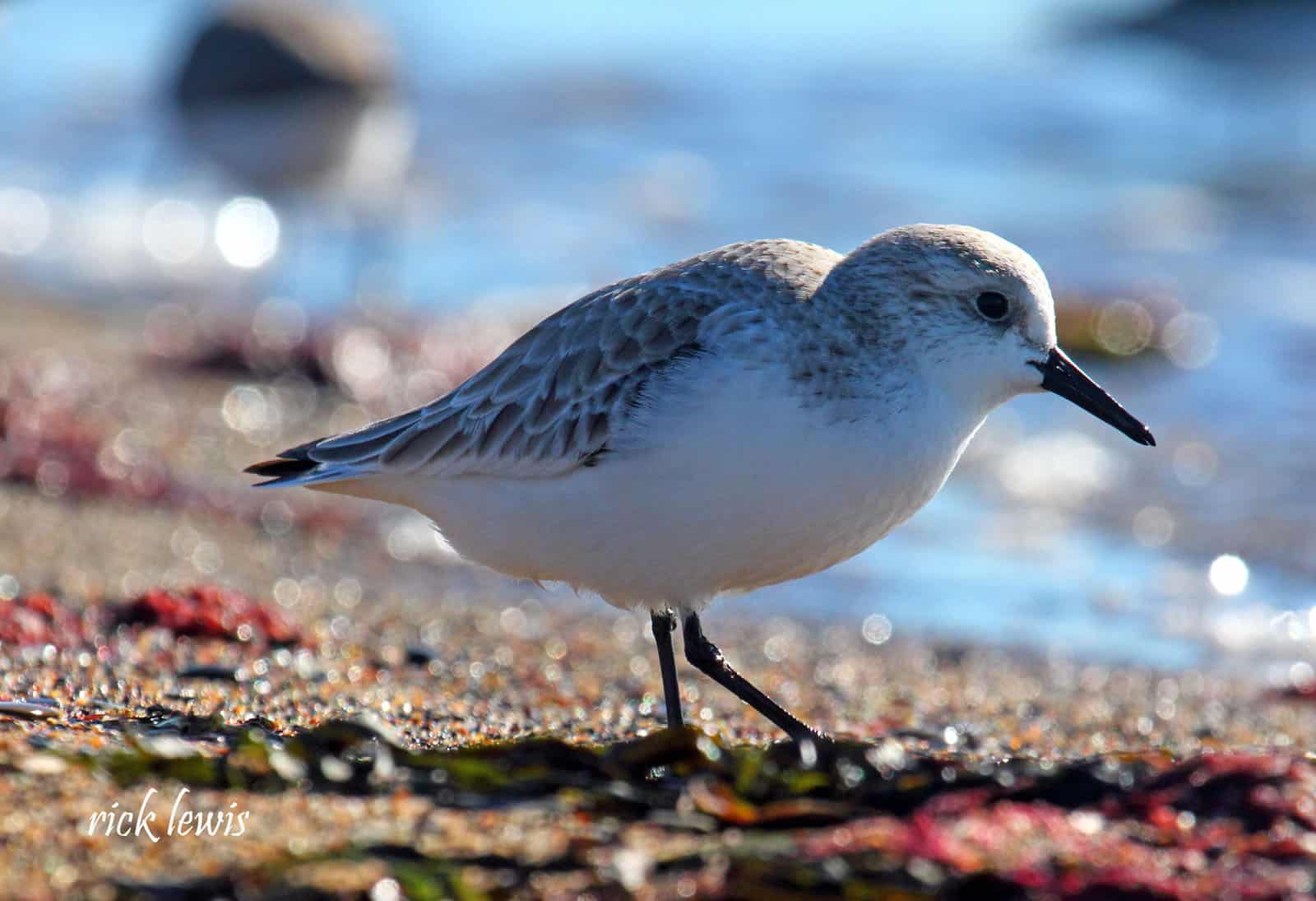
Sanderlings are those little light gray birds that seem to chase the waves. What they’re doing is searching for food in the sand that is exposed when a wave retreats, and then running to escape the incoming water. Their light gray back contrasts with bright white below, a black bill and black legs. The bird sometimes has a dark “shoulder” bar, which eases identification. At 7.1 to 7.9 inches long, it’s bigger than the least and western sandpipers, but still small. Sanderlings feed on invertebrates, which may include small crabs and other crustacean worms and mollusks.
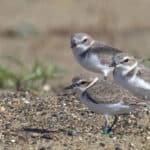
Sanderlings nest in the High Arctic on gravel patches and low-growing, wet tundra. Our sanderlings likely arrived here via the Aleutian Islands and southern Alaska following the Pacific Coast. Sanderlings are cosmopolitan—they can be found throughout almost all temperate and tropical marine beaches.
Dunlin (Calidris alpina)
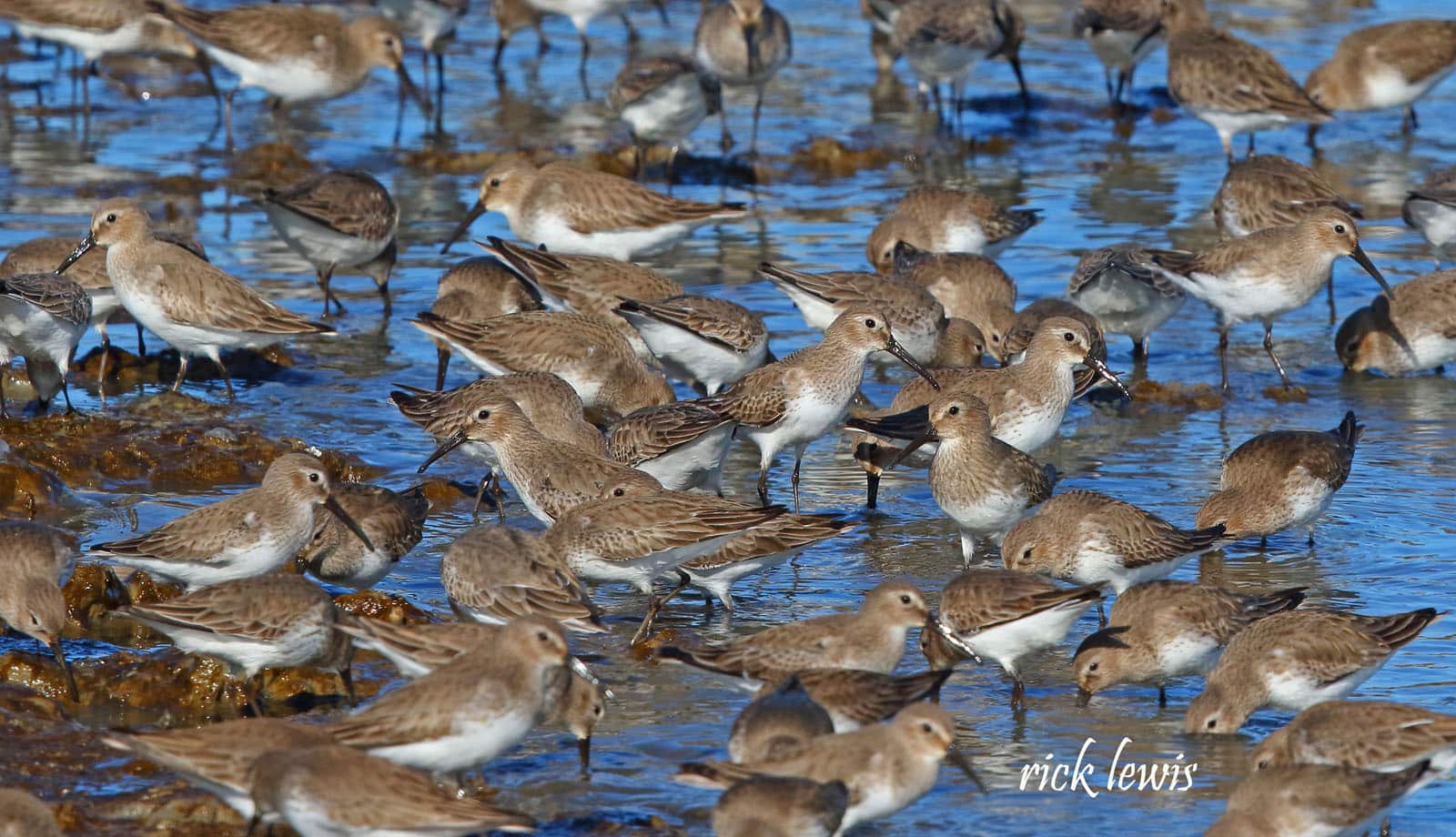
Our first three birds—western sandpipers, least sandpipers, and sanderling—have already arrived in Alameda, though their numbers will increase as we get closer to fall and winter. Dunlins are typically a later arrival. They breed in northern areas throughout the world, including western Alaska and along the west side of Hudson Bay. Dunlins typically are one of the last species to leave their summer location. They resemble western sandpipers with their brownish-gray back, black droopy bill and black legs. Dunlins, however, are larger—6.3 to 8.7 inches—and they have smudgy brownish gray on their breasts. Unlike many other sandpipers, they don’t probe deeply for their food, but feed on invertebrates just below the surface.
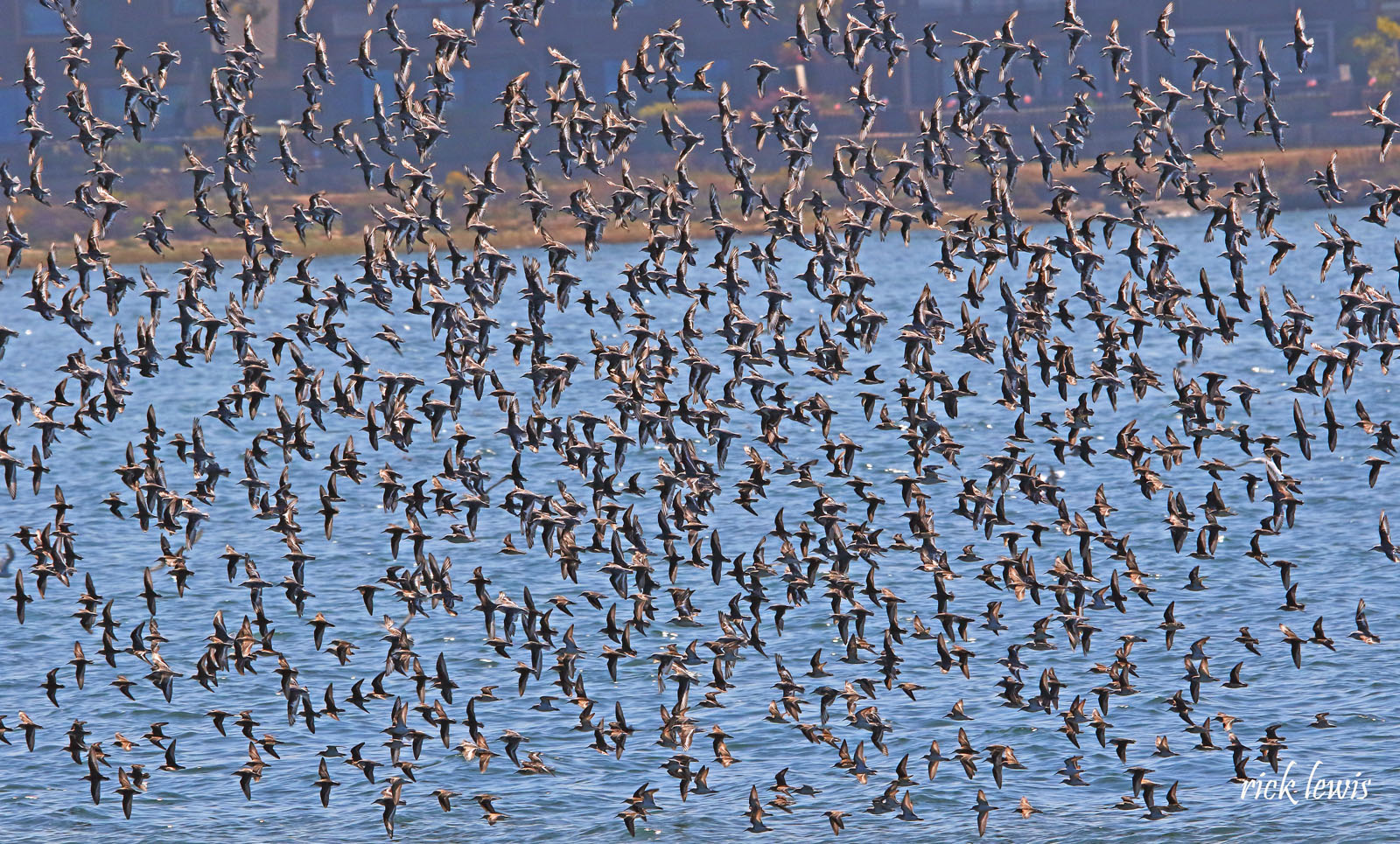
Those beautiful swirling flocks of small shorebirds flashing their colors? Those likely include dunlins as well as western sandpipers.
The four species of peeps all mostly eat the same general type of food—invertebrates. They manage to co-exist in the same area by resource partitioning, which means that the various species divide up available resources. In this case, the bill size of the birds, along with the length of their legs, influence which food they can easily find. The least sandpiper bill measures between 0.67 and 0.74 inches while the dunlin bill is between 1.4 and 1.7 inches. That big dunlin bill can handle much larger invertebrates than the petite least sandpiper bill.
Distinguishing among our peeps can be a challenge, especially when you are new to birding or coming back to it after a while away. For more years than I’d like to admit, I had to relearn the differences between least and western sandpipers every fall when they both return. If you’re interested in birds, it’s worth it to persevere. A great online resource is Cornell Lab’s All About Birds. For in-person, local help, join a Golden Gate Bird Alliance field trip to a Bay shoreline. New trips are announced each month; registration is required and opens on the third Tuesday of the month.
Our fall and winter shorebirds can teach us all kinds of interesting facts and concepts. Stay tuned for a post on the larger sandpipers on our beaches next month.
Linda Carloni is a long-time member of Golden Gate Bird Alliance and its Alameda Conservation Committee, Friends of the Alameda Wildlife Reserve.
This article is part of a series written by Friends of the Alameda Wildlife Reserve (FAWR) members; FAWR is a Conservation Committee of Golden Gate Bird Alliance (GGBA). To find out more about birds and GGBA’s free guided trips visit Golden Gate Bird Alliance online.
