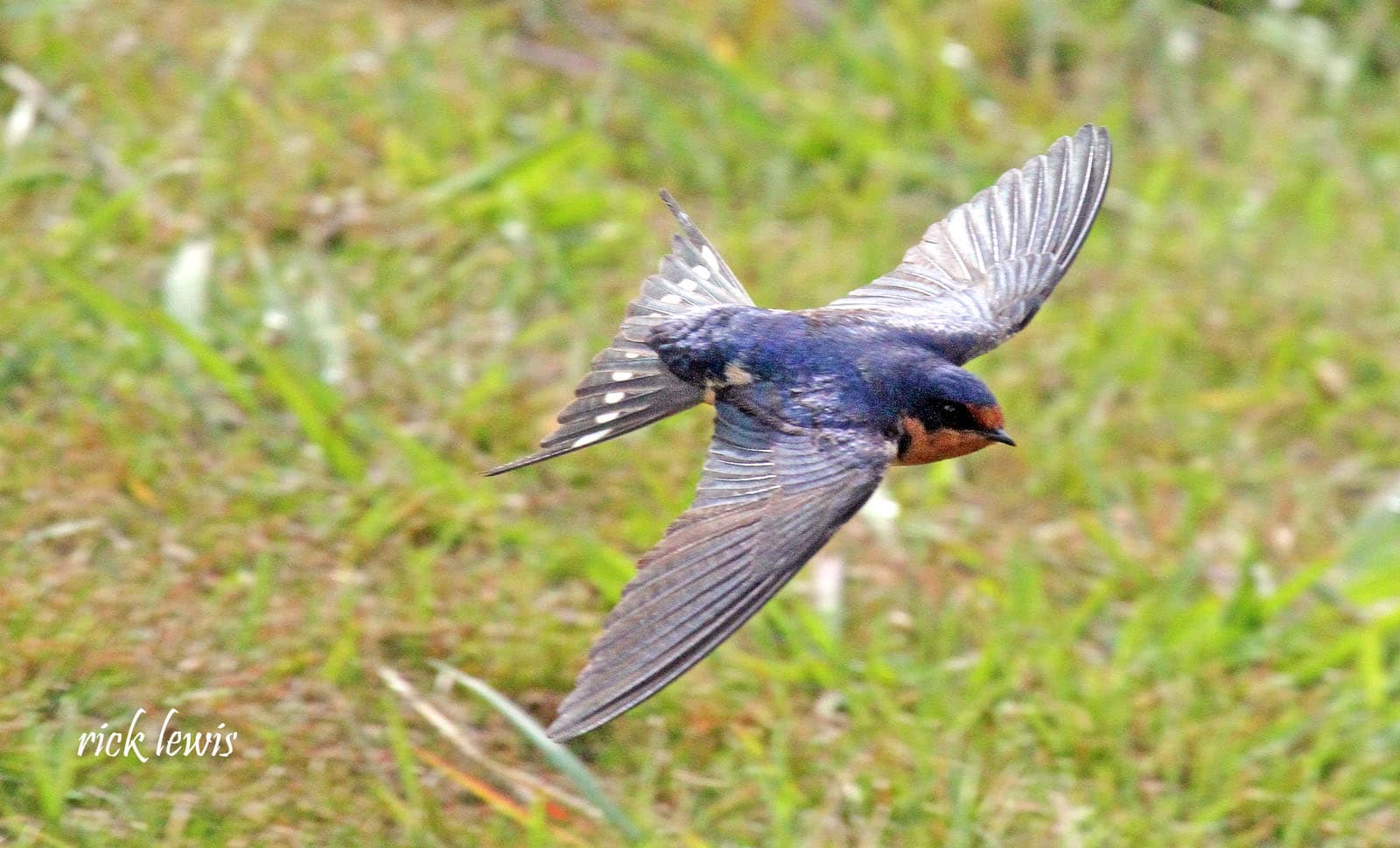
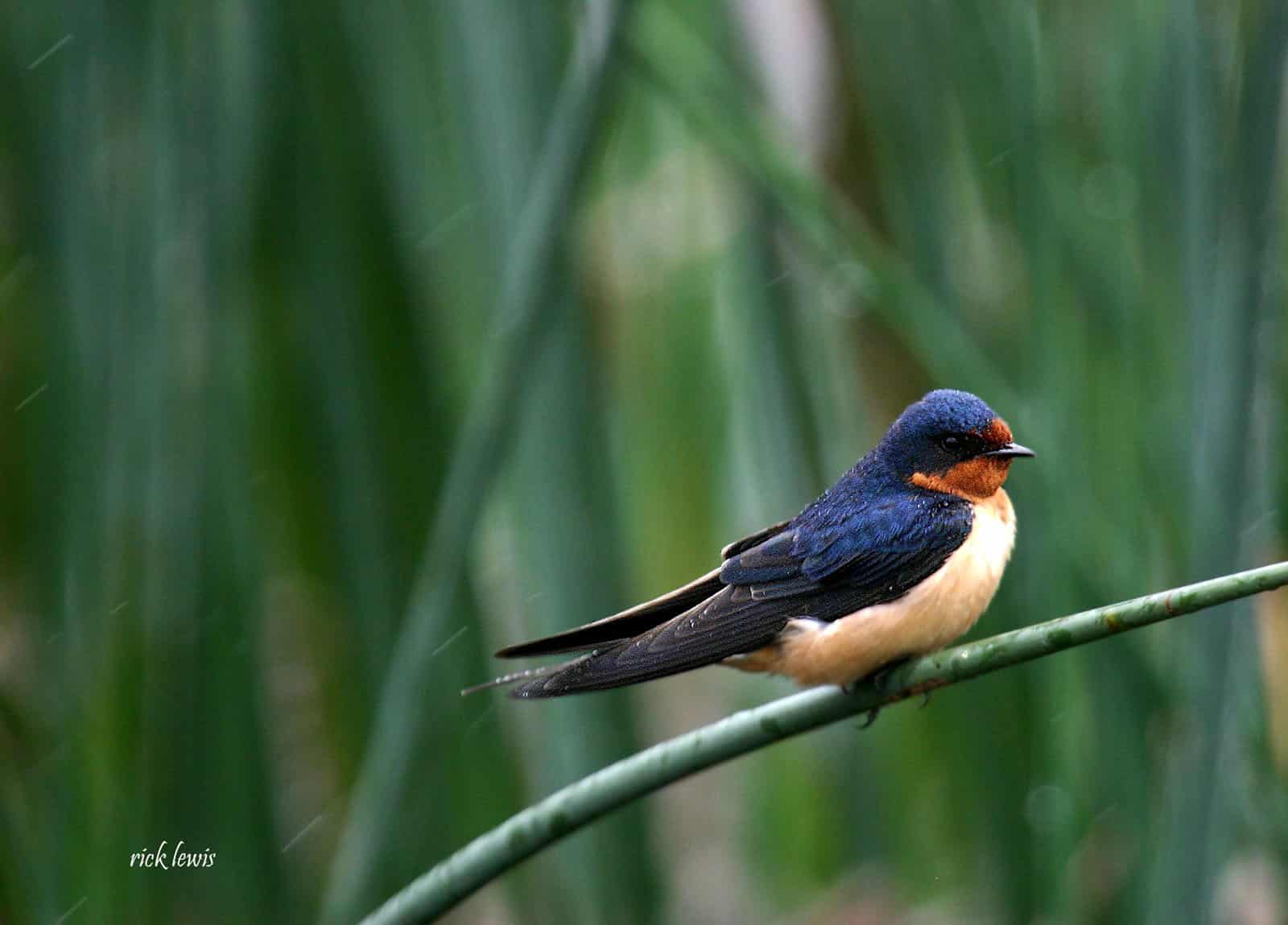
Small dark birds zipping through the air, turning quickly up, down, back, and forth, over water are generally swallows, but which of several species? Shiny dark backs and white or creamy bellies could be present on several species, but forked tails that show when they turn or bank to change direction provide a key clue that they are barn swallows—confirmed by a rust-colored chin.
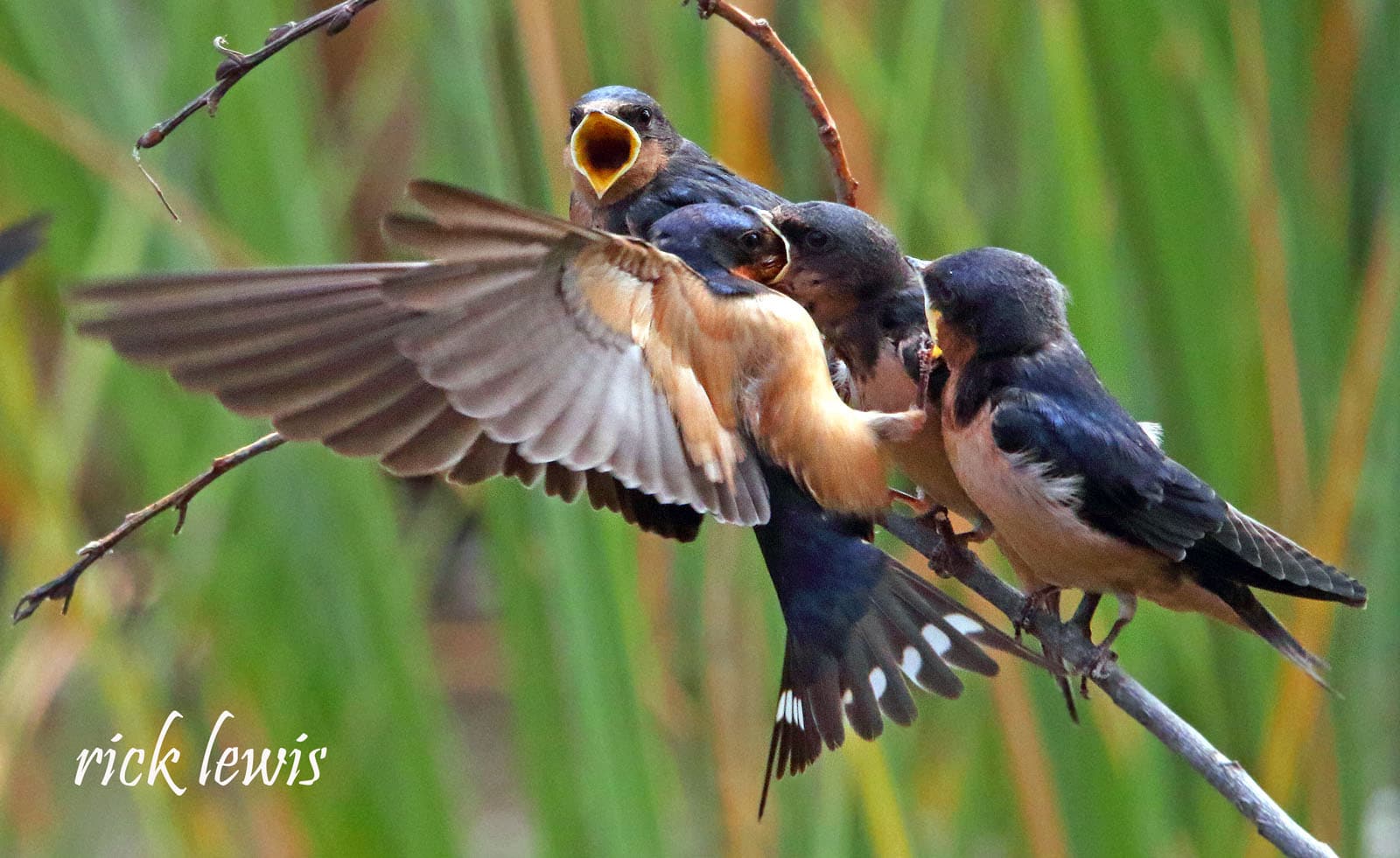
Occasionally you can see white spots near the end of the tail as they fly. Juvenile birds look like less-colorful versions of adults. A friend reports that she learned to identify the swallows with forked tails by the mnemonic, “The pitchfork (forked tail) is in the barn.” Sometimes I see them perched on the railing of a bridge. More often, I see them heading under the eaves of buildings. In spring, I see them at the edge of a river or in mudflats as a tide recedes scooping up mud.
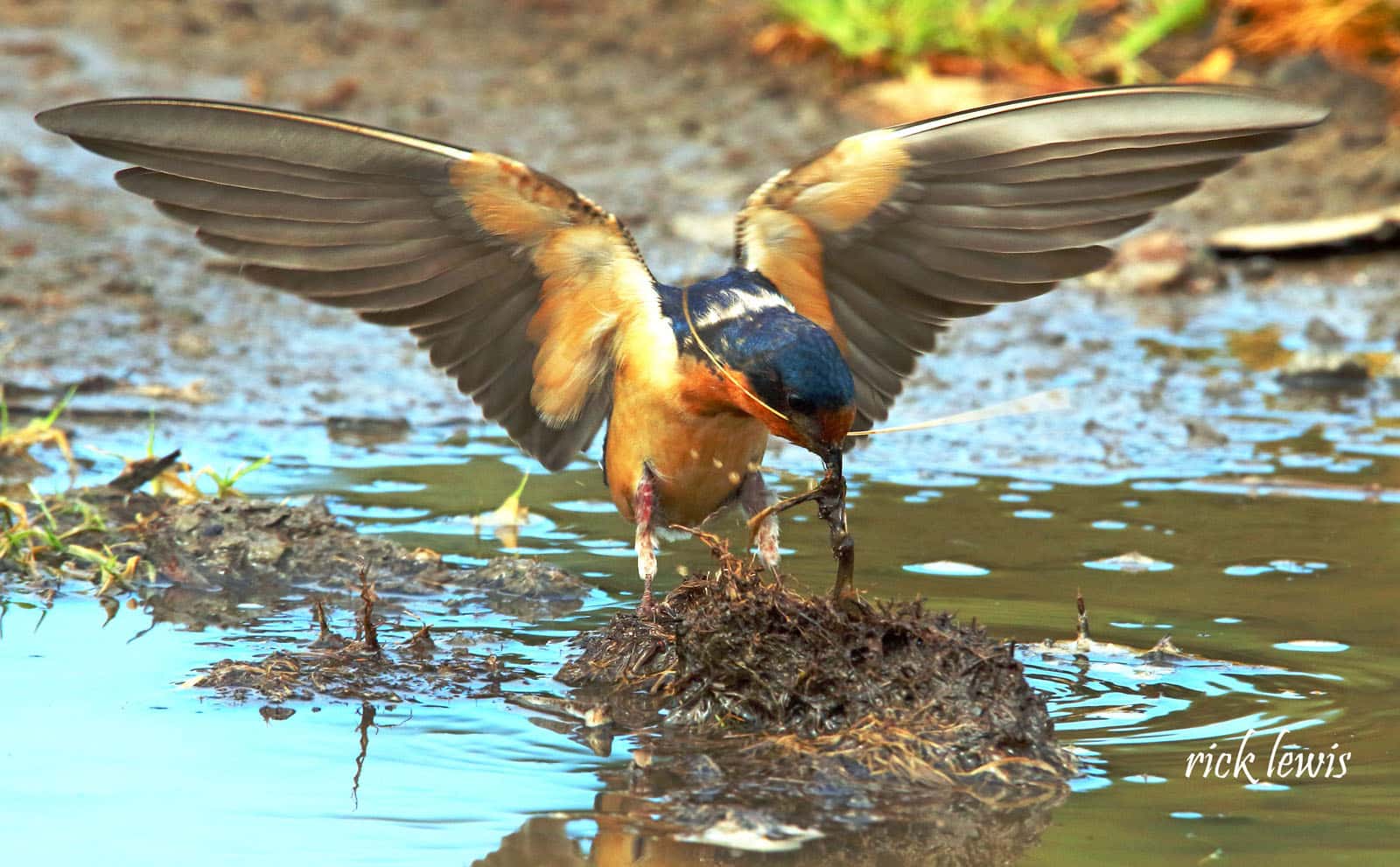
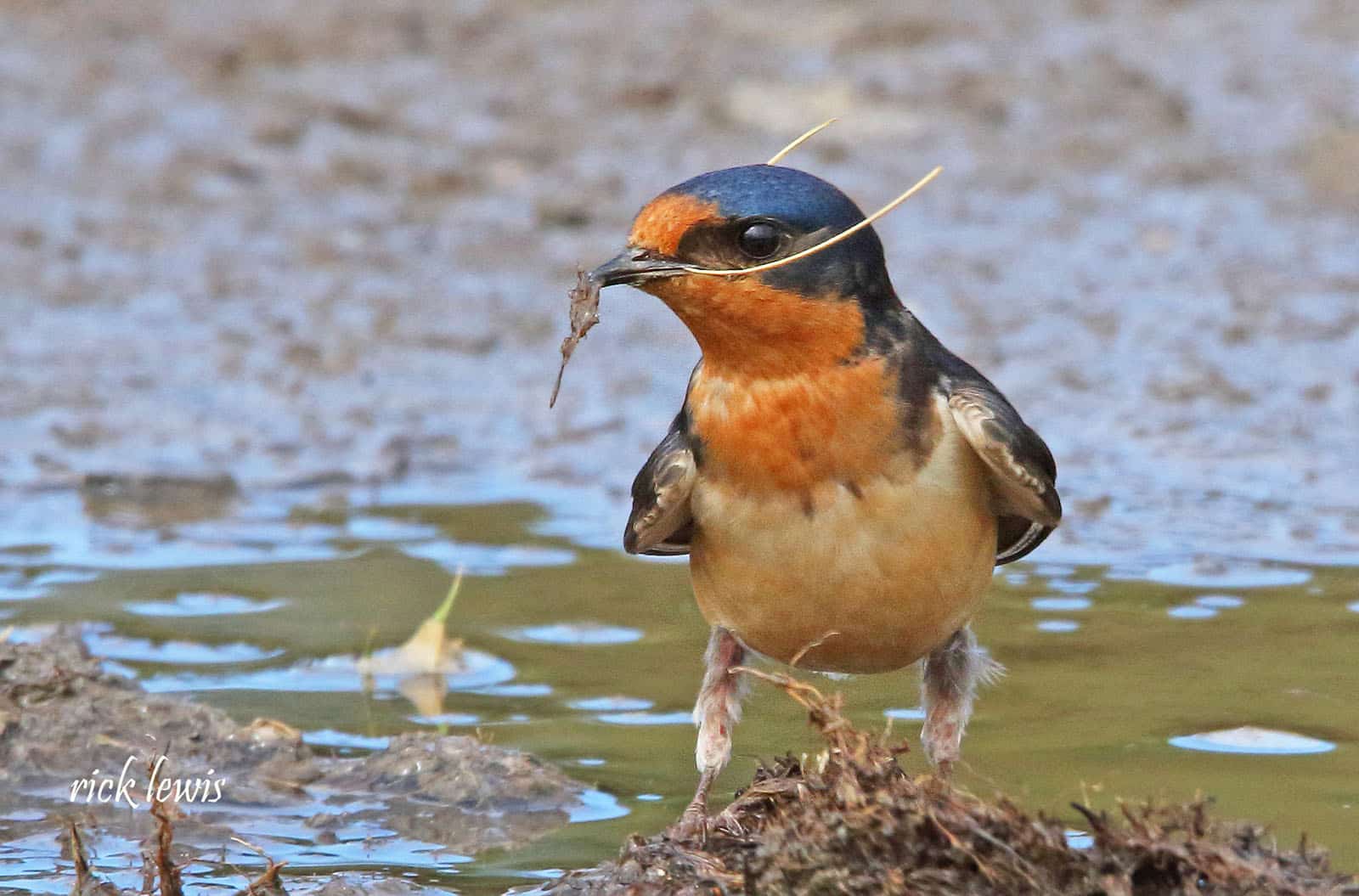
The mud is for their nest, bowl-shaped, attached to a ledge, the side of a building, or underneath eaves or a bridge. Nests may be scattered but usually are built close to others, forming large colonies. Sometimes a pair will use an old nest, strengthening mud-and-grass walls and adding new grass to line the nest. Males help, but females do the majority of the nest-building work.
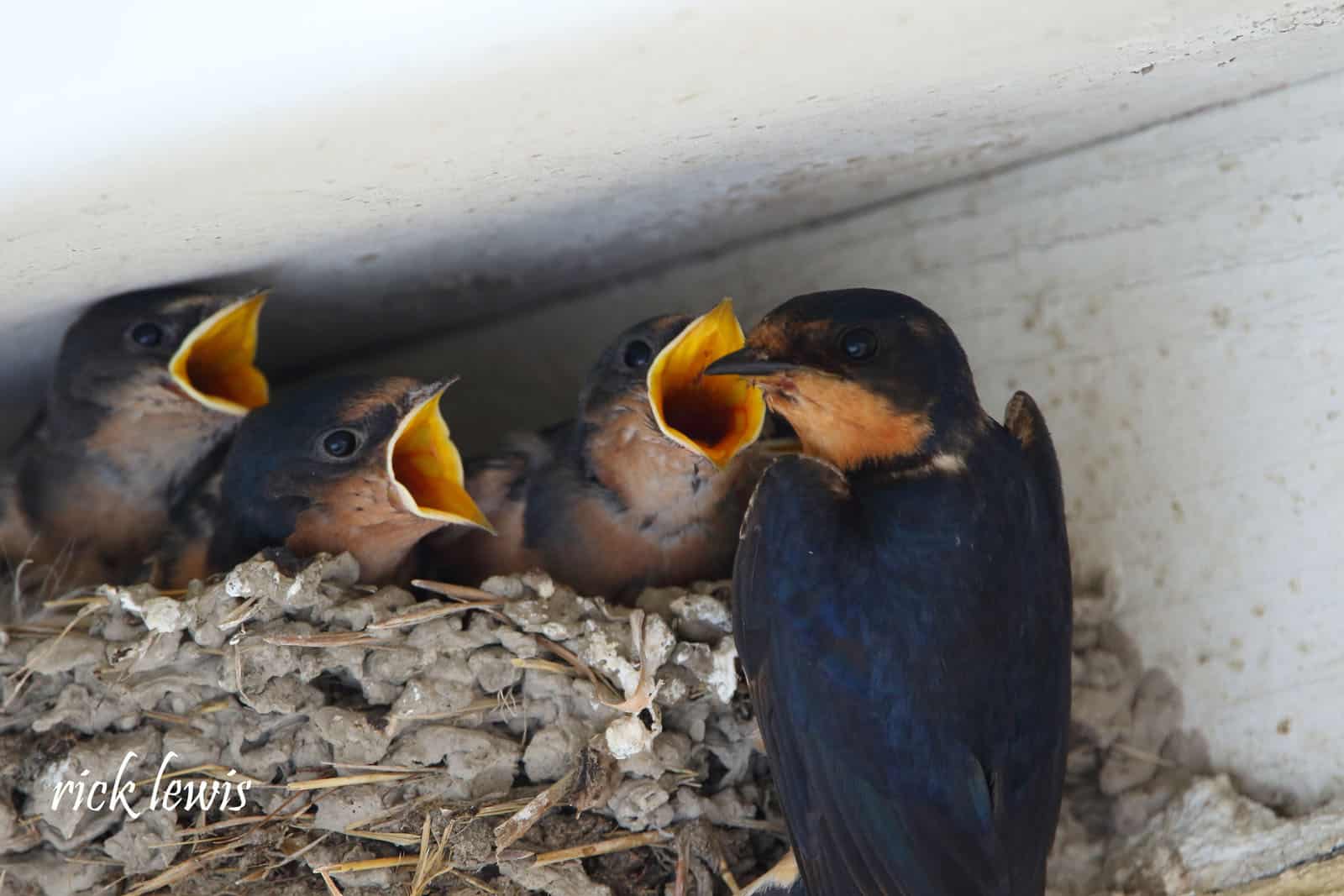
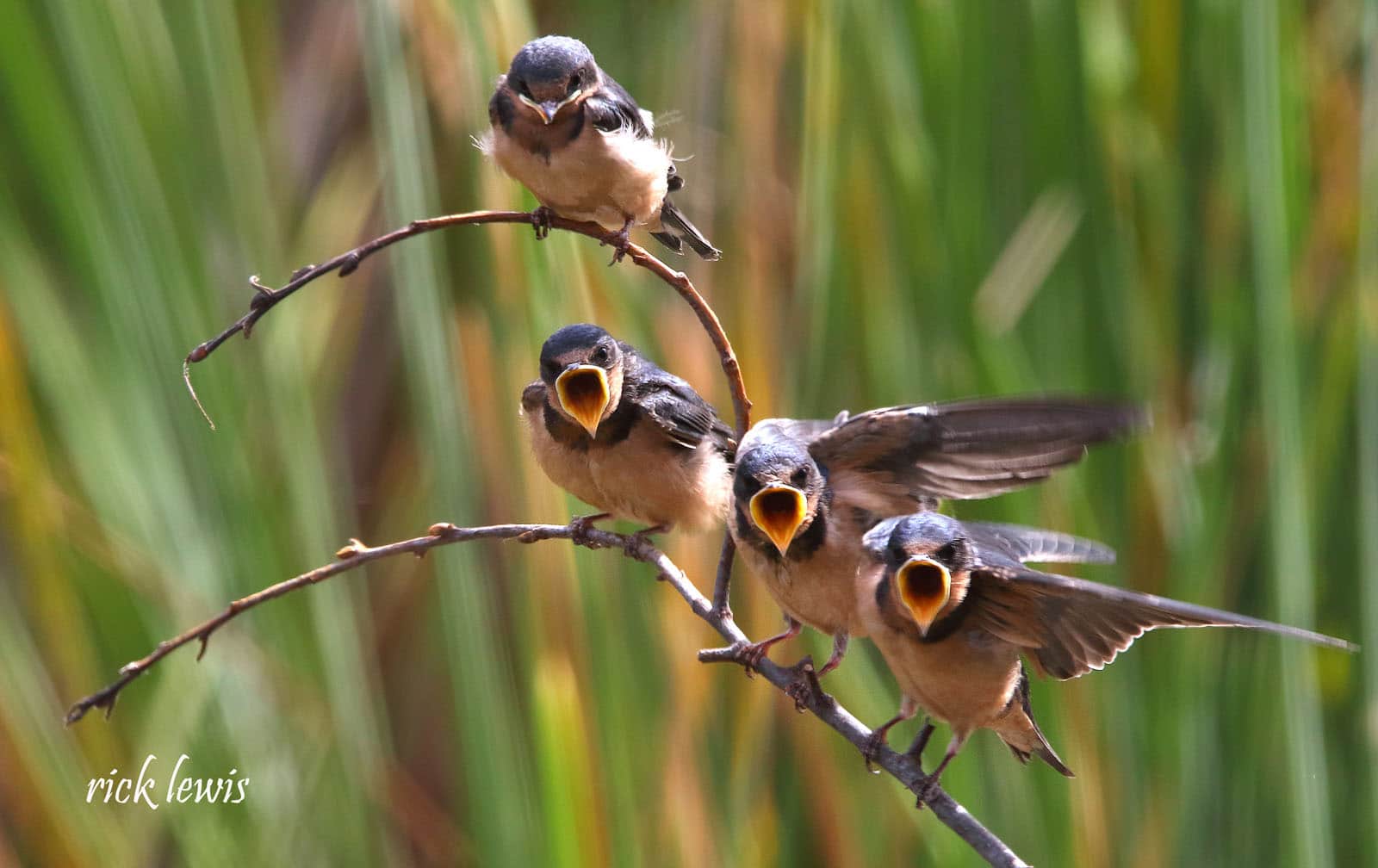
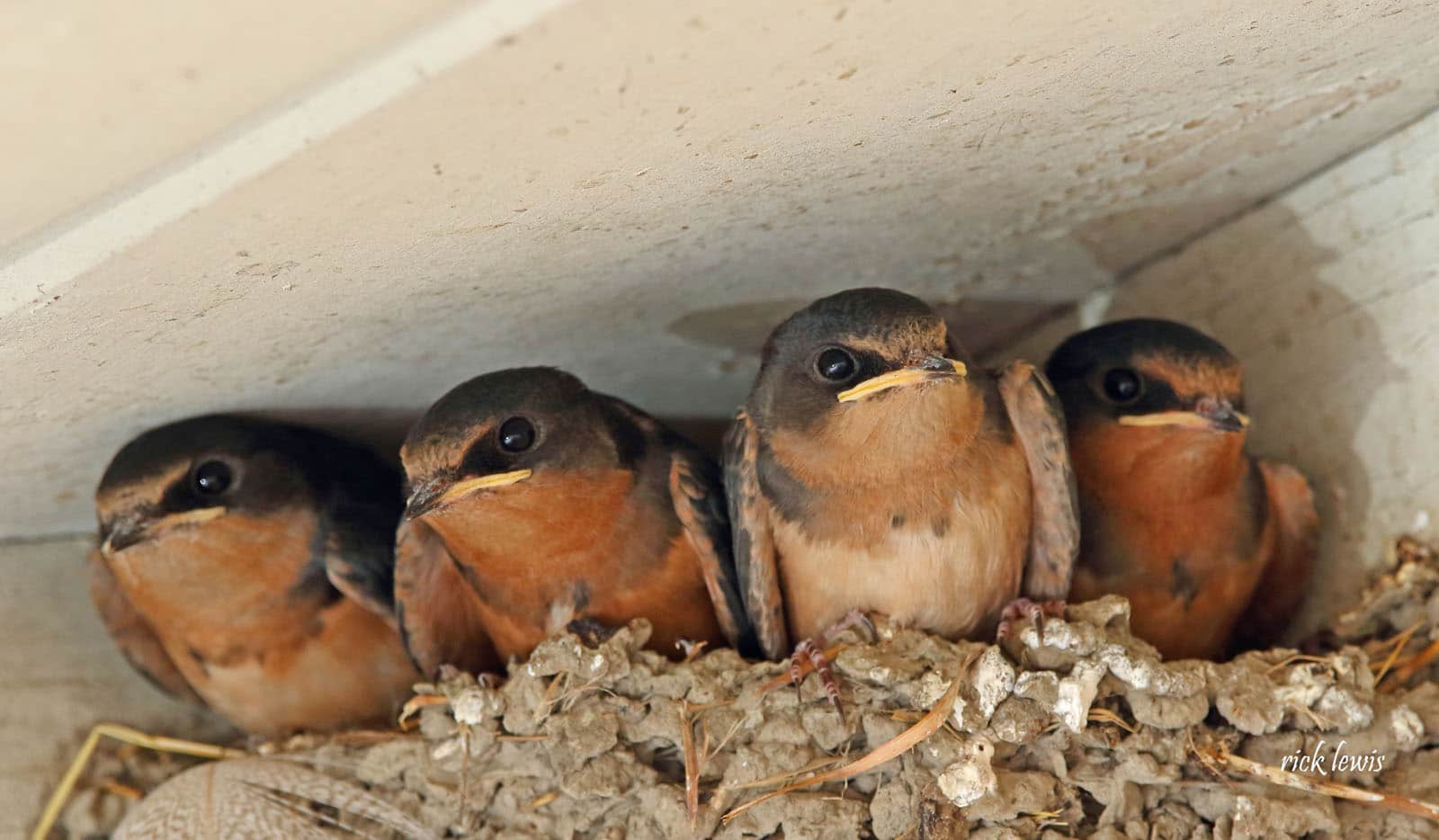
In Alameda, barn swallows breed from May through September; young birds lay one set of eggs, but older birds may have two clutches when there are lots of insects. Females do most of the incubating to keep the eggs warm through the two weeks before they hatch. The down-covered chicks warm for a couple of weeks until they grow feathers and can keep themselves warm. Both parents help with feeding for the three weeks until the chicks fledge, and about another week as the fledglings learn to catch their own food.
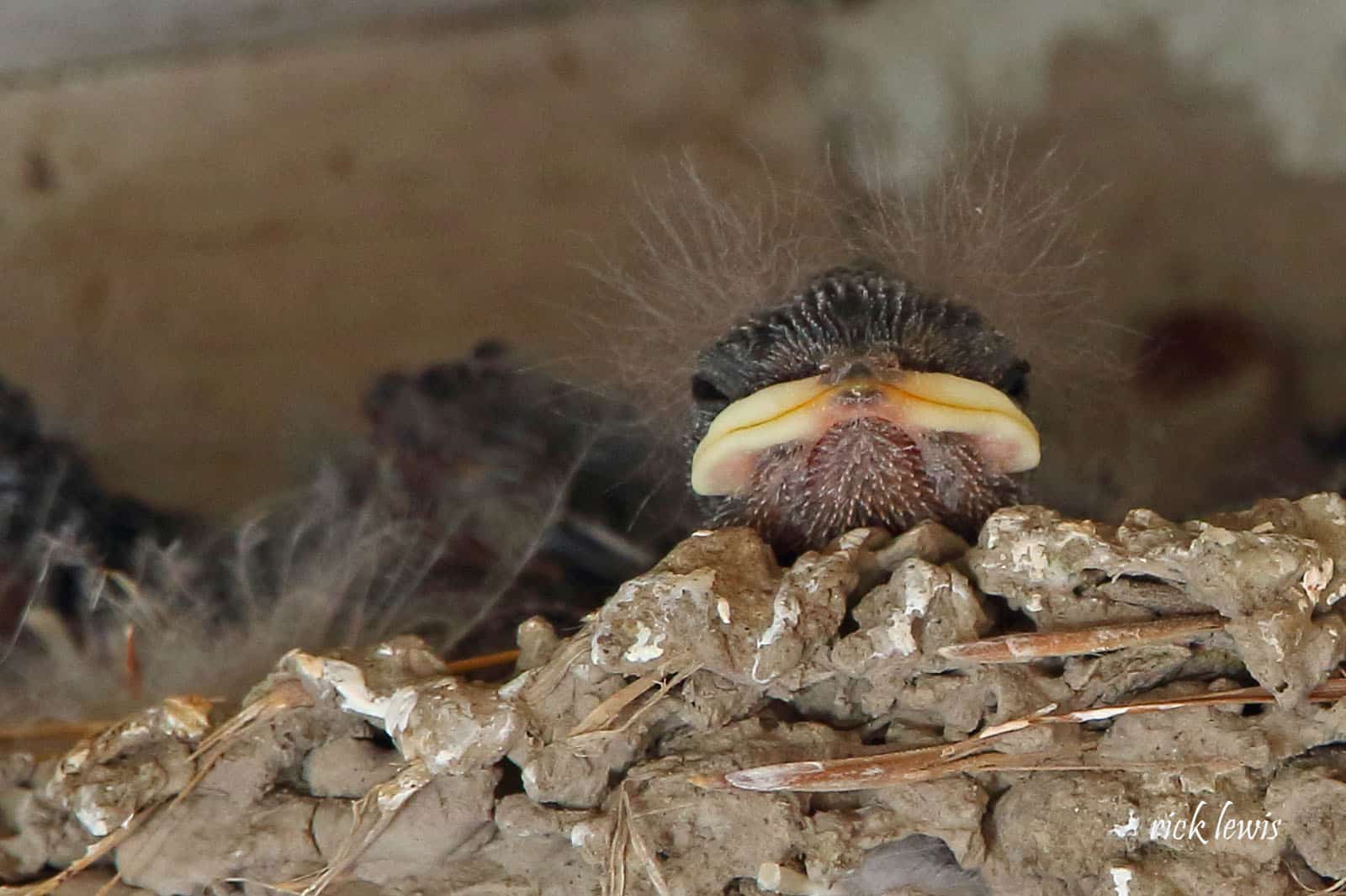
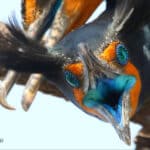
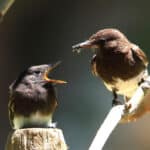
Chicks’ bright yellow mouths are prominent, designed to be sure the parent can find a gaping mouth even in the dark when flying in with food. Sticking its mouth into an open space lined in yellow, the parent disgorges the food. Chicks continue to open their wide mouths to beg for food even after they can feed themselves.
Barn swallows breed throughout the United States as well as southern Canada, Europe, and Asia. They winter in the southern hemisphere, migrating in the early fall. I see them flying in Alameda but also in New England when I visit there in the summer. Barn swallows are one of several bird species that seems to adapt very well to living near people – adapting their breeding nests to our buildings and bridges, finding food in our fields and gardens.
They feed almost exclusively on insects, most of which they catch in the air as they fly relatively low over water or grasslands, sometimes following farm machinery or animals. They search for perched or dead insects if it’s too cold for insects to fly. In very chilly weather they may eat seeds or berries.
Raptors, owls, crows, and ravens may eat barn swallow eggs, chicks, and even some adult birds, so a group of barn swallows may mob one of them if it comes near a group of nests. Domestic or feral cats, rats, and squirrels are their main mammalian predators. Other risks include very cold weather early in the breeding season as well as pesticides and herbicides that decrease the number of insects during the nesting season.
Look for small birds with forked tails flying or perched at the Crab Cove visitors center, Jean Sweeney Park, Elsie Roemer bird sanctuary, or the edge of the boardwalk at Arrowhead Marsh near the airport. Now is a fun time to see young birds that are still learning how to catch their own food.
Marjorie Powell is a member of the Golden Gate Bird Alliance and its Alameda Conservation Committee, Friends of the Alameda Wildlife Reserve.
This article is part of a series written by Friends of the Alameda Wildlife Reserve (FAWR) members, FAWR is a Conservation Committee of Golden Gate Bird Alliance (formerly Audubon). To find out more about birds and free guided trips, visit the Golden Gate Bird Alliance website.
