In Part 1 of our visit to Calistoga, the hot springs resort founded by Mormon pioneer Samuel Brannan in 1862, we learned about Brannan’s rags-to-riches story, how he became California’s first millionaire, and how a slip of the tongue caused him to refer to the resort as the “Calistoga of Sarafornia”, instead of the “Saratoga of California,” thus coining the name of the town. After a divorce in 1870, his fortunes declined and he died penniless in Escondido, California in 1889.
Five years after Brannan lost his beloved hot springs resort in Calistoga in 1875, a famous Scottish writer arrived in town (1880) and stayed in one of Brannan’s vacation cottages for his honeymoon. How that writer and his new wife Fanny ended up staying at an abandoned silver mine instead will be revealed in this story.
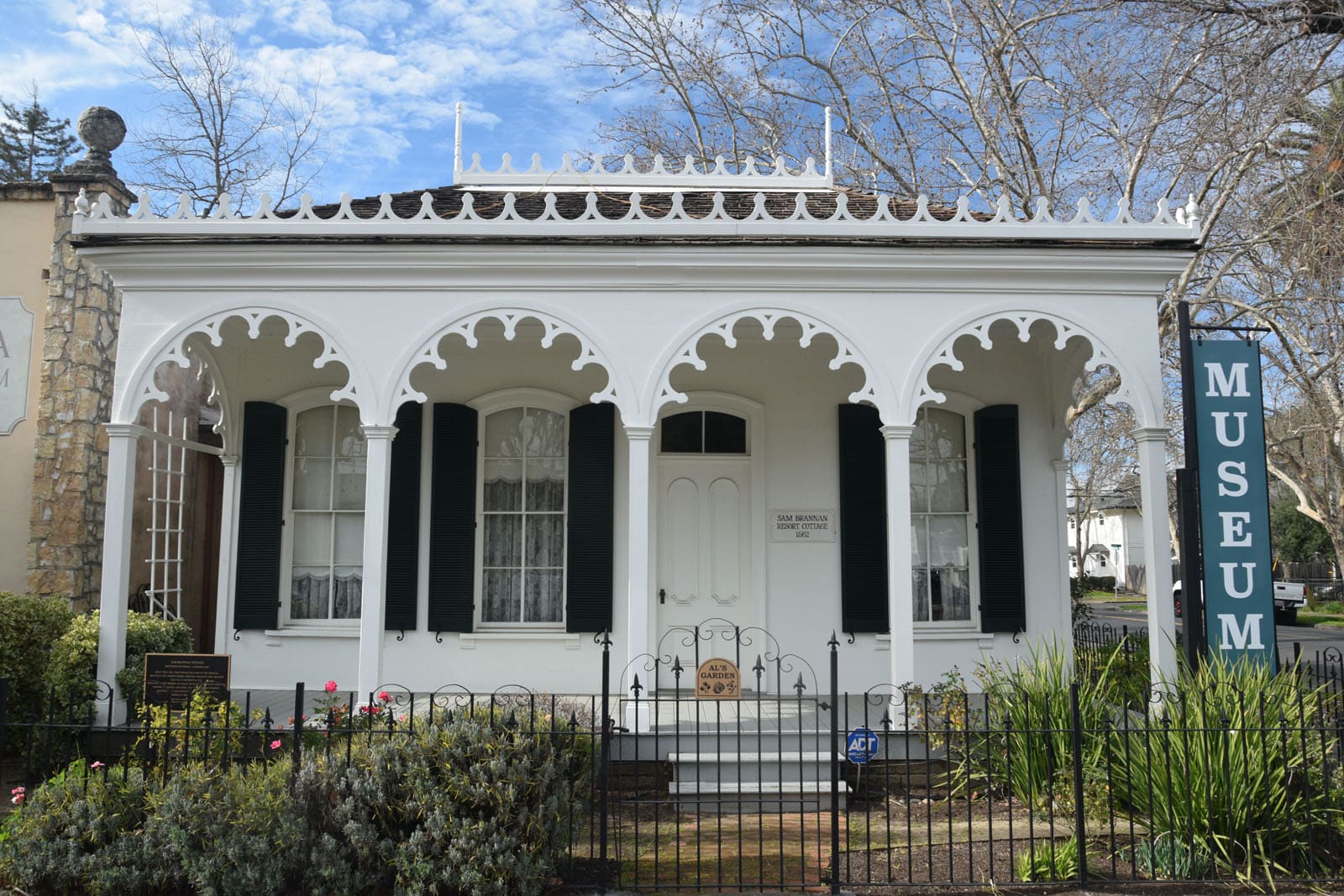
Sharpsteen Museum
A visit to Calistoga should begin at the excellent Sharpsteen Museum, located in the historic downtown area. Created by retired Walt Disney animator and producer Ben Sharpsteen, this award-winning history museum features dioramas, artifacts, antiques, and exhibits designed by Sharpsteen and his team of highly creative artists. The museum opened in 1978, and is one of the better history museums I’ve seen anywhere. Between talking with the friendly docent, and looking at the excellent exhibits, we spent about 90 minutes in the museum and only scratched the surface of what there is to see and learn there.
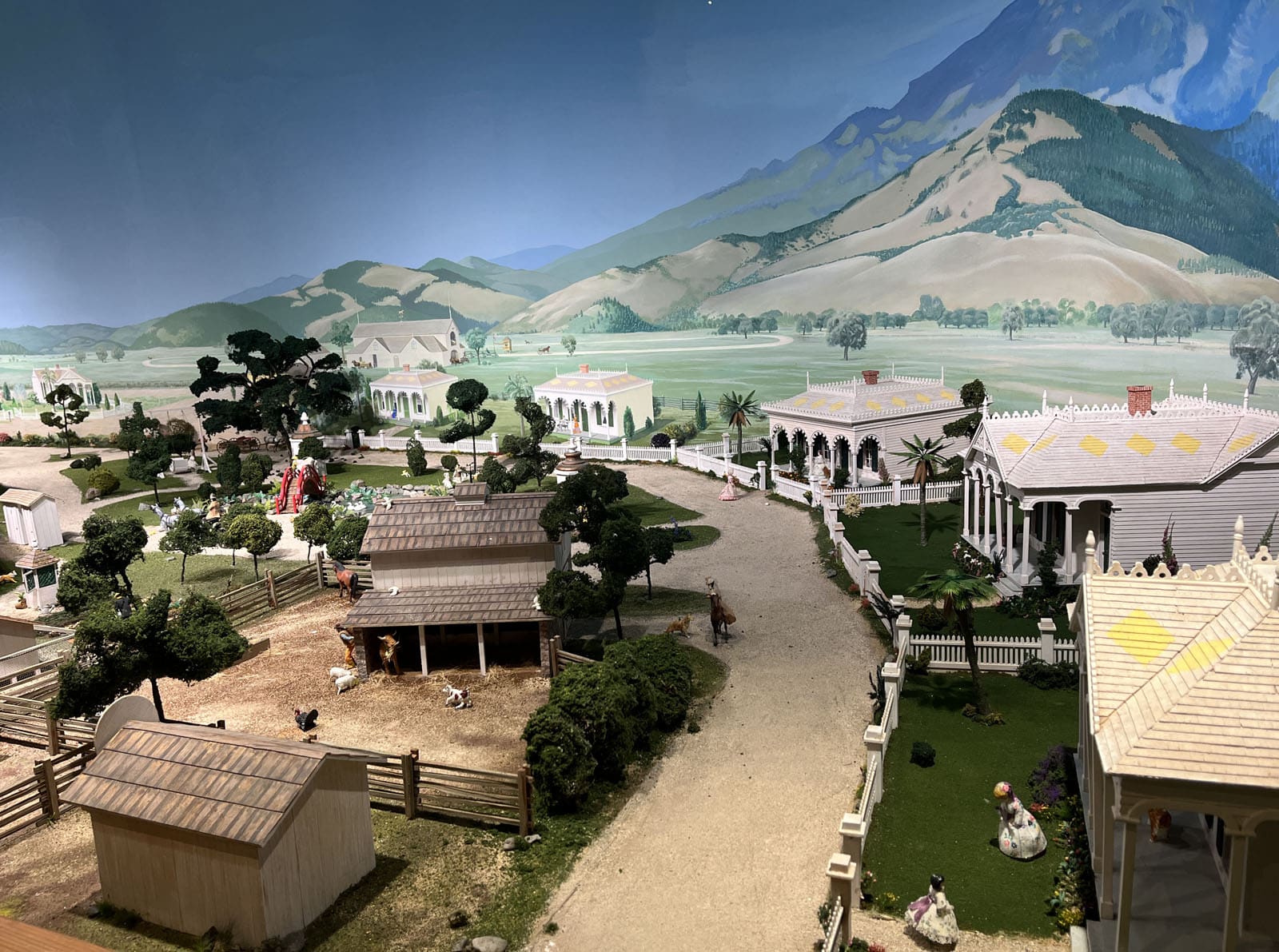
Calistoga walking tour
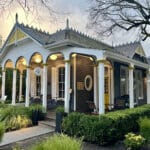
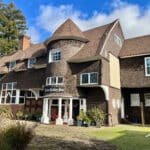
When setting off on a walking tour of a new city, the question often is where to begin? The Napa County Historical Society once published a walking tour on their website, which I printed out prior to our trip. Using that guide, we walked the streets of Calistoga, starting on Cedar Street, where a number of historic homes are located, including the circa 1873 Judge Augustus C. Palmer house, one of the few examples of the French Second Empire style in the Napa Valley. By following the guide and walking to as many houses as we could, it provided the framework of a nice afternoon of walking the quiet, pretty and historic streets and backroads of town.
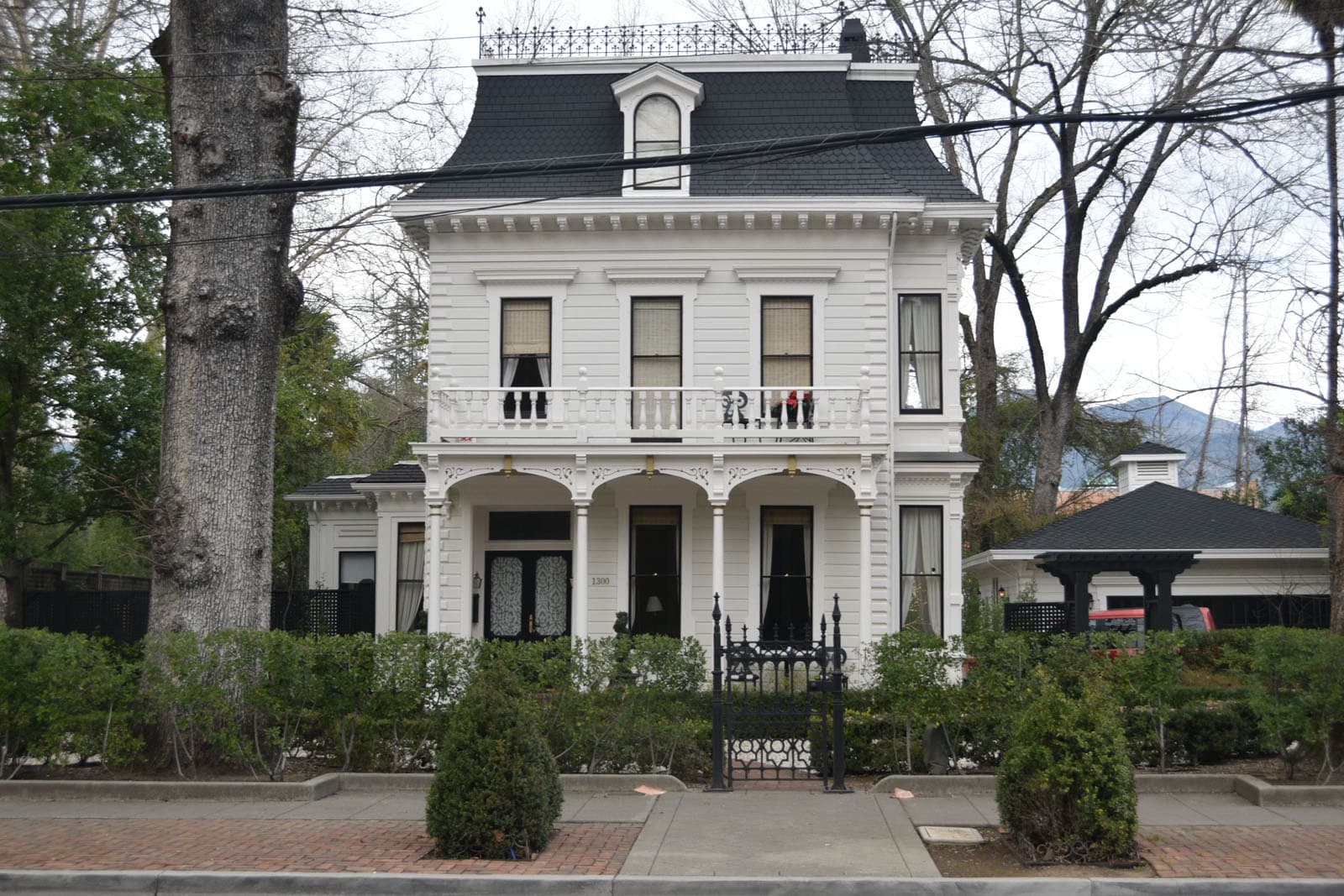
No chains
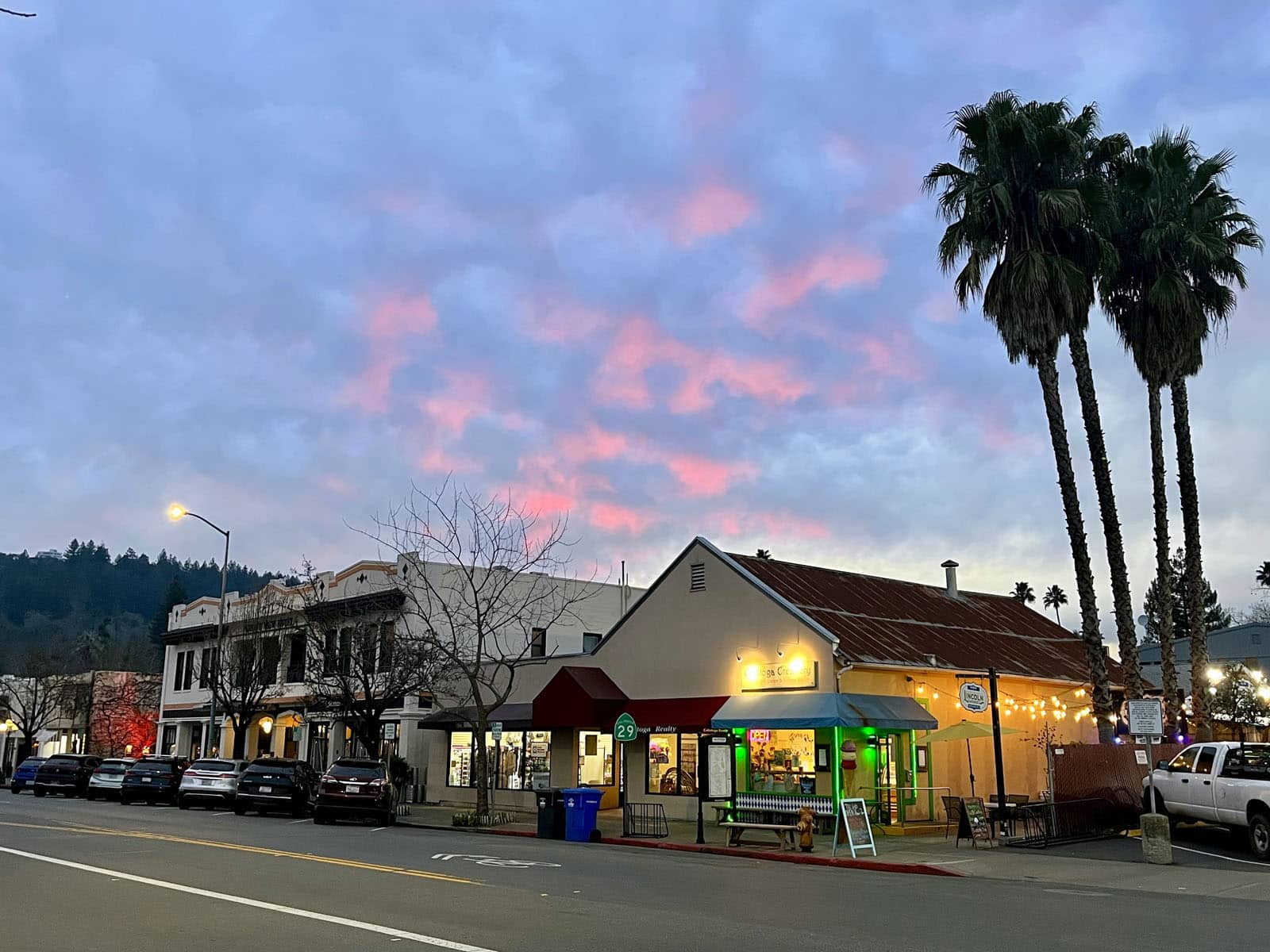
Despite its growth and popularity over the years, Calistoga still maintains a relaxed, historic and small-town feel. The city generally prohibits or severely restricts “formula” chain businesses, including formula restaurants and visitor accommodations, to maintain its small-town, independent character. Considering how many towns across this country are practically indistinguishable from one another, this seems a worthwhile stand to take.
Calistoga does have an Ace Hardware store and a hotel affiliated with the Best Western chain, both of which were exempted after the ordinance took effect. The city doesn’t have jurisdiction over banks or oil companies, hence the presence of national banks and a 76 gas station. There’s also a small grocery store, Cal Mart. Overall though, this is a thriving town that has managed to keep the unique charm and atmosphere that attracted Sam Brannan and his hot springs visitors here over 163 years ago, and still does to this day.
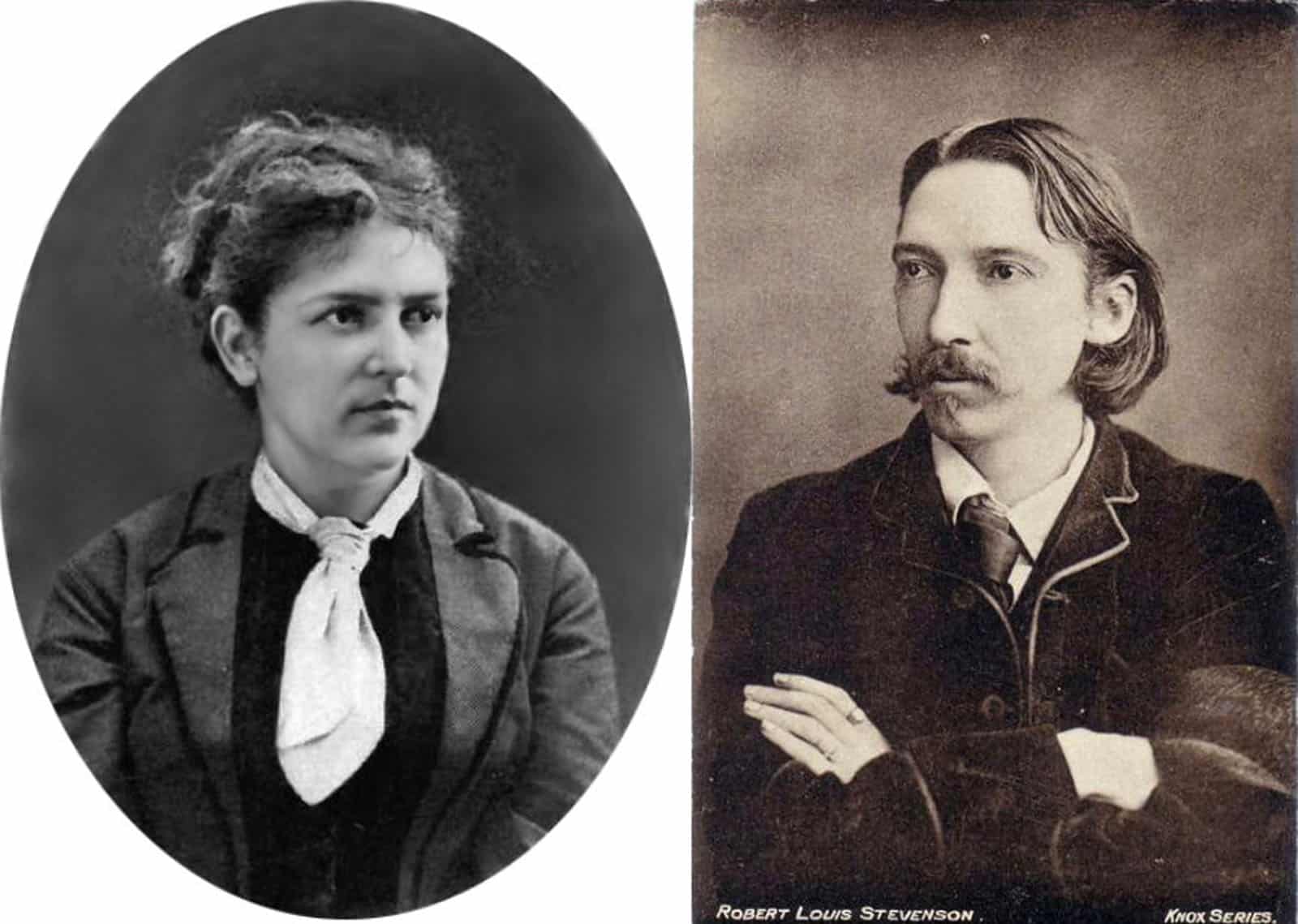
A Scottish diamond in the rough
The Scottish writer Robert Louis Stevenson (1850-1894) had not yet achieved fame or success when he arrived in Calistoga in the summer of 1880. His best-selling books Treasure Island (1883), and the Strange Case of Dr. Jekyll and Mr. Hyde (1886) were still yet to come, and Stevenson was living on a shoestring budget. Although Stevenson is a famous writer today, less well known is the fact that he spent his honeymoon staying at an abandoned mining camp in Calistoga during the summer of 1880.
After getting married in San Francisco on May 19, 1880, Robert Louis Stevenson and his wife Fanny, along with their dog Chuchu, set off on their honeymoon to Calistoga. In those days, they would have traveled by ferry and train, arriving in Calistoga via the Napa Valley Railroad. They spent the rest of May in one of Sam Brannan’s hot springs cottages, and then with money in short supply, they sought out more affordable accommodations. Now joined by Fanny’s 12-year-old son Lloyd Osbourne, the little group made its way by wagon up the St. Helena grade to the Toll House, where they climbed what is today the Mt. St. Helena trail up to the old, abandoned Silverado mine and its dilapidated bunkhouse. They did their best to clean up and equip this old mining building with a few bare necessities of life, and enjoyed a quiet summer “squatting” at their camp on the flanks of the mountain.
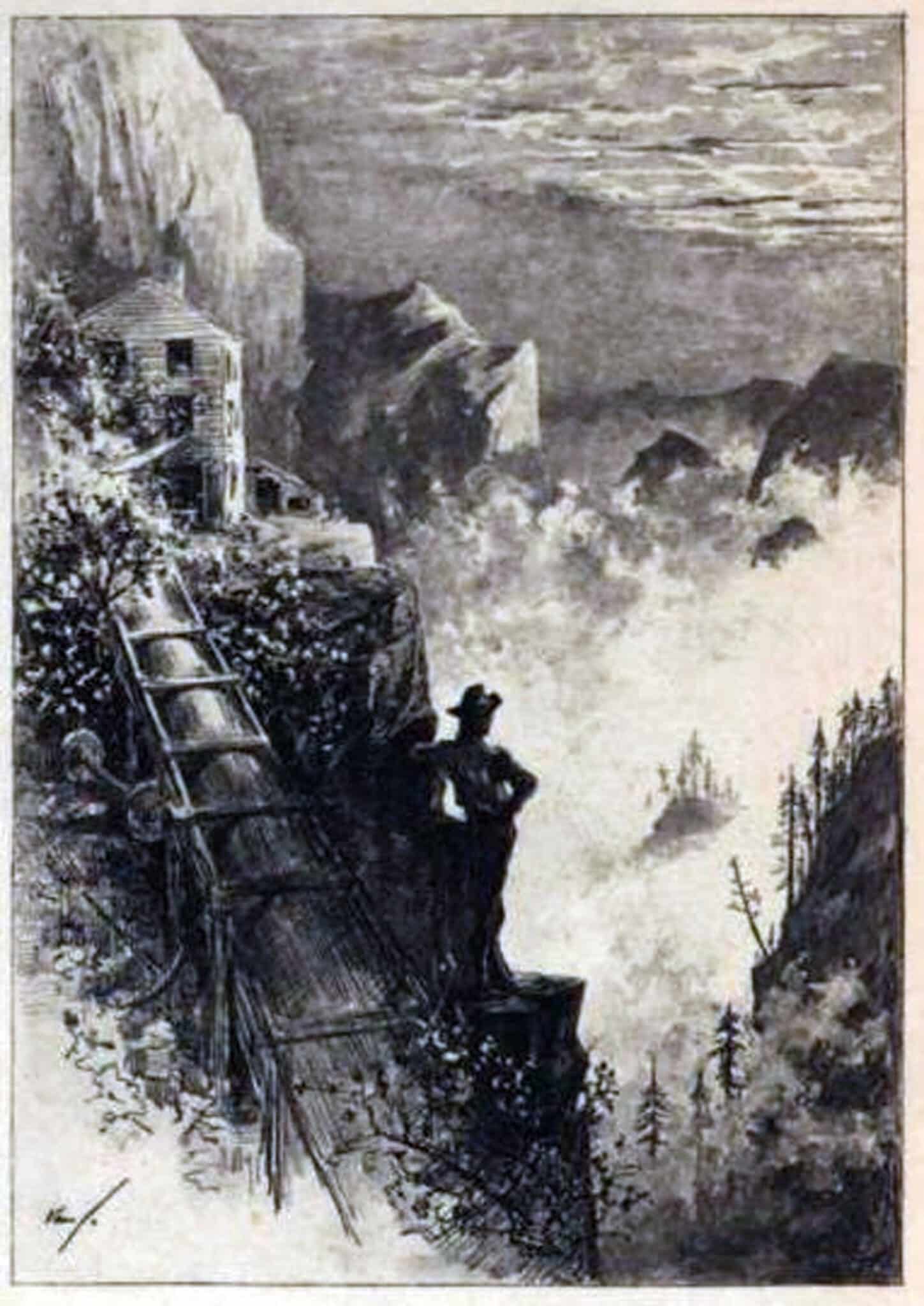
Silverado Squatters
I picked up Robert Louis Stevenson’s book Silverado Squatters while in Calistoga. In this travel memoir, published in 1883, Stevenson describes his unconventional two-month honeymoon squatting in an abandoned three-story bunkhouse set against a hillside, which contained an old assay office on the first floor, and a bunkhouse on an upper level. The levels weren’t connected by stairs inside; one had to go outside and climb up the hill and then over wooden planks to enter the upper floors. I would imagine that there weren’t many women, even in 1880, who’d enjoy such a rustic honeymoon, but Fanny Vandegrift Stevenson (1840-1914) must have been an adventurous soul indeed. The couple hauled water up from a nearby stream, dodged numerous rattlesnakes, hung cloth over the empty windows, and spent their days relaxing in their outdoor “parlor”– a makeshift wooden deck set on a large pile of mine tailings (waste materials left over after mining).
Stevenson describes his and Fanny’s first encounter with their new “home”:
“Fanny and I dashed at the house. It consisted of three rooms, and was so plastered against the hill, that one room was right atop of another, that the upper floor was more than twice as large as the lower, and that all three apartments must be entered from a different side and level. Not a window-sash remained. The door of the lower room was smashed, and one panel hung in splinters. We entered that, and found a fair amount of rubbish, sand, and gravel that had been sifted in there by the mountain winds; straw, sticks, and stones; a table, a barrel; a plate-rack on the wall; two home-made bootjacks, signs of miners and their boots.”
A time capsule
From this inauspicious start, Robert, Fanny, Lloyd, and Chuchu managed to pass a pleasant summer enjoying the Napa Valley weather, meeting a lot of local characters, sampling wine from local vineyards, and even using a telephone for the first time. With its vivid descriptions of living amidst the ruins of an abandoned mine, the gorgeous landscape, and early California life, Silverado Squatters is a time capsule left for us by one of our most gifted travel writers. By the end of July, the Stevensons would move back to San Francisco, then back to Scotland, England, and finally, Samoa in 1890. Stevenson died there in 1894, at 44 years old.
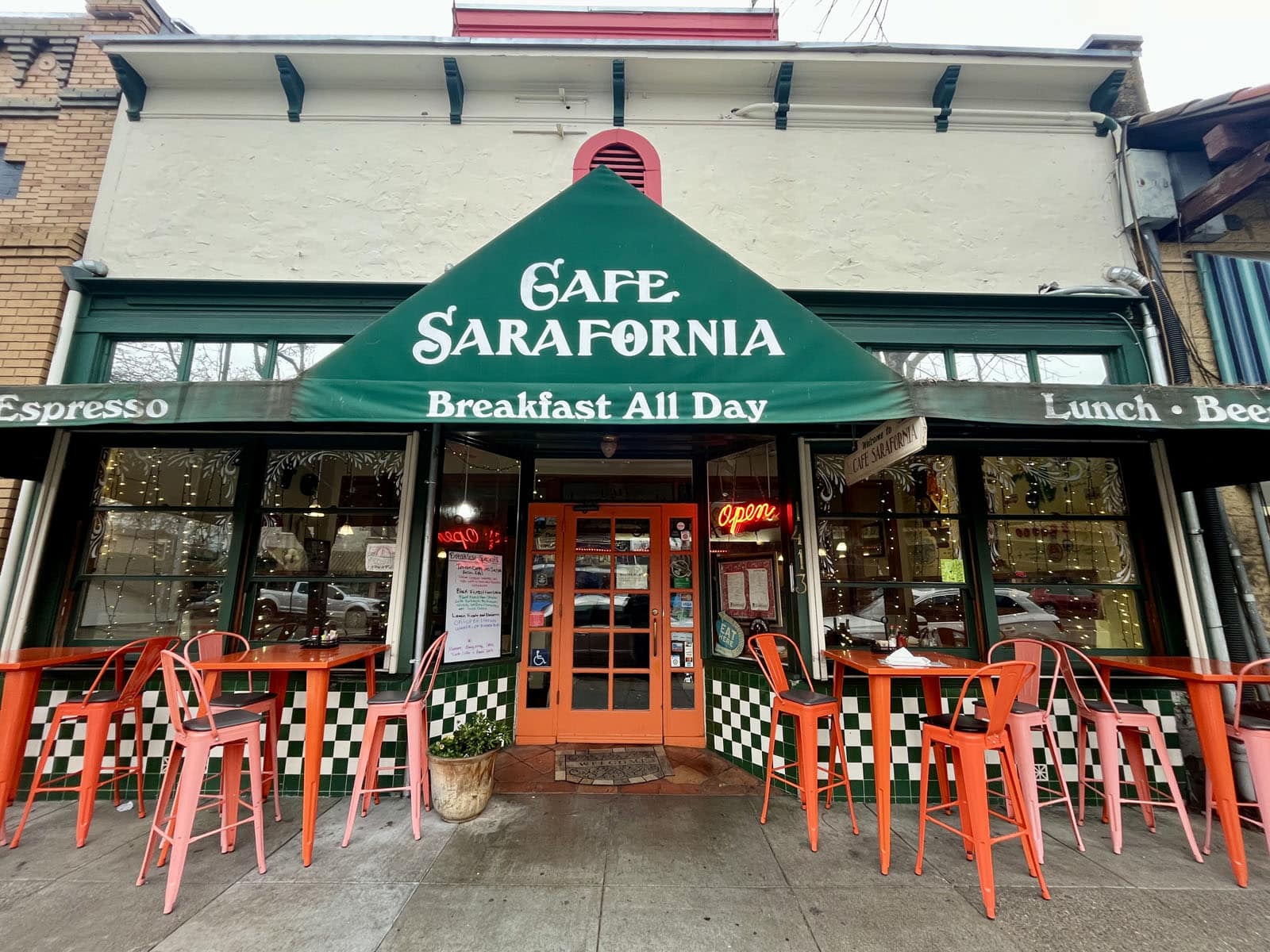
Café Sarafornia
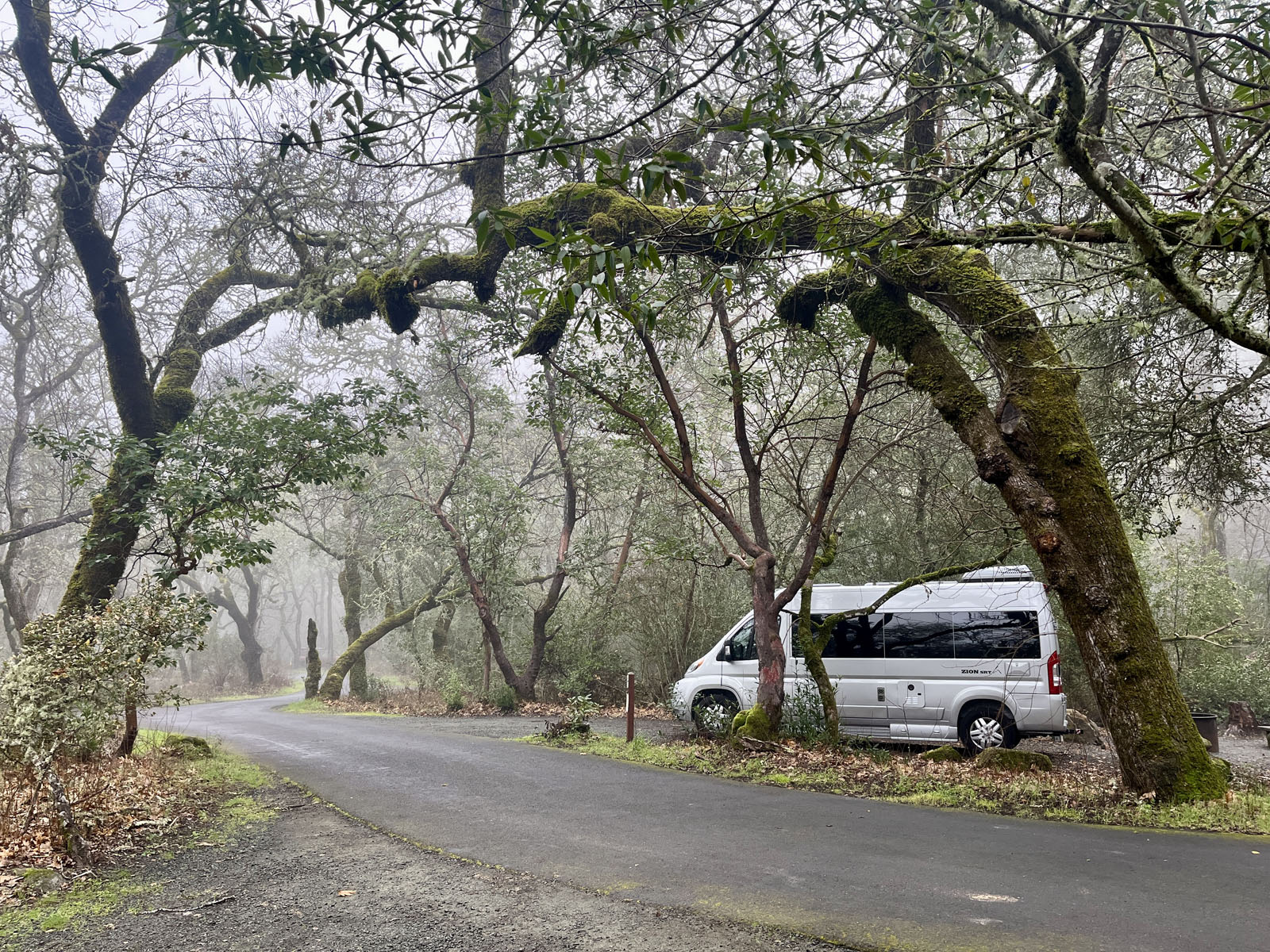
On our last morning in the upvalley region, Edie and I decided to have breakfast out, instead of eating our usual cold cereal, fruit and yogurt in our campervan. The most obvious choice was the charming Café Sarafornia, a long-standing local institution that pays homage to Sam Brannan’s original slip of the tongue that named the town to begin with. After a hearty breakfast and friendly service, we set off to explore the last few historic sites on the Napa County Historical Society walking tour that we hadn’t seen yet, including the wonderful and mysterious circa 1870s Pioneer Cemetery, located north of downtown on Highway 128.
The old Pioneer Cemetery
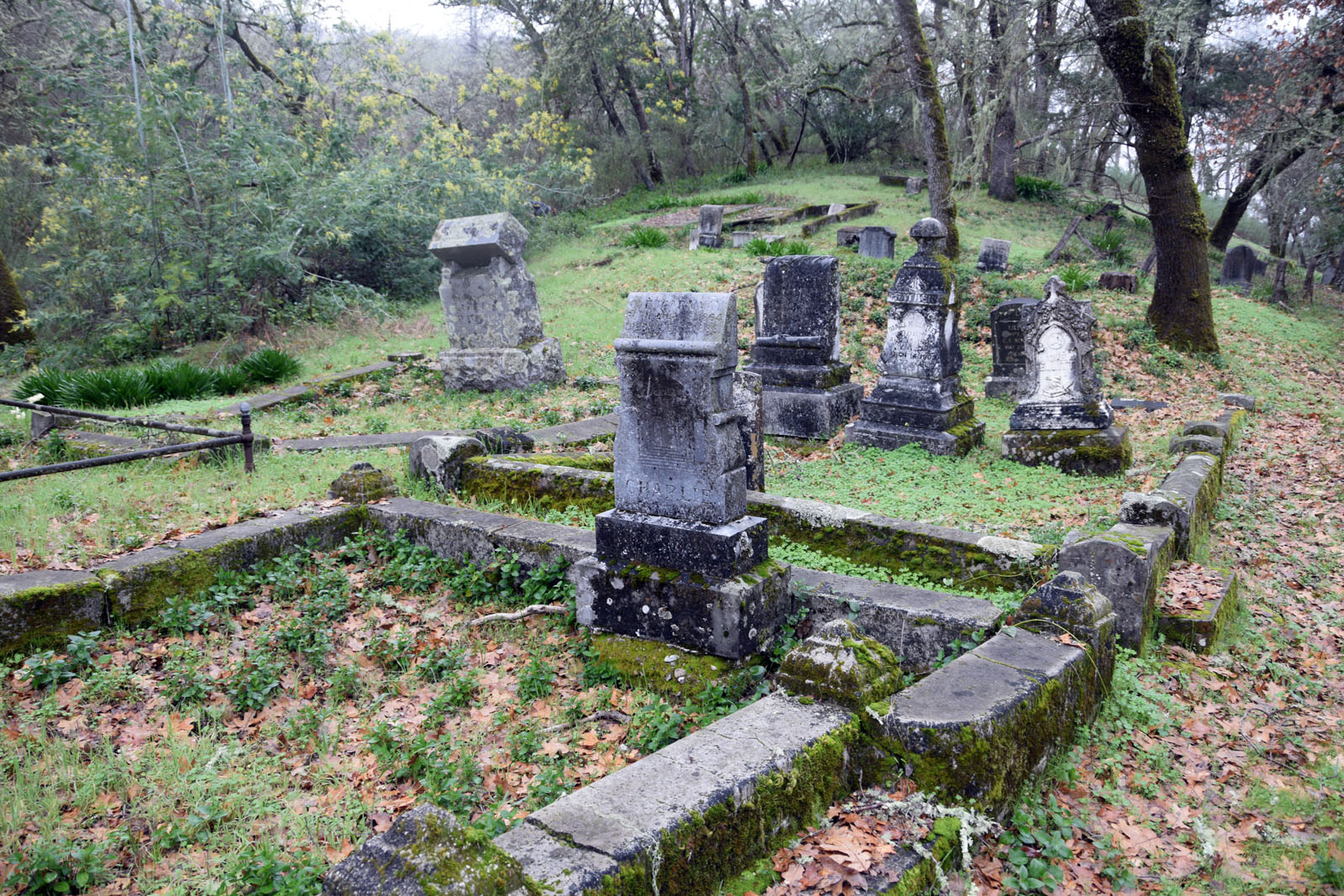
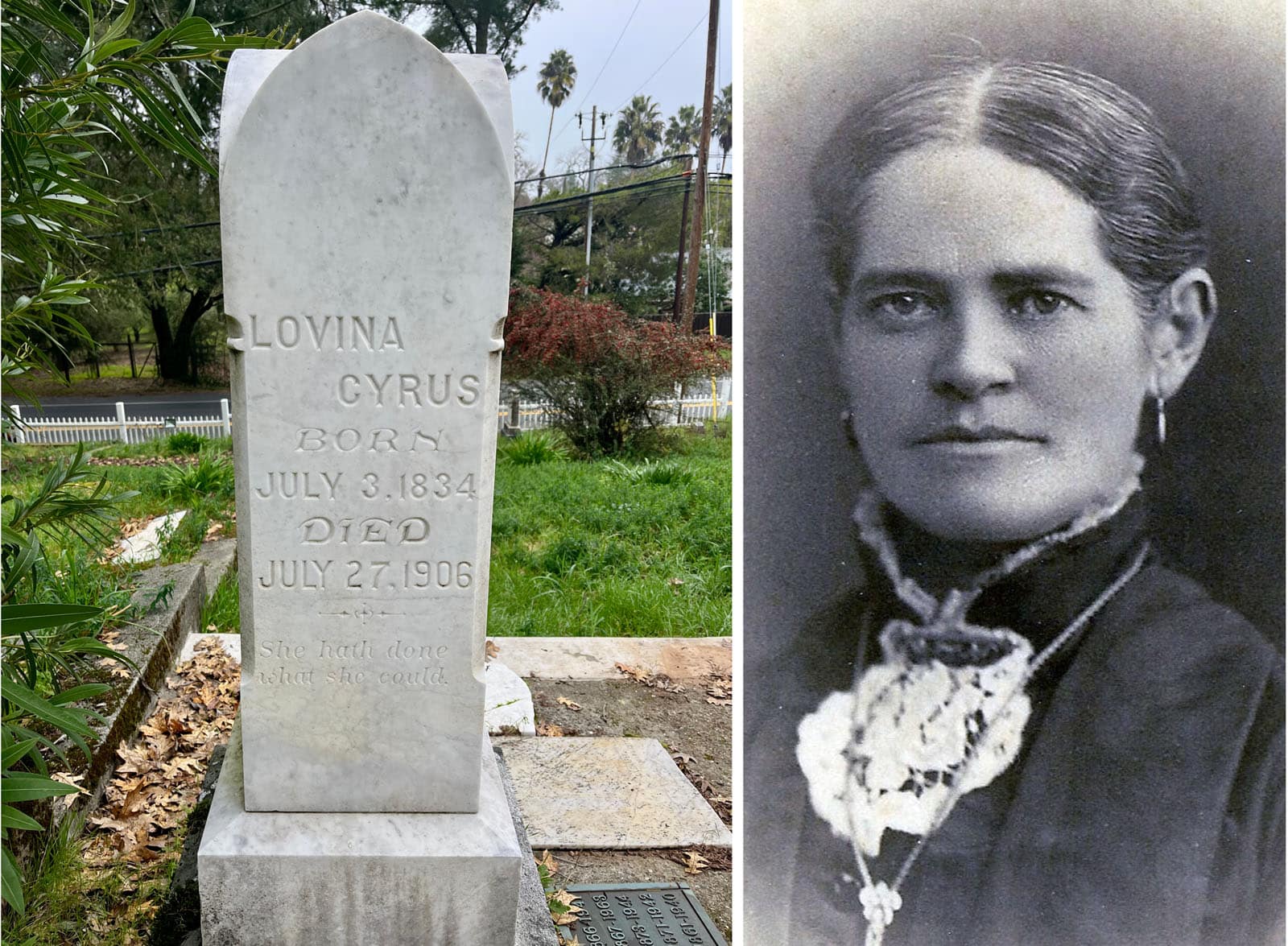
There was no better time to visit this old, semi-maintained hillside cemetery than on a cool, foggy, and moody morning like the one we experienced. We were walking among the graves of the pioneers of this area, many of whom came here before California was even a state. Lichen, moss, and overgrown trees all competed with the ancient gravestones, some of which were made of wood. Of particular interest was the gravestone of Lovina Graves Cyrus, a survivor of the Donner Party disaster of 1846. Lovina was 12 years old when the Graves family set off from Illinois to seek its fortune in California, only to be waylaid by an ill-chosen shortcut (the Hastings Cutoff) that left them stranded in the High Sierra over the brutal winter of 1846-47. Of the original group of 87 members of the Donner-Reed-Graves party who left the midwest that summer, only 45 survived and made it to California. Lovina lost both of her parents, two younger siblings, and her brother-in-law as a result of the tragic journey, and eventually settled in Calistoga where she married John Cyrus, who had made the cross-country journey shortly before the Graves family. Lovina went on to have six children, and lived to 72 years old. It was touching and meaningful to visit the final resting place of someone who had survived such an infamous and tragic event, and who went on to have a good and relatively long life.
Always more to the story
I never thought I’d be learning so much about Sam Brannan, Robert Louis Stevenson, Lovina Graves, Edward T. Bale, and a 180-year-old grist mill when I planned this trip to Calistoga. But that’s the nature of going out into the world with an explorer’s mindset; the amount of interesting stuff out there to see and learn about is almost infinite. For that reason, we’re going to stay on our theme of the north bay with a trip to Sonoma in late February. I get the feeling there’s also more to that history that I don’t yet know, and we’ll explore it here in the Alameda Post.
If you go:
Bothe-Napa Valley State Park has 47 tent/RV campsites, 10 yurts, and five cabins with bathrooms/showers, heat, and kitchenettes. Ten miles of trails, in 12 different loops, are available to hikers. Reserve sites at reservecalifornia.com.
The Bale Grist Mill is open weekends and on some Monday holidays, 10 a.m. – 4.p.m.
The Sharpsteen Museum is open Monday-Friday noon to 3 p.m., and Saturday-Sunday 11 a.m. to 4 p.m. Admission is free, but a $5 per person donation is appreciated.
Café Sarafornia is open for breakfast and lunch Monday-Friday 8 a.m. to 12:30 p.m. and Saturday-Sunday 7:30 a.m. to 2 p.m.
Contributing writer Steve Gorman has been a resident of Alameda since 2000, when he fell in love with the history and architecture of this unique town. Contact him via [email protected]. His writing is collected at AlamedaPost.com/Steve-Gorman.
