Why grow potatoes? Lots of reasons, actually.
Potatoes, while historically cheap, have been going up in price along with all other vegetables. Yukon Gold potatoes were recently $5.99 for a five-pound bag at Safeway. Potatoes are very easy to grow. They provide the most calories per square yard of any vegetable—which is why Irish farmers with a lot of mouths to feed and only a few acres grew them. Gourmet varieties of potatoes are just as easy to grow as supermarket varieties. And finally, growing potatoes is also a good project for children.
So, if you have some extra room, you might want to grow your own potatoes.
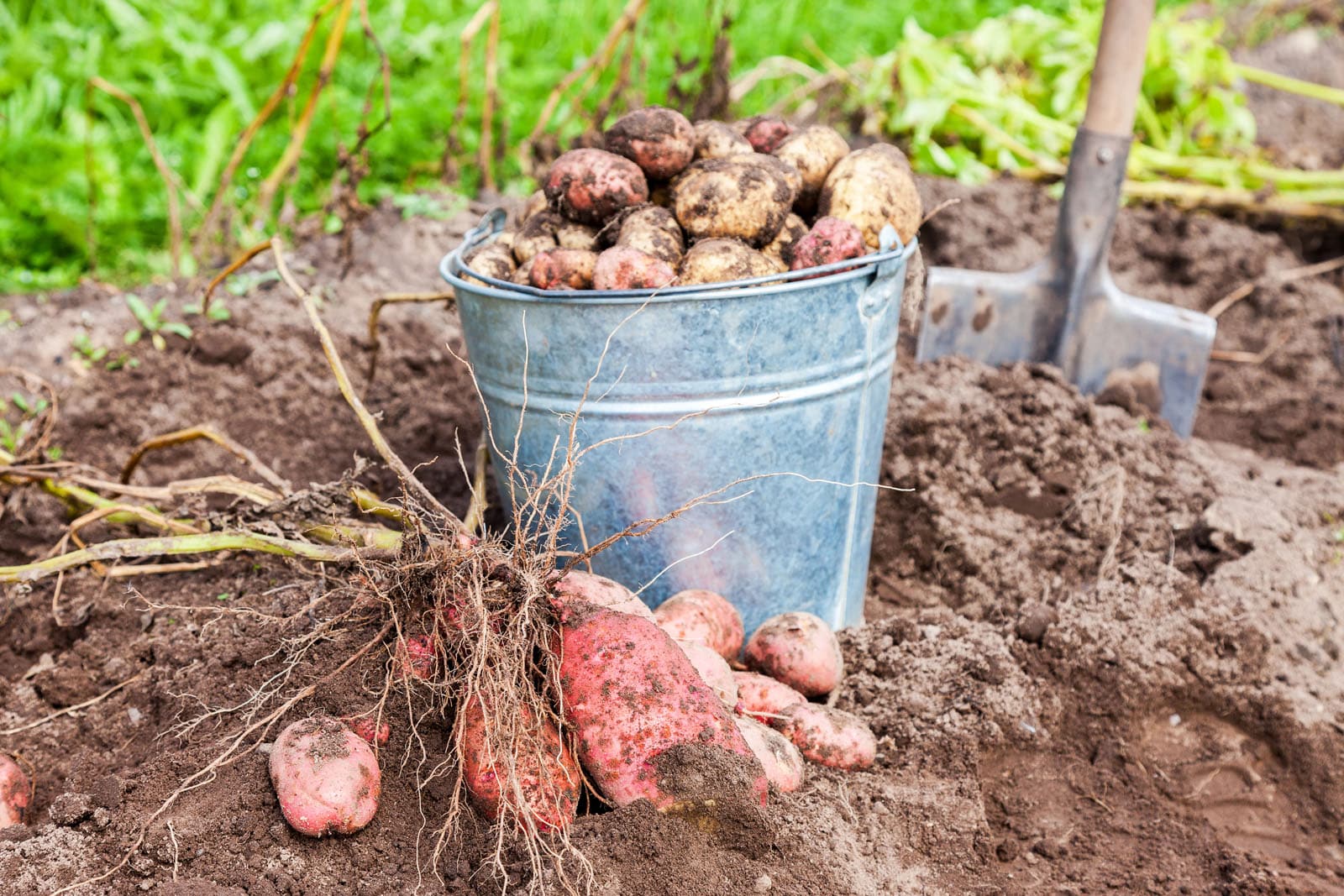
Potatoes 101
Potatoes form along the part of the stem that is excluded from light. They need a few inches of fertile soil to set roots in. The plant only needs a few inches above ground, so in order to grow more potatoes, the farmer pushes dirt, straw, or dry leaves around the plant, leaving the top few inches exposed. As the potato plant grows, the farmer tops up the mound around the plant. Inventive minds have figured out various ways to do this:
- Burlap sack. Set a sack on the ground and push stakes around it. Put four inches of potting soil in the sack. Roll the top over the stakes.
- Container or old barrel (plastic, metal, or wood). Drill a lot of holes in the bottom for drainage. Fill with four inches of potting soil. If you are growing on a deck or concrete surface, put a tray under the container and raise it up an inch to allow for drainage.
- Plant in the ground. Dig a trench, about eight inches deep. Push the soil to either side. Fertilize well with fish fertilizer.
Potatoes need full sun, but since you can grow them in a large container, you can locate your potato container on a concrete surface or a driveway, leaving your garden beds for other crops.
When to plant
You can plant potatoes year-round in Alameda, but good soil drainage is important during the winter months. Potatoes will rot if the ground is soggy.
The best time to plant is February or March, for a harvest in late spring and early summer. Potatoes will grow well later in the year, but you will have to water regularly for a good harvest. Potato plants like it uniformly moist.
Where to get potatoes to plant
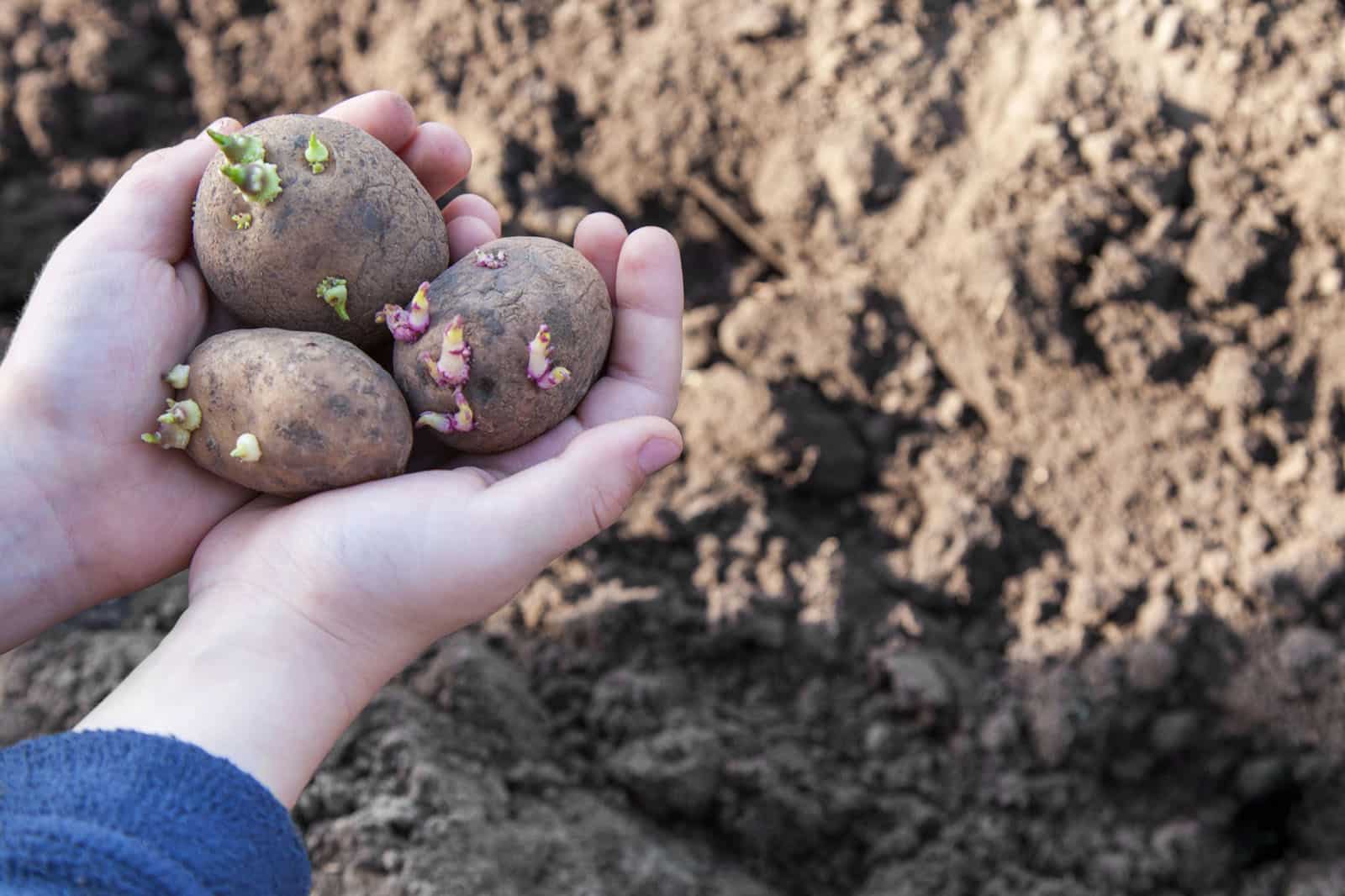
Potato plants grow from “eyes” in potatoes. You can either buy your favorite kind of organic potatoes (try Alameda Natural Grocery or Dan’s Produce) or purchase “seed” potatoes (specifically grown to plant) at Plowshares or Encinal Nursery. The advantage of seed potatoes is that they are certified disease free. If you buy potatoes from a grocery store, make sure they are organic, have no signs of disease such as blotchy skin or rough spots, and have big, prominent eyes. Non-organic potatoes are often treated to retard growth.


How To Plant
You will need one potato eye per eight inches to one foot of row. If growing in a container, space eight inches to one foot apart.
Cut up your seed potatoes so you have one or two eyes per piece the day before you intend to plant. Spread the pieces out and let the cut sides dry out overnight.
The next day, lay the potato pieces on your prepared site, eye side up, eight to 12 inches apart. Cover with two more inches of dirt (doesn’t have to be potting soil) and water well. Keep moist and you should see sprouts in a week or so.
Continue watering (hopefully Ma Nature will provide at least some of the water) and when the plants get about 10 inches tall, start hilling (mounding soil or mulch around the base of the plants). Make sure whatever you use is clean and dry—wet leaves or straw will transmit disease. Cover the stem of each plant to about five inches from the top. Spray the leaves with diluted fertilizer once a month.

Harvest
Eventually the tops will start to die down. Stop watering at this point.
When the tops are totally dry, it’s time to harvest your potatoes. One great way to do this is to enlist any children in the vicinity for a treasure hunt. Lacking children, carefully dig down and brush the dirt off the potatoes you find. If children are helping, be sure to wash them (the children) immediately—they will be very grubby. As for the potatoes, only wash the ones you intend to eat within the next two or three days.
You will be pleasantly surprised with your home-grown potatoes. They will cook faster and be a lot tastier than the ones you buy at the supermarket.
Margie Siegal is a long term gardener in Alameda and a supporter of Alameda Backyard Growers. Reach her via [email protected]. Her writing is collected at AlamedaPost.com/Margie-Siegal.
