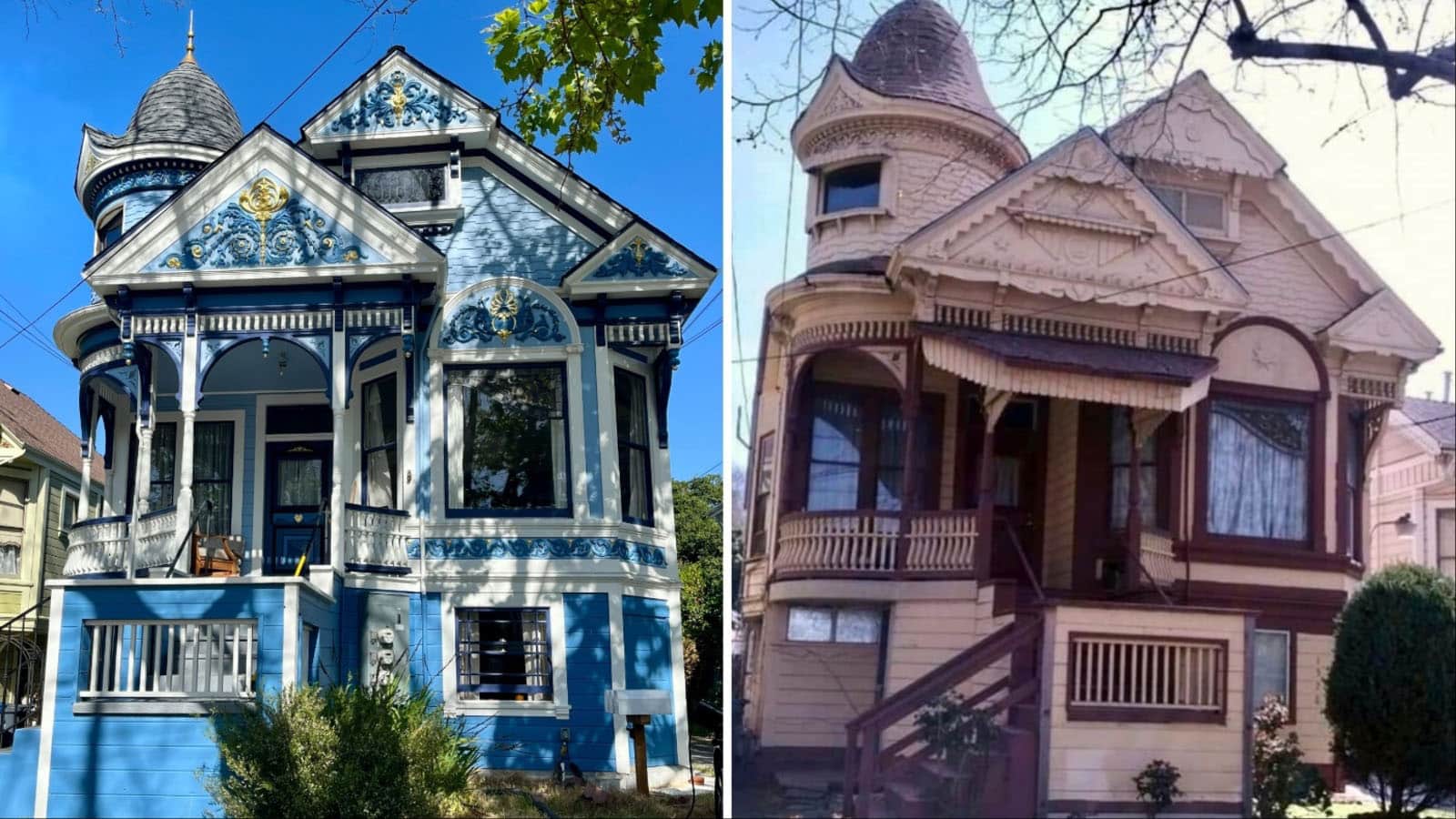
For the past three installments, we’ve looked back at the colorful history of 1528 Mozart Street, the Queen Anne-style home built in 1894 by the renowned architect/builder team of Felix Marcuse and Julius Remmel. Mozart Street was developed relatively late in Alameda’s pioneer street-building period, with the land having been held vacant by landowner Emil Kower for many years. It was only in 1885 that the first homes were put up on the newly created street, which was named after Caroline Dwinelle’s favorite composer, Wolfgang Amadeus Mozart. Other streets in the area named for Carrie’s favorite composers include Verdi and Weber Streets. In this installment, we’ll look into a strange story related to 1528 Mozart Street, involving a 12-year-old boy who refused to eat, causing much consternation and fear for his life.
1890s building boom
Mozart Street only had a handful of houses on it prior to the 1890s. But in 1890, the relatively new firm Marcuse & Remmel (M&R) started their building boom on the street, forever changing its character for the better. Between 1890 and 1894 the team put up 12 Queen Anne-style homes on Mozart, creating one of Alameda’s finest collections of M&R homes on the island. The prices for these homes at the time ranged from $1,650 to $2,925.
The first owner
Emma L. Gardner was the very first homeowner of 1528 Mozart Street, having purchased the land directly from Emil Kower, and then the house from Felix Marcuse in 1894. She lived in the home with her daughter until 1907, when a real estate listing in the Alameda Times Star, on September 17, 1907, announced, “Emma Gardner has transferred to M. I. Blotcky property on the east side of Mozart Street 287 feet south of Railroad Avenue, 37×150.” At this time, Emma moved to Oakland, and later to Paris, France, for a couple of years.
The Blotcky period
Traveling salesman M. I. Blotcky, his wife Jennie A. Blotcky, and their son Benjamin had previously been living just one block over, at 1556 Verdi Street, before purchasing 1528 Mozart Street in 1907. Newspaper articles as late as July 1908 still locate them at 1556 Verdi, but by early 1909 they seem to have finally moved into their new home on Mozart. But why were they being mentioned in the newspapers at all?
‘Boy Loses His Mind’
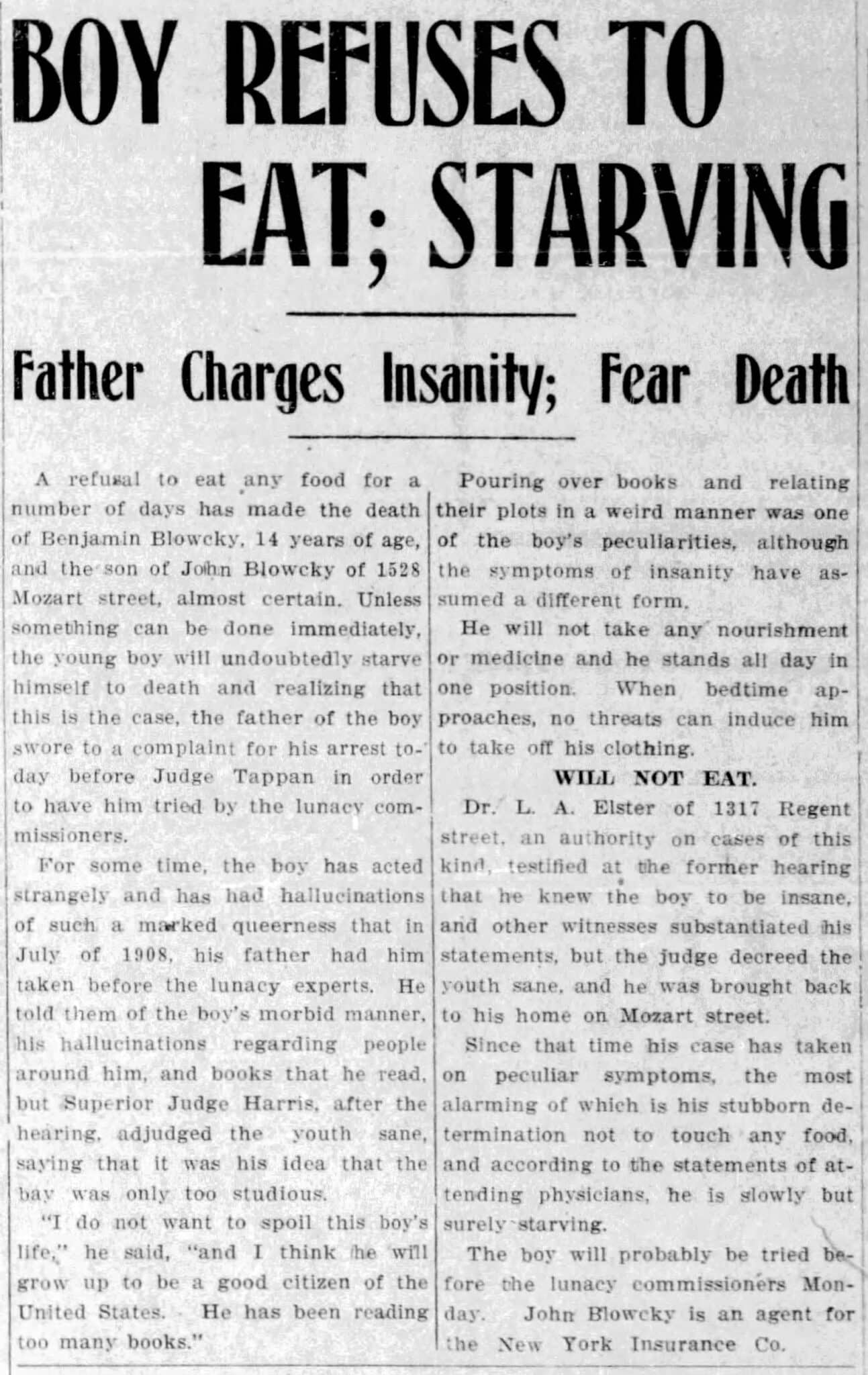
A headline in the Alameda Times Star, dated July 10, 1908, was the first sign of trouble in the household of the new owners of 1528 Mozart Street. It read, “Alameda Boy Loses His Mind,” and described how Judge Harris, at the municipal courthouse in Oakland, refused to commit 12-year old Benjamin Blotcky to the state asylum in Napa, despite pleas from the boy’s father. The judge opined that the boy’s mental condition was due to too much reading, and that a stay in the asylum would be a “dreadful blemish to be cast on this young man’s future” and that it would “cause a disgrace which he would probably never outlive.” Obviously, there were different views on mental health treatment in the early 20th century.
Refuses to eat
Despite the best efforts of Mr. and Mrs. Blotcky to help their son, by March of 1909 they were back in court once again attempting to get him committed to the asylum, where they felt he could get the help he needed. A couple of theories were offered as to why the boy refused to eat. One, offered by a doctor who described his condition as “melancholia agitata,” suggested that the trouble originated with an eye injury that Benjamin received in 1907, necessitating the use of eyeglasses. Shortly after the accident, the boy began to show peculiar symptoms and hallucinations, which so alarmed the parents that they first brought him before a judge in July of 1908, where he was nevertheless found to be sane.
Unhealthy interest in murder case
A more fascinating explanation also emerged in this case, one that involved a murder that took place in the Elmhurst neighborhood of Oakland in 1907. The murder of Mrs. Vernie Carmin, a crime for which Mark A. Wilkins was convicted, was said to have claimed another victim in the young Benjamin Blotcky. The boy’s father, M. I. Blotcky, testified in court in 1909 that his son “was as bright and active as any boy of his age until news came of the Elmhurst murder.” The crime seemed to hold an unusual fascination for the boy, who avidly read all of the details of the case he could get his hands on.
As the trial progressed, Benjamin’s condition grew worse, including a belief that food offered to him was poisoned with strychnine, the same drug with which Mrs. Carmin was killed. For days on end he refused to eat, and afterwards would only take food at restaurants. The complete collapse of the boy occurred when the guilty verdict was read. On that day, Benjamin became convinced that he had killed his own mother, and even when in her presence he did not recognize her. The boy’s fixation on the murder case had finally reached the point where the need for more advanced mental health treatment was obvious to all.
Committed
Finally, in March of 1909, Superior Court Judge Ogden declared the boy insane, issuing an order that the boy be committed to the Napa asylum. As further proof that young Benjamin needed help, he displayed a strong desire while in the courtroom to physically attack his questioners, despite his emaciated and wan appearance. And so, shortly thereafter, Mr. and Mrs. Blotcky packed a bag for their son and drove him up to Napa, in the fervent hope that he would get better.
Mind, found
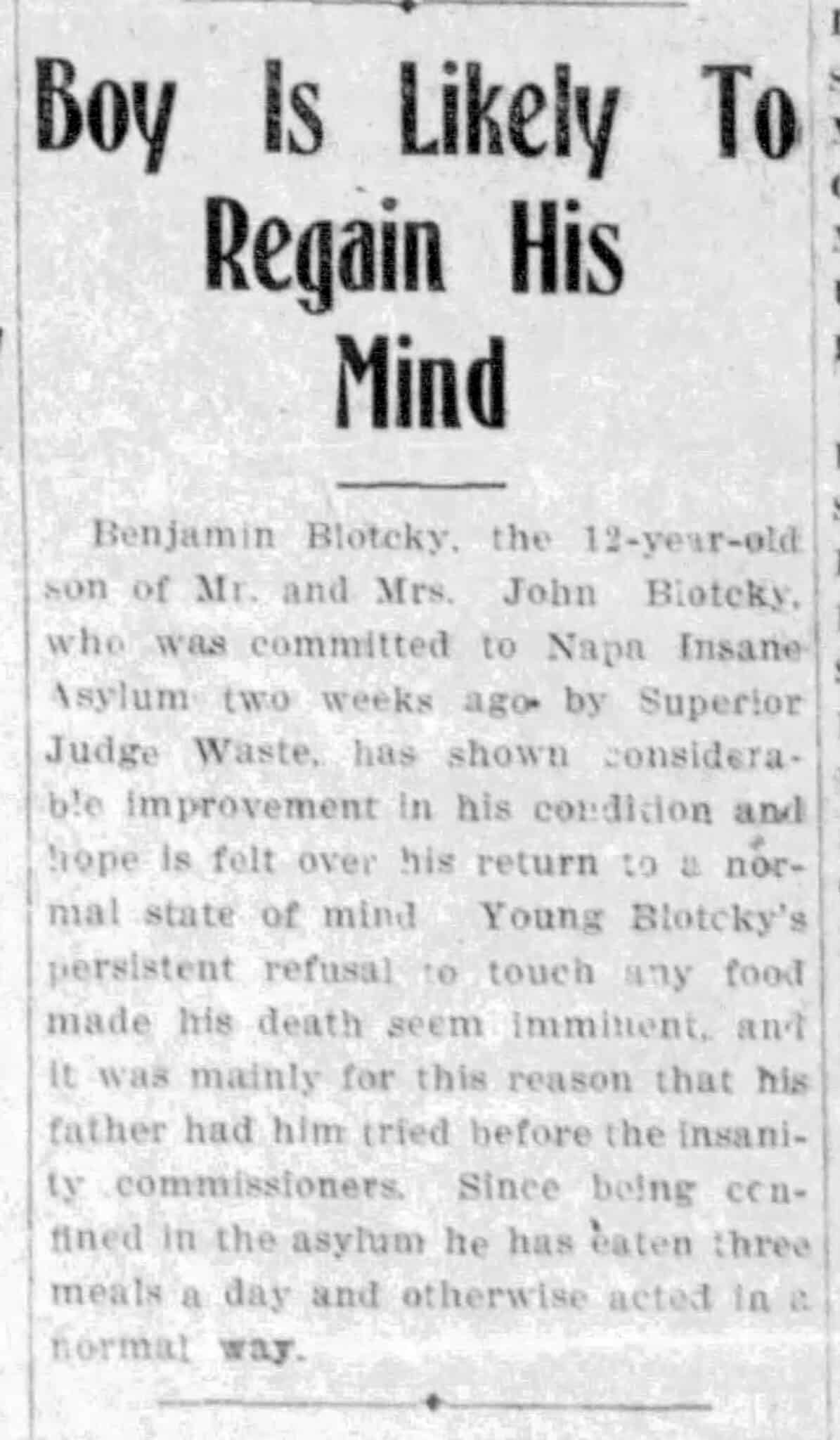
On March 19, 1909, just 10 days after Benjamin was committed to the state asylum in Napa, a more hopeful headline appeared in the Alameda Times Star, proclaiming “Boy Is Likely To Regain His Mind.” Reported in the article was the fact that Blotcky “has shown considerable improvement in his condition and hope is felt over his return to a normal state of mind.” Though the newspapers had previously reported that young Blotcky’s death would be “imminent” if he continued to refuse food, this more hopeful article ended with the line, “Since being confined in the asylum he has eaten three meals a day and otherwise acted in a normal way.”



More residents
It is not known how long the Blotcky family continued to live at 1528 Mozart Street after their son came home from the asylum, but since they seemed to be active in real estate transactions in Alameda during those years, perhaps it can be assumed that they moved on, in order to get a fresh start for themselves and Benjamin.
Searching through the records, many names are associated with 1528 Mozart Street, including the McCullough family in 1918. The fact that the home likely had downstairs apartment units for many decades adds greatly to the cast of characters that has called this place home over the past 131 years. In 1907 there was even a company called U.S. Loan & Realty Company operating out of 1528 Mozart Street, with the phone number ALA 2416.
Longest residency to date
The owners with the longest tenure appear to be the Viray family. In approximately 1965, Susie Viray’s grandfather Leon Mendoza was living in one of the downstairs units when he learned the owner of the house was planning to sell. Rather than having to move, Mendoza made a cash offer of $25,000 (according to family lore) and became a homeowner. According to Susie, the reason her grandfather wanted to live in Alameda was that he was retired from the military, and wanted to shop at the base commissary for his groceries. Many years later when he passed away, his wife (Susie’s grandmother) deeded the house to her daughter (Susie’s mother) and Susie, with the proviso that the grandmother would get to stay in the house as long as she lived, and that they would maintain the home.
The years went on, the dear grandmother passed away, and eventually it was Susie and her husband living upstairs on the main level, with her two brothers occupying the two ground-level apartments. By the time the year 2015 rolled around, the house was in serious need of maintenance and refurbishment, and though it was always Susie’s dream to fully restore the old Victorian-era gem, she had come to realize that it could be a “money pit.” With retirement nearing, and not wanting to work for years just to fix up the house, she and her family decided to sell. At that point, the Mendoza/Viray family had been owners of the home for about 50 years, likely the longest residence of any other owner so far. Susie and her family now live in Solano County.
Meant to be
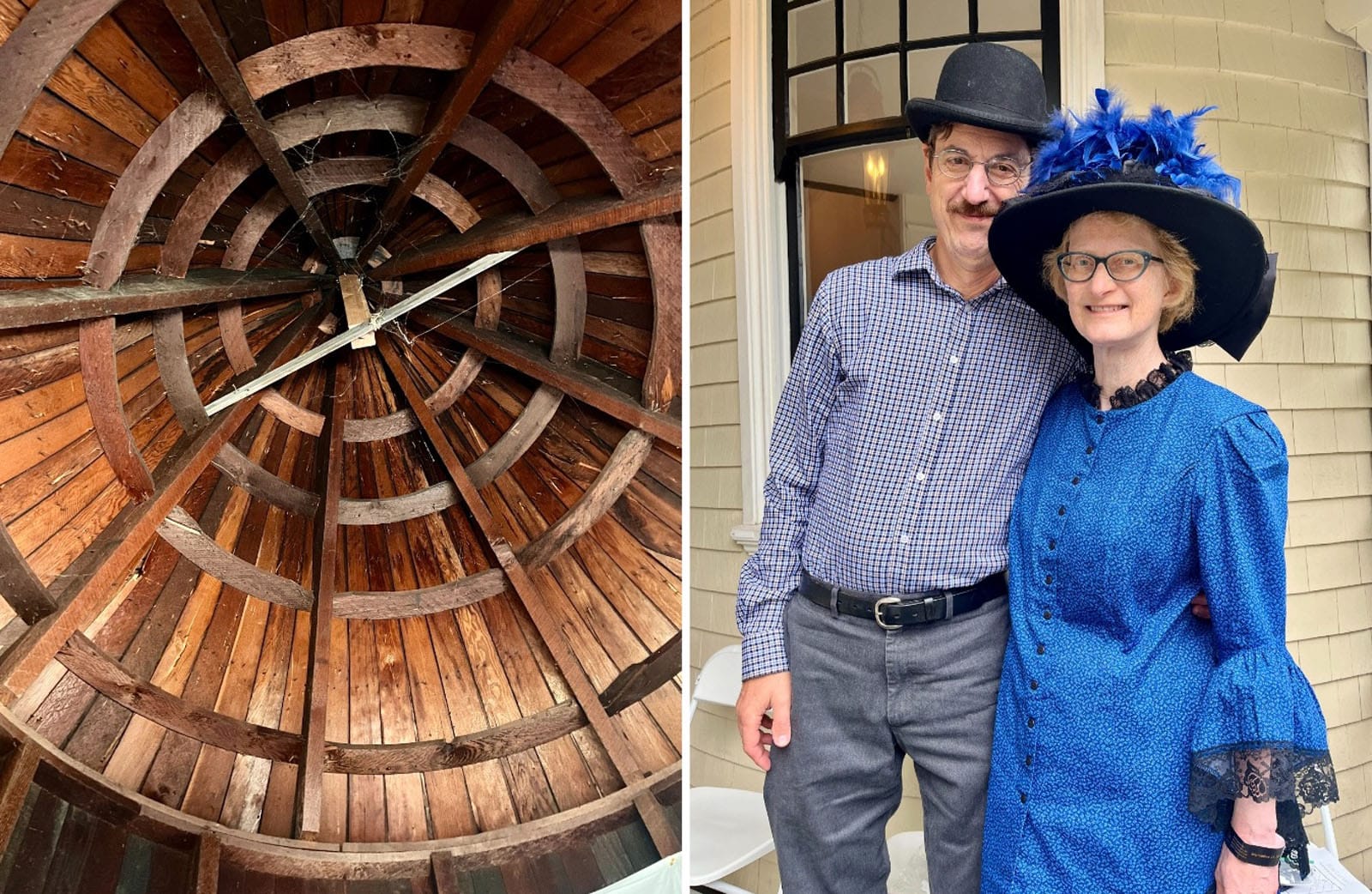
“I’m so glad I picked Joyce to buy the house, as I had so many offers even before I hired a realtor,” Susie says. “Joyce, thank you for restoring this home, and I’m glad my story can be part of the history.”
Actually, it was “meant to be” that Joyce and her husband Peter would come to own this home. As we learned in Part 3 of this story, there was a premonition in the form of a historic photo that came into Joyce’s presence long before she ever knew about 1528 Mozart Street, and which foreshadowed her future destiny as an eventual owner and steward of this storied property.
Every house tells a story
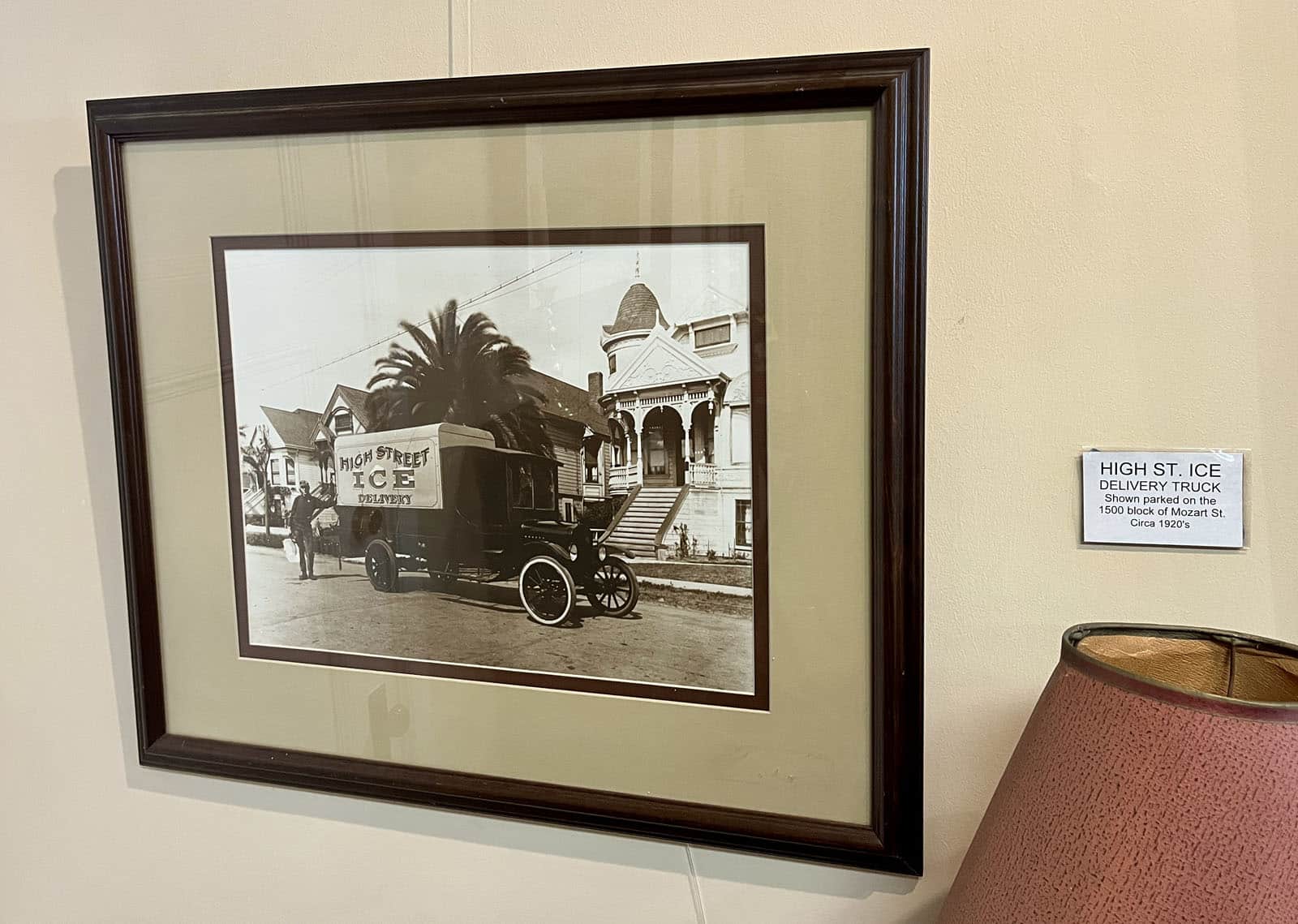
The old expression is “every picture tells a story,” but to me, it’s more like “every house tells a story.” It’s just a matter of taking the time to seek out the clues, do some digging, meet the people who have lived in the houses, and together learn more about the human history of a home than any of us ever knew or imagined before. I don’t know exactly why this is so important, or so interesting. Maybe it’s because people are interesting, and so is architecture and style. These articles attempt to tell the intertwined story of both—we humans and the structures we call home.
“But why am I so fond of these buildings? Because such houses as these will never be built on earth again. Because they are often both handsome and lovely, slightly irrational, and always a visual feast. Because their very presence was and is, day in and day out, a gift to every neighbor, postman and passerby on the street. In essence then, I see old houses as unique, public, large-scale celebrations of life, worthy of preservation and respect.”
— Carol Olwell, from her 1976 book, A Gift to the Street
Special thanks to current homeowners Joyce Boyd and Peter Conn for their help and cooperation with this story, along with former longtime owner Susie Viray.
Contributing writer Steve Gorman has been a resident of Alameda since 2000, when he fell in love with the history and architecture of this unique town. Contact him via [email protected]. His writing is collected at AlamedaPost.com/Steve-Gorman.
